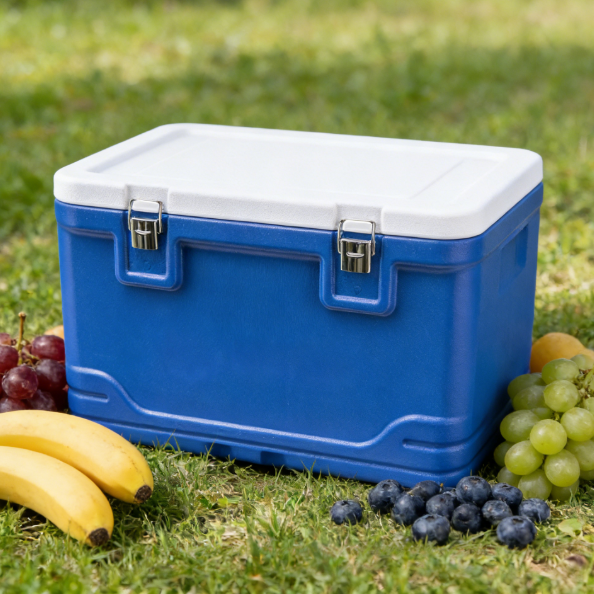
Choosing the right waterproof plastic tote for agricultural packaging means being honest about the commodity, rute, and the operating discipline behind it. A waterproof plastic tote usually refers to a closed-wall outer handling pack that resists splash, hujan, pencucian, and dirty operating conditions better than open crates or paper-based packaging. A design that works beautifully for pre-cooled, packaged berries may be the wrong fit for warm field-packed vegetables, while a waterproof tote that survives wash-down may be less useful than a vented crate when rapid airflow is the real priority. The smarter purchase is the one that matches biology and logistics at the same time.
The Packaging Job You Actually Need to Solve
Fresh-food buyers often use a plastic tote because it can do jobs that corrugated struggles to do repeatedly: hold shape in damp conditions, survive stacking pressure, move through wash areas, and return for reuse. The exact design still matters. Produce with high respiration or residual field heat often needs airflow and fast pre-cooling support, while packed or highly delicate items may need more surface protection. Export and import lanes also raise questions about pallet pattern consistency, pelabelan, and the risk of temperature abuse during border or port dwell. That is why the best produce container programs are built around commodity behavior and logistics rhythm together, not around a one-size-fits-all crate specification.
How to Match the Design to the Route
For produce and agricultural distribution, geometry matters almost as much as material. Standard reusable crates commonly use modular footprints that palletize cleanly and work with automation, while returnable systems in Europe and elsewhere often revolve around 600 X 400 mm dan 400 X 300 mm families. A waterproof claim can mean anything from splash resistance to a lidded wash-down-friendly outer pack, so buyers should ask exactly how sealing is achieved and what failure modes still exist. Material choice usually comes down to durable food-appropriate polyolefins such as PP or HDPE, but the more important performance question is how the wall pattern, base design, handholds, and corner stiffness behave under wet, ditumpuk, dinginkan, and repeatedly washed conditions.
Use-case fit depends on the commodity and the handling sequence. Vented designs are often favored for field-to-cooler and cooler-to-distribution flows where rapid air movement and moisture release help preserve quality. Closed-wall or more protective formats can make sense for prepacked items, sensitive skins, or wet logistics where splash resistance matters more than open airflow. Export and import programs often care about one more layer of detail: whether the same crate family can move from harvest or packing through palletization, border crossing, and receiving without rehandling. The more times produce is touched, the more the packaging choice affects bruising, tenaga kerja, dan menyusut.
The biggest buying mistake in fresh-food packaging is choosing on one feature alone. A crate that ventilates beautifully may not protect soft fruit from compression. A waterproof tote that stays cleaner in rain may slow cooling or hold condensation. A foldable crate that saves trailer cube may be slower to wash or less rigid at the corner posts than a rigid alternative. For chilled produce, packaging should support temperature control, but it does not replace pre-cooling, reefer management, or disciplined receiving. Requirements vary by product, rute, and seasonal conditions, so container choice should never be separated from operational practice.
Match the Design to the Operating Lane
Produce routes reveal packaging weaknesses quickly. A crate that performs well in a warehouse trial can disappoint if the commodity enters warm, if the stack pattern blocks airflow, or if the port or border dwell is longer than expected. Route fit means reviewing pre-cooling, pallet wrap, reefer behavior, retailer receiving, and empty recovery together. Untuk beberapa jalur, a vented design is the obvious answer because airflow and rapid heat removal are the priority. In other lanes, a more protective format is better because product is already prepacked or because rain, mud, and repeated outdoor handling create their own quality risk. The route decides whether ventilation, perlindungan, or return efficiency deserves the heaviest weighting.
Mistakes That Make a Good Container Look Bad
The most common mistake is matching the container to the warehouse instead of to the crop. A second mistake is assuming that waterproof, ventilasi, lipat, and stackable benefits can all be maximized at once with no trade-off. Another is ignoring pre-cooling and route control, then blaming the crate for quality losses that actually started before packing. Good produce packaging works with the commodity and the cold chain. It cannot rescue a weak operating process on its own.
Compliance Questions for Food Distribution
Food packaging decisions should be grounded in hygiene and temperature discipline, not just durability. FDA food-contact and food-safety frameworks emphasize safe materials and surfaces that can be cleaned effectively in food environments. The Sanitary Transportation rule under FSMA also highlights the risk of inadequate cleaning and failure to refrigerate food properly in transport. For produce and agricultural distribution, that means container choice should support cleaning, drainase, and product protection without undermining rapid cooling or cold-chain discipline. A reusable crate can help reduce waste and improve handling, but it still needs an operating system around washing, inspeksi, and route temperature control.
Why the Cheapest Unit Can Be the Most Expensive Choice
Harga satuan penting, but reusable packaging projects usually succeed or fail on cost per trip. Buyers should estimate service life, biaya pembersihan, efisiensi pengembalian, asset loss, ruang penyimpanan, labor at touchpoints, and damage reduction before they compare quotations. A more expensive container can be the lower-cost option if it reduces product loss, speeds handling, survives more cycles, or cuts empty-return cube significantly. The opposite is also true. A low-cost design becomes expensive when latches fail, labels fall off, or the container shape wastes transport space on the reverse leg. Good supplier evaluations therefore include a simple operating model: how many turns are realistic, what percentage of units are lost, how much labor does the design add or remove, and what does one full cycle really cost? Buyers who do that work usually make calmer, keputusan yang lebih baik.
A Practical Supplier Checklist
- Confirm internal and external dimensions separately, and ask for usable internal volume rather than relying on nominal size alone.
- Ask how the vent pattern, base design, and stack geometry affect airflow, drainase, bruise protection, and pallet stability for the specific commodity.
- Confirm whether the material and surface design are suitable for the cleaning method, wash chemicals, and food-handling environment in your operation.
- Check the empty-return ratio, fold or nest efficiency, and whether the same container family fits your pallet footprint, rak, and retail or export handling steps.
- Check stackability, nesting or folding ratio, handling ergonomics, and whether the product remains stable after repeated use and cleaning.
- Ask about MOQ, perkakas, color or logo options, lead-time variability, and what happens if you need sample revisions before production.
- Request clarity on quality control, resin traceability, and change-notification procedures so sample approval matches production reality.
Do Not Ignore Control After the Sample Passes
Production consistency is one of the most overlooked parts of reusable packaging procurement. A buyer may spend weeks comparing samples, then move directly to bulk ordering without documenting what made the sample acceptable. That is risky. Ask how the supplier controls resin source, wall-thickness variation, hinge or latch components, mold changes, and printing or label placement. Request a clear process for notifying you if any of those variables change. The more operationally important the container becomes, the more valuable disciplined change control becomes as a guard against surprise costs later.
Reference Data That Helps Frame the Decision
Across reusable transport packaging, standard footprints such as 600 X 400 mm dan 400 X 300 mm are common because they palletize efficiently and work well in standardized handling systems. Commercial stack-and-nest and foldable lines on the market frequently advertise around 80 percent space reduction when empty, which shows how strongly reverse-logistics economics can depend on format choice. Produce-focused reusable crates from major suppliers emphasize ventilation for more rapid and uniform cooling and better moisture management in transit. Reusable-packaging providers have also published recent life-cycle analyses showing lower carbon emissions and solid waste than comparable single-use systems in some fresh-food applications, though those gains depend on a functioning return and wash loop.
FAQ
Are vented crates always better for produce?
Tidak selalu. They are often better for commodities that need airflow and quick cooling, but prepacked or delicate items may need more surface protection than an open design provides.
Can a thermal or waterproof crate replace pre-cooling?
TIDAK. Good packaging can support temperature control, but it cannot undo poor pre-cooling, weak reefer settings, or long warm dwell times.
What matters more in export work: stack strength or fold ratio?
Keduanya penting, but they affect different costs. Stack strength protects the loaded trip. Fold or nest ratio affects return freight and storage after unloading.
Closing View
A good purchase decision for waterproof plastic tote for agricultural packaging comes from matching the container to the product, rute, and the operating discipline behind it. When those three elements line up, reusable plastic packaging can reduce damage, menyederhanakan penanganan, and improve repeatability. Ketika mereka tidak melakukannya, even a strong container becomes expensive friction.
One More Operational Check
One more practical point: sample approval should reflect real operations. Ask the supplier to send samples that use the final resin family, desain dinding, lid or latch option, and labeling method you expect in production. A visually similar sample can hide important differences in stiffness, bugar, dan daya tahan.
Teams also underestimate how much packaging influences labor. A crate that opens, menutup, tumpukan, washes, and labels quickly can save time at every touchpoint, while a poorly chosen design adds seconds that become real cost at scale.
A Sensible Validation Plan
For fresh-food programs, validate the container with real product, real pallet patterns, and realistic timing. Measure cooling behavior, kerusakan produk, kondensasi, ease of washing, and how long staff need to stack, de-stack, and relabel the units. If the route includes export or import steps, include the longest expected dwell points in the pilot instead of testing only the ideal lane. A packaging pilot is successful when it reveals not only whether the crate works, but where the cold chain or handling practice has to change for the crate to work consistently.
Pilot Metrics Worth Tracking
Useful trial metrics are usually simple. Track damage or leakage events, stabilitas tumpukan, time per handling touch, storage footprint for empties, label readability after the trip, and loss or non-return rate. In temperature-sensitive work, add temperature data and receiving-condition checks. In food and hygiene-sensitive work, add wash time and cleanliness observations. These practical measures help teams compare designs on operating reality instead of on brochure language. They also make supplier discussions more concrete because they connect packaging choice to labor, ruang angkasa, kualitas produk, dan total biaya.
Tempk at a Glance
Dan Tempk, we focus on cold-chain packaging that supports food and healthcare distribution. Our public product portfolio includes gel packs, batu bata es, tas terisolasi, penutup palet, and insulated boxes for a range of chilled and frozen workflows. When buyers need a reusable outer handling unit to work alongside temperature-control components, we approach the project from the transport conditions and packout needs rather than from a one-size-fits-all product list.
Tindakan Selanjutnya
If your operation needs a reusable outer pack and a cold-chain packout to work together, request guidance based on product temperature, waktu tinggal, dan kondisi penanganan.