Perkenalan
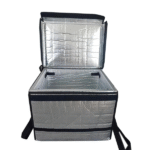
As an insulated backpack importer, you play a pivotal role in the cold-chain ecosystem. Di dalam 2026 the global cold-chain market is booming, with demand for temperature-controlled logistics expected to rise from roughly US$436 billion in 2025 menjadi lebih dari US$1,3 triliun pada tahun 2017 2034. Your challenge is to source backpacks that keep products within safe temperature ranges, comply with evolving regulations and support sustainability goals. This guide explains how to navigate sourcing, quality control and import compliance so you can confidently import insulated backpacks that protect perishable goods and strengthen your brand.
Panduan ini akan menjawabnya:
How do insulated backpacks fit into modern cold-chain logistics? – explores high-impact use cases such as meal delivery and pharmaceutical transport.
Which features and materials should you look for when importing insulated backpacks? – covers capacity, insulation performance and durability.
How can you ensure compliance and sustainability while managing tariffs and import regulations? – outlines classification, duty changes and sustainability requirements.
What procurement strategies help optimize cost, lead time and supplier relationships? – explains MOQs, cost levers and quality control procedures.
Which market trends and innovations will shape the insulated backpack landscape through 2026 dan seterusnya? – summarises industry growth, technological innovations and regional dynamics.
Why are insulated backpacks critical to cold-chain logistics in 2026?
Cold-chain essentials. An insulated backpack is more than just a bag – it is a mobile refrigerator that protects perishable goods for 60–120 minutes outside refrigeration. During meal kit deliveries, audit menunjukkan bahwa lebih dari 70 % of boxes exceed 4 °C after long routes. Importing high-quality backpacks helps you keep food, vaccines and biologics within safe ranges, reduces spoilage and maintains regulatory compliance. Their portability also turns them into walking billboards; a study cited in 2025 estimated each branded cooler bag generates about 1,900–2,000 impressions and stays in use for over two years.
Pertumbuhan pasar yang cepat. The cooler bag market (including insulated backpacks) is expected to grow from US$7.75 billion in 2025 to US$8.46 billion in 2026 and reach US$13.15 billion by 2031. North America held a 41.75 % berbagi 2025, yet Asia-Pacific is forecast to be the fastest-growing region. The insulated lunch bag sub-segment alone is projected to reach US$2.43 billion by 2031 with a CAGR of roughly 6.2 %. Major producing countries include China (60 % of output), Vietnam, India and the United States, while top importing regions are the United States (33 % membagikan), Uni Eropa, dan Jepang.
High-impact applications. Today’s insulated backpacks serve varied sectors:
Meal-delivery & layanan kelontong: last-mile couriers use backpack-style coolers to keep groceries chilled for up to two hours.
Farmasi & biotech logistics: validated temperature control is essential for vaccines, biologics and lab samples.
Rekreasi luar ruangan & olahraga: berkemah, hiking and tailgating have surged post-pandemic, driving demand for durable, high-capacity coolers.
Corporate promotions: branded insulated backpacks double as marketing tools, generating thousands of impressions per bag.
How to choose the right insulated backpack: features and materials
To source a backpack that performs well and satisfies customers, focus on capacity, kinerja isolasi, durability and user comfort. Using clear selection criteria prevents under-performing products and wasted investment.
Kapasitas dan ukuran: match use-case to volume
Choosing the correct capacity avoids wasted space and ensures insulation works efficiently. Commercial backpacks range from 6 L ke 40 L. Remember that thick insulation reduces usable volume by 15–20 %.
| Kategori kapasitas | Kisaran khas | Terbaik untuk | Artinya untukmu |
|---|---|---|---|
| Kompak | 6–10 liter | Pengiriman makanan tunggal, perlengkapan makan siang pribadi | Ringan dan portabel; ideal for quick-service outlets and small orders |
| Ukuran sedang | 15–20 l | Layanan persiapan makan, paket belanjaan, hadiah perusahaan | Muat untuk banyak kontainer; still manageable; useful for promotional programs |
| Besar | 30–40 liter | Acara katering, layanan minuman, aktivasi di luar ruangan | Membutuhkan konstruksi yang kokoh dan insulasi yang tebal; suits group meals; isi hingga 80–90 % for optimum performance |
Kinerja isolasi: busa, thickness and liners
Jenis busa. Insulation effectiveness is measured by R-value. Busa sel tertutup seperti poliuretan (Pu) atau polietilen ikatan silang (XPE) deliver R-values around 6 per inci, maintaining temperature for longer periods. Polietilen yang diperluas (EPE) atau polystyrene yang diperluas (EPS) have lower R-values (3.6–4.2 per inch) and are better for short trips.
Ketebalan. Tas entry-level dengan 3 mm Busa EPE mempertahankan suhu hingga enam jam. Meningkatkan ketebalan menjadi 5 mm plus an aluminium liner extends retention to 8–12 hours, ketika 8 mm foam and sealed zippers can maintain temperature for 12–24 hours when paired with gel packs.
Liners and closures. Aluminium foil liners reflect radiant heat and resist moisture, improving cold retention especially under sunlight. Polyethylene vinyl acetate (HARI INI) liners are flexible and food-safe but less reflective. Ritsleting ganda, flaps and Velcro help seal out warm air. Inspect closure quality carefully because weak zippers undermine insulation.
| Insulation component | Spesifikasi khas | Dampak praktis |
|---|---|---|
| Jenis busa | EPE (R 3,6–4,2/inci), PU/XPE (R 6+/inci) | Higher R-values mean longer retention; choose PU or XPE for premium applications |
| Ketebalan busa | 3 mm, 5 mm, 8 mm | Thicker foam extends hold time; 5 mm + foil retains 8–12 hours; 8 mm + gel packs achieves 12–24 hours |
| Bahan liner | Aluminium foil vs. HARI INI | Foil memantulkan panas dan menahan kelembapan; PEVA fleksibel tetapi kurang reflektif |
| Sistem penutupan | Ritsleting ganda, penutup, Velcro | Segel yang rapat mencegah masuknya panas; inspect zipper quality to reduce temperature loss |
Durability and user comfort
An insulated backpack must withstand daily handling and support the wearer. Outer materials such as 600 D atau 900 D Oxford fabric offer abrasion resistance and water repellence. Sustainable options like recycled polyester (RPET) provide eco-branding while maintaining performance. Reinforced base panels and anti-slip handles maintain shape and improve grip. Bisa disesuaikan, padded straps distribute weight evenly, reducing shoulder fatigue—especially important for bike couriers and foot delivery.
Ensuring quality, kepatuhan dan keberlanjutan
Importing insulated backpacks involves more than choosing a design. To protect your reputation and avoid customs delays, you must test products, verify documentation and comply with tariff regulations.
Testing and quality assurance
Before committing to large orders, perform practical tests:
Tes retensi termal: Pre-cool or preheat contents, insert a thermometer and record internal temperature every hour for 6–12 hours; compare with your required hold time.
Bocor & spill resistance: Fill the bag with 100–200 ml of water, tilt gently and check for moisture on the exterior.
Load-bearing & shape integrity: Fill to 80–90 % kapasitas, carry for 20–30 minutes, then leave the bag loaded for 24 hours to check handle strength and recovery.
Pembersihan & ketahanan terhadap bau: Wipe the interior repeatedly with disinfectant and air dry; watch for cracking or odour build-up.
Simulasi penggunaan nyata: Simulate a typical delivery route and gather feedback on balance, kenyamanan tali dan kinerja suhu.
Compliance documentation and certifications
Trusted suppliers provide a compliance pack containing labeling guidance, traceability documentation and test certificates. Verify certificates for food-contact safety (MISALNYA., FDA atau UE 10/2011) dan keberlanjutan (MISALNYA., Global Recycled Standard or OEKO-TEX). A quality control plan should include pre-production sample approval, pemeriksaan dalam proses dan pemeriksaan acak akhir.
Navigating tariffs and import regulations
Classification matters. Insulated backpacks and lunch bags fall under Chapter 42 of the Harmonized Tariff Schedule. Pada bulan Desember 2024 Amerika Serikat. Customs and Border Protection reclassified insulated lunch bags as bags with an outer surface other than textile, reducing the duty rate from 7 % (HTSUS 4202.92.08) ke 3.4 % (HTSUS 4202.92.10). The bags in question feature thermoplastic olefin sheeting and textile panels and are designed to maintain food temperature. As an importer you should review your product’s materials to determine the correct subheading and duty rate.
End of de minimis exemption. Pada bulan Agustus 29 2025 the United States suspended its long-standing de minimis duty exemption for low-value imports. Goods valued under US$800 now require formal entry and payment of duties, regardless of origin or shipping method. Carriers must file formal entries through the Automated Commercial Environment (ACE); Bagian 321 manifest filings and entry type 86 transactions are no longer allowed. You should budget for duties on every shipment and coordinate with a customs broker to handle paperwork.
Postal exceptions and flat-rate tariffs. International postal shipments still qualify for special procedures, but duty collection now relies on qualified carriers. Misalnya, the flat-rate tariff method charges US$80 per item when the country’s tariff rate is under 16 %, US$160 for countries with 16–25 % tarif, and US$200 for countries over 25 %. Discuss these options with logistics partners to avoid unexpected fees.
Sustainability requirements
Climate regulations such as the EU Green Deal and carbon-border adjustments are driving adoption of eco-friendly refrigerants and biodegradable materials. Corporations are committing to net-zero goals, so reusable cooler bags made from recycled polyester or biodegradable foam help reduce Scope 3 emisi. Selain itu, the market is moving toward end-of-life instructions and circular economy models. Saat memilih pemasok, ask for evidence of recycled fabrics, eco-certifications and recycling programs.
Procurement strategies for importers: manage cost, MOQ and logistics
Proactive procurement reduces costs and ensures timely delivery. Follow a structured process and understand the factors that influence price and lead time.
Minimum order quantities and lead times
MOQ tergantung pada kompleksitas desain, cakupan branding dan pilihan material. Full-colour printing or intricate builds require higher volumes. Lead times span from final artwork approval to shipment; mengharapkan jadwal yang lebih lama selama musim puncak (Q3 dan Q4).
Cost levers and negotiation
Key cost drivers include size standardization, tingkat isolasi, kompleksitas merek, jenis pegangan dan gaya pengemasan. Ukuran yang lebih kecil atau standar mengurangi limbah material, while thicker foam and premium liners increase costs but extend performance. Additional colours, laminasi matte atau hasil akhir khusus meningkatkan biaya pencetakan. Tali empuk, reinforced handles and double zippers add durability but increase unit price. Flat-packed bags maximize freight efficiency, whereas retail-ready folded packaging requires extra labour. Balance these levers against performance needs and negotiate with suppliers for the best combination.
| Faktor biaya | Impact on price | Apa yang harus dipertimbangkan |
|---|---|---|
| Standarisasi ukuran | Reduces material waste | Choose standardized volumes to lower unit cost |
| Tingkat isolasi | Higher foam thickness and premium liners raise costs | Evaluate hold-time requirements before upgrading insulation |
| Kompleksitas merek | More colours, matte lamination and custom finishes increase printing cost | Align branding with marketing goals and budget |
| Perangkat keras & handle type | Tali empuk, reinforced handles and double zippers add durability and cost | Prioritize user comfort for large bags; consider simpler hardware for compact models |
| Gaya kemasan | Retail-ready folded packaging requires extra labour; flat-packed bags maximize container load | Choose packaging based on distribution channel and cost efficiency |
Streamlined procurement process
Adopt a five-step path to simplify approval and protect quality:
RFQ intake: Tentukan bahan, anggaran dan kuantitas; share brand guidelines and logos.
Dieline and mock-up: Obtain dielines and digital mock-ups to align on design; confirm colours and finishes.
Sampel pra-produksi: Approve a physical sample that matches colours, dimensi dan bahan.
Production with inline QC: Pantau jahitan, menangani kekuatan dan toleransi cetak selama produksi.
Shipment with documentation: Conduct a final random inspection; ensure the shipment includes compliance and traceability documents.
Tip: Prepare your brand manual, logo vektor, hasil akhir yang disukai, budget and timeline before requesting quotes to avoid delays.
Market trends and innovations shaping insulated backpacks in 2026
Understanding market dynamics helps you anticipate demand and adapt your sourcing strategy.
Growth forecasts and regional dynamics
Analysts estimate that the cooler bag market will grow at a CAGR of 9.2 % dari 2026 ke 2033, reaching around US$2.5 billion by 2033. Key segments include outdoor recreation, food delivery and pharmaceutical transport. Pasarnya sangat terfragmentasi, with players focusing on eco-friendly materials and smart integration (MISALNYA., sensor suhu). High costs and limited awareness in emerging markets remain challenges.
Regional growth patterns differ: North America and Europe lead innovation and market share due to strict cold-chain regulations. Asia-Pacific shows rapid growth propelled by urbanization, rising disposable incomes and expanding food delivery services. Emerging markets with underdeveloped refrigeration infrastructure rely on cooler backpacks as vital last-mile solutions.
Inovasi teknologi
Smart insulation and monitoring. Advanced phase-change materials (PCMS) dan panel yang diisolasi vakum (VIP) enhance thermal retention without increasing weight. IoT-enabled coolers monitor temperature, kelembaban dan lokasi GPS secara real time; this helps businesses meet compliance requirements and reduce spoilage. The LinkedIn report notes that smart cooler bags equipped with sensors are becoming essential to ensure compliance with cold-chain standards.
AI dan analisis prediktif. Artificial intelligence analyses historical and real-time data to predict equipment failures, mengoptimalkan rute pengiriman dan memperkirakan permintaan. By anticipating temperature deviations, AI reduces spoilage and helps importers choose the right delivery modes..
Blockchain dan ketertelusuran. Blockchain creates tamper-proof records of a product’s journey, enhancing transparency and meeting regulatory requirements. Untuk obat -obatan, this ensures patient safety and streamlines audits.
Electric and reusable coolers. Electric coolers provide plug-and-play convenience and extend ice retention beyond five days. Reusable coolers made of recycled fabrics support net-zero commitments and align with consumer demand for sustainable solutions.
Market drivers and challenges
Drivers include the outdoor recreation boom, expansion of food delivery services, growing cold-chain requirements in pharmaceuticals and technological advancements in insulation and rotomolding. Challenges include high costs for advanced coolers, limited infrastructure in emerging regions, volatility in raw material prices and supply-chain disruptions.
Pertanyaan yang sering diajukan
Q1: How do I determine the correct backpack capacity for my business?
Nilai volume dan jenis produk yang Anda angkut. Kompak (6–10 liter) backpacks suit single-meal deliveries, ukuran sedang (15–20 l) backpacks work for multi-meal orders or promotional packs, dan besar (30–40 liter) backpacks cater to group catering or beverage service. Ingatlah bahwa isolasi tebal mengurangi volume internal sebesar 15-20 %, jadi konfirmasikan dimensi bagian dalam dengan pemasok.
Q2: Which materials provide the best insulation performance?
Closed-cell foams such as PU or XPE offer the highest R-values (sekitar 6 per inci) dan mempertahankan suhu lebih lama. Campurkan busa yang tebal (5–8 mm) with aluminium foil liners to maintain temperature for 8–24 hours. Untuk aplikasi ringan, 3 mm Busa EPE cukup untuk enam jam.
Q3: What documentation do I need to import insulated backpacks into the United States?
You must classify your products correctly under the Harmonized Tariff Schedule. Provide a compliance pack with labeling guidance, traceability documentation and test certificates for food-contact safety and sustainability. Be aware that the duty rate for insulated lunch bags changed to 3.4 % di dalam 2025 and that the de minimis exemption no longer applies.
Q4: How can I verify a supplier’s sustainability claims?
Request certifications such as GRS or OEKO-TEX for recycled fabrics and FDA or EU 10/2011 kepatuhan terhadap keamanan kontak makanan. Ask for traceability documents showing material sourcing and ensure suppliers provide recycling or end-of-life instructions.
Q5: Apa yang dimaksud dengan waktu tunggu tipikal dan jumlah pesanan minimum?
Waktu tunggu bervariasi sesuai kompleksitas desain dan musim; rentang waktunya mulai dari persetujuan akhir karya seni hingga pengiriman dan dapat diperpanjang selama kuartal puncak. MOQ tergantung pada ukuran tas, cakupan dan materi branding; negosiasikan ini selama tahap penawaran.
Ringkasan dan Rekomendasi
This guide explored why insulated backpacks are vital to modern cold-chain logistics, which features define a high-quality product, how to ensure compliance and sustainability, and where the market is headed. Poin-poin penting yang dapat diambil meliputi:
Prioritaskan kinerja: Choose foam thickness and liner materials based on required hold time; avoid cheap bags with thin insulation and weak closures.
Pertimbangkan kegunaan: Kapasitas yang tepat, tali pengikat empuk dan alas yang diperkuat meningkatkan kenyamanan pengguna dan mengurangi keluhan.
Uji sebelum Anda berkomitmen: Lakukan termal, leak and load tests to verify supplier claims.
Minta dokumentasi: Mewajibkan paket kepatuhan dan sertifikasi keberlanjutan untuk memenuhi tuntutan peraturan.
Rencanakan pengadaan secara strategis: Tentukan KPI, menegosiasikan MOQ, mengelola waktu tunggu dan memanfaatkan faktor biaya seperti standarisasi ukuran dan gaya pengemasan.
Langkah selanjutnya yang dapat ditindaklanjuti
Create a procurement checklist. Compile your product requirements (kapasitas, tingkat isolasi, bahan, branding) and share with prospective suppliers.
Gunakan kalkulator kapasitas. Estimate volume and hold time based on your delivery routes. Tools like Tempk’s capacity planning guide can help you pick the right backpack.
Run pilot tests. Order samples from two to three vetted suppliers and perform the retention and durability tests described above.
Prepare customs documentation. Work with a customs broker to classify products correctly, budget for duties and comply with the de minimis suspension.
Pantau tren pasar. Stay updated on technology innovations like PCMs, VIP, AI and IoT sensors; adopt sustainable materials to align with global regulations and consumer expectations.
Tentang tempk
Tempk is a trusted provider of cold-chain solutions and insulated packaging. We design and manufacture reusable cooler bags and thermal containers for food, industri farmasi dan logistik. Our products combine durable outer fabrics with high-performance insulation and user-friendly designs to ensure long-lasting temperature control. Kami memprioritaskan keberlanjutan dengan memasukkan bahan daur ulang dan menawarkan panduan daur ulang di akhir masa pakainya. Whether you need compact lunch bags for delivery riders or large-capacity backpacks for catering, our experts work with you to develop a solution that meets your hold-time, kebutuhan branding dan anggaran.
Panggilan untuk bertindak: Contact our team of cold-chain specialists today to discuss your insulated backpack needs and request a customized quotation. Kami siap membantu Anda meningkatkan rantai pasokan dan menciptakan pengalaman merek yang berkesan.