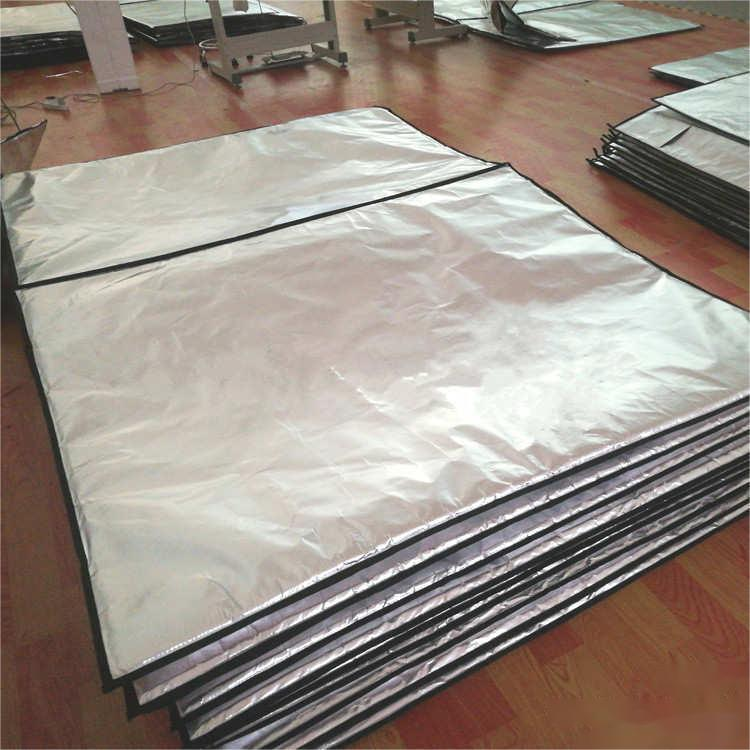
How to Specify Insulated Cargo Covers for Agriculture
The useful question is not whether a pallet cover “works.” The useful question is whether it controls a named exposure without creating another problem. Penutup kargo terisolasi for agriculture can slow heat gain or heat loss around a unitized load during staging, transfer, inspeksi, atau menerima. They cannot remove field heat, power a cold chain, or prove that a commodity remained acceptable. A strong specification therefore starts with a process gap, bukan suatu materi. It connects the crop requirement, kondisi palet, lingkungan, desain sampul, operating rule, and evidence into one decision that workers can repeat and quality teams can review.
Define One Thermal Gap Before You Define the Product
Start with a sentence that describes the intended use. Misalnya: “Protect pre-cooled palletized produce while it moves from controlled storage across an exposed loading area to transportasi berpendingin.” This is more valuable than “Provide an insulated cover for export pallets” because it states the starting condition, format, lokasi, and destination control.
Now test the sentence against the route. Does the pallet also wait for inspection? Can loading stop? Is direct sun possible? Does wind lift loose flaps? Will the cover remain in the refrigerated vehicle? Who removes it? If the cover is expected to serve several gaps, document each one separately. A design can be suitable for more than one use, but the approval should not silently expand.
The process-gap approach also exposes situations in which a cover is the wrong first investment. If produce is not pre-cooled adequately, improve heat removal. If reefer airflow is blocked by poor stacking, konfigurasi beban yang benar. If pallets wait because appointment scheduling fails, mengurangi tinggal. If an exposed base is the dominant heat path, side insulation alone will not solve it. Packaging should follow the diagnosed failure mode.
There are three early gates:
Product gate: What condition does the commodity require, and what variations in temperature, kelembaban, or ventilation can it tolerate?
Route gate: Which uncontrolled exposure is important under normal operation and under a credible delay?
Control gate: Is a passive cover capable of supporting that interval, or is active refrigeration, faster movement, naungan, a controlled buffer room, or a different package needed?
Do not proceed to supplier comparison until the three gates are answered well enough for a sample brief.
Preserve Product Condition Without Blocking the Cold Chain
Agricultural temperature management begins before a pallet is covered. Waktu panen, naungan, pra-pendinginan, sedang mengemas, penyimpanan dingin, and refrigerated transport establish and maintain product condition. FAO guidance describes the cold chain as linked upstream and downstream activities, while post-harvest guidance emphasizes airflow through produce packages and stacked loads. A cover should be inserted without contradicting those controls.
One recurring error is applying insulation too early. Warm product may continue to respire and release heat, while the cover slows heat removal. Another is leaving the cover around ventilated cartons inside a reefer without confirming the airflow effect. Dalam kedua kasus tersebut, a product intended to reduce external exposure can interfere with the planned process.
Write application and removal points into the specification:
The required product-release status before covering
The location where the cover is installed
The maximum pallet geometry allowed
The closure check
The approved locations where the covered pallet may wait
The event that triggers removal
The action taken during a delay
The receiving or return disposition
The cover should not become permission to extend an uncontrolled dwell. A delay rule may direct the pallet back to cold storage, into a temperature-controlled buffer, or through another approved response. The exact action depends on the operation. What matters is that workers do not invent it beside the dock.
Convert Heat Transfer Into Design Choices
Every cover manages a combination of three external heat-transfer paths. Insulating layers slow conduction through the assembly. Closures and overlaps reduce unwanted warm-air exchange. A reflective exterior may reduce radiant heat load when it faces the relevant air space and exposure. Muatannya, carton stack, dasar palet, and internal air determine how those external loads affect product temperature.
No single layer describes the finished result. A thick core with a short skirt can leave lower cartons exposed. A highly reflective face may do little against prolonged warm-air exposure if seams remain open. A snug design may improve coverage but take too long to install or obstruct necessary ventilation. Material selection and geometry must be reviewed together.
The minimum design description should include:
finished usable dimensions and dimensional tolerances;
atas, samping, sudut, and bottom coverage;
functional description of outer face, isolasi, dan lapisan dalam;
seam and edge construction;
tipe penutupan, tumpang tindih, dan lokasi;
label or scan access where required;
berat, fold size, dan fitur penanganan;
Alat pengambilan keputusan yang berguna
Periksa detailnya sebelum Anda memilih kemasan
Alat cepat ini dapat membantu Anda membandingkan risiko rute, kebutuhan ukuran, pilihan pendingin, dan detail kemasan sebelum Anda meminta penawaran.
Kalkulator Paket Es
Perkirakan jumlah paket es gel untuk pengiriman dingin dan perencanaan rute yang praktis.
Perkirakan kantong esPembuat Daftar Periksa Kepatuhan
Buatlah daftar periksa praktis untuk tinjauan kemasan, pengiriman, dan dokumentasi.
Buat daftar periksaKalkulator Es Kering
Perkirakan kebutuhan es kering untuk pengiriman beku atau sangat dingin sebelum pengepakan.
Perkirakan es keringcompatible cleaning and drying method for reusable products;
identification and production lot marking;
approved repair and retirement criteria, jika tersedia.
Avoid using “waterproof” or “food grade” without a precise definition and supporting documentation for the intended use. A water-resistant face may still have permeable seams. A cover touching only transport cartons has a different contact situation from material touching unpackaged food. Quality and regulatory teams should evaluate the actual interface.
Specify Insulated Cargo Covers for Agriculture Against Failure Modes
A failure-mode review is more productive than a long list of features. It asks how the intended control could fail and turns the answer into a design, proses, or evidence requirement.
| Modus kegagalan | Likely consequence | Specification or operating response |
|---|---|---|
| Product is covered before conditioning is complete | Heat is retained and later cooling may be slowed | Link application to documented product release or pre-cooling status |
| Cover is too small for pallet bulge or overhang | Gaps expose cartons and closures cannot engage | Measure worst-case acceptable production pallets and define usable internal dimensions |
| Top or base is left outside the thermal boundary | Uneven heat load bypasses side protection | State which surfaces must be covered and whether a base solution is part of the system |
| Cover blocks planned ventilation | Refrigerated airflow through cartons or stack is reduced | Define removal point or demonstrate compatibility with the actual airflow plan |
| Sun exposure is represented only by an air-temperature test | Radiant load is not addressed by the evidence | Include relevant radiant exposure or clearly limit the claim |
| Workers lift the cover repeatedly to scan labels | Protection is interrupted and the cover is damaged | Add a correctly placed access feature or revise the scanning sequence |
| Reusable cover returns wet or contaminated | Bau, kemerosotan, or hygiene risk develops | Establish segregation, pembersihan, full drying, inspeksi, and release steps |
| Supplier changes a layer or closure without review | Bugar, daya tahan, kemampuan bersih, or thermal behavior may change | Require controlled specifications, pemberitahuan, and re-evaluation rules |
The response does not always need to be a more complex cover. Sometimes a route change or work instruction is the most effective control. The table also prevents a common procurement problem: asking one material property to solve failures caused by operations.
Bangun Bukti Berlapis
Evidence should become more representative as the purchase moves from idea to deployment. A disciplined program can use four layers.
Lapisan 1: Tinjauan dokumen
Review the proposed construction, ukuran, penggunaan yang dimaksudkan, instruksi penanganan, pernyataan material, and any existing test report. A useful report identifies the tested item, muatan atau simulator, kondisi awal, profil lingkungan, lamanya, measurement setup, dan kriteria penerimaan. Marketing summaries without those details may support screening but not a route decision.
Lapisan 2: Fit and usability trial
Apply the sample to a representative pallet and the largest acceptable pallet. Include carton overhang, tali pengikat, papan sudut, dan label. Time application and removal, observe snag points, test closures, check forklift access, and practice storage. Run the trial with actual operators during a realistic work period.
Lapisan 3: Controlled thermal comparison
Compare the proposed covered configuration with the relevant baseline under documented conditions. The design of the comparison should reflect the decision. A direct-sun transfer requires different exposure than a warm indoor wait. Sensor placement and measurement equipment should be planned, but data interpretation must use the commodity owner’s product criteria.
Lapisan 4: Route confirmation and exception review
When risk warrants it, review the complete lane or a representative pilot. Include handovers and the delay process, not just normal timing. A successful pilot on one lane does not approve all climates, tanaman, format palet, or seasons. Record the boundaries so later teams know what was established.
ISTA 7E may appear in supplier literature, but it is designed for thermal kemasan transportasi dalam sistem pengiriman paket. It is not a universal qualification for penutup palet or agricultural lanes. Use standards whose scope matches the decision, and supplement them with route-specific work when appropriate.
Make the Control Visible at Every Handover
An effective cover program has physical and informational control. The physical control is the correctly fitted cover. The informational control tells the next person what the pallet is, what status it has, when it was covered, where it should go, and what to do if the plan changes.
For a disposable cover, the information may be part of a shipment label and work instruction. For a reusable cover, the item itself may carry a unique asset identifier plus a visible size and status mark. Keep product traceability and cover-asset tracking distinct: the pallet identifier follows the goods, while the asset identifier follows the cover.
Saat menerima, the consignee should not use cover condition as the sole acceptance signal. A displaced or damaged cover is relevant evidence, but an intact cover does not prove product condition. Review temperature records, shipment history, keadaan kemasan, and product inspection according to the established procedure.
If the shipment falls under food-transport requirements, applicable roles and records must be considered separately. Di Amerika Serikat, FDA sanitary transportation requirements address vehicles, Operasi, pelatihan, catatan, and protection against food-safety risks within their scope. A cover can support the procedure, not substitute for it.
Decide Whether Reuse Fits the Network
Reuse is attractive when agricultural flows are predictable, but harvest season makes asset imbalance especially likely. The economic and environmental case depends on actual returns, not theoretical durability.
Draw the reverse route. Covers may return on the same truck, consolidate at a distribution center, or move through a third-party pool. Each option needs ownership, memindai acara, cleaning responsibility, ruang pengeringan, inventory buffers, and loss handling. If no party accepts responsibility at the destination, the intended return loop may never begin.
Life-cycle thinking is more credible than a simple “reusable is sustainable” statement. The EPA’s sustainable materials management framework emphasizes productive material use across the whole life cycle. Apply that idea to the cover by considering material quantity, manufaktur, transportasi keluar dan pulang, pembersihan, memperbaiki, kehilangan, pemanfaatan, dan akhir kehidupan.
Destination rules also matter. Peraturan Pengemasan dan Limbah Pengemasan Uni Eropa umumnya mulai berlaku sejak 12 Agustus 2026 and introduces requirements across the packaging life cycle, with application depending on the operator and packaging format. Agricultural exporters serving EU markets should obtain current, situation-specific advice. Do not assume that a reusable label or a material declaration establishes compliance.
A one-way product may remain the better operational choice for an open export lane. A durable reusable design may be stronger on a closed domestic route. The correct conclusion comes from the network, not from a universal hierarchy.
Move From Sample to Controlled Production
Sebelum melakukan penskalaan, convert the approved sample into a controlled specification. Keep photographs, gambar, layer descriptions, detail penutupan, Label, dan toleransi. Agree on inspection points and change notification. Decide whether the first production lot needs enhanced inspection or a repeat fit trial.
Training should be short and visual. Show the correct orientation, urutan penutupan, bottom treatment, akses label, dan metode penghapusan. Include defects that require segregation. Supervisors should be able to observe correct use without dismantling the pallet.
Use early deployment data to improve the system. Track missing covers, application time, damage locations, pengembalian basah, size errors, dan pengecualian. These data reveal whether the design or the process needs attention. They should not be turned into performance claims without a suitable study.
Change control continues after launch. Revisit the decision when there is a new commodity, karton, pola palet, rute, iklim, kendaraan, metode pembersihan, bahan pemasok, atau kebutuhan pelanggan. Insulation is part of a living distribution process.
Pertanyaan yang sering diajukan
How long will an insulated agricultural cargo cover protect a pallet?
Tidak ada durasi universal yang bertanggung jawab. The result depends on the product’s starting condition, massa termal, konfigurasi palet, paparan lingkungan, sun and wind, konstruksi penutup, bugar, basis, dan kriteria penerimaan. Ask for the full conditions behind any duration claim, then decide whether additional testing is needed for your route.
Is full bottom coverage always necessary?
Tidak selalu, but the base must be considered. Heat can enter through contact with a hot surface or air around an open skirt. Some systems use an insulated base, pallet sheet, or controlled staging surface. Define the base condition and include it in evaluation instead of assuming side-and-top coverage represents the whole pallet.
Can the cover stay on during refrigerated transport?
Only if the product, ventilasi karton, aliran udara kendaraan, and evaluated configuration support that use. Many fresh-produce loads depend on air moving through aligned package vents and pallet channels. A cover used during outdoor transfer may need to be removed before final loading. Put the removal point in the work instruction.
Apa dokumen pemasok yang paling penting?
No single document answers every question. The controlled product specification establishes what will be supplied, while a detailed test report explains any thermal evidence. Cleaning instructions, dokumentasi materi, change-control terms, and production inspection records may also matter. Together they connect the sample, mengeklaim, and production lot.
When should a reusable cover be retired?
Use observable criteria supported by the supplier and your hygiene and quality process. Examples may include damaged closures, jahitan terbuka, punctured or wet insulation, delaminasi, kontaminasi yang tidak dapat dihilangkan, loss of fit, or an unapproved repair. Avoid assuming a fixed number of trips unless it is supported for the actual conditions.
Kesimpulan
A defensible agricultural cover specification begins with one process gap and follows it through product condition, aliran udara, perpindahan panas, geometri, penanganan, bukti, dan kepemilikan. The cover should preserve a condition established by the cold chain, not hide a missing control. Test in layers, keep claims tied to their setup, and define the delay response before deployment. For reusable designs, prove the return loop as carefully as the physical product. This route-based method produces a smaller, clearer claim and a more dependable operation.
Tentang tempk
Tempk adalah B2B kemasan rantai dingin provider whose relevant offerings include insulated pallet and thermal covers and related Kemasan yang dikendalikan suhu. We can help buyers turn a route description into a cover discussion that addresses usable dimensions, cakupan, penutupan, handling access, dan dimaksudkan untuk digunakan kembali. The agricultural product requirement, strategi kualifikasi, and operating approval remain the responsibility of the shipper and its quality team. Tempk’s most useful starting point is therefore not a generic requested duration, but a representative pallet and a clear description of the exposure the cover is meant to manage.
Bagikan komoditas Anda, geometri palet, transfer sequence, paparan lingkungan, and return plan with Tempk. Use that information to request a focused sample and evidence review before scaling.