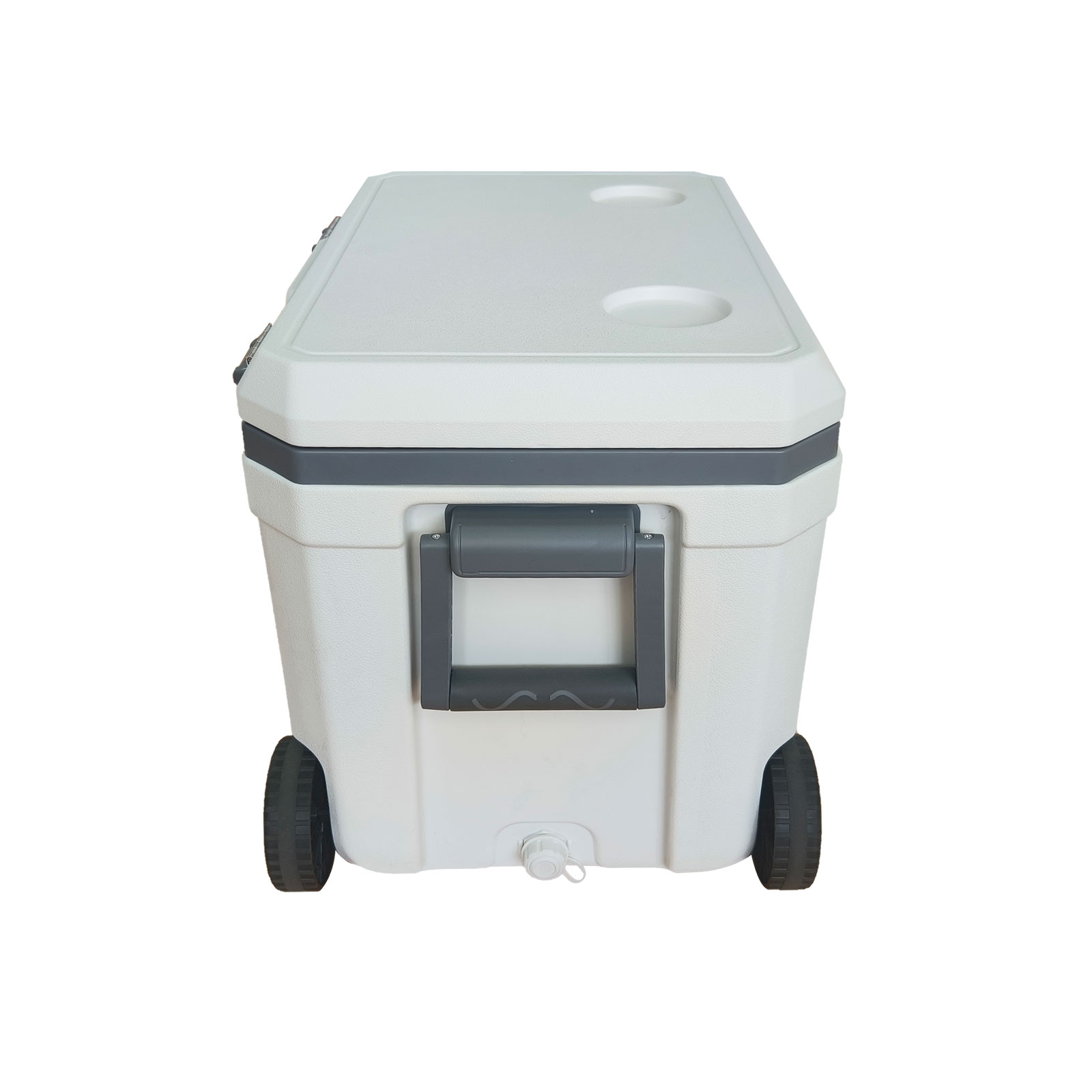
If you are comparing suppliers for thermal plastic containers for logistics supply chains, the first job is to define what problem the container must solve in logistics supply chains. Most buyers are trying to protect the product, mengurangi gesekan penanganan, and create a packaging format that is easier to reuse and control at scale. Those goals are realistic, but only when the container is matched to the route, muatannya, and the day-to-day workflow.
The most useful buying distinction is simple: a thermal-looking container only delivers value when the insulation level, strategi pendingin, metode pengepakan, and route duration align with the real supply-chain risk. A reusable plastic container may be the right outer handling format, a useful short-term temperature buffer, or part of a more complete packaging system. It becomes a poor choice only when buyers expect it to do more than the design can actually support. The rest of the decision should flow from that boundary.
What the Container Should Do in Real Operations
A good thermal plastic container should make daily handling easier before it makes a presentation slide look impressive. It should fit the actual route, support a stable load, and give operators a repeatable way to prepare, bergerak, menerima, and reuse the package. Di banyak program, the biggest gains come from fewer damaged loads, alur kerja yang lebih bersih, and better space use rather than from one dramatic specification.
That is also why buyers should compare full operating fit. Pembersihan, pengeringan, pelabelan, penanganan pengembalian, and sample-to-production consistency matter just as much as the headline material. When the package works in the whole loop, it starts to reduce cost and risk. When it works only in the catalog, it becomes a source of exceptions.
Set the Performance Boundary Before You Compare Quotes
A lot of wasted procurement time comes from asking one container to do three different jobs. Start by defining whether the package is primarily a reusable handling format, a short-term temperature buffer, or part of a fuller insulated shipping system. That single clarification removes much of the confusion from supplier comparison.
Once the boundary is clear, the rest of the evaluation becomes more practical. You can compare structure, kemampuan bersih, closure behavior, thermal support, kesesuaian rute, and return logistics without mixing unlike products into the same shortlist.
How to Read the Design Instead of the Sales Sheet
Good container selection starts by reading the design honestly. Thermal logistics containers commonly use durable plastic outer shells for reuse and handling strength, while thermal performance depends on the insulation package, tutup pas, and coolant design. Buyers should then look at the whole system interface: lid behavior, load transfer, membersihkan kenyataan, kontrol label, and how the package is expected to be used every day.
Bukaan, engsel, segel, and lid compression points often determine whether a thermal container performs consistently across repeat trips. If the container will serve food, Perawatan kesehatan, or mixed cold-chain operations, easy cleaning and fast turnaround are essential. Route labels, scan zones, kantong pencatat data, and serial identifiers help turn a thermal box into a managed asset rather than a generic insulated bin. Dengan kata lain, the right container is rarely the one with the boldest headline claim. It is the one whose details match the actual work.
The Criteria That Usually Decide the Outcome
Most buying decisions become easier once the evaluation moves away from vague quality language and into a few practical variables.
- Mulailah dengan realitas jalur: The first buying question should be route duration, tinggal risiko, and ambient exposure, not just box volume.
- Define the temperature objective: Didinginkan, beku, controlled-room, and heat-sensitive non-pharma goods all call for different thermal designs.
- Balance weight against hold time: More insulation can improve performance, but it can also reduce payload and increase handling effort.
- Design for packing consistency: A complex box that only expert operators can pack correctly is often a poor large-scale logistics solution.
- Rencanakan putaran kembalinya: Reusable thermal packaging needs cleaning, component replacement, and return logistics that do not erase the benefit of reuse.
- Integrate with the wider system: Pallet covers, parcel containers, last-mile totes, and stationary cold storage may all play different roles in one network.
Keep the Factual Boundary Clear
One of the best ways to avoid bad packaging decisions is to keep the factual boundary honest. A supplier may offer useful data on structure, pembersihan, or thermal behavior, but the final decision still has to reflect your route, produk, proses penerimaan, and control requirements. That is why buyers should ask what the data proves, what it does not prove, and what additional trial or qualification work may still be needed.
Think in Terms of Program Cost, Not Unit Cost
An inexpensive container can still be costly if it breaks stacks, complicates cleaning, wastes cube, or creates relabeling work. A more expensive container can still be the better choice if it survives longer, supports a cleaner process, and reduces daily friction across multiple sites.
The practical comparison is therefore program cost: purchase price, kehidupan pelayanan, efisiensi pengembalian, upaya pembersihan, replacement parts, and any effect on product loss or handling speed. That wider lens usually leads to a better supplier conversation.
A Practical Supplier Checklist
If you only keep one section from this guide, keep this one. It helps turn a vague sourcing project into a decision with visible criteria.
- Map the goods and routes clearly: Different products and lanes may need different thermal solutions even inside one company.
- Ask how performance is achieved: Jenis isolasi, pendingin, berkemas, and test profile should be explicit before comparing suppliers.
- Review usable volume and payload weight: Thermal packaging often loses internal space faster than buyers expect.
- Check turnaround demands: If the system must be reused quickly, ask how it is cleaned, kering, and reconditioned between trips.
- Confirm where qualification is needed: Some lanes need documented performance and work instructions, while others only need short-term buffering.
- Pilot in the real distribution flow: Cross-docks, kurir, late deliveries, and receiving delays reveal issues laboratory profiles may not show.
- Understand service model and spare parts: Tutup, pendingin, and inserts are part of the system, not accessories to think about later.
- Align sustainability claims with operations: Reuse only works when the package returns, turns quickly, and delivers a real reduction in waste or loss.
Where the Right Design Creates Real Value
The best way to test whether a container choice makes sense is to place it inside a real scenario rather than discuss it as a generic packaging type.
- Healthcare and pharmacy distribution: Thermal containers are often used when dispatch and receiving times create moderate temperature risk but a parcel-friendly reusable format is still practical.
- Meal kits and fresh food distribution: Dalam logistik makanan, they may help bridge first-mile and last-mile exposure when active refrigeration is not continuous.
- Industrial and specialty goods: Beberapa perekat, reagen, or temperature-sensitive components also benefit from short-term thermal buffering in logistics networks.
Test the Whole Workflow, Not Just the Container
The strongest way to validate a supplier is to test the whole workflow. Include loading, menumpuk, menerima, pembersihan, penanganan pengembalian, and any temperature or traceability steps that belong to the package. This reveals whether the product works in your operation instead of only in a catalog environment.
It also helps buyers separate a strong sample from a strong long-term supply program. A good supplier should be able to discuss pilot scope, pengulangan produksi, mengubah kendali, and how the packaging will be supported after the first order ships.
What Usually Goes Wrong
Most buying mistakes sound small at the start and become expensive only after the first rollout.
- Selecting a container by advertised hold time without checking the exact test conditions.
- Buying one thermal format for every route even when the risk profile is very different.
- Ignoring internal space loss and repacking complexity.
- Treating reuse as sustainable by default without a workable return program.
Sustainability Only Counts When the Program Works
Reusable packaging is attractive for good reason, but the real test is operational. Supply chains are looking for more route-specific reusable thermal packaging rather than one generic insulated box for all jobs. Visibilitas, pencatatan data, and standardized operating instructions are becoming more important as reusable thermal assets scale. Sustainability conversations increasingly focus on total system efficiency, pembusukan yang lebih rendah, and repeatable reuse rather than packaging slogans. A container that comes back reliably, stays in specification, and prevents product loss can create meaningful value. A package that is reusable in theory but awkward to wash, kembali, or redeploy usually does not.
A Final Integration Check
Sebelum melakukan pemesanan dalam jumlah besar, compare the candidate container against the real workflow one more time: memuat, mengangkut, kuitansi, inspeksi, pembersihan, kembali, and any temperature or traceability requirements. That quick integration check often catches issues that would otherwise appear only after rollout.
It also forces suppliers to show whether they understand the application beyond the sales stage. The better they can translate the design into day-to-day use, the more dependable the program is likely to be.
A Final Integration Check
Sebelum melakukan pemesanan dalam jumlah besar, compare the candidate container against the real workflow one more time: memuat, mengangkut, kuitansi, inspeksi, pembersihan, kembali, and any temperature or traceability requirements. That quick integration check often catches issues that would otherwise appear only after rollout.
It also forces suppliers to show whether they understand the application beyond the sales stage. The better they can translate the design into day-to-day use, the more dependable the program is likely to be.
FAQ
What is the most important buying input for a thermal logistics container? Usually the real route profile: lamanya, paparan lingkungan, pola penanganan, and receiving timing.
Does more insulation always mean a better container? TIDAK. Extra insulation can add cost and weight without solving the actual route risk.
Can one supplier handle multiple logistics scenarios? Ya, but the best suppliers usually segment the solution by lane instead of forcing one box into every use case.
A Practical Bottom Line
The most useful way to buy in this category is to define the operating role, compare the few variables that really change performance, and shortlist suppliers who can answer practical questions clearly. That approach helps you choose a container that supports the whole workflow rather than creating new exceptions.
Tentang tempk
We focus on temperature-controlled packaging for pharmaceutical and food cold chains. Public information on Tempk highlights products such as insulated boxes, penutup palet, and coolant packs, together with packaging support that helps buyers match solutions to route duration and product sensitivity. This is where Tempk’s public offering is most directly relevant: the company presents insulated boxes, penutup palet, paket pendingin, and other temperature-controlled packaging intended to be matched to route, tahan waktu, dan sensitivitas produk. When the job requires more than a standard reusable container, that system view matters.
Langkah selanjutnya
Jika Anda membandingkan opsi sekarang, mulailah dengan rute Anda yang sebenarnya, produk, dan cara penanganannya. Then ask suppliers to propose a container around those conditions rather than around a generic size or marketing claim.