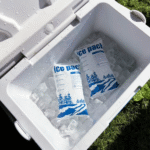
VIP insulated packaging for high performance insulation is most powerful when you treat it as a complete cold chain solution instead of a premium box. The strongest programs combine VIP insulation, correctly tuned refrigerant, validasi khusus rute, pemantauan praktis, and a clear response plan for delays or excursions. That is the approach that protects both product quality and operating margin in 2026.
This optimized guide combines the buyer-view, the engineering view, and the market view into one article. If you need to decide quickly and still make a high-quality packaging choice, it will help you focus on what really determines success: stabilitas suhu, kesederhanaan penanganan, bukti yang terdokumentasi, and total program fit.
Artikel ini akan menjawab
- how to decide whether VIP insulated packaging for high performance insulation is the right fit for your lane and payload
- which engineering details drive hold time, perlindungan muatan, dan pengulangan
- how compliance, visibilitas, and sustainability should influence your packaging program
- Apa 2026 market trends suggest for future-proofing advanced thermal packaging design operations
Why is VIP insulated packaging for high performance insulation the right solution for some lanes but not all?
The best packaging choice is always contextual. VIP insulated packaging for high performance insulation is strongest when you need a mix of high insulation, reasonable operational simplicity, and enough evidence to trust the shipment at arrival. It is not automatically the right answer for every lane, but it becomes compelling when the product is valuable, the route is variable, atau efisiensi dimensi penting.
The key is to judge the shipper as a system. That means looking at thermal design, refrigerant tuning, pengaturan muatan, kualifikasi rute, pemantauan, dan total biaya bersama-sama. Saat potongan-potongan itu sejajar, a VIP program can protect quality, simplify release, and improve economics at the same time.
Alat pengambilan keputusan cepat
1. If your lane carries pharmaceuticals, bahan kimia khusus, high-value foods, Bahan Laboratorium, and other space-sensitive shipments and a single failure would be costly, lean toward higher insulation quality and stronger monitoring.
2. If your route repeats often and you can recover packaging, evaluate a reusable program with asset inspection and reverse logistics.
3. If your route is irregular or remote, prioritize simple packout execution and larger delay margin over overly complex smart features.
4. If dimensional weight or payload space is a major cost driver, compare usable volume and freight footprint, not only carton price.
5. If QA release speed matters, choose a solution that produces clean, reviewable data at delivery.
| <kuat>Titik keputusan</kuat> | <kuat>Better choice when…</kuat> | <kuat>Hati-hati</kuat> | <kuat>Hasil</kuat> |
| Sekali pakai atau dapat digunakan kembali | Use reusable when lanes repeat and reverse logistics are realistic | Do not force reuse where returns fail | You protect margin and sustainability at the same time. |
| Basic logger or live tracking | Use live visibility for high-value or claim-prone lanes | Data without response rules adds little value | You catch problems earlier and release faster. |
| Thicker box or better insulation | Use VIP when payload space, lamanya, or dimensional weight matters | Damaged panels erase the advantage | Anda membeli kinerja, not just bulk. |
How should you design the thermal system around VIP insulated packaging for high performance insulation?
Start from the payload and the route. Define the true ship condition, the allowed temperature window, the worst-case season, and the most likely delay pattern. Only then choose panel design, jenis pendingin, massa pendingin, and packout geometry. This sequence prevents the common mistake of buying a premium box and then forcing the product to fit the box instead of the other way around.
Berikutnya, protect repeatability. The engineered result should survive routine operations, not only ideal pilot conditions. That means visual work instructions, controlled refrigerant conditioning, simple loading order, and monitoring devices positioned where they represent product risk. A strong system is one that ordinary teams can execute well on ordinary days.
The engineering details that matter most
- Segar, undamaged VIP panels can reach thermal conductivity around 0.004 W/m · k, roughly one-fifth that of common foam insulation in engineering references.
- Refrigerant must be tuned to the exact target range chosen for the payload, achieved with minimal wall thickness and low heat leak and to the product’s tolerance for both warming and overcooling.
- Internal geometry matters because empty space and poor symmetry can shift temperature patterns inside the box.
- Reusable assets need inspection criteria so aging, kerusakan, or seal wear do not quietly degrade performance.
How should compliance, visibilitas, and quality review fit together?
For regulated temperature-sensitive goods, the packaging decision should sit inside a documented quality process. WHO Annex 9 frames time- and temperature-sensitive pharmaceutical products around predefined environmental conditions and makes documentation central to safe distribution. EU GDP guidance expects validated temperature-control systems and temperature data that can demonstrate compliance during transit. That means your VIP insulated packaging for high performance insulation should be qualified for the lane, loaded through a controlled SOP, and backed by data you can review after delivery.
The most important compliance question is whether the shipper, the refrigerant set, and the packout method have been qualified for the real route. That includes worst-case seasonality, realistic dwell times, monitored handoffs, and clear disposition rules when temperature data shows an excursion.
Visibility should support the quality decision, not distract from it. A basic logger may be enough for stable low-risk lanes. Higher-risk lanes may justify real-time sensors or GPS-linked alerts. The important point is that the monitoring choice should reflect the product, rute, and the response capability of your team.
What a strong release-ready data set includes
- a route-qualified packout with clear pre-conditioning rules
- shipment data that shows both in-range performance and remaining thermal reserve
- documented exception handling tied to product stability and quality ownership
- traceable records for reusable asset inspection or one-way shipment identification
What does total cost really look like for VIP insulated packaging for high performance insulation?
Carton price is only one piece of total cost. The full picture includes freight footprint, waktu kerja, qualification effort, logistik pengembalian, tingkat kerusakan, reship frequency, product write-offs, and the time quality teams spend investigating exceptions. When product value is high, preventing a few failures can outweigh a large difference in packaging unit cost.
Sustainability should be viewed through the same operational lens. A reusable VIP system can be excellent when the lane supports enough turns and the shipper is easy to inspect and recover. A one-way solution can still be the better choice when returns are unreliable or the network is too fragmented. The honest answer comes from the lane economics, not from marketing language.
Three questions finance and operations both understand
- How many failures must this system prevent to pay back the premium over standard foam?
- How much freight or payload efficiency does the smaller wall thickness create over a year?
- Can the lane support reuse often enough to convert a sustainability goal into a measurable operating result?
How should you implement VIP insulated packaging for high performance insulation without creating new operational risk?
Implementation should move in steps. Start with the highest-risk or highest-value lanes, qualify them properly, and train the teams who actually do the packout and receiving work. Then review the early data, tighten the SOP, and only after that extend the program to more regions or more SKUs. This staged rollout prevents a good design from being undermined by rushed adoption.
It also helps you define ownership. Procurement can handle commercial terms, operations can own execution, and quality can own release logic and deviation review. When those roles are explicit, the packaging program becomes much easier to sustain. When they are vague, even a well-qualified shipper can get stuck in internal debate after the first exception.
A practical rollout path
1. Choose one or two representative lanes and qualify them with realistic worst-case assumptions.
2. Train packout and receiving teams with visual instructions and a short verification checklist.
3. Review early shipment data jointly across operations and quality, then adjust the SOP if needed.
4. Expand only after the program shows repeatable execution, clean data, and acceptable cost.
How should receiving sites and downstream partners use the shipper data?
A packaging program is only as strong as the handoff at the receiving end. Sites should know what to look for when the carton arrives, how to check the logger or tracker, and when to escalate a suspected excursion instead of improvising. That simple training prevents routine uncertainty from turning into unnecessary quarantine or unsafe release.
Downstream partners also need clear rules for reusable assets, kembali, and damage reporting. If a shipper is returned late, stacked incorrectly, or sent back with hidden damage, the next cycle begins with more risk than anyone realizes. Strong programs close that loop with defined receipt checks, damage photos, and fast communication between sender and receiver.
Receiving-site priorities
- know the expected arrival condition and the first acceptance checks
- retrieve and review the data in the same way every time
- escalate clear exceptions quickly instead of storing questionable product and deciding later
2026 pandangan: what should you build for next, not just for now?
The programs that will age best are the ones designed for change. Routes change, products launch, regulations tighten, dan ekspektasi pelanggan meningkat. The packaging choice you make now should therefore be easy to requalify, easy to explain to quality teams, and flexible enough to support better data or greener operations later.
Buyers increasingly compare total cost, berat dimensi, rasio muatan, and reusability instead of headline insulation claims alone. Sustainability pressure is pushing buyers to ask not only whether a shipper works, but whether it works with less material and less waste. The EU Packaging and Packaging Waste Regulation starts applying from mid-2026 and pushes packaging programs toward better recyclability and practical reuse. The message for 2026 is not that every shipper must become more complicated. It is that every shipper must be easier to defend with evidence, easier to execute consistently, and easier to align with broader business goals.
Perkembangan terbaru sekilas
- buyers are comparing payload ratio and dimensional weight alongside hold time
- reusability and material circularity are being discussed earlier in packaging design
- qualification packages are expected to be clearer, more visual, and more route-specific
Pertanyaan yang sering diajukan
Why is VIP called high-performance insulation?
Because it blocks heat far better per thickness than standard foam. That lets you build smaller walls for the same thermal goal or extend hold time in the same carton.
Can VIP panels be cut after manufacturing?
TIDAK. Cutting a standard VIP destroys the vacuum and the performance. That is why sizing and structural protection must be planned upfront.
What is the hidden downside of VIP?
Cost and damage sensitivity. If the design does not protect the panel edges and surfaces, the performance advantage can be wasted.
When is premium insulation worth paying for?
When product value is high, the lane is harsh, dimensional weight matters, or payload space is limited. Dalam kasus tersebut, better insulation changes the economics.
Does better insulation always mean lower total cost?
Tidak secara otomatis. You still need to compare recovery rates, tingkat kerusakan, biaya pengiriman, and packout labor to see the real business result.
Ringkasan dan Rekomendasi
The strongest VIP insulated packaging for high performance insulation program does four things well: it protects the payload inside the right temperature window, fits the actual route, produces evidence the quality team can trust, and makes operational sense at scale. When any one of those pieces is weak, the shipper may still look good in a brochure but disappoint in field use. The winning decision is rarely the cheapest carton or the highest headline hold-time claim by itself. It is the design that keeps working when real transit conditions are less tidy than the sales sheet suggests.
Langkah Anda selanjutnya harus praktis. Tentukan jalurnya, muatannya, the allowed temperature range, the likely delay margin, and the monitoring level you really need. Then compare candidate systems against that brief and run a route-based qualification before full rollout. That disciplined approach will protect both product quality and budget far better than buying on insulation claims alone. If you already have a shipper in service, use post-delivery data, complaint history, and excursion review to refine the program instead of waiting for a major failure to force change.
Tentang tempk
Dan Tempk, we focus on temperature-controlled packaging for cold chain logistics, including VIP-based shippers, PCM integration, and route-aware packaging design. Our work is centered on practical performance: protecting sensitive products, simplifying packout, and making qualification easier to understand.
If you are comparing packaging options, the best next move is to align the shipper with your real lane and product profile, then review the data with operations and quality together. That creates a packaging decision that is easier to defend internally and more reliable in day-to-day use.