


Chill exposure
Konfigurasi kemasan dingin atau pak gel beku dapat menurunkan trombosit di bawah rentang suhu ruang terkontrol yang dituju.
Trombosit transport is not a refrigerated konfigurasi kemasan. It needs suhu ruang terkontrol planning, no beku media pendingin contact, stable penyangga kantong, short validated lanes, and clear serah terima records.
Pengiriman produk darah harus dinilai berdasarkan riwayat suhu dan kondisi penerimaan. Rincian di bawah ini adalah panduan perencanaan pengemasan; penanganan akhir harus mengikuti prosedur fasilitas Anda dan persyaratan setempat.
Konfigurasi kemasan dingin atau pak gel beku dapat menurunkan trombosit di bawah rentang suhu ruang terkontrol yang dituju.
Hot vehicles, long waiting time, or direct sunlight can warm the shipper quickly if insulation and PCM are not validated.
Loose bags, rough courier handling, and unrecorded stops make pemeriksaan saat tiba harder to trust.
| Kondisi rute | Tujuan suhu | Pengaturan kemasan | Perencanaan media pendingin atau es kering | Pemeriksaan saat diterima |
|---|---|---|---|---|
| Indoor courier or same-campus route, 0-4 H | Maintain suhu ruang terkontrol handling according to the facility procedure. | Clean insulated carrier, penyangga kantong, no beku media pendingin, pencatat data near the muatan. | Often no active media pendingin is needed if the lane stays stable. Use a suhu ruang buffer only after validation. | Kurva suhu, waktu rute, bag position, and serah terima signature. |
| Kurir di hari yang sama, 4-12 H | Control both warm and cool exposure without using dingin konfigurasi kemasan logic. | Pengirim terisolasi, 20-24 C PCM if validated, lengan kargo, pencatat data near likely warm and cool sides. | Uji coba parsel kecil sering kali dimulai dengan 0.8-2 kg suhu ruang terkontrol PCM, placed away from direct tekanan pada kantong. | No chill dip, tidak terlalu panas, penyangga kantong, and arrival record completeness. |
| Seasonal or cross-city route, 12-24 H | Use a qualified suhu ruang terkontrol system rather than improvised pak gel pendingin. | Higher-performance pengirim berinsulasi, validated PCM mass, external temperature shield, tinjauan risiko rute. | Tes 2-4 kg 20-24 C PCM for larger parcel lanes, then adjust based on pencatat data curves and ambient profile. | Suhu minimum dan maksimum, keterlambatan serah terima, bag movement, and route notes. |
Gunakan rentang ini sebagai titik awal untuk pengambilan sampel dan penawaran harga. Final media pendingin, PCM, es kering, isolasi, dan pilihan pemantauan harus divalidasi dengan muatan sebenarnya, Ukuran pengirim, durasi rute, proses pembawa, musim, dan prosedur penerimaan.
Trombosit should not be packed like sel darah merah. Avoid ice, pak gel beku, and direct chill sources.
If media pendingin is required, use PCM designed for the intended suhu ruang band and validate the real lane.
Use a sleeve or tray so bags stay stable but are not pressed against PCM panels or hard inserts.
Trombosit shipments need clear serah terima timing and a pencatat data curve that shows both warm and cool risks.
Ini adalah masalah yang terlihat dan operasional yang harus dikurangi oleh konfigurasi kemasan sebelum kiriman mencapai penerima.
Gunakan kurva tes sebagai perbandingan kerja, kemudian validasi dengan muatan sebenarnya, pengirim, media pendingin or es kering mass, durasi jalur, profil lingkungan, dan proses penerimaan.
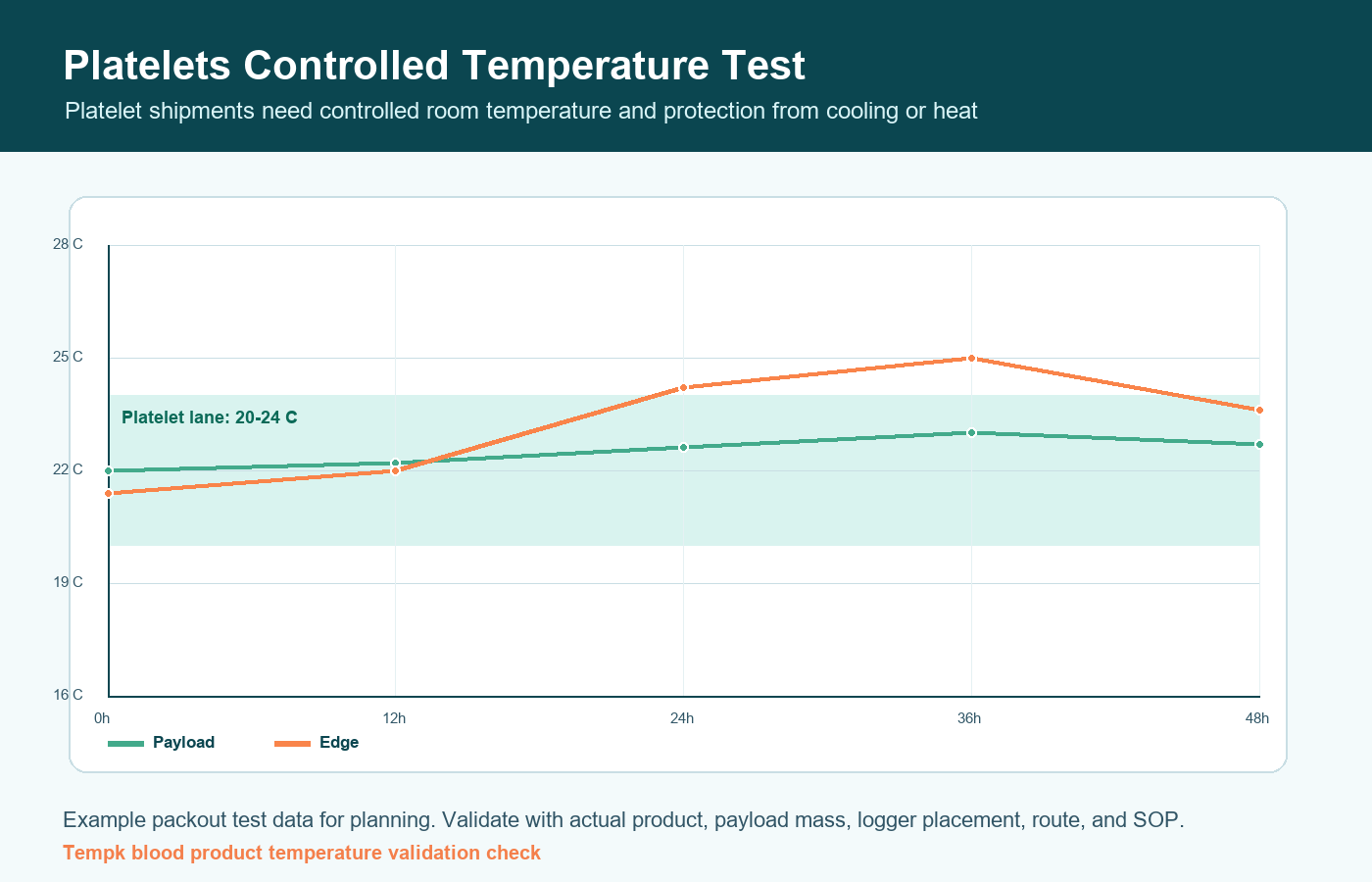
Gunakan halaman ini untuk membandingkan rute produk darah terdekat, media pendingin choices, pilihan isolasi, dan pertanyaan risiko rute sebelum pengambilan sampel.
Trombosit are usually transported at suhu ruang terkontrol, not in the same dingin konfigurasi kemasan as sel darah merah. The package must prevent cold exposure while maintaining the required range.
Risiko terbesar adalah pendinginan tidak sengaja, perencanaan agitasi yang buruk, keterlambatan pengiriman, dan staf keliru menaruh pengirim di lemari pendingin.
Gunakan pengirim bersuhu terkontrol dengan bantalan yang menopang wadah trombosit tanpa menekannya. Tambahkan label penanganan jelas untuk penerimaan non-dingin.
Gunakan komponen perubahan fase tervalidasi untuk jalur suhu ruang yang diperlukan. Ice pack standar tidak sesuai untuk transportasi trombosit.
Check temperature log, container condition, kejelasan label, dan menerima alur kerja. The acceptance check should confirm the shipper was not refrigerated.
Trombosit are a special case because many lanes require suhu ruang terkontrol rather than a dingin konfigurasi kemasan. Adding standard ice packs can create a serious cold-exposure problem.
Use validated suhu ruang PCM or a qualified controlled-temperature shipper. The package should clearly tell receiving staff not to refrigerate the shipment unless their procedure specifically requires it.
Tempk validation should include target range, waktu transit, orientasi, serah terima, and any agitasi requirement. Review pencatat data data, container condition, kejelasan label, dan menerima tindakan.
Custom konfigurasi kemasan support
Untuk ukuran karton tetap, batasan muatan, persyaratan merek, jalur musiman, atau target validasi, Tempk can adapt this solution into a custom cold-chain konfigurasi kemasan.
Bagikan jenis komponen, muatan count, ukuran tas atau wadah, jangkauan sasaran, durasi rute, kondisi sekitar, langkah kurir, serah terima limit, and pemeriksaan penerimaan. Tempk dapat membantu membandingkan pengirimnya, media pendingin layout, sisipan dukungan, posisi pemantauan, dan rencana validasi.
Request a konfigurasi kemasan review