


Spesimen Darah
Ikuti protokol pengujian, lalu lindungi tabung dari pembekuan, panas, kebocoran tutup, merusak, dan catatan penerimaan yang hilang.
Pengemasan sampel klinis harus diawali dengan jenis sampel, protokol pengujian, wadah, dan waktu pengangkutan maksimum. Tempk membantu laboratorium, CRO, rumah sakit, dan jaringan diagnostik membandingkan pengirim, pendingin, penahanan sekunder, penyerap layer, penyangga tabung atau wadah, pencatat position, and pemeriksaan penerimaans before validasi rute.
Blood tabung, jaringan containers, dan PCR usap tidak memerlukan konfigurasi kemasan yang sama. Satu rute mungkin didinginkan, yang lain mungkin ambien, dan tes beku mungkin memerlukan es kering atau penanganan sangat rendah. Keputusan pengemasan yang berguna adalah untuk melindungi integritas sampel dan alur kerja penerimaan laboratorium.
Ikuti protokol pengujian, lalu lindungi tabung dari pembekuan, panas, kebocoran tutup, merusak, dan catatan penerimaan yang hilang.
Rute jaringan segar, terfiksasi, dan beku memerlukan opsi suhu, bantalan, kontrol bocor, dan waktu serah terima yang berbeda.
Lindungi tabung usap atau wadah VTM/UTM dengan penyangga tegak, pemisahan pendingin, waktu serah terima singkat, dan dokumen lab yang jelas.
| Contoh rute | Tujuan suhu | Pengaturan kemasan | Perencanaan pendingin atau es kering | Pemeriksaan penerimaan |
|---|---|---|---|---|
| Spesimen darah untuk transportasi rutin berpendingin | Ikuti protokol pengujian. Banyak jalur sampel rutin yang direncanakan 2-8 C, sementara beberapa pengujian memerlukan penanganan di lingkungan sekitar atau beku. | Leak-resistant kemasan sekunder, penyerap layer, rak atau selongsong tabung, pembagi pendingin, pengirim terisolasi luar, dan pencatat di dekat tepi hangat. | Untuk yang kecil 3-8 L pengirim, cobaan sering kali dimulai 0.6-1.5 kg gel terkondisi atau 2-8 C PCM untuk 0-8 H, Dan 1.5-3 kg untuk 8-24 jam jalur. | Tabung condition, segel tutup, tidak ada pembekuan, tidak ada kebocoran, label yang dapat dibaca, catatan rantai, dan suhu kedatangan. |
| Biopsi or spesimen jaringan, segar, tetap, atau dibekukan | Gunakan protokol pengumpulan atau laboratorium. Jaringan baru mungkin diperlukan 2-8 C, jaringan tetap mungkin bergerak secara berbeda, dan jaringan beku mungkin memerlukan es kering. | Wadah utama yang kaku, penyerap kemasan sekunder, Bantalan, dukungan tegak, pemisahan zona basah, dan selongsong dokumen jauh dari cairan pendingin atau cairan. | Untuk segar 2-8 C jaringan, mulai 0.8-2.5 kg pendingin terkondisi di pengirim kecil. Untuk jaringan beku, gunakan es kering hanya jika protokol dan peraturan operator mengizinkan. | Tidak ada kebocoran, wadah utuh, jaringan tidak hancur, catatan suhu yang benar, dokumen kering, dan waktu serah terima laboratorium. |
| Gunakan sampel PCR di VTM, UTM, atau pembicaraan kering | Ikuti protokol diagnostik. Jalur pendek sering digunakan 2-8 C; jalur yang tertunda atau jalur khusus protokol mungkin memerlukan penanganan beku. | Upright tabung divider, penyerap layer, tas sekunder yang disegel, penghalang pendingin, daftar spesimen yang jelas, dan ukuran pengirim untuk menghindari tekanan tabung. | Untuk 2-8 C rute pada hari yang sama, mulai 0.5-1.5 kg pendingin terkondisi. Untuk 24-48 jam rute, tes 1.5-3 kg atau pengirim yang lebih besar; jalur beku mungkin memerlukan es kering. | No tabung leakage, tidak ada tekanan tutup, daftar sampel yang benar, tidak ada pencairan-pembekuan kembali jika dibekukan, dan penerimaan lab yang cepat. |
Ini adalah rentang perencanaan untuk diskusi pengemasan. Penanganan akhir harus mengikuti protokol pengujian, SOP laboratorium, klasifikasi transportasi, Aturan operator, dan persyaratan lokal untuk sampel yang tepat.
Gunakan kurva untuk membandingkan didinginkan, beku, dan rute sampel diagnostik sebelum penskalaan. Tinjauan yang berguna menggabungkan kurva pencatat dengan pemeriksaan kebocoran, kondisi tabung atau wadah, keterbacaan label, dan waktu serah terima.
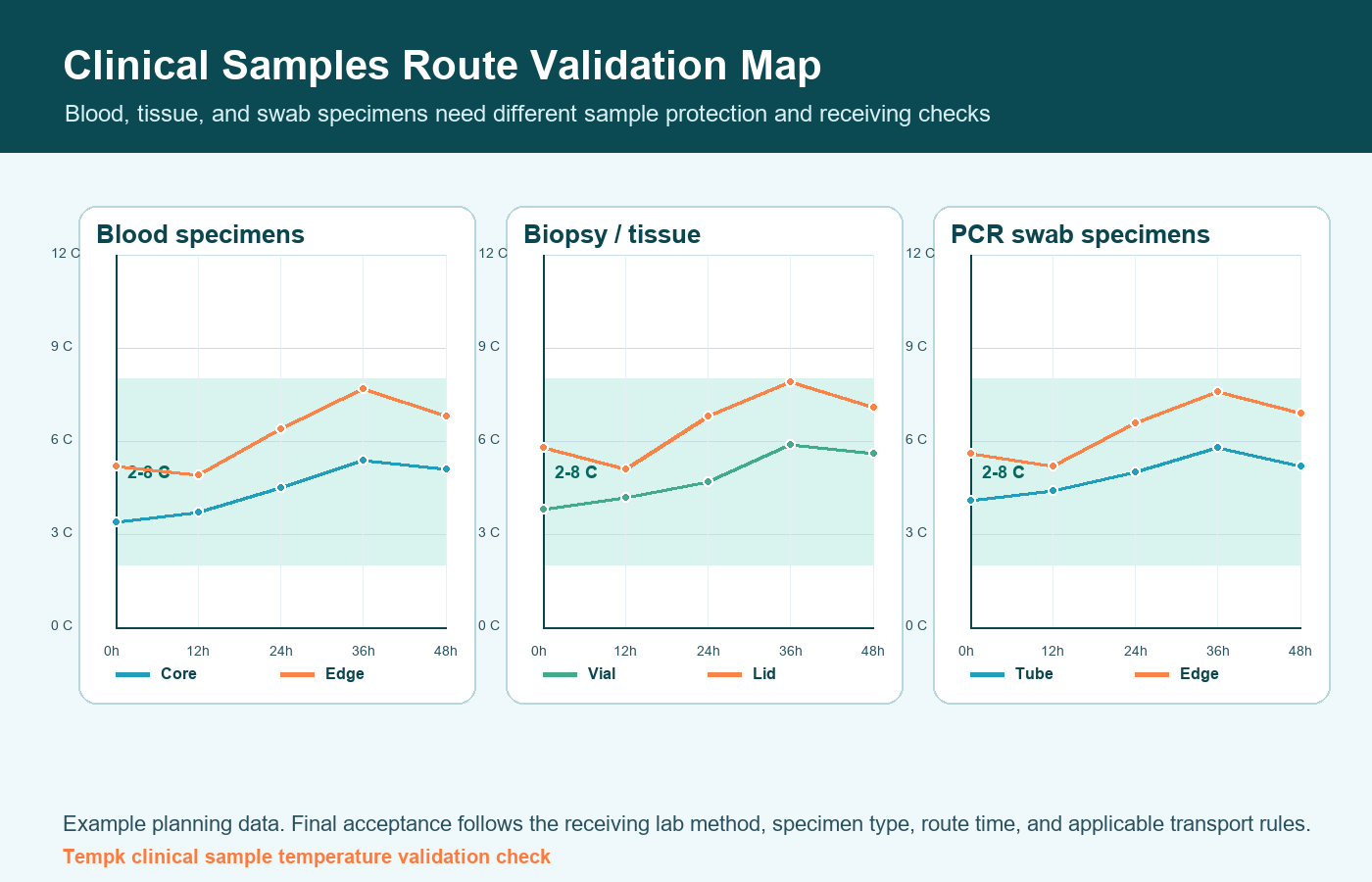
Rute diagnostik campuran dan program sampel yang lebih kecil dapat menggunakan panduan sampel klinis yang lebih luas, sedangkan tiga halaman di atas mencakup jenis pengiriman dengan nilai tertinggi.
Catatan kemasan untuk darah, jaringan, dan menggunakan rute PCR dengan 2-8 C, beku, es kering, kebocoran, dan kontrol handoff.
Gunakan halaman ini untuk membandingkan pilihan cairan pendingin, risiko rute, struktur isolasi, kasus logistik medis terdekat, and final konfigurasi kemasan questions before sampling.
Sampel klinis can be ambient, dinginkan, beku, atau beku tergantung pada pengujiannya. Rencana pengemasan harus dimulai dengan jenis spesimen dan kriteria penerimaan laboratorium.
Kegagalan termasuk hemolisis, thawed sampel, lost rantai kustodi forms, kebocoran, dan spesimen dikirimkan di luar jendela penerimaan lab.
Gunakan wadah utama yang anti bocor, penyerap kemasan sekunder, dan pengirim luar yang kaku. Jaga agar formulir permintaan tetap kering dan terpisah dari wadah spesimen.
Gunakan gel dingin, es kering, atau PCM suhu kamar sesuai dengan pengujian. Jangan memilih cairan pendingin karena kebiasaan ketika persyaratan lab berbeda.
Konfirmasikan suhu, kebocoran, keterbacaan label, dan menerima batas waktu. Tinjauan penolakan laboratorium harus menjadi bagian dari rute validasi.
Custom konfigurasi kemasan support
Untuk ukuran karton tetap, batasan muatan, persyaratan merek, jalur musiman, atau target validasi, Tempk can adapt this solution into a custom cold-chain konfigurasi kemasan.
Bagikan jenis sampel, tabung atau wadah, suhu target, waktu pengangkutan maksimum, muatan count, durasi rute, profil lingkungan, langkah kurir, klasifikasi, and pemeriksaan penerimaans. Tempk dapat membantu membandingkan pengirimnya, tata letak pendingin, kemasan sekunder, penyerap layer, sisipan, pencatat position, dan rencana validasi.
Request a konfigurasi kemasan review