


Estimar a massa de gelo seco
Usar peso da carga útil, Tamanho da caixa, tempo de rota, temperatura ambiente sazonal, e limites da operadora antes do teste da primeira pista.
Refeições prontas congeladas geralmente combinam bandejas, selos de filme, molhos, arroz, macarrão, vegetais, e mangas em um pacote. A rota deve manter as refeições congeladas enquanto protege as vedações das bandejas, etiquetas de manga, textura de molho, e cantos de bandeja empilhados.
As quantidades de gelo seco abaixo são faixas iniciais para planejamento. O pacote final deve ser validado com a carga exata, Tamanho da caixa, faixa de transporte, temporada, e limite de gelo seco.
| Condição da rota | Intenção de temperatura | Configuração de embalagem temporária | Faixa de planejamento de refrigeração | Posição do refrigerante |
|---|---|---|---|---|
| Entrega de refeições locais, 8-18 h | Chegada congelada | EPP ou caixa isolada, suporte para pilha de bandejas, barreira de umidade da manga, refrigerante congelado separado ou gelo seco. | 1.0-2.0 kg de gelo seco para 1-5 kg de carga útil, ou PCM/gel congelado validado para pistas curtas. | Líquido refrigerante lateral/superior com divisor; evite pressão nas vedações do filme. |
| Pacote congelado durante a noite, 18-36 h | -18 Intenção da rota C | Isolamento mais espesso, bolsa de gelo seco, suporte de canto de bandeja, espaço vazio reduzido. | 2.0-4.5 kg de gelo seco para 1-5 kg de carga útil. | Gelo seco superior separado por placa; mantenha o registrador no espaço aéreo do produto. |
| Pista quente ou 36-48 h | Pista congelada validada | Maior isolamento, suporte de bandeja mais forte, verificação de risco de rota, revisão do limite da operadora. | 4.0-7.0 kg de gelo seco para 1-5 kg de carga útil. | Se as vedações da bandeja levantarem, reduza a pressão e melhore o suporte antes de alterar a massa de gelo seco. |
Para uma estimativa mais precisa, comece com o Calculadora de gelo seco e revisar as opções de isolamento no Referência de material de isolamento.
As devoluções de alimentos congelados geralmente resultam de uma pequena falha de layout: contato direto com gelo seco, muito espaço livre, uma caixa molhada, ou uma pilha de produtos que se desloca durante o manuseio.
A falha na vedação cria um retorno mesmo que a curva de temperatura pareça aceitável.
Use uma divisória ou câmara de gelo seco para que as mangas não enruguem e a película da bandeja não seja tensionada pelo contato direto.
Refeições com molho pesado, tigelas de arroz, e bandejas de macarrão mostram descongelamento e recongelamento de maneira diferente; verifique o produto real.
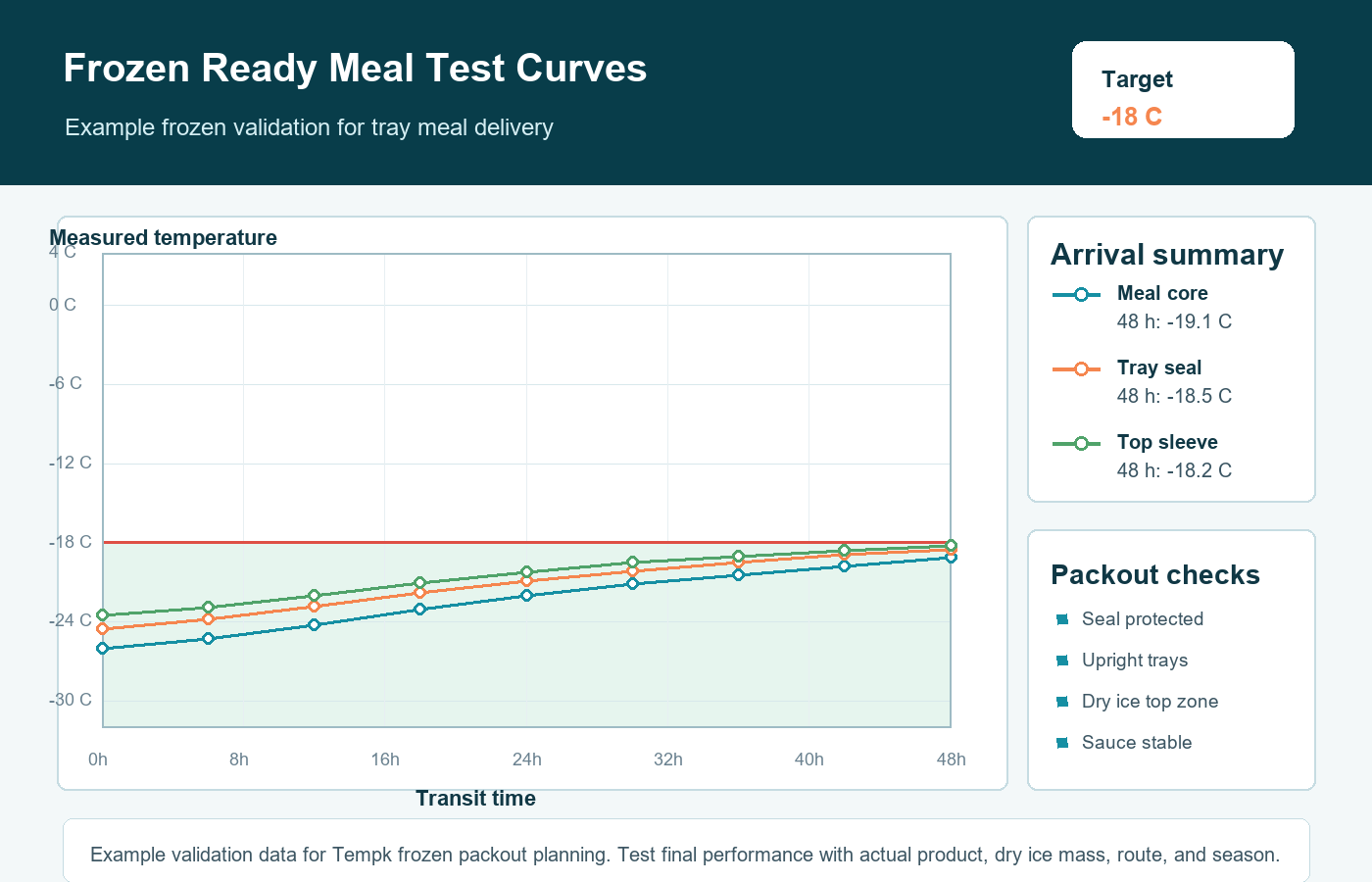
Registrar temperatura, integridade do selo, rachaduras na bandeja, umidade da manga, separação de molho, e gelo seco restante.
Use estas verificações de recebimento ao ajustar a massa de gelo seco, espessura de isolamento, ou separação interna.
Use a página do produto para a lógica de tratamento, em seguida, dimensione o primeiro teste com ferramentas e valide a rota real.
Usar peso da carga útil, Tamanho da caixa, tempo de rota, temperatura ambiente sazonal, e limites da operadora antes do teste da primeira pista.
Comparar gelo seco, pacotes de gel congelado, e PCM congelado na escolha da primeira embalagem congelada.
Rever o tempo de retirada, atraso na última milha, janela de recebimento, e rotas de verão antes do lançamento.
Compartilhe o tipo de produto congelado, peso da carga útil, Tamanho da caixa, duração da rota, perfil ambiente, limites da operadora, e recebimento de cheques. Tempk pode ajudar a escolher o isolamento, colocação de gelo seco ou refrigerante congelado, e etapas de validação.
Suporte a pacotes personalizados
Para tamanhos de caixa fixos, limites de carga útil, requisitos de marca, pistas sazonais, ou alvos de validação, A Tempk pode adaptar esta solução em um pacote personalizado de cadeia de frio.