


Intenção de temperaturaSiga o rótulo do produto. FDA observa armazenamento comum de insulina em refrigeradores 36-46 F, cerca de 2-8°C, e alerta contra congelamento.
Solução de cadeia de frio para canetas de insulina
Envios de canetas de insulina são cargas pequenas; por isso, a configuração deve evitar exposição ao calor e resfriamento excessivo por contato direto com acumuladores de gel refrigerante. O objetivo é uma rota refrigerada baseada no rótulo do produto, com cartuchos protegidos, posição estável da caneta e registro claro de temperatura no recebimento.
O que a embalagem precisa controlar
Regra do refrigeranteUse acumuladores condicionados or 5 C PCM with a espaçador. Mantenha canetas e cartuchos longe de superfícies congeladas.
Foco na embalagemCargas pequenas esfriam facilmente, suporte para cartucho, camada de proteçãos, secura do rótulo, e a colocação do registrador são essenciais.
Escolher a configuração pela condição da rota
| Condição da rota | Configuração de embalagem | Faixa preliminar de refrigerante | Verificação de posicionamento e recebimento |
|---|---|---|---|
| Local farmácia entrega, 4-8 h | Cartucho isolado pequeno, cartucho da caneta in center, side refrigerante with paperboard espaçador. | 0.3-0.7 kg acumuladores condicionados or PCM for a 0.5-2 Carga útil L. | Check no contato direto com o refrigerante and move into storage quickly. |
| DTC ou pacote de correio, 8-24 h | EPP ou cartucho isolado, center cavidade da carga, lateral/superior condicionado refrigerante, manga de documento seca. | 0.7-1.6 kg acumuladores condicionados or PCM for a 0.5-3 Carga útil L. | Check registrador min/max, secura do cartucho, clareza do rótulo, e movimento da caneta. |
| Rota quente ou possível atraso, 24-36 h | Isolamento mais espesso, balanced refrigerante, zona tampão maior, registrador próximo à cavidade do produto. | 1.6-2.8 kg acumuladores condicionados or PCM, validado antes do dimensionamento. | If temperatura mínima approaches freezing, adicione buffer ou escolha PCM mais quente antes de adicionar mais refrigerante. |
Use essas faixas como ponto de partida para revisão de embalagens. Confirme a massa refrigerante final com o rótulo aprovado, contagem de carga útil, tamanho do remetente, duração da rota, perfil ambiente, colocação do registrador, e procedimento interno de qualidade.
Como a Tempk montaria o envio
Carregar a partir da condição de armazenamento indicada
Comece com o rótulo do produto e pré-condicione o remetente e o refrigerante para que a embalagem mantenha o alcance em vez de corrigir uma carga útil quente.
Criar uma cavidade central
Mantenha os cartuchos de canetas afastados das paredes do expedidor e de acumuladores de gel refrigerante utilizando papelão, espuma, ou inserções moldadas.
Controlar pontos frios
Coloque o registrador próximo à carga útil, não contra refrigerante, e revise a temperatura mínima tão cuidadosamente quanto a máxima.
Proteger documentos de farmácia e rótulos
Use uma capa seca ou área externa do documento para que a condensação não danifique as etiquetas, informações sobre lote, ou documentos voltados para o paciente.
Pontos comuns de falha a serem evitados
For medicamento parcels, um pacote para sensação de frio não é suficiente. O destinatário precisa de uma remessa documentada que permaneça dentro da faixa exigida e proteja a embalagem do produto.
- Exposição abaixo de zero causada por contato direto com gel congelado.
- Warm delivery after tempo de espera na porta or delayed entrega.
- Wet labels or cartuchos from condensação.
- Cartuchos de caneta se movendo dentro de um carregador de grandes dimensões.
Curva de validação e evidência no recebimento
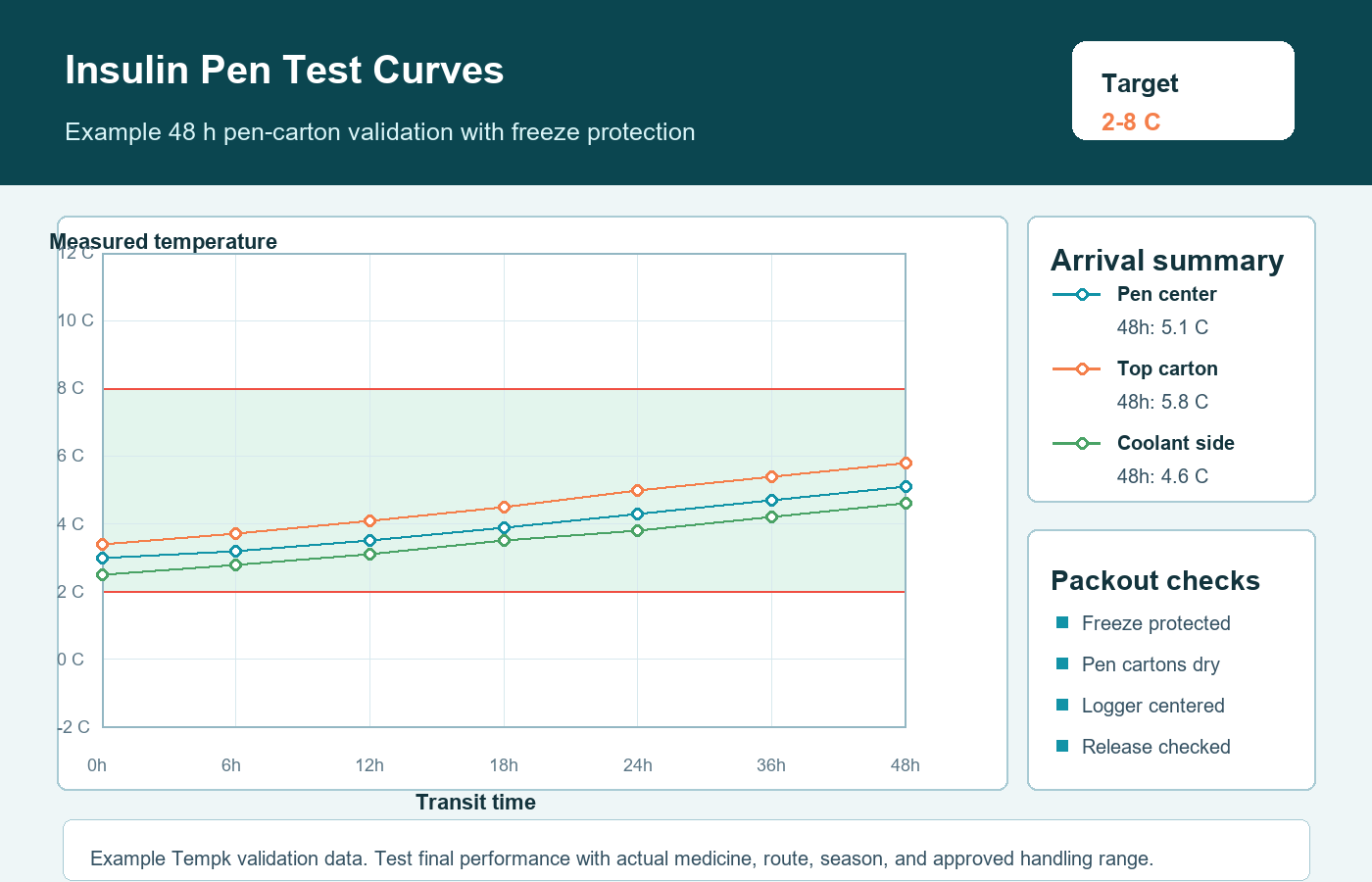
Revise a curva com a carga útil real, refrigerante mass, tamanho do remetente, duração da pista, e estação. Adicionar notas de recebimento para condição do cartucho, clareza do rótulo, movimentação de produtos, and any contato direto com o refrigerante.
Páginas relacionadas para planejar a configuração
Medicamentos categoryCanetas GLP-1Injeções de fertilidadeGuia de antibióticos refrigeradosEstojos de viagem de insulina para canetas refrigeradasCaixas médicas de cadeia de frio para entrega e transporte de canetas de insulinaPacotes de PCM e blocos de gelo para entrega e transporte de canetas de insulinaFerramentas da cadeia de frioContactar a Tempk
Notas práticas de rota
Proteger canetas de insulina do calor e do congelamento
Canetas de insulina geralmente são enviadas como cartuchos prontos para o paciente. A configuração deve manter a faixa refrigerada indicada e impedir que acumuladores de gel refrigerante congelados criem pontos frios contra o cartucho da caneta.
Onde este produto geralmente falha
The main risks are exposição ao congelamento, entrega residencial atrasada, esmagamento de cartucho, e pacientes recebendo um pacote molhado ou confuso.
Configuração de embalagem to test first
Use uma pequena luva de carga útil ou cavidade de cartucho com um tampão transparente em cada lado voltado para o refrigerante. Adicione preenchimento de vazios para que os cartuchos de canetas não possam chacoalhar em embalagens duras.
Escolha do refrigerante
Usar 2 para 8 C PCM ou cuidadosamente acumuladores condicionados para percursos noturnos e de dois dias. Evite gelo seco e evite embalagens congeladas não acondicionadas ao lado dos cartuchos de insulina.
Verificação de validação de rota
Teste as estações quentes e frias separadamente. Place the registrador beside the cartucho da caneta and check temperatura mínima, secura do cartucho, e experiência de abertura do paciente.
Detalhe da configuração
Insulin pen parcels need instruções seguras para o paciente
Caso de uso
Canetas de insulina são frequentemente enviadas para residências, então a embalagem tem que proteger o produto e deixar o paciente confiante na abertura. A carga útil deve estar limpa, seco, e separado do refrigerante por um tampão visível.
Escolha da embalagem
Para pistas noturnas ou de dois dias, usar 2 para 8 C PCM or acumuladores condicionados in a validated layout. Evite o gelo seco e evite o contato direto com a embalagem congelada porque o congelamento pode ser mais prejudicial do que uma curta exposição ao calor moderado.
O que Tempk deve validar
Tempk deve testar a contagem real do cartucho da caneta, menor carga útil, maior carga útil, e residência residencial. Review temperatura mínima, temperatura máxima, secura do cartucho, e se as instruções são fáceis de seguir.
Custom configuração de embalagem support
Precisa desta pista construída em torno de seu produto e rota?
Para tamanhos de cartuchos fixos, limites de carga útil, requisitos de marca, pistas sazonais, ou alvos de validação, Tempk can adapt this solution into a custom cold-chain configuração de embalagem.
Precisa verificar esta rota de medicamento antes do envio?
Envie a temperatura da etiqueta do produto, tamanho da carga útil, cartucho dimensions, nível de serviço, condição ambiente, entrega entrega, e exigência do registrador. Tempk pode ajudar a comparar o isolamento, acumuladores condicionados, PCM, camada de proteçãos, inserções, e etapas de validação.
Solicitar uma revisão de configuração