


Canetas de insulina
Remessas de canetas de insulina precisam de manuseio refrigerado primeiro no rótulo do produto, sem congelamento, cartuchos protegidos, and simple evidência no recebimento for farmácia or entrega domiciliar.
Medicamentos sensíveis à temperatura devem ser planejados a partir do rótulo do produto. Para muitos medicamentos refrigerados, a embalagem deve proteger uma rota de 2-8°C, evitar congelamento, support cartucho pequenos or pens, proteger rótulos, e facilitar a revisão do registro de temperatura de recebimento.
Pacotes de medicamentos costumam ser pequenos, então alguns acumuladores de gel refrigerante congelados podem resfriar demais a carga útil se tocarem no cartucho. A Tempk projeta o remetente em torno do refrigerante condicionado, Escolha do PCM, camada de proteçãos, suporte para caneta ou frasco, duração da rota, and the evidência no recebimento the farmácia, clínica, ou necessidades de atendimento ao paciente.
Remessas de canetas de insulina precisam de manuseio refrigerado primeiro no rótulo do produto, sem congelamento, cartuchos protegidos, and simple evidência no recebimento for farmácia or entrega domiciliar.
Canetas GLP-1 são pequenas, pacotes de alto valor onde contato direto com gel-pack, tempo de espera na entrega, e esmagamento de cartuchos podem se tornar riscos maiores que a temperatura bruta do expedidor.
Remessas de injeção de fertilidade precisam de frasco cuidadoso ou suporte de seringa, 2-8Controle °C, no exposição ao congelamento, and clear entrega timing for clínica or entrega ao paciente.
| Rota do produto | Intenção de temperatura | Configuração de embalagem | Faixa preliminar de refrigerante | Verifique no recebimento |
|---|---|---|---|---|
| Pacote de farmácia ou DTC para canetas de insulina, 8-24 h | Use requisitos de rótulo de produto; normalmente refrigerado a 2-8°C e evita congelamento. | EPP pequeno ou cartucho isolado, cartuchos de canetas in a cavidade central, acumuladores condicionados or 5 C PCM separated by espaçador board. | Sobre 0.6-1.6 kg acumuladores condicionados or PCM for a 0.5-3 Carga útil de medicamento L. | Mínimo e máximo do registrador, secura do cartucho, movimento da caneta, clareza do rótulo, and tempo de espera na entrega. |
| Pacote domiciliar de canetas GLP-1, 12-36 h | Primeira rota de 2 a 8°C no rótulo do produto com forte prevenção contra congelamento para pequenas cargas úteis. | Bandeja interna rígida, capa de etiqueta/documento, center cavidade da carga, conditioned refrigerante on sides/top with camada de proteção. | Sobre 0.8-2.4 kg acumuladores condicionados or PCM for a 0.5-3 Carga útil L, ajustado por rota e temporada. | Temperatura mínima, esmagamento de cartucho, contato direto com o refrigerante, tempo de espera na porta, e estado refrigerante restante. |
| Entrega de injeção de fertilidade para clínica ou paciente, 8-24 h | Geralmente planejado em torno de 2-8°C quando o rótulo do produto requer refrigeração; proteger contra congelamento e choque. | Suporte para frasco ou seringa, inserção vertical/divisória quando necessário, cartucho isolado ou remetente EPP, refrigerante condicionado separado do produto. | Sobre 0.5-1.8 kg acumuladores condicionados or PCM for small frasco or seringa payloads. | Hora de transferência, registrador record, suporte frasco/seringa, condição do cartucho, e qualquer risco abaixo de zero. |
Estas são faixas de planejamento para a discussão da embalagem, não critérios de liberação do medicamento. A configuração final deve seguir o rótulo aprovado, o tamanho do shipper, a quantidade de carga, a duração da rota, o perfil ambiente, o requisito de monitoramento e o procedimento interno de qualidade.
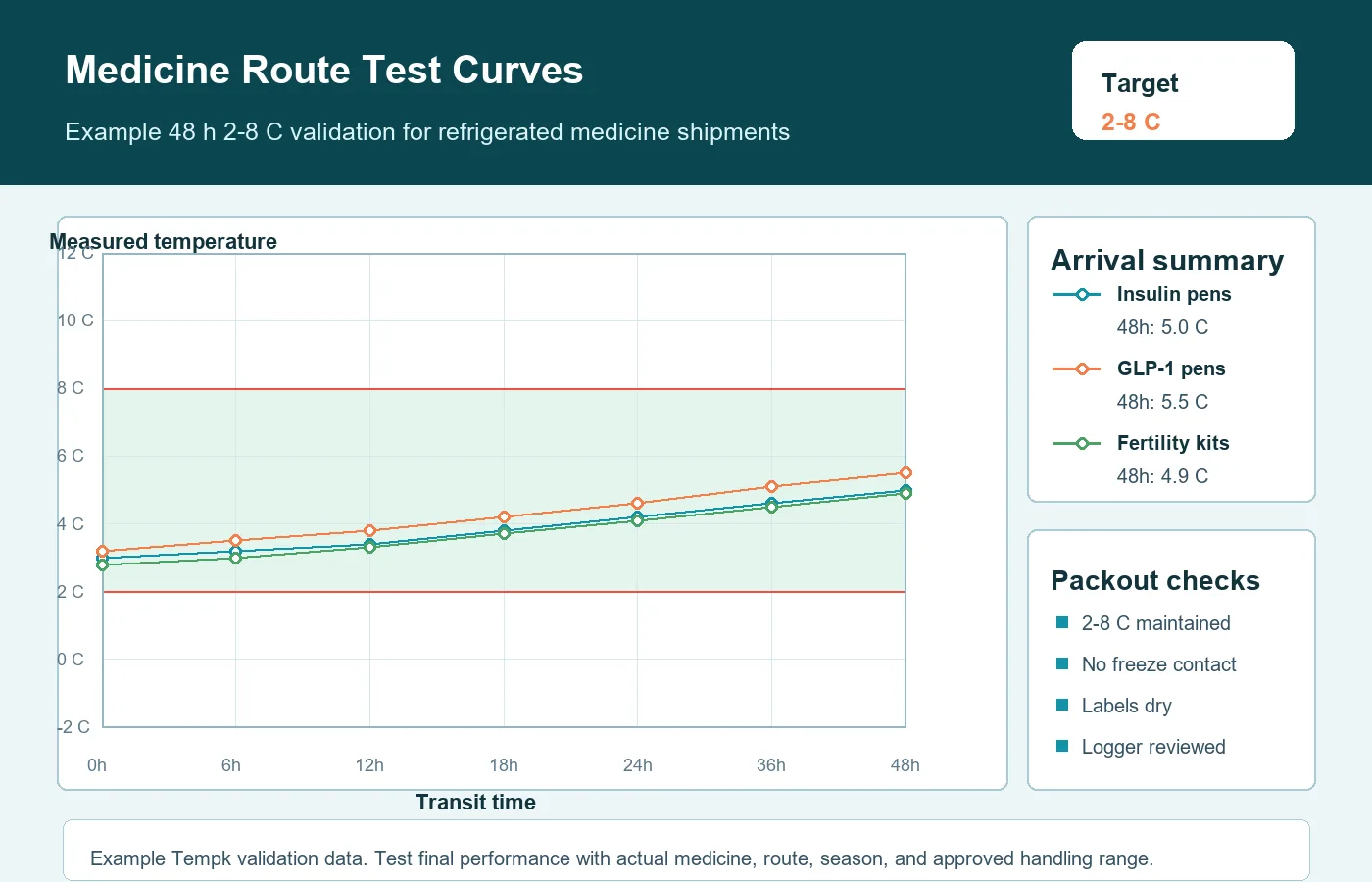
Use a curva de validação com notas de recebimento. Em remessas de medicamentos, a temperatura mínima e o risco de contato direto com o refrigerante podem importar tanto quanto a temperatura final de chegada.
Esses artigos oferecem suporte às vias de medicamentos relacionadas, mantendo a estrutura da solução gerenciável.
Use este guia como referência focada de configuração para medicamentos sem adicionar outra página de solução dedicada.
Use este guia como referência focada de configuração para medicamentos sem adicionar outra página de solução dedicada.
Use este guia como referência focada de configuração para medicamentos sem adicionar outra página de solução dedicada.
Use este guia como referência focada de configuração para medicamentos sem adicionar outra página de solução dedicada.
Use estas páginas para comparar a escolha do refrigerante, risco de rota, e isolamento antes da execução de validação.
Remessas de medicamentos não devem usar uma única receita fixa de caixa para todos os produtos. Comece com controle de 2-8°C para medicamentos refrigerados, com alternativas de temperatura ambiente controlada somente quando o rótulo permitir, em seguida, separe os produtos por carga de calor, força da embalagem, e como eles são recebidos. Para programas mistos, Tempk geralmente compara uma rota local curta, uma rota noturna de encomendas, e a estação mais quente esperada antes de confirmar o remetente.
Use um remetente de encomendas qualificado, espaçador system, fechamento com reconhecimento de violação, e entrega apoiada por registrador. O plano de refrigerante deve começar com acumuladores de gel refrigerante de grau farmacêutico ou PCM selecionados para evitar excursões quentes e exposição ao congelamento. Quando a carga tem cartuchos de varejo delicados, textura macia, material ao vivo, ou documentação médica, proteja a carga útil primeiro e depois adicione capacidade de resfriamento. Se a remessa atrasar na embalagem, entrega, alfândega ou transferência de doca, o perfil da rota deve ser verificado novamente em vez de apenas aumentar o peso do refrigerante.
A validação deverá incluir verificação de temperatura mínima e máxima, entrega ao paciente time, e condição do cartucho no recebimento. Um teste útil registra o ponto de carga útil mais quente, o ponto mais frio perto do refrigerante, e a condição de recebimento após o manuseio. Isso dá à equipe operacional uma instrução prática de configuração, não apenas um gráfico de temperatura.
Custom configuração de embalagem support
Para tamanhos de cartuchos fixos, limites de carga útil, requisitos de marca, pistas sazonais, ou alvos de validação, Tempk can adapt this solution into a custom cold-chain configuração de embalagem.
Compartilhe a temperatura do rótulo do produto, contagem de carga útil, cartucho dimensions, duração da rota, condição ambiente, entrega entrega, and verificações no recebimento. Tempk pode ajudar a comparar o isolamento, acumuladores condicionados, PCM, camada de proteçãos, inserções, e colocação do registrador.
Solicitar uma revisão de configuração