


Intenção de temperaturaPlaneje 2-8 C, a menos que o rótulo do produto exija algo diferente; proteger contra calor e congelamento.
Solução de embalagem para cadeia fria de vacinas contra gripe
As remessas de vacinas contra a gripe são frequentemente sazonais, sensível ao tempo, e repetido em muitos destinos clínicos. A embalagem deve ser fácil para as equipes do armazém construírem de forma consistente, enquanto mantém as embalagens de vacina em 2-8 C e longe do contato direto com refrigerante congelado.
O que o pacote precisa controlar
Regra do refrigeranteUse pacotes de gel condicionado ou 5 C PCM com uma camada tampão. Não coloque gel congelado não condicionado diretamente contra as embalagens da vacina.
Foco na embalagemPacote repetível, identidade da caixa, rótulos secos, e recebimento rápido durante picos de volume sazonais.
Escolha o pacote por condição de rota
| Condição da rota | Configuração de embalagem | Faixa preliminar de refrigerante | Recebendo cheque |
|---|---|---|---|
| Correio no mesmo dia ou local, 4-12 h | Caixa isolada, bandeja de carga útil central, refrigerante lateral com placa tampão. | 0.6-1.2 kg de pacotes de gel condicionado ou PCM para um 1-3 Carga útil L. | Mantenha a sonda do logger perto da carga útil, não contra o refrigerante. |
| Rota de encomendas clínicas, 12-24 h | EPP ou caixa isolada, refrigerante superior/lateral, camada espaçadora acima das caixas. | 1.2-2.5 kg de pacotes de gel condicionado ou PCM para um 1-4 Carga útil L. | Verifique a temperatura mínima, secura da caixa, e hora de chegada antes do armazenamento. |
| Rota de reabastecimento mais longa, 24-36 h | Isolamento mais espesso, refrigerante balanceado nas laterais/parte superior, cavidade de carga útil central. | 2.5-4.0 kg de pacotes de gel condicionado ou PCM, ajustado por faixa e ambiente. | Se a rota cair perto 0 C, aumente o buffer antes de adicionar mais refrigerante. |
Use essas faixas como ponto de partida para revisão de embalagens. Confirme a massa final do líquido refrigerante com o rótulo do produto, tamanho do remetente, duração da rota, perfil ambiente, e um teste de registrador de temperatura qualificado.
Como Tempk construiria a remessa
Design para embalagem repetida
As rotas da gripe sazonal geralmente envolvem muitas remessas semelhantes. Use um padrão de carregamento fixo e posições claras de refrigeração para que as equipes do armazém não improvisem.
Proteja as caixas de superfícies congeladas
Mantenha as caixas de vacinas no centro com papelão ondulado, espuma, ou divisórias moldadas entre o produto e o refrigerante.
Controlar a condensação
Use liners secos ou capas de papelão onde o papelão e as etiquetas são importantes para recebimento e verificações de inventário clínico.
Validar rotas na alta temporada
Teste as rotas prováveis mais quentes e mais frias, em seguida, confirme o posicionamento do registrador, hora de recebimento, e estado restante do líquido refrigerante.
Pontos de falha comuns para prevenir
O objetivo não é apenas uma caixa fria. O receptor precisa de uma limpeza, legível, remessa documentada que permaneceu dentro da faixa refrigerada exigida.
- Excursão de congelamento causada por embalagens de gel não condicionadas tocando as caixas.
- Chegada calorosa após longa permanência na doca ou atraso no fim de semana.
- Caixas molhadas ou etiquetas ilegíveis devido à condensação.
- Embalagem inconsistente quando o volume de pedidos sazonais aumenta.
Curva de validação e recebimento de evidências
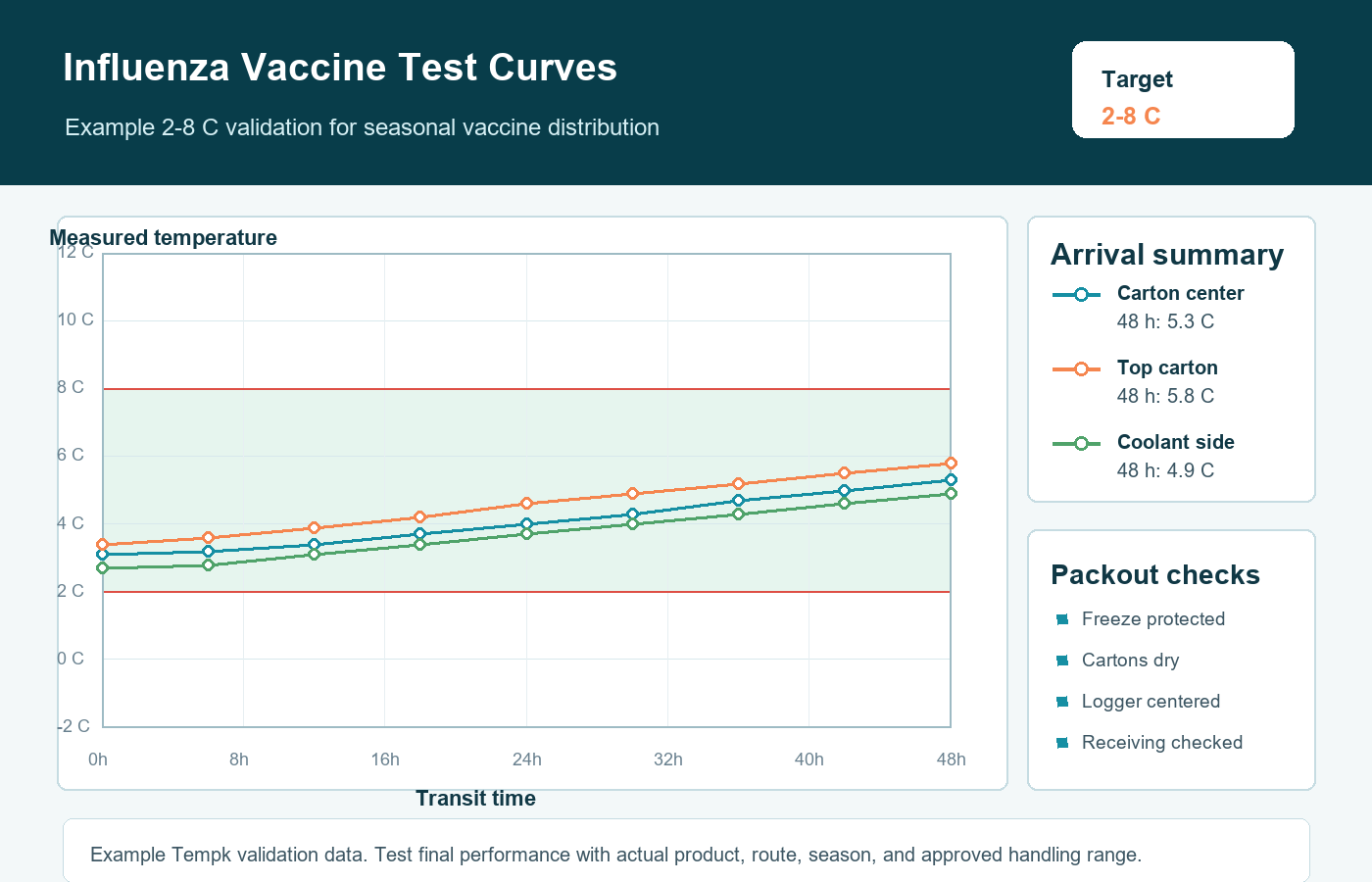
Revise a curva com a carga útil real da vacina, massa de refrigerante, tamanho do remetente, duração da rota, e estação. Para vacinas, a temperatura mínima e o registro de recebimento são tão importantes quanto a temperatura final.
Páginas relacionadas para planejamento de embalagem
Categoria de vacinasVacinas contra HPVVacinas contra hepatite BGuia da vacina COVID-19Caixas médicas de cadeia de frio para remessas de vacinas contra influenzaPacotes de PCM e blocos de gelo para remessas de vacinas contra influenzaRemetentes com isolamento VIP para remessas de vacinas contra influenzaFerramentas da cadeia de frioContactar a Tempk
Notas práticas de rota
Planeje a embalagem da vacina contra influenza para o volume sazonal
As rotas de vacinação contra a gripe muitas vezes atingem o pico rapidamente antes da temporada clínica. O pacote precisa ser repetível 2 para 8 Desempenho C em contagens de encomendas diárias maiores e em vários destinos clínicos.
Onde este produto geralmente falha
Falhas sazonais incluem condicionamento apressado do líquido refrigerante, caixas embaladas com muita força, congelar alarmes no inverno, e excursões calorosas durante o recebimento da clínica.
Configuração de embalagem para testar primeiro
Use uma cesta de produtos ou um compartimento de carga corrugado com pacotes de gel condicionado ao redor. Deixe espaço suficiente para que as embalagens de vacina não sejam empurradas contra a parede do líquido refrigerante.
Escolha do refrigerante
Use qualificado 2 para 8 Pacotes C ou pacotes de gel condicionado para rotas noturnas e de dois dias. Adicione proteção de inverno quando as pistas incluírem condições ambientais congelantes.
Verificação de validação de rota
Teste a maior contagem de caixas e a menor contagem de caixas. Coloque o registrador entre as embalagens de vacina e revise as temperaturas mínima e máxima.
Detalhe da embalagem
Os programas de vacina contra a gripe precisam de embalagens sazonais repetíveis
Caso de uso
O envio da vacina contra a gripe geralmente acontece em ondas sazonais, portanto, a embalagem deve ser fácil para o pessoal do armazém repetir. Use um processo fixo de condicionamento de refrigerante, uma cavidade de carga útil definida, e instruções da embalagem que não mudam de acordo com o operador.
Escolha da embalagem
Para reabastecimento de pequenas clínicas, teste a contagem mínima de caixas porque uma cavidade de carga útil insuficientemente preenchida pode resfriar demais. Para grandes encomendas, teste a contagem máxima de caixas porque cargas densas podem aquecer lentamente, mas podem ocultar pontos quentes perto do topo.
O que Tempk deve validar
A Tempk pode criar perfis de ambientes quentes e frios para o mesmo remetente. O cheque de recebimento deve confirmar 2 para 8 Resultados do registrador C, sem alarme de congelamento, secura da caixa, e transferência rápida para refrigeração.
Cenário de empacotamento de campo
Exemplo de configuração para reposição de vacina contra gripe sazonal
Para programas de vacina contra influenza, construir uma estação de embalagem repetível. Uso condicionado 2 para 8 Líquido refrigerante C ou PCM qualificado, uma cavidade de carga útil fixa, e uma sequência escrita do pacote que a equipe sazonal pode seguir sem improvisar. Teste uma contagem de caixas baixa e uma contagem de caixas cheias porque os expedidores com pouco enchimento podem arrefecer demasiado e os expedidores com excesso de enchimento podem aquecer perto do topo. Incluir um perfil de inverno para risco de congelamento e um perfil quente para atraso na entrega na clínica. O recebimento deve verificar o mínimo do registrador, máximo do registrador, secura da caixa, e tempo desde a entrega até a geladeira.
Suporte a pacotes personalizados
Precisa desta pista construída em torno de seu produto e rota?
Para tamanhos de caixa fixos, limites de carga útil, requisitos de marca, pistas sazonais, ou alvos de validação, A Tempk pode adaptar esta solução em um pacote personalizado de cadeia de frio.
Precisa que esta rota de vacina seja verificada antes do envio?
Envie o requisito de etiqueta do produto, volume de carga útil, tipo de destino, duração da rota, condição ambiente, e relatório de registrador necessário. Tempk pode ajudar a comparar o isolamento, colocação de refrigerante, e etapas de validação antes de enviar.
Solicite uma revisão do pacote