Manufacturer Dry Ice Pack for Pharmaceutical Delivery: From Requirement to Controlled Supply
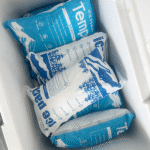
Selecting a manufacturer Trockeneisbeutel for pharmaceutical delivery is a lifecycle decision. The product considered here is a dry cellular sheet that is hydrated with water and frozen before use. Es handelt sich nicht um festes Kohlendioxid. It provides stored cooling only when integrated into an Isolierter Versender with a defined payload, Separator, Zubereitungsmethode, Route, and operating instruction.
The exact pharmaceutical requirement governs the design. A common refrigerated range cannot be extended to every medicine, and a frozen pack is not automatically suitable for a freeze-sensitive product. Start with approved product information and end with evidence for the complete system.
Set the Evidence Boundary Before Sourcing
Procurement teams can avoid most claim confusion by assigning each party a clear role.
The product owner defines required conditions, Stabilitätsinformationen, excursion decisions, und Qualitätsfreigabe. Packaging engineering designs and qualifies the complete packout. Operations prepares and assembles it. Logistics manages the route and handovers. The manufacturer controls the hydration-sheet specification and supplies relevant component information.
No component alone is "pharma compliant." A sheet can meet an agreed specification. A packout can be qualified for defined conditions. A route can be monitored and controlled. Compliance depends on the applicable product, activity, Organisation, and market requirements.
WHO's time- and temperature-sensitive pharmaceutical framework supports this risk-based view. Product quality is protected through defined storage and transport conditions, suitable systems, Verfahren, Überwachung, Qualifikation, und Rezension.
Define the Product and Movement
Prepare a concise technical brief:
- Exact medicine, dosage form, und Präsentation
- Approved storage and transport condition
- Einfrieren, Hitze, Licht, Luftfeuchtigkeit, or handling sensitivity where relevant
- Excursion-assessment authority
- Minimum and maximum payloads
- Insulated shipper under consideration
- Herkunft, Ziel, and intermediate storage
- Route stages, Übergaben, Jahreszeiten, and delay
- Monitoring and data workflow
- Receiving and quarantine
- Expected purchase and preparation model
For portfolio operations, group products only when the product owner justifies shared conditions and packout assumptions. Similar carton size does not prove thermal or stability equivalence.
State clearly whether "Trockeneisbeutel" means a water-activated sheet. Actual solid CO2 is a different refrigerant with gas, Sicherheit, and transport controls. It belongs only in product-specific systems designed for it.
Keep the two refrigerant categories distinct in master data and storage. Supplier names, item descriptions, Sicherheitsdokumente, Verpackungsanweisungen, and warehouse locations should not allow a hydration sheet to be picked as CO2 or vice versa. Staff who handle actual solid CO2 need the applicable safety and transport process; staff preparing hydration sheets need water, Einfrieren, und Auspackkontrollen. Shared commercial wording should never collapse those training paths.
Screen the Manufacturer in Two States
The buyer receives a dry component but uses a hydrated, frozen component. Both states belong in the supplier review.
| Überprüfungsbereich | Dry-state question | Prepared-state question | Evidence boundary |
|---|---|---|---|
| Identität | Is the product labeled as a hydration sheet? | Is frozen water the working coolant? | Does not establish pharmaceutical suitability |
| Geometrie | What are dimensions and cell layout? | What are hydrated fit, Dicke, und Flexibilität? | Fit must be checked in the final packout |
| Integrität | How are film and seals inspected? | How do they tolerate freezing and handling? | No universal reuse life should be assumed |
| Vorbereitung | What activation and storage instructions apply? | How are freezing and conditioning controlled? | Customer process must be verified |
| Thermische Daten | What component information is available? | What full assembly was tested? | Results apply only to disclosed conditions |
| Produktion | How are lots and changes controlled? | Does commercial material match the sample? | Customer approves changes through risk review |
The matrix helps distinguish a controlled component from a qualified system. It also exposes gaps early, before commercial negotiation creates pressure to approve a sample.
Design the Heat-Flow Path
Frozen water absorbs incoming heat as it warms and melts. Insulation slows heat entering from outside. Nutzlastmasse, internal air, Separatoren, and contact determine where that heat moves.
For a freeze-sensitive medicine, a sheet touching a carton can create a local cold condition. A central air sensor may not detect it. Control options include a specified separator, fixed sheet position, Kühlmittelaufbereitung, alternative phase-change material, and separate configurations for payload extremes.
The separator is part of the thermal design. Its material, Dicke, Feuchtigkeit, Kompression, and coverage matter. The same is true of void fill, Außenkarton, Schließung, and logger holder. Preserve them in the bill of materials and drawing.
Warm-side protection needs equal attention. Heat can enter through lids, Nähte, und Öffnungen, and a payload loaded too warm can consume available capacity. The design must balance both boundaries for the defined route.
Do not choose one worst case by intuition
Minimum load may be severe for freezing. Maximum load may be severe for warming or airflow. Summer may drive heat ingress; winter may combine cold ambient and frozen coolant. Development should investigate these possibilities, and the protocol should test the cases justified by risk.
Make Preparation a Controlled Production Step
Hydration turns the dry sheet into its working form. That means the shipping site influences the coolant's mass, Dicke, and freezing behavior.
Write a process that controls:
1. Released component lot
2. Hydration container and batch arrangement
3. Water access and handling
4. Drainage
5. Freezer rack and loading pattern
6. Batch identity and prepared inventory status
7. Verification of the required state
8. Conditioning where applicable
9. Maximum uncontrolled handling before pack closure
10. Damaged-sheet segregation
Verify the process at peak volume. Crowded hydration tanks or freezers can change preparation. A backup site may use different racks, Ausrüstung, or staffing and needs a controlled transfer.
Hygiene and moisture management matter. Reinigung definieren, Reaktion auf Verschüttungen, wet-material handling, and protection of labels and corrugated components. If an additional containment bag is introduced, treat it as a packout change because it may alter heat transfer.
Entwickeln, Qualifizieren, and Transfer the Complete System
Development trials compare components and expose risks. Use them to refine separators, Kühlmittelplatzierung, payload variants, und Sensorpositionen. They are not final evidence.
Formal qualification begins with approved acceptance criteria. The protocol identifies the exact bill of materials, Nutzlast oder gerechtfertigtes Simulanz, Ausgangsbedingung, Kühlmittelaufbereitung, Umgebungsprofil, Dauer, Sensorkarte, repetitions, und Abweichungen. Instrumentation should be suitable and supported by the organization's calibration process.
Sensors test hypotheses. Place them near predicted cold-contact zones, likely warm ingress paths, and representative payload regions. Identify whether each point measures air, Oberfläche, or simulant response.
Hilfreiche Entscheidungshilfen
Überprüfen Sie die Details, bevor Sie sich für die Verpackung entscheiden
Mit diesen schnellen Tools können Sie das Routenrisiko vergleichen, Größenanforderungen, Kühlmittelauswahl, und Verpackungsdetails, bevor Sie ein Angebot anfordern.
Verpackungsauswahl
Vergleichen Sie isolierte Verpackungsoptionen nach Produkt, Route, und Temperaturbedarf.
Verpackung findenTrockeneisrechner
Schätzen Sie vor dem Verpacken den Bedarf an Trockeneis für gefrorene oder ultrakalte Sendungen.
Schätzen Sie TrockeneisFallfestigkeit des Isolationsmaterials
Überprüfen Sie die Fallfestigkeit und die Handhabungsfaktoren, bevor Sie Isoliermaterialien auswählen.
Widerstand prüfenRoute information informs the challenge. Map the pack room, Dock, Fahrzeuge, Hubs, cross-border dwell where relevant, letzte Meile, und Empfangen. Consider credible delays and custody changes. Historical profiles are useful evidence but not promises.
Operational qualification or a controlled shipping trial confirms that routine staff can reproduce the method and that carrier and receiving interfaces work. The final report should point to the approved packing instruction. Unwritten engineering adjustments must not become hidden requirements.
Transfer the Qualified Design Into Master Data and Training
A qualification report does not control routine work by itself. Convert the approved design into information that purchasing, Inventar, the warehouse, Transport, and receiving systems can use.
Give every configuration a unique identifier. Maintain an approved bill of materials with the hydration sheet, Isolierung, Separator, Hohlraumfüllung, Außenkarton, logger holder, und Schließung. A controlled drawing or visual instruction should show orientation and areas where sheets may not overlap or contact the payload.
Packout selection rules need to address product, Nutzlast, Jahreszeit, Route, and service level as applicable. If an order does not fit a defined case, the system should stop or route it for review rather than encourage the packer to improvise. Component staging and line clearance can prevent materials from adjacent configurations entering the box.
Training should combine the task with its thermal reason. Staff who understand that a different separator changes heat flow or that extra coolant may create a cold spot are less likely to make informal substitutions. Competency checks can use sample orders, damaged components, a missed collection, and a wrong logger to test decisions.
The shipment record should capture enough information to reconstruct the packout under the customer's quality plan. Depending on risk, that may include configuration, payload case, Komponentenlos, preparation batch, packer verification, monitor identity, and close time. Avoid collecting fields that no one reviews; every record should serve traceability, freigeben, or investigation.
Observe routine packing after launch. Workarounds often signal that the official method is slow, unklar, or physically difficult. Correct the underlying process and update controlled documents through change management rather than allowing a shadow procedure to develop.
Connect Shipment Monitoring to Disposition
Qualification shows expected system behavior; monitoring provides journey evidence. Define device, Kalibrierungsstatus, Konfiguration, Probenahme, Platzierung, starten und stoppen, shipment association, Abruf, Alarmüberprüfung, and record handling.
The destination needs the reader, Zugang, Ausbildung, and authority required by the procedure. If review is not immediate, define how the medicine is stored and segregated. Preserve the full record and packout observations after an event.
A logger alarm does not decide product fitness. The authorized owner reviews product-specific stability information, exposure magnitude and duration, Sensorstandort, Paketbedingung, und Abweichungen. The coolant manufacturer does not release or reject the medicine.
Release Wholesale Production Through Gates
Commercial volume should follow technical approval.
Tor 1: Spezifikation
Approve product identity, dry attributes, Zubereitungshinweise, Loskodierung, Verpackung, Inspektion, Nichtkonformität, und Erwartungen an Änderungsbenachrichtigungen.
Tor 2: Probenäquivalenz
Record the evaluated sample and compare commercial material in dry, hydratisiert, gefroren, and handled states. Resolve differences before use.
Tor 3: site readiness
Verify hydration space, Gefrierkapazität, released-material control, Ausbildung, Aufzeichnungen, Überwachungsgeräte, and contingency. Include peak dispatch.
Tor 4: controlled launch
Observe early packouts and receiving. Review preparation variation, Schaden, Abweichungen, Streckenleistung, and data retrieval.
Tor 5: ongoing review
Trend complaints, Leckage, incomplete hydration, packer workarounds, Ausflüge, route change, and supplier notifications. Decide whether corrective action or requalification is needed.
These gates align purchasing with the quality lifecycle and prevent a large order from outrunning the evidence.
Manage Changes and Alternatives Before They Are Needed
A change in cell pattern, Film, Nähte, absorbierende Struktur, Abmessungen, Herstellungsprozess, or instructions may affect hydration and heat transfer. Require appropriate notification and assess the impact.
Änderungen an der Isolierung, Separator, Nutzlast, Logger, site equipment, Route, Träger, and destination also matter. Use a risk-based process to decide whether document review, Probenprüfung, engineering study, oder eine Umqualifizierung ist erforderlich.
Supply resilience comes from qualified alternatives. A second manufacturer or packout should be evaluated before disruption. Keep components and instructions identifiable so staff do not mix them.
Contingency procedures should cover freezer outage, missed collection, damaged sheet, wrong payload configuration, Monitorfehler, and destination closure. State who can stop, neu einpacken, versenden, Quarantäne, oder eskalieren.
Compare Cost and Sustainability at the Delivery-System Level
The dry sheet's price is only one line. Add hydration labor, Wasser, freezer use, Gestelle, Separatoren, Isolierung, Überwachung, Ausbildung, Inspektion, Aufzeichnungen, damaged material, Reverse-Logistik, und Abweichungsbehandlung.
Dry transport and storage can reduce inbound water mass. Reuse can reduce material consumption on suitable closed loops. Neither benefit is automatic. Assess freezer energy, Rücklaufquote, Reinigung, Inspektion, rehydration, Verlust, Schaden, und Ruhestand.
Track actual indicators:
- Sheets prepared but unused
- Hydration or integrity rejects
- Damage by handling stage
- Repack events
- Return and retirement where reuse applies
- Überwachen Sie die Wiederherstellung
- Excursions associated with packing deviations
Protecting the pharmaceutical product remains the first sustainability gate. Process improvements should stay inside the qualified boundary.
Häufig gestellte Fragen
What must appear in a manufacturer quotation?
Request clear product identity, dry specification, activation and freezing instructions, prepared-state information, integrity controls, Loskodierung, Änderungsmitteilung, Verpackung, und Handelsbedingungen. Ask for full test context behind any performance claim.
Can a hydration sheet be called a qualified pharmaceutical shipper?
NEIN. It is a coolant component. Qualification applies to a defined complete system under stated conditions. The sheet, Isolierung, Nutzlast, Separator, Vorbereitung, Umgebungsprofil, and procedure work together.
When is direct contact acceptable?
Only when the specific qualified design and product requirements support it. Do not assume direct contact for a freeze-sensitive medicine. Evaluate cold spots and preserve the tested placement and separator.
How should a custom cell pattern be introduced?
Treat it as a new component. Review drawings and samples, evaluate hydration, Einfrieren, fit, Integrität, and heat-transfer implications, then determine the necessary packout testing and approval before scale-up.
Does WHO guidance approve individual coolant products?
WHO guidance provides risk-based principles and technical expectations for storage and transport. It does not make a hydration sheet universally approved. Product owners must apply relevant guidance and local requirements to their specific system.
Abschluss: Buy a Controlled State, Kein Produktname
A hydration dry ice pack becomes useful only after the manufacturer's component and the customer's preparation process produce a consistent frozen sheet. That sheet must then sit inside a defined, qualified packout for an exact pharmaceutical requirement and route.
Keep solid CO2 separate, design for warm and cold risk, transfer the method into routine operations, and govern production and changes through evidence. The result is not a universally compliant component; it is a controlled delivery system with a clear scope.
Über Tempk
Tempk supplies hydration coolant sheets and insulated Kühlkettenverpackung options for business customers. We can review component format, Aktivierung, Einfrieren, intended placement, Isolierung, Nutzlastanordnung, Routenannahmen, and volume preparation as part of a focused manufacturer discussion. Customers retain responsibility for product requirements, complete-system qualification, Überwachung, und Qualitätsfreigabe.
CTA: Provide Tempk with your product condition, Nutzlastreichweite, Packout-Design, lane outline, and site-preparation limits to plan a controlled sample-to-production review.