Vaccine Shipping Packaging for Reliable Cold Chain Operations
Impfstoff Versandverpackung is a controlled system that protects labeled transport conditions, Produktintegrität, and shipment evidence from packing through receipt. The system may be passive or active, but it always depends on more than the outer container. Produktanforderungen, Spurrisiko, Nutzlast, coolant or refrigeration, Überwachung, packing execution, and receiving decisions must work together.
Vaccine manufacturers, Händler, Logistikteams, Beschaffungsteams, and healthcare supply organizations should organize packaging decisions across a portfolio without treating one qualifizierter Versender as a universal solution.
Beginnen Sie mit der Produktanforderung
The vaccine manufacturer defines the approved transport conditions and stability limits. Those conditions may be refrigerated, gefroren, or ultra-low temperature, and they may differ by presentation or market. Packaging teams should document the source of each requirement and control revisions when labeling, Genehmigung, or manufacturer instructions change.
| Product question | Why it changes packaging |
|---|---|
| What is the labeled transport range | It defines the thermal acceptance criteria and coolant or active-system need |
| Is the product freeze sensitive | It changes cold-source selection, Barrieren, Sensorplatzierung, and winter risk |
| What is the presentation | Fläschchen, Spritzen, Kartons, Tabletts, and bundled diluent change payload geometry and thermal mass |
| What is the approved excursion process | It determines alarm review, Quarantäne, and escalation responsibilities |
| Does the product need light or orientation protection | It adds physical design and handling controls beyond temperature |
In den Vereinigten Staaten, the CDC Vaccine Storage and Handling Toolkit tells providers to use the manufacturer's package insert for FDA-approved vaccines or the relevant healthcare-provider fact sheet for products under an emergency authorization. The same principle applies more broadly: do not replace product-specific instructions with a generic packaging range.
Choose passive or active control
Passive packaging uses a finite amount of preconditioned coolant inside an insulated enclosure. Active systems use powered refrigeration or another controlled energy source. The choice depends on shipment size, Streckenlänge, Infrastruktur, Modell wiederverwenden, Temperaturbereich, Nutzlastwert, and recovery options during delay.
| System | Geeignete Routen | Management priorities |
|---|---|---|
| Passiver Paketversender | Small and medium consignments, Paketnetze, and lanes without powered support | Packout discipline, Konditionierungskapazität, qualified duration, Nutzlastreichweite, und Entsorgung bzw. Rückgabe |
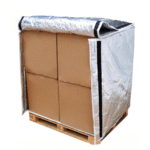
| Passive pallet shipper | Larger loads where payload efficiency and handling stability matter | Pallet assembly, fork handling, cargo protection, Routenprofilierung, and hot and cold spot mapping |
| Aktiver Container | High-value or long international movements with suitable infrastructure and service support | Pre-booking, battery or fuel status, Alarm, Sollwertregelung, Wiederherstellungsplan, and provider responsibility |
| Kühlfahrzeug | Controlled ground distribution or repeated regional routes | Vehicle qualification, Lademuster, Türöffnung, Luftstrom, Notstromversorgung, and route monitoring |
A passive system may be simpler to deploy, but it has a finite thermal capacity and must be packed exactly as qualified. An active system can regulate temperature, but it adds power, Ausrüstung, Service, and contingency dependencies. A risk assessment should compare the full operating model rather than assuming that one technology is always safer.
Assign a function to every component
A vaccine shipping package usually combines several layers. Each component should have a defined function and specification so that substitutions do not enter routine production unnoticed.
- The outer container provides handling strength, Schließung, Etiketten, and protection from normal distribution hazards.
- Isolierung verlangsamt die Wärmeübertragung. EPS, EVP, Pu, VIP, and hybrid structures create different tradeoffs in thickness, Haltbarkeit, Gewicht, payload efficiency, und wiederverwenden.
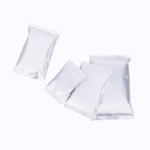
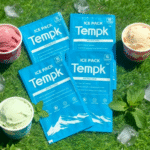
- Coolant provides thermal capacity. Wasserpackungen, Gelpackungen, PCM -Packungen, and dry ice operate differently and require controlled conditioning and placement.
- Payload trays, Trenner, Abstandshalter, and dunnage preserve geometry, limit direct coolant contact, and prevent product movement.
- Temperature monitoring records the shipment. Gerätetyp, programming, Standort, and data ownership should be specified.
- Etiketten, Unterlagen, and security features communicate handling requirements and support traceability and receipt.
A component specification does not equal system performance. A highly insulating panel cannot compensate for an uncontrolled lid gap, an under-conditioned Kühlmittelpaket, or a payload that falls outside the qualified range.
Hilfreiche Entscheidungshilfen
Überprüfen Sie die Details, bevor Sie sich für die Verpackung entscheiden
Mit diesen schnellen Tools können Sie das Routenrisiko vergleichen, Größenanforderungen, Kühlmittelauswahl, und Verpackungsdetails, bevor Sie ein Angebot anfordern.
Routenrisiko-Prüfer
Überprüfen Sie die Fahrspurbedingungen, bevor Sie die Verpackung entsprechend den tatsächlichen Betriebsanforderungen auswählen.
Routenrisiko prüfenBoxliner & Dimensionierung der Palettenabdeckung
Überprüfen Sie die Größenlogik für Kartoneinlagen und Palettenabdeckungen für isolierte Verpackungsprojekte.
Schätzen Sie die GrößeReferenz zu Isoliermaterialien
Vergleichen Sie die Auswahl an Isoliermaterialien für unterschiedliche Kühlkettenverpackungsanforderungen.
Vergleichen Sie MaterialienOrganize the packaging lifecycle
- Approve product and market requirements. Identify labeled transport conditions, stability references, Präsentation, Nutzlastreichweite, und geltenden Qualitätsanforderungen.
- Profile the route. Map modes, Hubs, Übergaben, Umgebungseinflüsse, geplante Dauer, saisonale Variation, und Verzögerungsszenarien.
- Select the system architecture. Compare passive and active options, nutzbare Nutzlast, Gesamtkosten, Handhabung, Infrastruktur, und Notfallbedarf.
- Develop and qualify the packout. Control every component, conditioning step, Sensorstandort, Ladereihenfolge, und Akzeptanzkriterium.
- Release an operating SOP. Train packers and receivers, control documents, and record each shipment's critical data.
- Monitor routine performance. Überprüfen Sie die Temperaturaufzeichnungen, Abweichungen, Schaden, Verzögerungen, and packing errors for trends.
- Manage changes. Assess new routes, Lieferanten, Materialien, Nutzlasten, product presentations, and work instructions before implementation.
Plan international handoffs and monitoring
International shipments add airport dwell, Zoll, Sicherheitsüberprüfung, Trägerübertragung, and receiving variability. The WHO 2025 international vaccine shipping guideline emphasizes route profiling, Qualifikation, Sendungsüberwachung, und Ankunftskontrollen. It recommends one electronic data integrator in every Versandbehälter and two for containers over 800 mm hoch, positioned according to mapped hot and cold points. Organizations should confirm the exact device and placement for their vaccine class and procurement program.
Trockeneis requires special control. WHO encourages frozen water packs or suitable PCM for Class A and B packaging and limits dry ice mainly to products requiring an ultra-low-temperature environment, with exceptional use in defined circumstances. Air transport of dry ice also introduces dangerous-goods requirements, Belüftungsbedarf, Mengenbegrenzungen, und Spediteurverfahren. The packaging decision must involve quality, Logistik, and dangerous-goods expertise.
The handoff plan should identify who keeps the package within controlled storage, who responds to a delayed flight, who can replace coolant if the qualified design permits it, and who reviews monitor data at destination. A qualified package without an accountable handoff process can still fail operationally.
Control receipt and temperature excursions
Receipt is part of the cold chain. Staff should inspect the shipper, security seal, wetness or damage, Status überwachen, and product condition before transferring the vaccine to approved storage. The receiving record should capture delivery time, unpacking time, Identität überwachen, Anordnung, and any deviation.
- Move the vaccine promptly to appropriate storage while preserving shipment evidence.
- Separate affected product and label it so it is not used while an excursion is being assessed.
- Do not decide viability from a single temperature value without the time history and product-specific guidance.
- Contact the vaccine manufacturer, public health program, or other authorized decision maker as required.
- Document the final disposition and use the investigation to improve packaging, Route, or operating controls.
CDC guidance states that vaccines stored outside recommended temperatures should not be administered unless the manufacturer or public health authority confirms that safety and effectiveness have not been compromised. This protects patients and prevents a local receiving decision from overriding product-specific evidence.
Evaluate suppliers on evidence and control
A packaging supplier should be evaluated on the quality of the proposed system and the controls behind it. A low unit price is incomplete if the packout consumes excess freight volume, requires impractical conditioning, or lacks evidence for the intended route.
| Supplier area | Nachweise auf Anfrage | Operational reason |
|---|---|---|
| Systemdefinition | Kontrollierte Stückliste, Zeichnungen, Spezifikationen, and approved variants | Prevents undocumented component substitutions |
| Thermischer Beweis | Testprofil, Nutzlast, Konditionierung, Sensorkarte, Rohdaten, und berichten | Shows what the claimed duration actually covers |
| Qualitätskontrolle | Eingehende Schecks, in-process controls, Freigabekriterien, Rückverfolgbarkeit, und Nichtkonformitätsprozess | Supports lot consistency and investigation |
| Änderungsbenachrichtigung | Defined notice and impact-assessment process | Protects the qualified state when materials or processes change |
| Scale and continuity | Kapazitätsplan, Annahmen zur Vorlaufzeit, backup sources, and critical-material risk | Reduces shortage and last-minute substitution risk |
| Ende der Nutzung | Wiederverwendungsgrenzen, Reinigung, Inspektion, zurückkehren, Recycling, or disposal guidance | Makes environmental and cost claims operational |
Manage cost without weakening control
The lowest-cost package is the one that meets the requirement with the least total operational burden and acceptable risk. Compare container price together with coolant conditioning, Arbeit, Frachtgewicht, dimensional volume, Überwachung, Reverse-Logistik, Stauraum, Schaden, und Abweichungsbehandlung.
- Right-size payload cavities instead of shipping excess air and coolant.
- Use qualified payload families when several products can share a controlled configuration.
- Compare reusable systems only after including return rate, Reinigung, Inspektion, Verlust, and repositioning.
- Reduce packer variation with pre-kitted components, klare Diagramme, and objective conditioning checks.
- Use shipment data to identify lanes that need stronger protection and lanes where an approved lighter configuration may be justified.
Quellen
- WHO Guidelines for the International Packaging and Shipping of Vaccines Seventh Edition. International air shipment, packaging classes, Überwachung, Routenprofilierung, und Qualifikation
- CDC Vaccine Storage and Handling Toolkit July 2026. US vaccine storage, provider transport, Überwachung, and excursion guidance
- Tempk Insulated Cooler Box Range. First-party overview of Tempk insulated container options
- Tempk Ice Brick. First-party information for rigid coolant options