Whole blood shipments need a controlled refrigerated lane and careful physical protection. The package must keep the payload inside the licensed establishment’s accepted range, protect the bag and segments, Halten Sie die Etiketten lesbar, and provide records that support receiving or return decisions. A whole blood packout is not the same as a food or medicine parcel because the receiving team may need to inspect temperature evidence, Zustand der Dichtung, segment integrity, and visible product condition before release.
Whole blood transport planning data
| Typischer Temperaturbereich | Storage is commonly 1-6 C, with shipment controls often planned around 1-10 C when permitted by the licensed establishment SOP. |
|---|---|
| Feuchtigkeit und Kondensation | Bewahren Sie Etiketten auf, Umhüllungen, Sekundärtaschen, and paperwork dry; condensation can make visual inspection and chain-of-custody review harder. |
| Vorkühlung | Bereiten Sie den isolierten Transportbehälter vor, payload spacers, and coolant before loading; do not use the shipper to pull down warm product. |
| Verpackungsdruck | Support the blood bag without pressing tubing, Häfen, or segment attachments against frozen coolant or hard walls. |
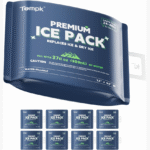
| Kühlmittelposition | Use conditioned cold packs with a buffer layer. Avoid direct freeze contact with the bag, Schlauch, or ports. |
| Transportdauer | Use validated local and regional routes, with logger positions at payload core and wall-facing edge. |
| Häufige Verluste | Out-of-range temperatures, freeze-contact risk, nasse Etiketten, bag abrasion, port stress, fehlende Datensätze, and rejected return-to-inventory decisions. |
| Tempk-Verpackung passt | Insulated medical shipper, conditioned PCM or gel packs, Pufferschicht, Saugfähige Einlage, bag support insert, Originalitätssiegel, und Logger-Aufzeichnung. |
Why whole blood needs its own packout
Whole blood can be vulnerable to both warm exposure and freeze contact. Adding more frozen coolant can create a new risk if a bag, Rohr, or segment rests against a frozen surface. The payload should be buffered and held in a stable cavity so the bag does not slide, scharf falten, or press against Kaltpackungen during road vibration, courier sorting, or hand carry.
For validated distribution, Tempk would use a qualified Isolierter Versender with conditioned coolant, absorbierender Schutz, a bag support insert, and at least one logger in the product zone. Longer or higher-risk routes should include an edge logger near the warmest or coldest expected point. Receiving checks should cover temperature data, Zustand der Dichtung, bag abrasion, visible appearance, Lesbarkeit des Etiketts, und Streckenzeit.
Hilfreiche Entscheidungshilfen
Überprüfen Sie die Details, bevor Sie sich für die Verpackung entscheiden
Mit diesen schnellen Tools können Sie das Routenrisiko vergleichen, Größenanforderungen, Kühlmittelauswahl, und Verpackungsdetails, bevor Sie ein Angebot anfordern.
Referenz zu Isoliermaterialien
Vergleichen Sie die Auswahl an Isoliermaterialien für unterschiedliche Kühlkettenverpackungsanforderungen.
Vergleichen Sie MaterialienKühlmittel & PCM-Referenz
Vergleichen Sie Kühlmittel- und PCM-Optionen, wenn eine Route zusätzliche Temperaturunterstützung benötigt.
Vergleichen Sie OptionenBoxliner & Dimensionierung der Palettenabdeckung
Überprüfen Sie die Größenlogik für Kartoneinlagen und Palettenabdeckungen für isolierte Verpackungsprojekte.
Schätzen Sie die GrößeEmpfohlener Tempk-Ansatz
Start from the establishment’s SOP and the component label. Define the allowed range, maximale Streckenzeit, Standort des Loggers, and acceptance criteria before selecting coolant mass. Use a buffer layer between the product and any frozen coolant, and use tamper-evident closure when chain-of-custody matters. The final test should include the actual bag count, Starttemperatur, Kühlmittelaufbereitung, Versendergröße, Umgebungsprofil, und Empfangsprozess.
The eCFR blood products regulation includes requirements for whole blood storage and shipment ranges, and it also emphasizes container integrity, Aufzeichnungen, und Inspektion. Tempk packaging should support those workflows; it does not replace the licensed blood establishment’s procedures or regulatory responsibility.