


Schätzen Sie Trockeneismasse
Nutzlastgewicht verwenden, Kastengröße, Streckenzeit, saisonale Umgebungstemperatur, und Trägergrenzen vor dem ersten Spurtest.
Tiefkühlpizza braucht eine ebene Fläche, trocken, eingefrorene Route. Die Verpackung muss die Krustenform schützen, Spitzenposition, Pappkartons, und gestapelten Kartons, während Trockeneis oder gefrorenes Kühlmittel vom direkten Kontakt mit der Pappe ferngehalten werden.
Die unten aufgeführten Trockeneismengen sind Richtwerte für die Planung. Das endgültige Packout sollte mit der genauen Nutzlast validiert werden, Kastengröße, Trägerspur, Jahreszeit, und Trockeneisgrenze.
| Streckenzustand | Temperaturabsicht | Einrichtung der Tempk-Verpackung | Kühlmittelplanungsbereich | Kühlmittelposition |
|---|---|---|---|---|
| Lieferung vor Ort, 8-18 H | Gefrorene Ankunft | Flache EPP-Box oder isolierter Karton, Kartonhülle, Feuchtigkeitsbarriere, leichte obere Verstrebung. | 1.0-1.8 kg Trockeneis für 1-5 kg Nutzlast, oder validiertes gefrorenes PCM/gefrorenes Gel für kontrollierte lokale Routen. | Ober- oder Seitenkammer mit Trennwand; Halten Sie Pizzen flach und trocken. |
| Übernachtungspaket, 18-36 H | -18 C-Routenabsicht | Dickere Isolierung, Trockeneisbeutel oder -kammer, Dampfspalt, flache Stapelunterstützung. | 2.0-4.0 kg Trockeneis für 1-5 kg Nutzlast. | Oben Trockeneis von den Kartons getrennt; Vermeiden Sie ein Quetschen der Kanten und ein Durchnässen des Kartons. |
| Heiße Spur oder 36-48 H | Validierte eingefrorene Spur | Höhere Isolierung, reduzierter Kopfraum, Starker Umkarton, Routenrisikocheck. | 4.0-6.5 kg Trockeneis für 1-5 kg Nutzlast, vorbehaltlich der Trägerbeschränkung. | Wenn Kartons weich werden, Verbessern Sie die Feuchtigkeitsbarriere, bevor Sie mehr Trockeneis hinzufügen. |
Für eine genauere Schätzung, Beginnen Sie mit dem Trockeneisrechner und überprüfen Sie die Isolierungsoptionen im Referenz zu Isoliermaterialien.
Retouren von Tiefkühlkost sind oft auf einen kleinen Layoutfehler zurückzuführen: Direkter Trockeneiskontakt, zu viel Kopfraum, ein nasser Karton, oder ein Produktstapel, der sich während der Handhabung verschiebt.
Verwenden Sie eine Aussteifung oder eine eng anliegende Produktkammer, damit sich die Kartons nicht verbiegen, wenn das Paket gekippt oder gestapelt wird.
Verwenden Sie einen Trockeneisbeutel, Teiler, oder Kammer, damit Dampf und extreme Kälte den Verkaufskarton nicht angreifen.
Große Luftspalte erhöhen die Sublimation und ermöglichen die Bewegung der Kartons; Passen Sie den Transportbehälter an die Höhe des Pizzastapels an.
Produkttemperatur prüfen, Trockeneis bleibt übrig, Karton nass, Krustenbruch, und Anzeichen von Auftauen und Wiedereinfrieren.
Verwenden Sie diese Eingangskontrollen, wenn Sie die Trockeneismasse anpassen, Isolationsdicke, oder innere Trennung.
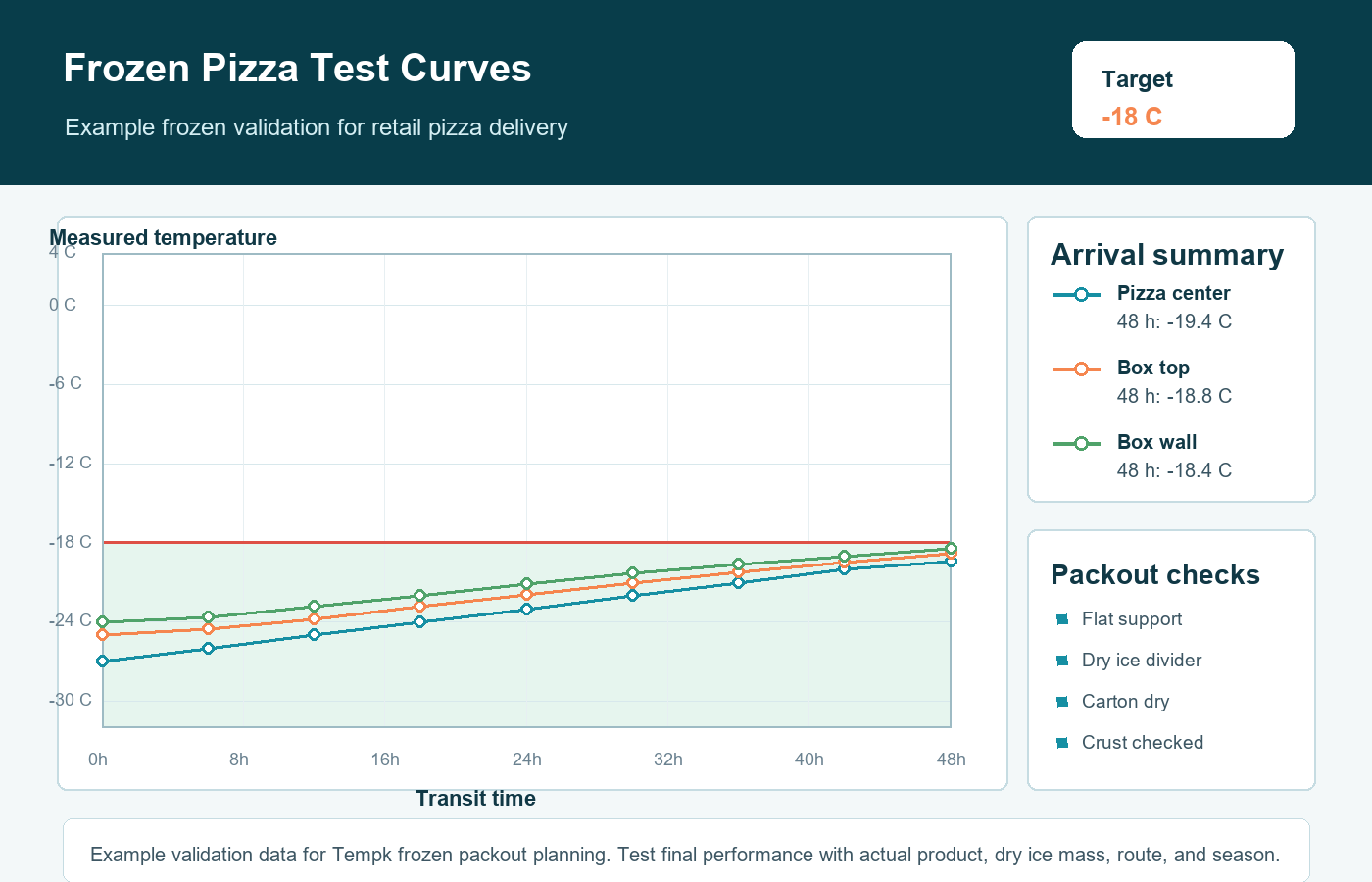
Nutzen Sie die Produktseite für die Handhabungslogik, Dimensionieren Sie dann den ersten Versuch mit Werkzeugen und validieren Sie die tatsächliche Route.
Nutzlastgewicht verwenden, Kastengröße, Streckenzeit, saisonale Umgebungstemperatur, und Trägergrenzen vor dem ersten Spurtest.
Vergleichen Sie Trockeneis, gefrorene Gelpackungen, und gefrorenes PCM bei der Auswahl der ersten gefrorenen Verpackung.
Überprüfen Sie die Abholzeit, Verspätung auf der letzten Meile, Empfangsfenster, und Sommerroute vor dem Start.
Teilen Sie den Tiefkühlprodukttyp, Nutzlastgewicht, Kastengröße, Streckendauer, Umgebungsprofil, Trägergrenzen, und Erhalt von Schecks. Tempk kann bei der Auswahl der Isolierung helfen, Platzierung von Trockeneis oder gefrorenem Kühlmittel, und Validierungsschritte.
Unterstützung für benutzerdefinierte Pakete
Für feste Kartongrößen, Nutzlastgrenzen, Branding-Anforderungen, Saisonspuren, oder Validierungsziele, Tempk kann diese Lösung in eine individuelle Kühlkettenverpackung umwandeln.