


An erster Stelle steht die Produktanforderung
Die Verpackung sollte um das Produkt herum aufgebaut sein's gekennzeichnetes Sortiment und der Versender's Streckenqualifizierungsplan.
Gekühlte Pharmapakete
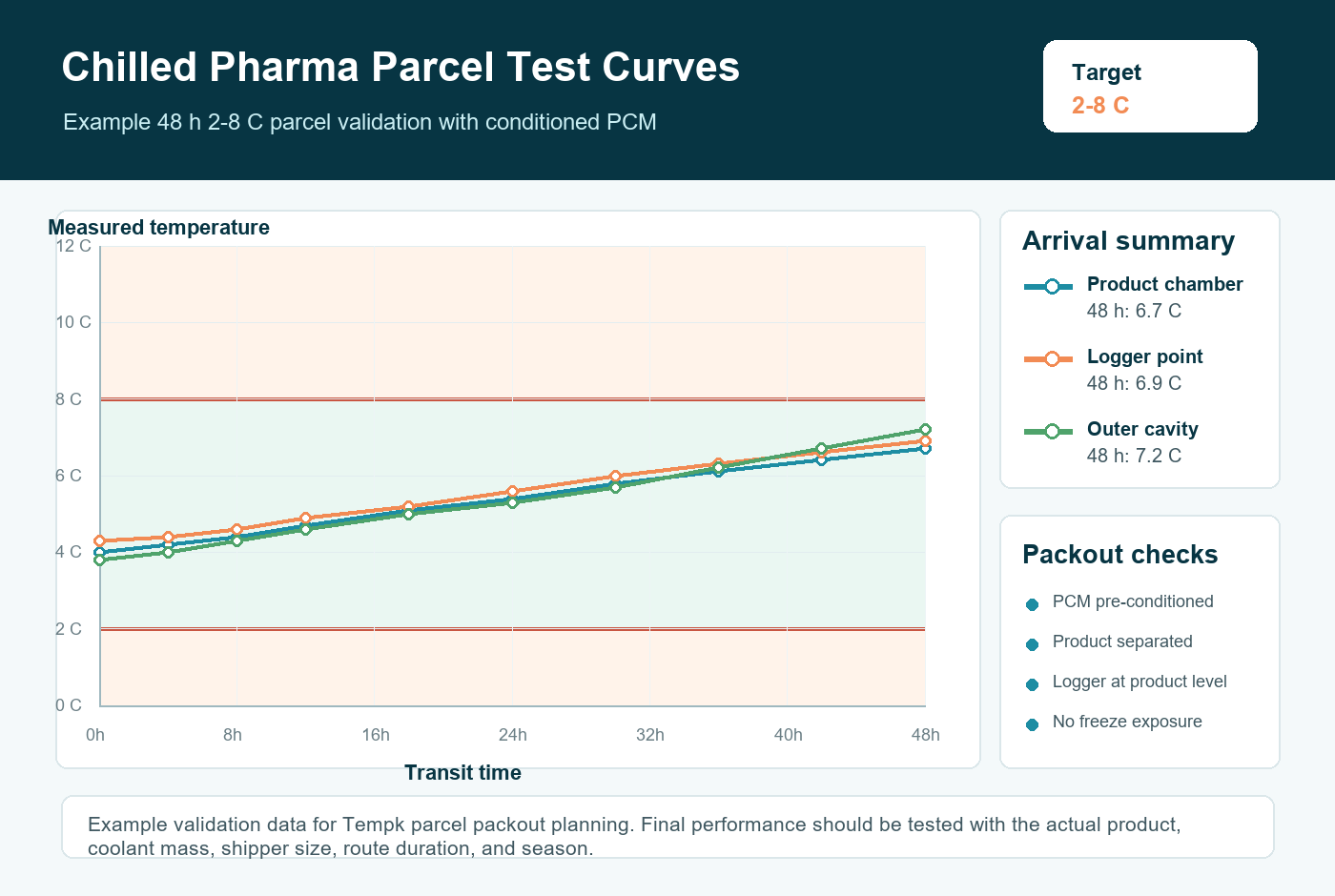
Gekühlte Pharmapakete benötigen eine kontrollierte Produktkammer, nicht nur eine Kühlbox. Die Verpackung sollte dem Produkt folgen's gekennzeichneten Lagerbereich, Schützen Sie sich sowohl vor Hitzeexkursionen als auch vor Frostkontakt, und geben Sie dem Empfänger einen klaren Beweis für die Annahme.
Produktrisiko
Die richtige Verpackung muss das eigentliche Produkt und die Empfangsentscheidung schützen, zeigt nicht nur eine Kaltlogger-Spur an. Diese Risiken bestimmen die Isolierung, Kühlmittelwahl, Kühlmittelposition, innere Unterstützung, und Validierungsprüfungen.
Die Verpackung sollte um das Produkt herum aufgebaut sein's gekennzeichnetes Sortiment und der Versender's Streckenqualifizierungsplan.
Hartgefrorene Gelpackungen, die in der Nähe des Produkts platziert werden, können ein lokales Gefrierrisiko darstellen, selbst wenn die durchschnittliche Spur akzeptabel erscheint.
Der Karton kann vor der Inspektion an einem Empfangsschalter stehen, Daher sollte der Validierungsplan eine realistische Übergabezeit enthalten.
Kleine Kartons und Fläschchen haben eine geringe thermische Masse und erfordern eine sorgfältige Kühlmitteltrennung.
Routenbasierte Empfehlung
Dies sind praktische Ansatzpunkte für die Probenplanung. Endgültige Kühlmittelmasse, Isolationsdicke, und die innere Unterstützung sollte mit der tatsächlichen Nutzlast validiert werden, Route, Kurierdienst, und Empfangsstandard.
| Versandzustand | Empfohlenes Tempk-Paket | Startrichtung des Kühlmittels | Kühlmittelposition | Was zu validieren ist |
|---|---|---|---|---|
| Kontrollierter Kurier am selben Tag 8-18h-Route, Umgebungstemperatur unten 22 C, direkte Übergabe | Qualifizierter EPS- oder EPP-Versender, Produktkammer, konditionierte Phasenwechselmaterial-Taschen, Teiler, und Holzfäller | Um 0.5-1.0 kg insgesamt konditioniertes Phasenwechselmaterial oder Gel-Packs für ein kleines 0.5-2 kg Nutzlast. Befolgen Sie den beschrifteten Bereich und qualifizieren Sie sich mit der tatsächlichen Nutzlast. | Seitentaschen oder Deckeltasche mit geprüfter Trennwand; Stellen Sie gefrorene Packungen niemals direkt auf den Produktkarton. | Wärmster Produktpunkt, kältester Produktpunkt, Empfängerverzögerung, Kartonquetschen, und Logger-Wiederherstellung |
| Paketroute über Nacht 18-36h-Route, Depotabwicklung, Ambient 22-30 C | EPP- oder EPS-Versender, dickere Isolierung, feste Produktkammer, konditioniertes Phasenwechselmaterial, Liner, und Holzfäller | Um 1.0-2.0 kg gesamtes konditioniertes Phasenwechselmaterial für einen Kleinpakettest. Erhöhung erst nach Überprüfung des Cold-Spot-Risikos. | Zwei seitliche Positionen oder Umfangs-Phasenwechselmaterial mit vollem, dem Produkt zugewandten Puffer; Logger in der Nähe des Produkts, nicht gegen Kühlmittel. | 2-8 C-Spur, Frostkontaktgefahr, Stabilität der Produktkammer, verspäteter Empfang, und Zustand des Außenkartons |
| Heißes Wetter oder verzögerungsanfällige Route 30-35 C Umgebungstemperatur, 36-48h Risiko, Wochenende oder Empfangsverzögerung möglich | Leistungsstärkerer EPP/EPS-Versender, größerer Isolationsspielraum, qualifiziertes Phasenwechselmaterial-Layout, Produktkammer, und Holzfäller | Um 2.0-3.5 kg insgesamt konditioniertes Phasenwechselmaterial für erweiterte Tests kleiner Pakete. Nutzlast bestätigen, Versendergröße, Serviceniveau, und Akzeptanzkriterien vor der Skalierung. | Perimeter-Phasenwechselmaterial mit Trennwänden und ohne direkten Kontakt; Fügen Sie Logger-Positionen für warme und kalte Stellen hinzu. | Warmer Ausflugsspielraum, niedrigste Produkttemperatur, Empfangsverzögerung, Kartonkompression, und dokumentierte Abnahme |
Die Kühlmittelmasse ist ein Ausgangspunkt, keine Garantie. Passen Sie die Produkttemperatur beim Verpacken an, Nutzlastgewicht, Versendergröße, Isolationsmaterial, Kühlmittelaufbereitung, Streckendauer, Umgebungsprofil, Carrier-Handling, und Erhalt von Schecks. Mehr Kühlmittel kann zum Gefrieren führen, Druckschäden, Nassverpackung, oder unsicherer Umgang mit Trockeneis, wenn Trennung und Anweisungen falsch sind.
Packout-Struktur
Paketversand braucht Produktunterstützung, Kühlmitteltrennung, und Klarheit zu erhalten, bevor der Versender geschlossen wird. Beginnen Sie mit der Nutzlast und den Akzeptanzkriterien, Dann dimensionieren Sie Isolierung und Kühlmittel.
Verpackungsprozess
Ein stärkerer Versender hilft, aber Ladezustand, Kühlmitteltrennung, innere Unterstützung, und Empfangsanweisungen entscheiden in der Regel darüber, ob das Paket angenommen wird.
Verwenden Sie vor dem Packout-Design die gekennzeichneten Reichweiten- und Empfängerregeln. Verallgemeinern Sie nicht ein Produkt's Spur zu einem anderen.
Verwenden Sie während der Validierung und des Live-Versands dieselbe Konditionierungsmethode.
Verhindern Sie, dass die Nutzlast während der Paketabfertigung ins Kühlmittel rutscht.
Überprüfen Sie den Logger-Datensatz, Zustand des Produktkartons, Übergabezeit, und jedes Szenario mit verzögerter Öffnung.
Wann sollte das Design geändert werden?
Pufferdicke erhöhen, Phasenwechselmaterial-Konditionierung ändern, oder Kühlmittel weiter von der Produktkammer entfernen.
Erhöhen Sie den Isolationsspielraum, Phasenwechselmaterial-Masse anpassen, Servicelevel verkürzen, oder Empfangsverzögerung reduzieren.
Verbessern Sie die Festigkeit des Außenkartons, innere Stützen, und Produktkammerabstand.
Verwandte Ressourcen
Teilen Sie den gekennzeichneten Bereich, Produktpackungsgröße, Nutzlastgewicht, Streckendauer, Umgebungsprofil, Serviceniveau, und Empfangsworkflow. Tempk kann bei der Auswahl der Isolierung helfen, Phasenwechselmaterial-Konditionierung, Kammeranordnung, und Validierungsschritte.
Fordern Sie eine Überprüfung der Paketverpackung anUnterstützung für benutzerdefinierte Pakete
Für feste Kartongrößen, Nutzlastgrenzen, Branding-Anforderungen, Saisonspuren, oder Validierungsziele, Tempk kann diese Lösung in eine individuelle Kühlkettenverpackung umwandeln.