


Führen Sie die Kühlmittelschätzung durch
Nutzlastgewicht verwenden, Kastengröße, Streckenzeit, und saisonale Temperatur, bevor Sie die Gelpackung oder PCM-Masse fertigstellen.
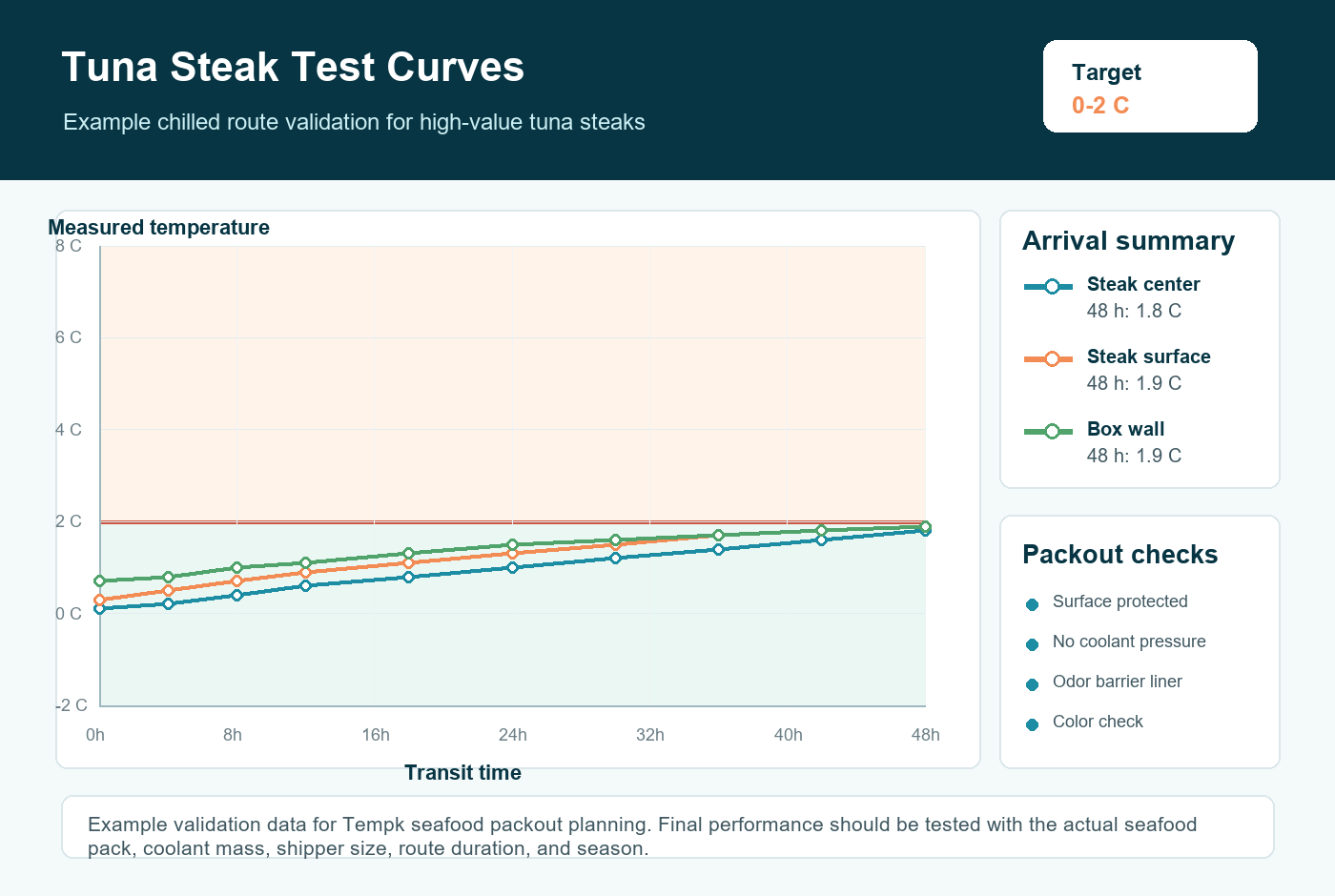
Thunfischsteaks reagieren empfindlich auf die Warmhaltezeit, Farbwechsel, Geruchsübertragung, und Druckstellen. Eine praktische Verpackung hält das Produkt nahe der Eistemperatur, verkürzt die unkontrollierte Abhol- oder Empfangszeit, und verhindert, dass das Kühlmittel die Steakoberfläche oder die Vakuumverpackung direkt berührt.
Die unten aufgeführten Kühlmittelmengen sind Richtwerte für die Planung. Das endgültige Packout sollte mit der genauen Nutzlast validiert werden, Isolationsgröße, Trägerspur, und Jahreszeit.
| Streckenzustand | Temperaturabsicht | Einrichtung der Tempk-Verpackung | Kühlmittelplanungsbereich | Kühlmittelposition |
|---|---|---|---|---|
| Premium-Lieferung am selben Tag, 8-18 H | 0-2 C gekühlt | EPP-Versandkarton oder isolierter Karton, versiegelter Produktbeutel, absorbierende Schicht, Geruchsbarriere. | 0.7-1.3 kg konditionierte Gelpackungen oder 0 C PCM für 1-3 kg Nutzlast. | Perimeterkühlmittel. Halten Sie gefrorene Packungen von der Steakoberfläche fern und vakuumieren Sie die Ränder. |
| Übernachtungsroute, 18-36 H | Eisnahe Route mit kurzem Aufenthalt | Dickere Isolierung, dichtere Hohlraumfüllung, Leckage-Liner, Temperaturlogger in der Nähe des Produkts. | 1.4-2.4 kg Gelpacks oder PCM für 1-3 kg Nutzlast. | Verwenden Sie seitliches und oberes Kühlmittel getrennt durch eine Platte oder einen Beutel; verhindern Druckbeulen. |
| Hot-Lane- oder Fernlieferung, 36-48 H | Nur validierte Kühlspur | Vorab ausgewählte Versendergröße, reduzierter Kopfraum, Routenrisikoprüfung vor dem Start. | 2.5-4.0 kg Gelpacks oder PCM für 1-3 kg Nutzlast. | Wenn die Validierung das Ziel nicht halten kann, Verbessern Sie die Isolierung oder den Servicegrad, bevor Sie unkontrollierte Kühlmittelmasse hinzufügen. |
Für eine genauere erste Schätzung, Verwenden Sie das Eisbeutel-Rechner und vergleichen Sie dann die Kühlmittelfamilien im Kühlmittel & PCM-Referenz.
Kleine Layoutänderungen können darüber entscheiden, ob der Empfänger ein sauberes, gekühltes Meeresfrüchtepaket oder ein nasses Paket sieht, unter Druck gesetzt, teilweise gefrorenes Produkt.
Halten Sie den Thunfisch vor der Übergabe kalt. Ein warmer Bereitstellungstisch kann ein größeres Risiko darstellen als der Pakettransport selbst.
Fügen Sie einen Trenner zwischen Kühlmittel und Produkt hinzu, Verwenden Sie dann eine Hohlraumfüllung, die Bewegungen verhindert, ohne die Steakränder zu zerdrücken.
Befestigen Sie den Logger nicht am Kühlmittel. Der Empfänger muss die Umgebung sehen, die der Thunfisch erlebt hat.
Empfangstemperatur prüfen, Oberflächenfarbe, Geruch, Paketlecks, Zustand der Vakuumdichtung, und Hinweise auf Kühlmittelkontakt.
Verwenden Sie diese Eingangskontrollen, wenn Sie die Kühlmittelmenge anpassen, Isolationsdicke, oder innere Trennung.
Nutzen Sie die Produktseite für die Verpackungslogik, Verwenden Sie dann die Werkzeuge, um die Größe des ersten Probepackouts vor einem Spurtest zu ermitteln.
Nutzlastgewicht verwenden, Kastengröße, Streckenzeit, und saisonale Temperatur, bevor Sie die Gelpackung oder PCM-Masse fertigstellen.
Vergleichen Sie gefrorene Gelpackungen, konditionierte Gelpackungen, Und 0 C PCM, damit das Produkt ohne direkten Frostschaden gekühlt wird.
Überprüfen Sie die Fahrzeit, Abholung verweilen, Verspätung auf der letzten Meile, und Empfängerprozess vor dem Start.
Teilen Sie das Meeresfrüchte-Formular, Nutzlastgewicht, Kastengröße, Serviceniveau, Ursprungstemperatur, Bahnsaison, und Empfangsfenster. Tempk kann beim Vergleich von Isolierungen helfen, Kühlmittelmasse, Platzierung, und Validierungsschritte.
Unterstützung für benutzerdefinierte Pakete
Für feste Kartongrößen, Nutzlastgrenzen, Branding-Anforderungen, Saisonspuren, oder Validierungsziele, Tempk kann diese Lösung in eine individuelle Kühlkettenverpackung umwandeln.