


Partial descongelación during transfer
La demora en muelle, la transferencia aérea o hielo seco insuficiente pueden calentar los bordes antes de que responda el núcleo.
Plasma fresco congelado needs a congelado route that prevents descongelacióning without letting hielo seco damage bags, etiquetas, or documentos. The configuración de embalaje should control temperature, soporte de bolsas, vapor space, and receiving evidence together.
Los envíos de productos sanguíneos deben juzgarse por el historial de temperatura y las condiciones de recepción.. Los detalles a continuación son una guía de planificación de embalaje.; El manejo final debe seguir el procedimiento de su instalación y los requisitos locales..
La demora en muelle, la transferencia aérea o hielo seco insuficiente pueden calentar los bordes antes de que responda el núcleo.
Direct contact can make bags brittle, damage etiquetas, or cause localized over-cooling and handling issues.
Helada, aguanieve, or hielo seco vapor management can make receiving paperwork and carton condition difficult to review.
| Condición de ruta | Intención de temperatura | Configuración de embalaje | Planificación de refrigerante o hielo seco | Control de recepción |
|---|---|---|---|---|
| Short congelado courier, 0-8 h | Maintain congelado condition and prevent surface descongelación during entrega. | Congelado embalaje médico, rigid bag tray, hielo seco separated from bags, revestimiento absorbente o resistente a fugas, one registrador near carga útil edge. | Las pruebas de parcelas pequeñas a menudo comienzan con 1-3 kg hielo seco when allowed by carrier and route rules. | Congelado arrival, no puncture, documentos secos, remaining hielo seco, y tiempo de entrega. |
| Standard congelado parcel or air lane, 8-24 h | Hold congelado condition through transfer, demora, and receiving queue. | Transportador de alto aislamiento, hielo seco above or around a protected carga útil zone, carcasa ventilada, documentos isolated from frost. | Prueba 3-8 kg hielo seco for common parcel lanes, then adjust for carga útil mass, tamaño del listón, y exposición ambiental. | registrador de curvas, remaining hielo seco, bag brittleness, carton frost, y legibilidad de la etiqueta. |
| Long lane or hot-season disruption, 24-48 h | Validated congelado route with enough hielo seco reserve and clear handling rules. | Larger embalaje isotérmico, hielo seco reserve zone, capas espaciadoras, hielo seco marking, revisión de riesgo de ruta, procedimiento de recepción. | Some longer or hot lanes may require 8-15 kg or more hielo seco; calculate and validate before use. | Congelado condition, temperatura mínima, remaining hielo seco, soporte de bolsas, y retraso en la recepción. |
Utilice estos rangos como punto de partida para muestreo y cotización.. acabado de soda, PCM, hielo seco, aislamiento, y las opciones de monitoreo deben validarse con la carga útil real, tamaño del listón, duración de la ruta, proceso de transporte, estación, y procedimiento de recepción.
La configuración de embalaje debe preservar un componente congelado, no congelar el producto durante el transporte.
Usar bandejas, espaciadores, or liners so hielo seco does not touch bags, etiquetas, or paperwork directly.
Use a vented shipper and follow the carrier procedure for hielo seco weight, etiquetado, and documentos.
Receiving should review registrador data with bag condition, remaining hielo seco, documentos, and delay notes.
Estos son los problemas visibles y operativos que la configuración de embalaje debe reducir antes de que el envío llegue al destinatario..
Utilice la curva de prueba como comparación de trabajo, luego validar con la carga útil real, expedidor, refrigerante or hielo seco mass, duración del carril, perfil ambiental, y proceso de recepción.
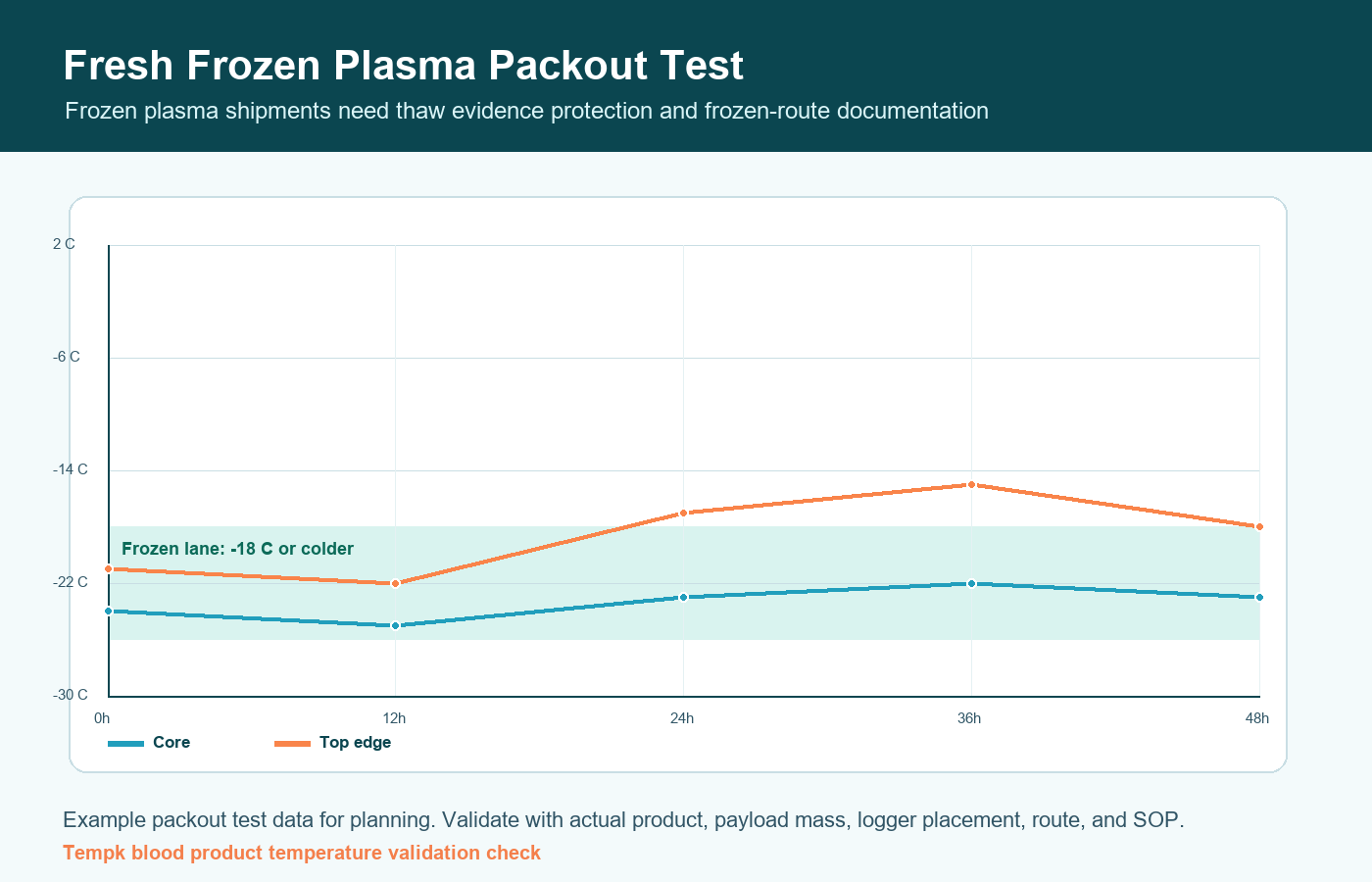
Utilice estas páginas para comparar rutas de productos sanguíneos cercanas, refrigerante choices, opciones de aislamiento, y preguntas sobre riesgos de ruta antes del muestreo.
Plasma fresco congelado needs a congelado route with enough refrigerante capacity for delays. The configuración de embalaje should avoid descongelación parcial at the top layer and protect bags from hielo seco pressure points.
Common failures include descongelación de bordes, bag brittleness, hielo seco depletion, label frost damage, and cartons wet after tempering.
Use un embalaje isotérmico cualificado para congelado, separadores de bolsas y una barrera plana entre hielo seco y bolsas de plasma. Mantenga la documentación seca y fuera de la zona más fría.
Use hielo seco o embalaje congelado validado para la duración requerida. Dimensione el hielo seco para la ruta más demora de recepción, no solo el tiempo de tránsito programado.
Check bag hardness, hielo seco remaining, registrador data, legibilidad de la etiqueta, and any signs of descongelación parcial.
Plasma fresco congelado routes should be sized for the scheduled transit plus realistic receiving delay. The top layer and edge bags usually warm first, so they need special attention in the test configuración de embalaje.
Use a congelado-qualified shipper, bag separators, and a hielo seco barrier that prevents pressure marks or label frost damage. Keep documentos dry and outside the coldest zone.
Tempk should validate hielo seco mass, bag count, carga útil arrangement, y retraso en la ruta. Check hielo seco remaining, bag hardness, registrador data, legibilidad de la etiqueta, and any descongelación parcial signs.
Custom configuración de embalaje support
Para tamaños de cartón fijos, límites de carga útil, requisitos de marca, carriles estacionales, o objetivos de validación, Tempk can adapt this solution into a custom cold-chain configuración de embalaje.
Compartir el tipo de componente, carga útil count, tamaño de bolsa o contenedor, rango objetivo, duración de la ruta, condición ambiental, pasos de mensajería, entrega limit, and controles de recepción. Tempk puede ayudar a comparar el transportista, disposición del refrigerante, inserto de soporte, posición de monitoreo, y plan de validación.
Request a configuración de embalaje review