


Congelar el contacto en la cara del refrigerante
Los acumuladores de gel congelados o bloques de hielo pueden crear un punto frío que no aparece en una lectura de registrador solo en el centro.
Los envíos de glóbulos rojos necesitan control refrigerado sin congelar el componente ni presionar las bolsas contra refrigerante duro. The configuración de embalaje should protect the component, la etiqueta, el conjunto de documentos, y el registro de temperatura al mismo tiempo.
Los envíos de productos sanguíneos deben juzgarse por el historial de temperatura y las condiciones de recepción.. Los detalles a continuación son una guía de planificación de embalaje.; El manejo final debe seguir el procedimiento de su instalación y los requisitos locales..
Los acumuladores de gel congelados o bloques de hielo pueden crear un punto frío que no aparece en una lectura de registrador solo en el centro.
Transferencia de puerta abierta, tiempo de espera del mensajero, y el retraso en la recepción puede elevar la carga útil externa más rápido de lo esperado.
Inserciones ajustadas, refresco pesado, o la condensación puede dañar las bolsas, etiquetas, y documentación necesaria al recibir.
| Condición de ruta | Intención de temperatura | Configuración de embalaje | Planificación de refrigerante o hielo seco | Control de recepción |
|---|---|---|---|---|
| Vehículo controlado o mensajero corto., 0-6 h | Mantener la manipulación refrigerada y evitar la congelación.; alinearse con el procedimiento de instalación para glóbulos rojos. | Pre-conditioned insulated embalaje médico, forro absorbente, soporte para bolsa, un registro cerca de la carga útil, refrigerante separado por divisor. | A menudo no hay refrigerante contra la carga útil. Por un 3-8 paquete L, prueba 0.8-1.5 kg acondicionados 2-8 Gel C o PCM detrás de una barrera. | Curva de temperatura, sin marcas de frio, etiqueta seca, soporte de bolsas, y tiempo de entrega. |
| Paquetería estándar o ruta de verano, 6-24 h | Ruta refrigerada con protección más fuerte del lado caliente y sin contacto directo con el hielo. | Transportador isotérmico de EPP o cartón, divisor más grueso, contención secundaria absorbente, dos registradores para posiciones cálidas y frías. | Iniciar pruebas alrededor 1.5-3.5 kg acondicionados 2-8 Gel C o PCM para paquetes pequeños; aumentar sólo después de la revisión del punto frío. | Borde cálido, cara fría, condensación, legibilidad de la etiqueta, y retraso en la recepción. |
| Ruta de invierno frío o traslado aéreo. | Evite la congelación por exposición ambiental mientras mantiene el control refrigerado.. | Transportador de alto aislamiento, refrigerante reducido o amortiguado, diseño de contacto no directo, carga útil envuelta en funda de soporte. | Utilice PCM acondicionado en lugar de gel congelado cuando el riesgo de frío sea alto. Pruebe el ambiente más bajo esperado antes del envío en vivo. | Temperatura mínima, ubicación de punto frío, flexibilidad de la bolsa, sequedad del cartón exterior, y tiempo de permanencia del mensajero. |
Utilice estos rangos como punto de partida para muestreo y cotización.. acabado de soda, PCM, hielo seco, aislamiento, y las opciones de monitoreo deben validarse con la carga útil real, tamaño del listón, duración de la ruta, proceso de transporte, estación, y procedimiento de recepción.
The component should enter a stable refrigerated configuración de embalaje. No confíe en la caja para devolver una carga útil caliente al alcance.
Usa un divisor, espaciador de espuma, o funda de carga útil para que los acumuladores de gel o PCM no puedan tocar las bolsas directamente.
Coloque los documentos fuera de las zonas húmedas y use un contenedor absorbente o resistente a fugas alrededor de la carga útil..
Coloque un sensor cerca del probable borde cálido y otro cerca del punto de riesgo del lado del refrigerante durante la validación..
Estos son los problemas visibles y operativos que la configuración de embalaje debe reducir antes de que el envío llegue al destinatario..
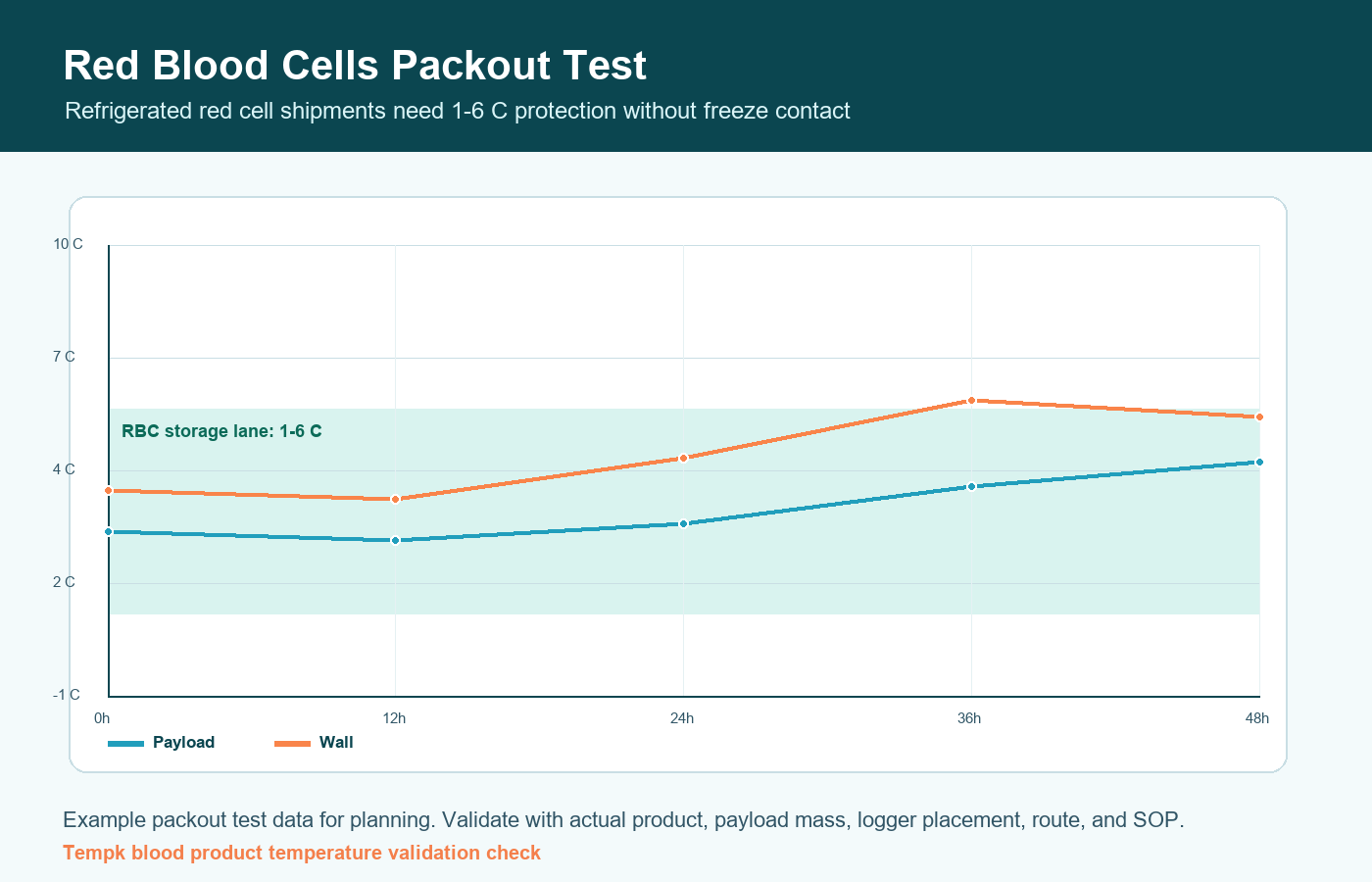
Utilice la curva de prueba como comparación de trabajo, luego validar con la carga útil real, expedidor, refrigerante or hielo seco mass, duración del carril, perfil ambiental, y proceso de recepción.
Utilice estas páginas para comparar rutas de productos sanguíneos cercanas, refrigerante choices, opciones de aislamiento, y preguntas sobre riesgos de ruta antes del muestreo.
Los glóbulos rojos requieren transporte refrigerado controlado con colocación cuidadosa del registrador. El embalaje debe prevenir tanto el calentamiento como la congelación accidental durante la entrega.
Congelar la exposición, cálidos retrasos en la recepción, presión sobre las bolsas points, y la mala separación de la carga útil son los principales modos de falla.
Use un embalaje sanguíneo cualificado con compartimento de carga, liner absorbente y separación del refrigerante. Mantenga las bolsas lo bastante planas para evitar daño por presión.
Uso calificado 1 a 6 Componentes de embalaje C. No sustituir los acumuladores de gel congelado estándar sin una validación completa.
Revisar datos mínimos y máximos del registrador., condición de la bolsa, control de fugas, y tiempo desde la entrega hasta el almacenamiento controlado.
Los glóbulos rojos requieren una ruta refrigerada calificada, no es una caja de hielo genérica. El área de carga útil debe proteger las bolsas del refrigerante directo e incluir suficiente control absorbente para el riesgo de fugas..
Uso validado 1 a 6 C componentes y mantener el registrador de temperatura en la zona de carga útil. Un registrador contra la pared fría puede exagerar el riesgo de congelación, mientras que un registrador fuera de la carga útil puede perder el calentamiento.
La revisión de Tempk debería cubrir el recuento de bolsas, carga útil masiva, duración de la ruta, equipo de entrega, y recibir flujo de trabajo. Consultar temperatura mínima y máxima, condición de la bolsa, fuga, y transferirlo a un almacenamiento controlado.
Custom configuración de embalaje support
Para tamaños de cartón fijos, límites de carga útil, requisitos de marca, carriles estacionales, o objetivos de validación, Tempk can adapt this solution into a custom cold-chain configuración de embalaje.
Compartir el tipo de componente, carga útil count, tamaño de bolsa o contenedor, rango objetivo, duración de la ruta, condición ambiental, pasos de mensajería, entrega limit, and controles de recepción. Tempk puede ayudar a comparar el transportista, disposición del refrigerante, inserto de soporte, posición de monitoreo, y plan de validación.
Request a configuración de embalaje review