


exposición al frío
Una configuración de embalaje refrigerada o un acumulador de gel congelado puede llevar las plaquetas por debajo del rango previsto de temperatura ambiente controlada.
Plaqueta transport is not a refrigerated configuración de embalaje. Necesita una planificación de temperatura ambiente controlada, en contacto con refrescos congelados, stable soporte de bolsas, carriles cortos validados, y registros de entrega claros.
Los envíos de productos sanguíneos deben juzgarse por el historial de temperatura y las condiciones de recepción.. Los detalles a continuación son una guía de planificación de embalaje.; El manejo final debe seguir el procedimiento de su instalación y los requisitos locales..
Una configuración de embalaje refrigerada o un acumulador de gel congelado puede llevar las plaquetas por debajo del rango previsto de temperatura ambiente controlada.
vehículos calientes, largo tiempo de espera, o la luz solar directa puede calentar el transportista rápidamente si el aislamiento y el PCM no están validados.
Bolsas sueltas, manejo brusco del mensajero, y las detenciones no registradas hacen que sea más difícil confiar en los controles de llegada.
| Condición de ruta | Intención de temperatura | Configuración de embalaje | Planificación de refrigerante o hielo seco | Control de recepción |
|---|---|---|---|---|
| Mensajería interior o ruta por el mismo campus, 0-4 h | Mantener temperatura ambiente controlada manipulación según procedimiento de la instalación.. | Transportín aislado limpio, soporte de bolsas, no congelado refrigerante, registrarse cerca de la carga útil. | A menudo no se necesita refrigerante activo si el carril se mantiene estable.. Utilice un buffer de temperatura ambiente sólo después de la validación. | Curva de temperatura, tiempo de ruta, posición de la bolsa, y firma de entrega. |
| mensajería el mismo día, 4-12 h | Control both warm and cool exposure without using refrigerado configuración de embalaje logic. | Remitente, 20-24 C PCM si está validado, carga útil sleeve, registrador cerca de lados probablemente cálidos y fríos. | Las pruebas de parcelas pequeñas a menudo comienzan con 0.8-2 kg temperatura ambiente controlada por PCM, placed away from direct presión sobre las bolsas. | Sin baño frío, sin sobrecalentamiento, soporte de bolsas, y la integridad del registro de llegada. |
| Ruta estacional o entre ciudades., 12-24 h | Utilice un sistema calificado de control de temperatura ambiente en lugar de acumuladores de gel improvisados.. | Higher-performance embalaje isotérmico, masa PCM validada, escudo de temperatura externo, revisión de riesgo de ruta. | Prueba 2-4 kilos 20-24 C PCM para carriles de paquetes más grandes, luego ajuste según las curvas del registrador y el perfil ambiental. | Temperatura mínima y máxima, retraso de entrega, movimiento de bolsa, y notas de ruta. |
Utilice estos rangos como punto de partida para muestreo y cotización.. acabado de soda, PCM, hielo seco, aislamiento, y las opciones de monitoreo deben validarse con la carga útil real, tamaño del listón, duración de la ruta, proceso de transporte, estación, y procedimiento de recepción.
Plaquetas should not be packed like glóbulos rojos. Evite el hielo, acumuladores de gel congelado, y fuentes directas de frío.
Si se requiere refrigerante, Utilice PCM diseñado para la banda de temperatura ambiente prevista y valide el carril real..
Utilice una funda o bandeja para que las bolsas se mantengan estables pero no se presionen contra los paneles de PCM o los insertos duros..
Los envíos de Plaqueta necesitan tiempos de entrega claros y una curva de registro que muestre los riesgos tanto cálidos como fríos..
Estos son los problemas visibles y operativos que la configuración de embalaje debe reducir antes de que el envío llegue al destinatario..
Utilice la curva de prueba como comparación de trabajo, luego validar con la carga útil real, expedidor, refrigerante or hielo seco mass, duración del carril, perfil ambiental, y proceso de recepción.
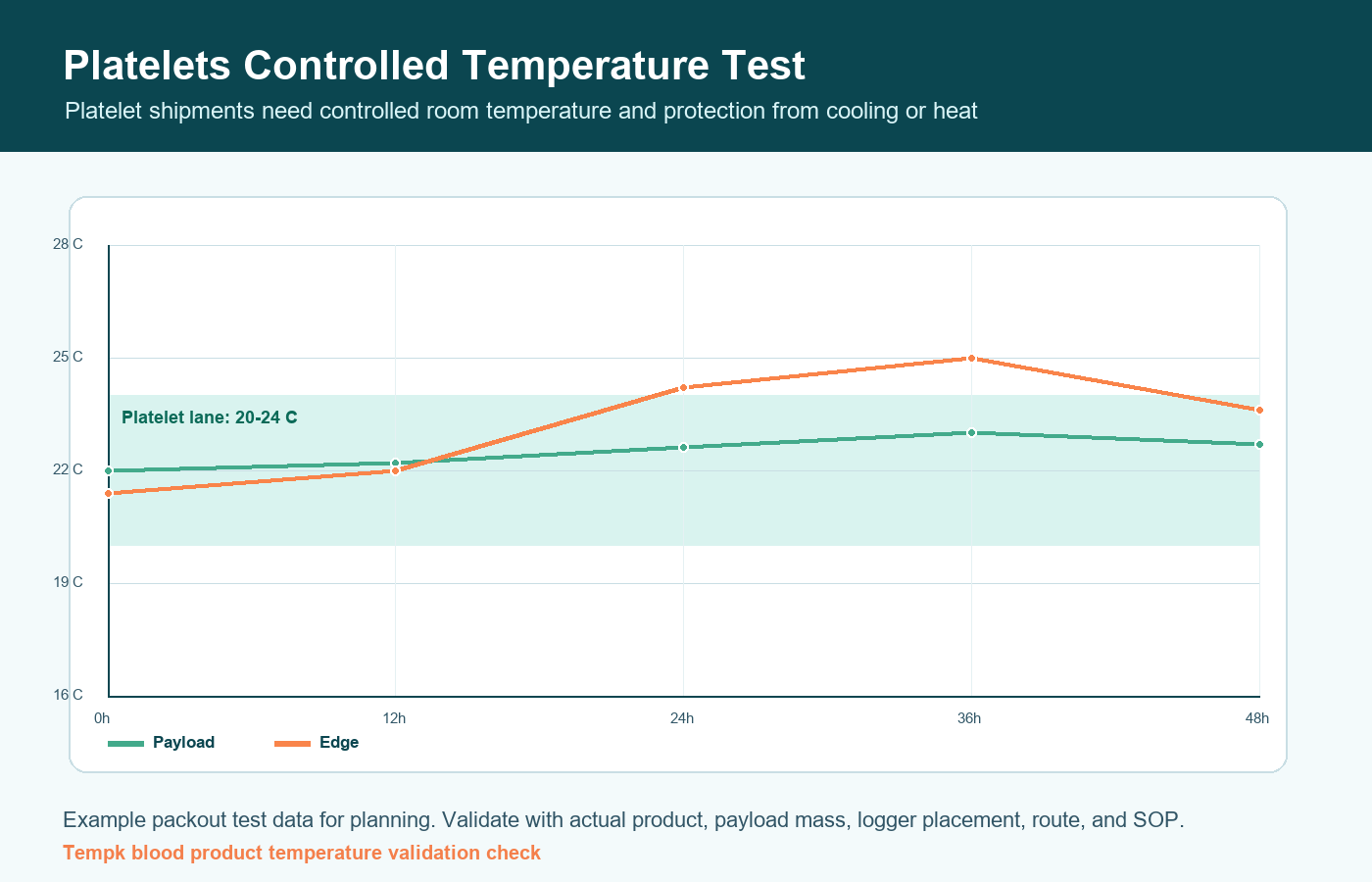
Utilice estas páginas para comparar rutas de productos sanguíneos cercanas, refrigerante choices, opciones de aislamiento, y preguntas sobre riesgos de ruta antes del muestreo.
Plaquetas are usually transported at temperatura ambiente controlada, not in the same refrigerado configuración de embalaje as glóbulos rojos. El paquete debe evitar la exposición al frío manteniendo el rango requerido..
Los mayores riesgos son enfriamiento accidental, mala planificación de agitación controlada, retrasos de entrega y que el personal coloque el embalaje en un refrigerador por error.
Use un embalaje de temperatura controlada con acolchado que soporte los contenedores de plaquetas sin comprimirlos. Añada etiquetas claras para recepción no refrigerada.
Use componentes de cambio de fase validados para la ruta de temperatura ambiente requerida. Los acumuladores de frío estándar no son adecuados para transportar plaquetas.
Verificar registro de temperatura, condición del contenedor, claridad de la etiqueta, y recibir flujo de trabajo. La verificación de aceptación debe confirmar que el remitente no estaba refrigerado..
Plaquetas are a special case because many lanes require temperatura ambiente controlada rather than a refrigerado configuración de embalaje. Agregar bolsas de hielo estándar puede crear un problema grave de exposición al frío.
Utilice PCM de temperatura ambiente validado o un transportista calificado de temperatura controlada. El paquete debe indicar claramente al personal de recepción que no refrigere el envío a menos que su procedimiento lo requiera específicamente..
La validación de Tempk debe incluir el rango objetivo, tiempo de tránsito, orientación, entrega, and any agitación controlada requirement. Revisar el registrador de datos, condición del contenedor, claridad de la etiqueta, y recibir acciones.
Custom configuración de embalaje support
Para tamaños de cartón fijos, límites de carga útil, requisitos de marca, carriles estacionales, o objetivos de validación, Tempk can adapt this solution into a custom cold-chain configuración de embalaje.
Compartir el tipo de componente, carga útil count, tamaño de bolsa o contenedor, rango objetivo, duración de la ruta, condición ambiental, pasos de mensajería, entrega limit, and controles de recepción. Tempk puede ayudar a comparar el transportista, disposición del refrigerante, inserto de soporte, posición de monitoreo, y plan de validación.
Request a configuración de embalaje review