


Muestras de sangre
Seguir el protocolo de la prueba y proteger los tubos contra congelación, calor, fugas de tapa, rotura y registros de recepción faltantes.
El empaque de muestra clínica debe comenzar con el tipo de muestra., protocolo de prueba, recipiente, y tiempo máximo de transporte. Tempk ayuda a los laboratorios, CRO, hospitales, y redes de diagnóstico comparan el transportista, refrigerante, contención secundaria, absorbente layer, soporte para tubo o contenedor, registrador position, y verificación de recepciones antes de la validación de ruta..
Blood tubos, tejido containers, and hisopo PCRs do not need the same configuración de embalaje. Una ruta puede estar refrigerada., otro puede ser ambiente, y una prueba congelada puede requerir hielo seco o manipulación ultrabaja. La decisión útil sobre el embalaje es proteger tanto la integridad de la muestra como el flujo de trabajo de recepción del laboratorio..
Seguir el protocolo de la prueba y proteger los tubos contra congelación, calor, fugas de tapa, rotura y registros de recepción faltantes.
Las rutas de tejido fresco, fijado y congelado requieren distintas temperaturas, amortiguación, control de fugas y tiempos de entrega.
Proteger tubos de hisopo o contenedores VTM/UTM con soporte vertical, separación del refrigerante, entregas breves y documentación clara.
| Muestra route | Objetivo de temperatura | Configuración de embalaje | Planificación de refrigerante o hielo seco | Verificación de recepción |
|---|---|---|---|---|
| Muestras de sangre para transporte refrigerado de rutina. | Siga el protocolo de prueba. Se planean muchos carriles de muestra de rutina alrededor 2-8 do, mientras que algunas pruebas necesitan manipulación a temperatura ambiente o congelada. | Leak-resistant embalaje secundario, absorbente layer, rejilla o funda para tubos, divisor de refrigerante, cargador aislado exterior, y registrador cerca del borde cálido. | para un pequeño 3-8 L remitente, Los juicios a menudo comienzan alrededor 0.6-1.5 kg de gel acondicionado o 2-8 PCM para 0-8 h, y 1.5-3 kilos para 8-24 h carriles. | condición del tubo, sello de tapa, sin congelación, sin fugas, etiquetas legibles, registro de cadena, y temperatura de llegada. |
| Biopsia or muestras de tejido, fresco, fijado, o congelado | Utilice el protocolo de recolección o laboratorio.. Es posible que necesite tejido fresco 2-8 do, El tejido fijo puede moverse de manera diferente., and frozen tejido may require hielo seco. | Contenedor primario rígido, absorbente embalaje secundario, amortiguación, soporte vertical, separación de zonas húmedas, y la funda para documentos lejos del refrigerante o líquido. | Para fresco 2-8 C tejido, empezar alrededor 0.8-2.5 kg de refrigerante acondicionado en transportistas pequeños. Para tejido congelado, use hielo seco solo donde el protocolo y las reglas del transportista lo permitan. | Sin fugas, contenedor intacto, tejido no aplastado, registro de temperatura correcto, documentos secos, y tiempo de entrega del laboratorio. |
| Histogramas de PCR en VTM, UTM, o tubos de hisopo seco | Sigue el protocolo de diagnóstico.. Los carriles cortos suelen utilizarse 2-8 do; los carriles retrasados o específicos del protocolo pueden requerir manejo congelado. | Divisor de tubo vertical, absorbente layer, bolsa secundaria sellada, barrera de refrigerante, clear muestra list, y un cargador dimensionado para evitar la presión del tubo.. | Para 2-8 C rutas del mismo día, empezar alrededor 0.5-1.5 kg de refrigerante acondicionado. Para 24-48 r rutas, prueba 1.5-3 kg o un transportista más grande; frozen lanes may require hielo seco. | Sin fugas en el tubo, sin presión de tapa, lista de muestra correcta, no descongelar-volver a congelar donde esté congelado, y recepción de laboratorio rápida. |
Estos son los rangos de planificación para la discusión sobre embalajes.. El manejo final debe seguir el protocolo de prueba., POE de laboratorio, clasificación de transporte, Reglas del operador, y requisitos locales para la muestra exacta.
Utilice la curva para comparar refrigerados, congelado, y muestra rutas de diagnóstico antes de escalar. Una revisión útil combina la curva del registrador con comprobaciones de fugas., condición del tubo o contenedor, legibilidad de la etiqueta, y tiempo de entrega.
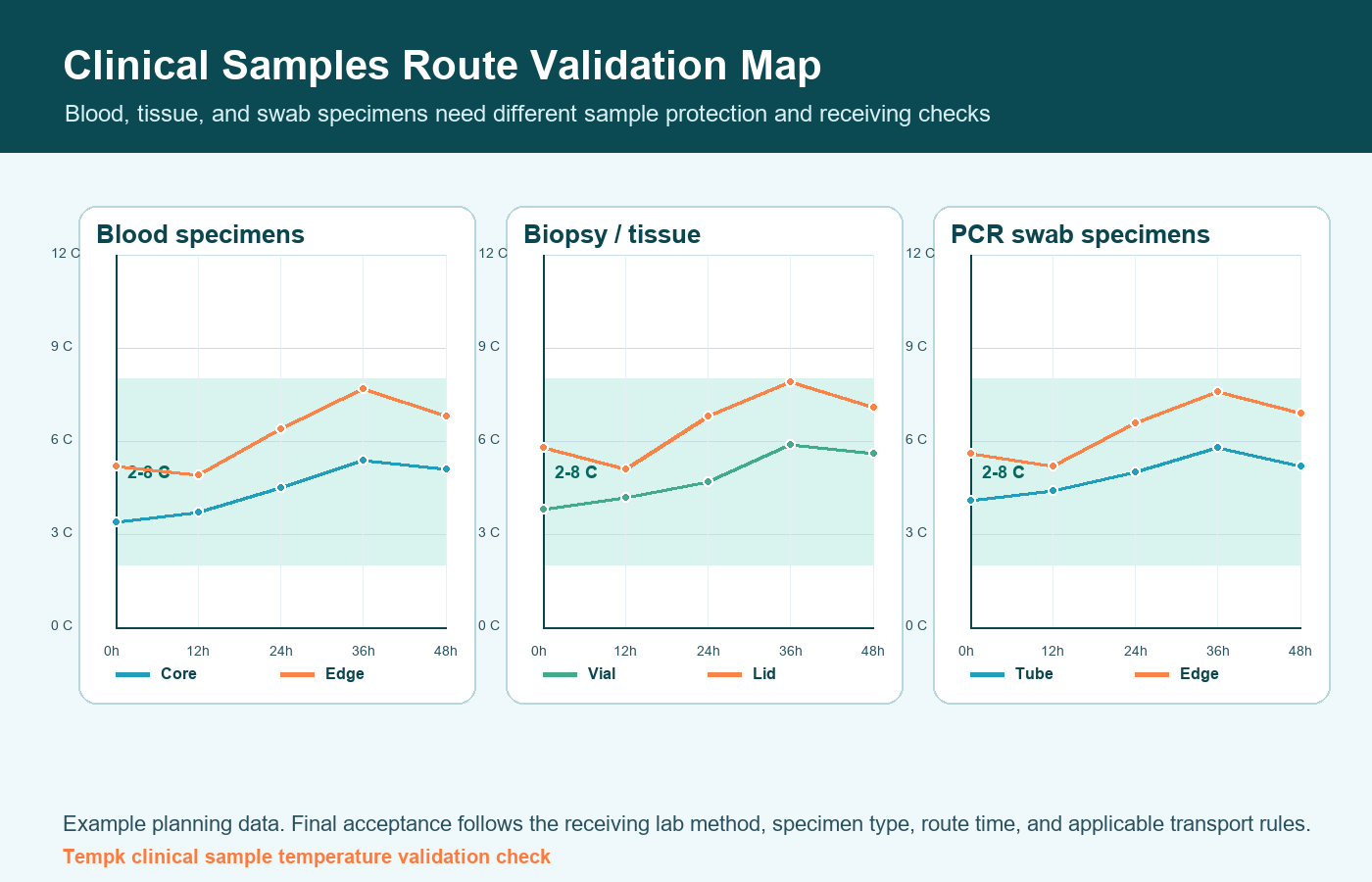
Las rutas de diagnóstico mixtas y los programas de muestra más pequeños pueden utilizar la guía de muestra clínica más amplia, mientras que las tres páginas anteriores cubren los tipos de envío de mayor valor..
Notas de embalaje para sangre., tejido, y rutas hisopo PCR con 2-8 do, congelado, hielo seco, fuga, y controles de transferencia.
Utilice estas páginas para comparar las opciones de refrigerante, riesgo de ruta, estructura de aislamiento, casos de logística médica cercana, and final configuración de embalaje questions before sampling.
Muestras clínicas can be ambient, enfriado, congelado, o congelado dependiendo del ensayo. El plan de empaque debe iniciar con el tipo de muestra y los criterios de aceptación del laboratorio..
Las fallas incluyen hemólisis., thawed muestras, lost cadena de custodia forms, fuga, y muestras entregadas fuera de la ventana de recepción del laboratorio.
Utilice contenedores primarios a prueba de fugas, absorbente embalaje secundario, y un cargador exterior rígido. Mantenga los formularios de solicitud secos y separados de los contenedores de muestras..
Usa gel frío, hielo seco, o PCM a temperatura ambiente según el ensayo. No elija refrigerante por costumbre cuando los requisitos del laboratorio son diferentes.
Confirmar temperatura, fuga, legibilidad de la etiqueta, y recibir hora límite. A lab rejection review should be part of validación de ruta.
Custom configuración de embalaje support
Para tamaños de cartón fijos, límites de carga útil, requisitos de marca, carriles estacionales, o objetivos de validación, Tempk can adapt this solution into a custom cold-chain configuración de embalaje.
Comparte el tipo de muestra., tubo o contenedor, temperatura objetivo, tiempo máximo de transporte, carga útil count, duración de la ruta, perfil ambiental, pasos de mensajería, clasificación, y verificación de recibos. Tempk puede ayudar a comparar el transportista, disposición del refrigerante, embalaje secundario, absorbente layer, inserciones, registrador position, y plan de validación.
Request a configuración de embalaje review