


Estimar la masa de hielo seco
Usar peso de carga útil, tamaño de la caja, tiempo de ruta, temperatura ambiente estacional, y límites del transportista antes de la primera prueba de carril.
Las albóndigas congeladas son trozos pequeños con envolturas finas.. Una descongelación breve puede provocar grumos, grietas en la envoltura, deformación, y condensación de bolsas. El paquete debe mantener las bolas de masa congeladas., proteger las bolsas de pinchazos, y separe el hielo seco del contacto directo con el producto..
Las cantidades de hielo seco a continuación son rangos iniciales para la planificación.. El paquete final debe validarse con la carga útil exacta, tamaño de la caja, carril de transporte, estación, y límite de hielo seco.
| Condición de la ruta | Intención de temperatura | Configuración del embalaje Tempk | Rango de planificación de refrigerante | Posición del refrigerante |
|---|---|---|---|---|
| Entrega local, 8-18 h | Calidad de piezas sueltas congeladas | Cartón aislado o caja de EPP, soporte de bolsa, barrera contra la humedad, refrigerante congelado separado o hielo seco. | 1.0-1.8 kg de hielo seco para 1-5 kg de carga útil, o PCM congelado/gel congelado validado para carriles controlados. | Cámara lateral o superior con divisor; Evita la presión directa sobre las bolsas de bola de masa.. |
| Paquete nocturno, 18-36 h | -18 Intención de ruta C | Aislamiento más grueso, bolsa de hielo seco, protección de la bolsa interior, espacio de cabeza limitado. | 2.0-4.0 kg de hielo seco para 1-5 kg de carga útil. | Hielo seco perimetral separado de bolsas; Mantenga las bolsas apoyadas para reducir la punción.. |
| carril caliente o 36-48 h | Carril congelado validado | Mayor aislamiento, cartón exterior más fuerte, espacio vacío reducido, control de riesgo de ruta. | 4.0-6.5 kg de hielo seco para 1-5 kg de carga útil. | Si aparece grumos, Reduzca la exposición al descongelamiento y mejore la distribución del refrigerante.. |
Para una estimación más ajustada, empezar con el Calculadora de hielo seco y revisar las opciones de aislamiento en el Referencia del material aislante.
Las devoluciones de alimentos congelados suelen deberse a un pequeño fallo en el diseño: contacto directo con hielo seco, demasiado espacio de cabeza, un cartón mojado, o una pila de productos que se desplaza durante la manipulación.
No deje que las bolas de masa se sientan calientes durante la recolección o el montaje.; un breve deshielo puede comenzar a acumularse antes de que comience el tránsito.
Utilice refuerzos internos o un revestimiento para que el refrigerante duro y las esquinas de la caja no rompan las bolsas delgadas..
Mantenga el hielo seco en una bolsa o cámara con un divisor para que los bloques de hielo seco no aplasten las albóndigas..
Al recibir, comprobar la temperatura, grupos, grietas en la envoltura, bolsa de escarcha, puntas, y hielo seco restante.
Utilice estos controles de recepción al ajustar la masa de hielo seco, espesor de aislamiento, o separación interna.
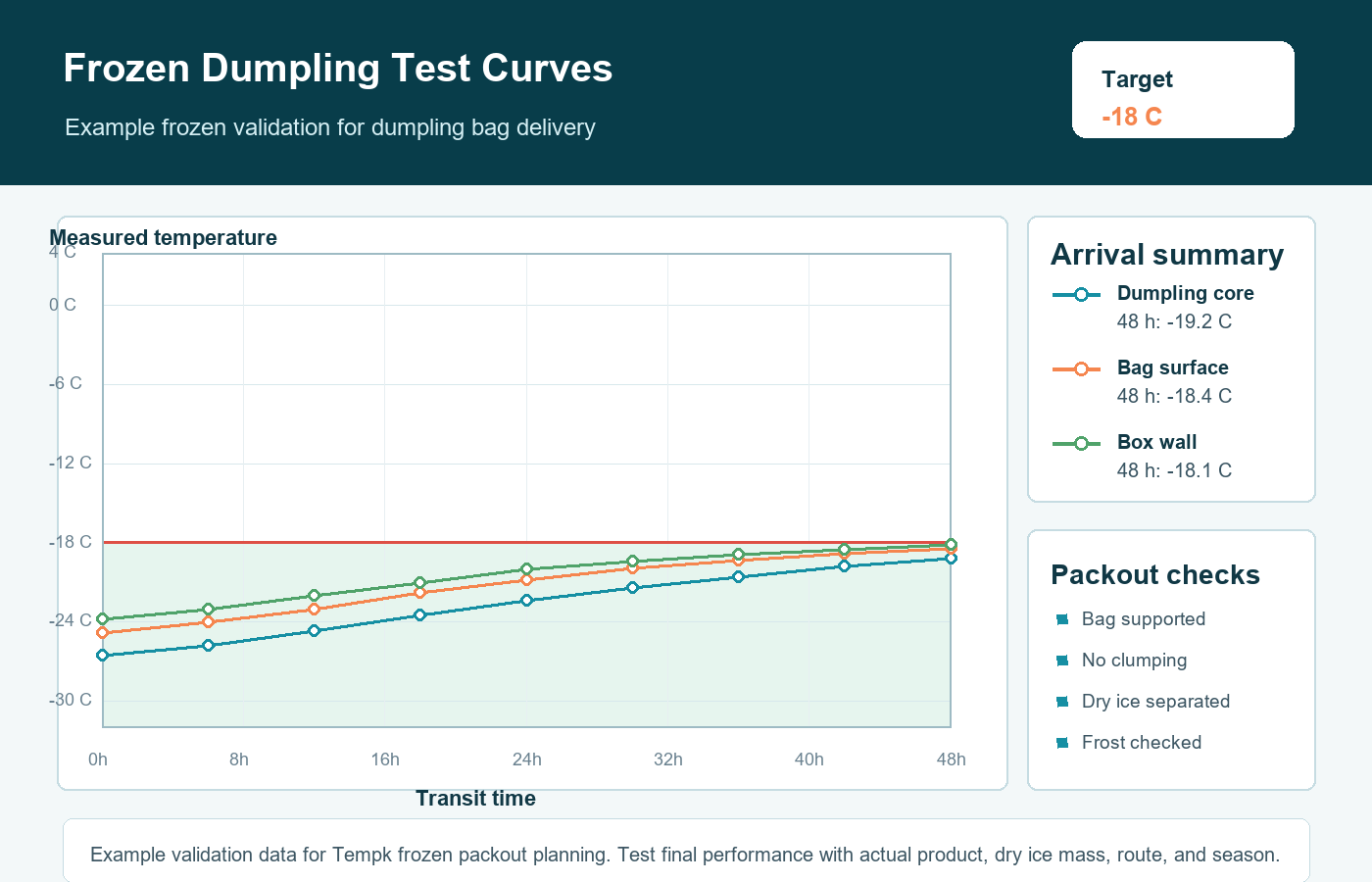
Utilice la página del producto para la lógica de manejo., luego dimensione la primera prueba con herramientas y valide la ruta real.
Usar peso de carga útil, tamaño de la caja, tiempo de ruta, temperatura ambiente estacional, y límites del transportista antes de la primera prueba de carril.
Comparar hielo seco, paquetes de gel congelado, y PCM congelado al elegir el primer paquete congelado.
Revisar la recogida en espera, retraso en la última milla, ventana receptora, y ruta de verano antes del lanzamiento.
Compartir el tipo de producto congelado, peso de carga útil, tamaño de la caja, duración de la ruta, perfil ambiental, límites del transportista, y recibir cheques. Tempk puede ayudar a elegir el aislamiento, Colocación de hielo seco o refrigerante congelado., y pasos de validación.
Soporte de paquete personalizado
Para tamaños de cartón fijos, límites de carga útil, requisitos de marca, carriles estacionales, o objetivos de validación, Tempk puede adaptar esta solución a un paquete de cadena de frío personalizado.