


Ejecute la estimación de refrigerante
Usar peso de carga útil, tamaño de la caja, tiempo de ruta, y temperatura estacional antes de finalizar el paquete de gel o la masa de PCM.
Las ostras no se manipulan como filetes de pescado.. El embalaje debe mantener los mariscos vivos fríos y húmedos., proteger conchas y etiquetas, evitar lesiones por congelación, y evitar que las ostras se asienten en el agua de deshielo. El mejor diseño depende de las reglas de los mariscos., estación, tamaño del pedido, y tiempo del transportista.
Las cantidades de refrigerante a continuación son rangos iniciales para la planificación.. El paquete final debe validarse con la carga útil exacta, tamaño de aislamiento, carril de transporte, y temporada.
| Condición de la ruta | Intención de temperatura | Configuración del embalaje Tempk | Rango de planificación de refrigerante | Posición del refrigerante |
|---|---|---|---|---|
| Entrega de restaurante local, 8-18 h | Frío y húmedo, no congelado | Cartón aislado o caja de EPP, bolsa o bandeja de conchas, revestimiento húmedo, base absorbentee. | 0.5-1.0 Paquetes de gel acondicionado en kg para paquetes pequeños, ajustado por el tamaño del pedido. | Refrigerante encima o al lado de los mariscos con un divisor; Evite el contacto directo con el caparazón.. |
| Mariscos vivos durante la noche, 18-30 h | 0-4 Rango de planificación C a menos que el proveedor indique lo contrario | Aislamiento más fuerte, diseño no hermético cuando sea necesario, diseño interior protector de etiquetas. | 1.0-1.8 Paquetes de gel acondicionado de kg para paquetes pequeños y medianos. | Mantenga los mariscos fuera del agua de deshielo estancada y proteja la etiqueta de cosecha contra daños por humedad.. |
| Temporada de calor o carril más largo, 30-48 h | Carril anticongelante validado | Mayor aislamiento, control de riesgo de ruta, espacio de cabeza reducido, recogida más temprana del transportista. | 1.8-3.0 paquetes de gel acondicionado de kg, confirmado por prueba estacional. | Si las conchas muestran congelación, reducir el riesgo de contacto antes de aumentar la masa de refrigerante. |
Para una primera estimación más ajustada, usar el Calculadora de bolsa de hielo y luego comparar las familias de refrigerantes en el refrigerante & Referencia PCM.
Pequeños cambios en el diseño pueden decidir si el receptor ve un paquete de marisco limpio y refrigerado o un paquete húmedo., presionado, producto parcialmente congelado.
Utilice el proveedor'rango, etiquetado, etiqueta, y reglas de ventilación antes de elegir un diseño de cargador cerrado.
Utilice material húmedo apto para alimentos para la humedad y una base absorbentee separada para el agua de deshielo o la condensación..
Empaque las ostras para que no puedan aplastar las etiquetas ni entre sí durante el manejo del paquete.. Mantenga la etiqueta del marisco legible al recibirla..
Compruebe el cierre de la carcasa, olor, humedad, daño del caparazón, condición de etiqueta, y cualquier señal de congelación.
Utilice estos controles de recepción al ajustar la cantidad de refrigerante, espesor de aislamiento, o separación interna.
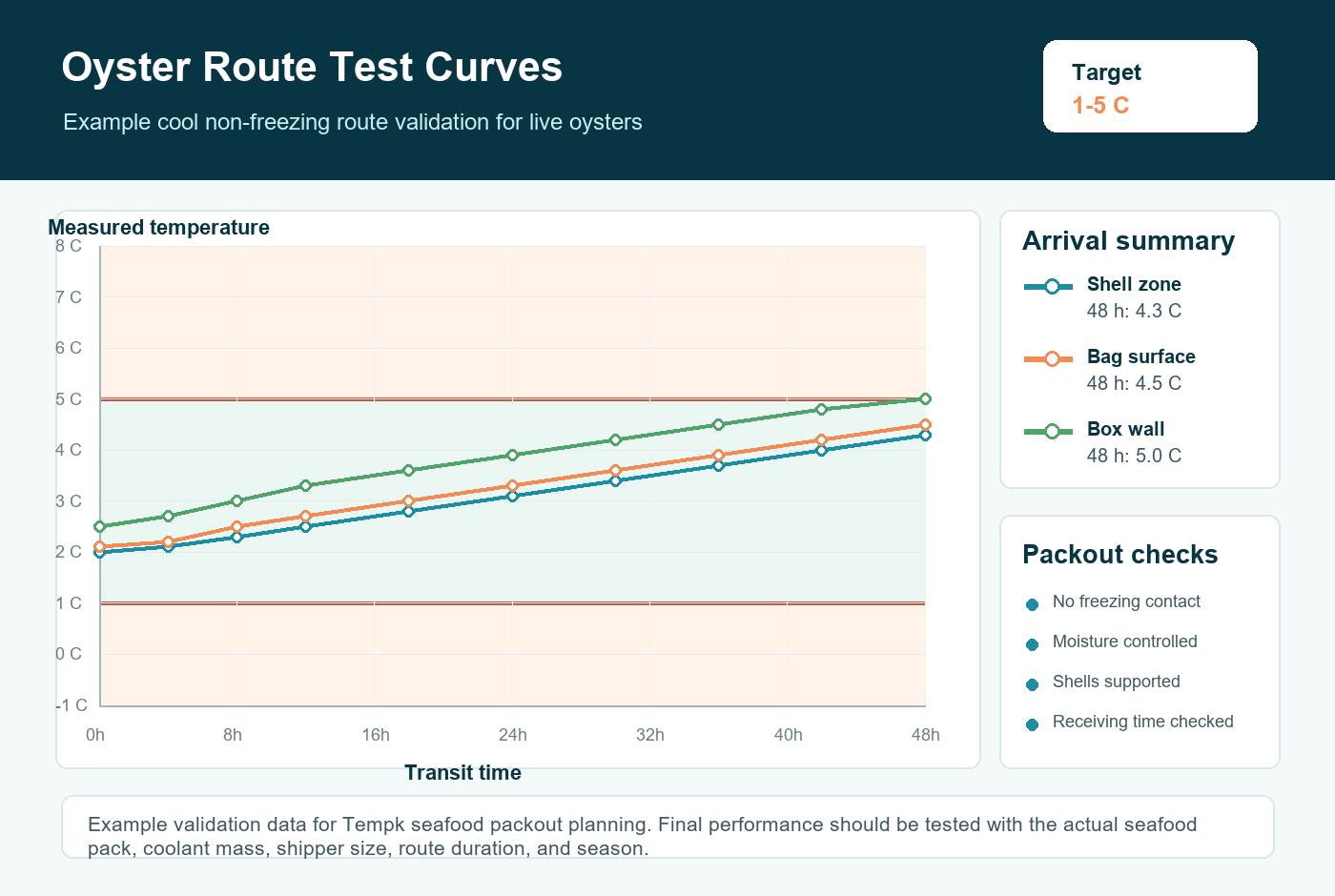
Utilice la página del producto para la lógica de embalaje., luego use las herramientas para dimensionar el primer paquete de prueba antes de una prueba de carril.
Usar peso de carga útil, tamaño de la caja, tiempo de ruta, y temperatura estacional antes de finalizar el paquete de gel o la masa de PCM.
Comparar paquetes de gel congelado, paquetes de gel acondicionados, y 0 C PCM para que el producto se enfríe sin sufrir daños directos por congelación..
Revisar el tiempo del carril, recogida en espera, retraso en la última milla, y proceso del receptor antes del lanzamiento.
Comparte el formulario de mariscos., peso de carga útil, tamaño de la caja, nivel de servicio, temperatura de origen, temporada de carril, y ventana de recepción. Tempk puede ayudar a comparar el aislamiento, masa refrigerante, colocación, y pasos de validación.
Soporte de paquete personalizado
Para tamaños de cartón fijos, límites de carga útil, requisitos de marca, carriles estacionales, o objetivos de validación, Tempk puede adaptar esta solución a un paquete de cadena de frío personalizado.