


Ejecute la estimación de refrigerante
Usar peso de carga útil, tamaño de la caja, tiempo de ruta, y temperatura estacional antes de finalizar el paquete de gel o la masa de PCM.
Los filetes de atún son sensibles al tiempo de permanencia en caliente, cambio de color, transferencia de olores, y marcas de presión. Un paquete útil mantiene el producto cerca de la temperatura del hielo., acorta el tiempo de recogida o recepción incontrolada, y evita que el refrigerante toque la superficie del bistec o el paquete al vacío directamente.
Las cantidades de refrigerante a continuación son rangos iniciales para la planificación.. El paquete final debe validarse con la carga útil exacta, tamaño de aislamiento, carril de transporte, y temporada.
| Condición de la ruta | Intención de temperatura | Configuración del embalaje Tempk | Rango de planificación de refrigerante | Posición del refrigerante |
|---|---|---|---|---|
| Entrega premium el mismo día, 8-18 h | 0-2 C enfriado | Transportador de EPP o cartón aislado, bolsa de producto sellada, capa absorbentee, barrera contra olores. | 0.7-1.3 kg de paquetes de gel acondicionado o 0 PCM para 1-3 kg de carga útil. | Refrigerante perimetral. Mantenga los paquetes congelados alejados de la cara del bistec y de los bordes sellados al vacío.. |
| Ruta nocturna, 18-36 h | Ruta cerca del hielo con breve estancia | Aislamiento más grueso, relleno de vacíos más ajustado, revestimiento de fuga, registrador de temperatura cerca del producto. | 1.4-2.4 paquetes de gel de kg o PCM para 1-3 kg de carga útil. | Utilice refrigerante lateral más superior separados por placa o bolsa; prevenir abolladuras por presión. |
| Línea directa o entrega remota, 36-48 h | Solo carril refrigerado validado | Tamaño del transportista precalificado, espacio de cabeza reducido, verificación de riesgo de ruta antes del lanzamiento. | 2.5-4.0 paquetes de gel de kg o PCM para 1-3 kg de carga útil. | Si la validación no puede mantener el objetivo, Mejorar el aislamiento o el nivel de servicio antes de agregar masa refrigerante no controlada.. |
Para una primera estimación más ajustada, usar el Calculadora de bolsa de hielo y luego comparar las familias de refrigerantes en el refrigerante & Referencia PCM.
Pequeños cambios en el diseño pueden decidir si el receptor ve un paquete de marisco limpio y refrigerado o un paquete húmedo., presionado, producto parcialmente congelado.
Mantenga el atún frío antes del traspaso. Una mesa de preparación cálida puede generar más riesgos que el propio tránsito del paquete.
Agregue un divisor entre refrigerante y producto., luego use un relleno de huecos que impida el movimiento sin aplastar los bordes del bistec.
No pegue el registrador al refrigerante con cinta adhesiva.. El receptor necesita ver el entorno que experimentó el atún..
Comprobar la temperatura de recepción, color de la superficie, olor, fugas de paquetes, condición del sello de vacío, y evidencia de contacto con el refrigerante.
Utilice estos controles de recepción al ajustar la cantidad de refrigerante, espesor de aislamiento, o separación interna.
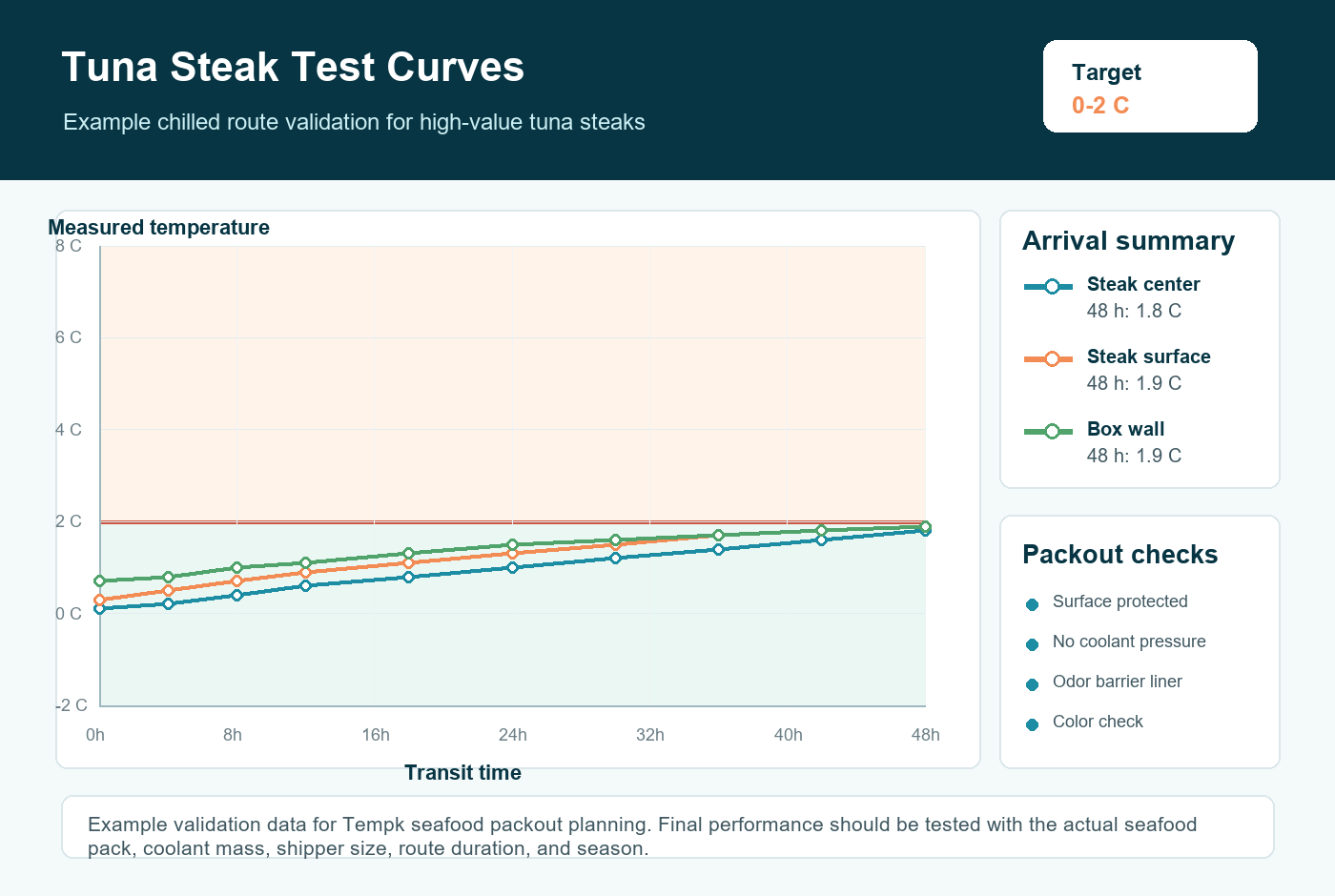
Utilice la página del producto para la lógica de embalaje., luego use las herramientas para dimensionar el primer paquete de prueba antes de una prueba de carril.
Usar peso de carga útil, tamaño de la caja, tiempo de ruta, y temperatura estacional antes de finalizar el paquete de gel o la masa de PCM.
Comparar paquetes de gel congelado, paquetes de gel acondicionados, y 0 C PCM para que el producto se enfríe sin sufrir daños directos por congelación..
Revisar el tiempo del carril, recogida en espera, retraso en la última milla, y proceso del receptor antes del lanzamiento.
Comparte el formulario de mariscos., peso de carga útil, tamaño de la caja, nivel de servicio, temperatura de origen, temporada de carril, y ventana de recepción. Tempk puede ayudar a comparar el aislamiento, masa refrigerante, colocación, y pasos de validación.
Soporte de paquete personalizado
Para tamaños de cartón fijos, límites de carga útil, requisitos de marca, carriles estacionales, o objetivos de validación, Tempk puede adaptar esta solución a un paquete de cadena de frío personalizado.