Emballage de viande de distributeur de sac à dos isolé: Du brief produit à la flotte contrôlée
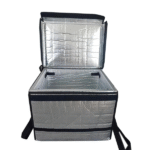
L'erreur la plus coûteuse dans un sac à dos isolé le projet de conditionnement de viande du distributeur achète de la capacité avant de définir le contrôle. Un sac peut contenir douze paquets de viande scellés mais échouer lorsque du liquide de refroidissement est ajouté. Il peut réussir un test non ouvert mais perdre le contrôle lors de quatre arrêts au restaurant. Il peut survivre à l'itinéraire mais prendre trop de temps à désinfecter pour le prochain quart de travail. Un sac à dos isolé est un support secondaire passif, pas de réfrigération, emballage primaire de viande, ou conformité réglementaire automatique. Le bon achat est un système contrôlé dont le produit limite, construction, réfrigérant, emballage, itinéraire, nettoyage, preuve, et les responsabilités du fournisseur restent liées depuis l'échantillon jusqu'à l'utilisation quotidienne.
C'est ainsi qu'une équipe d'approvisionnement peut établir cette connexion sans demander au sac d'effectuer un travail qui appartient à une autre partie de la chaîne du froid..
Rédigez une déclaration d'utilisation spécifique à la viande
Commencez par une phrase qui définit le travail approuvé. Par exemple: le transporteur se déplacera scellé, coupes de détail réfrigérées depuis une salle d'expédition contrôlée jusqu'aux récepteurs des restaurants sur un itinéraire local défini, en utilisant une disposition de source froide spécifiée et pas plus que le nombre d'ouvertures approuvé. Cette phrase n'est pas la spécification finale, mais cela révèle une ambiguïté.
Fait "viande" méchant boeuf cru, volaille tranchée cuite, saucisse surgelée, porc mariné, ou une commande mixte? Les produits sont-ils dans des sachets sous vide, plateaux à couvercle, cartons, ou sacs souples? Des os pointus ou des clips peuvent-ils entrer en contact avec la doublure? La charge contient-elle des allergènes? À qui appartient le produit lors de la remise? Où reprend le stockage à température contrôlée?
Clarifier les limites de l'emballage. L'emballage primaire doit contenir et protéger la viande. L'emballage des commandes secondaires peut assurer la ségrégation et l'organisation physique. Le sac à dos assure l'isolation, mobilité, et confinement secondaire pour un intervalle limité. Les réfrigérants ajoutent une réserve de froid. Aucune de ces couches ne devrait en remplacer silencieusement une autre. La viande exposée ne doit pas être placée contre une doublure de sac à dos à moins que l'ensemble de l'utilisation par contact prévue n'ait fait l'objet d'un examen réglementaire et de sécurité alimentaire approprié..
Définir les conditions de départ et d'arrivée via l'équipe qualité. Les informations destinées aux consommateurs de l'USDA utilisent 40 °F ou moins comme référence réfrigérée commune et 0 °F ou moins pour le stockage au congélateur.. Un programme commercial peut fixer des limites opérationnelles différentes ou plus strictes pour une viande spécifique., processus, durée de conservation, et promesse client. La norme approuvée doit indiquer ce qui est mesuré, où il est mesuré, le temps imparti, et la réponse à un écart.
Inclure l’acceptation physique. Joints qui fuient, pochettes perforées, plateaux écrasés, cartons contaminés, étiquettes manquantes, ou des preuves de falsification peuvent rendre une livraison inacceptable, indépendamment d'une lecture de température favorable.. Un transporteur frigorifique ne prouve pas que chaque colis est sain.
Enfin, exclusions d'État. Le sac à dos peut ne pas être approuvé pour le produit exposé, tronçons de carcasse, charges utiles au-delà de la limite de transport sûre, mélange d'aliments crus et prêts à manger dans une seule zone, glace carbonique, livraison sans surveillance, transport interurbain long, ou utiliser comme stockage. Les exclusions protègent le programme contre une utilisation abusive progressive.
Convertissez la déclaration d'utilisation en sept points de preuve
L'examen suivant relie chaque décision d'acheteur à des preuves. Il indique également lorsque la réponse du distributeur est incomplète.
| Point de preuve | Décision qui doit être prise | Preuve à conserver | Réponse non résolue |
|---|---|---|---|
| Produit | Quels formats et conditions de viande scellés sont approuvés? | Liste de produits, dessins de colis, critères d'expédition et d'arrivée | "N'importe quelle viande, chaud ou froid" |
| Charge utile | Quel minimum, routine, et les charges maximales s'adaptent en toute sécurité? | Examen de l'ajustement chargé avec liquide de refroidissement et limite de poids en charge | Capacité basée sur un sac vide |
| Itinéraire | À quelle heure, exposition ambiante, ouvertures, et les transferts sont couverts? | Feuille de route et défi sérieux mais crédible | Durée indiquée sans itinéraire |
| Emballage | Quelle révision de sac, réfrigérant, diviseur, et le modèle de chargement sont utilisés? | Nomenclature contrôlée et SOP illustrées | Les composants peuvent être échangés librement |
| Hygiène | Comment les fuites sont-elles contenues, sacs nettoyés, séché, et libéré? | Données de doublure, essai de nettoyage, critères de dommages, et flux de ségrégation | "Essuyer" comme toute la procédure |
| Performance | Le système d'intention de production respecte-t-il la limite approuvée? | Protocole thermique, données complètes, répétitions, et pilote de terrain | Lecture d'un centre à partir d'un échantillon fermé |
| Fournir | Comment la production en vrac restera-t-elle cohérente? | Échantillon approuvé, tolérances, chèques de lot, avis de changement, et actions correctives | La similarité visuelle est considérée comme suffisante |
Un projet n'est prêt à évoluer que lorsque les sept points sont réunis. Un support techniquement solide sans processus de retour et de nettoyage n'est pas opérationnel. Un sac nettoyable sans preuve thermique pertinente pour l'itinéraire n'est pas prêt thermiquement. Un échantillon de passage avec des substitutions de production incontrôlées n'est pas prêt commercialement.
Concevoir le support autour de la viande emballée
Commencez à l'intérieur. Mesurer les emballages primaires et les cartons secondaires réels. Inclure des joints saillants, clips, étiquettes, tampons absorbants, et formes irrégulières. Déterminez si les produits sont empilés à plat ou verticalement et si l'orientation est importante. Ajoutez un espace pour le chargement sans racler la doublure.
Les dimensions intérieures finies doivent être mesurées après isolation, doublure, base, et le couvercle sont installés. Le volume utilisable est ce qui reste après les sources froides, séparateurs, étagères, et jeu de fermeture. Évaluez la charge minimale avec autant de soin que la charge maximale. Quelques paquets dans une cavité surdimensionnée peuvent se déplacer et se réchauffer différemment; une charge complète peut écraser les colis et faire plier la fermeture.
La doublure doit permettre une inspection visuelle, la chimie de nettoyage approuvée, flexion à basse température, et séchage pratique. Recherchez les pièges à terre dans les coins, bandes de fermeture éclair, reliure de bord, accessoires de séparation, et coutures. Si les emballages avec os ou rigides sont courants, envisager des écrans anti-abrasion ou des plateaux secondaires. Une affirmation selon laquelle le tissu est résistant à l'eau ne prouve pas que le support fini contiendra une fuite dans l'emballage principal..
Choisir l'isolation comme assemblage. Demandez du matériel de base, épaisseur nominale, carte du panneau, densité le cas échéant, points de compression, coutures, chevauchement du couvercle, et construction de base. La résistance thermique d'un panneau plat en dit peu sur un espace à côté de la fermeture éclair. Les ancrages de sangle et les inserts structurels peuvent créer des ponts. Un dessin du fournisseur et un test de sac fini sont plus informatifs qu'un certificat d'échantillon seul..
Les fermetures doivent fonctionner sous charge. Tester les fermetures éclair, rabats, ou d'autres systèmes avec des employés gantés et de vrais cartons. Vérifiez si le remplissage excessif déforme le couvercle et si le mouvement de fermeture transfère la terre de l'extérieur vers le revêtement.. L'identification de commande externe peut raccourcir les ouvertures, mais les fenêtres et pochettes d'étiquettes ne doivent pas créer de problèmes de nettoyage ou de chaleur.
La conception du harnais et de la base nécessite un essai ergonomique. La viande est dense; les réfrigérants ajoutent du poids. Définir une charge approuvée sûre via le processus pertinent de sécurité sur le lieu de travail et d'exploitation, pas à cause de la résistance à la déchirure du sac. Si l'itinéraire demande plus, sélectionnez un transporteur isolé sur roues ou monté sur véhicule. Un achat réussi ne devrait pas créer de risque de blessure pour les employés.
La couleur et la marque peuvent aider à contrôler. Des couleurs dédiées peuvent distinguer le service cru du service prêt à manger ou le service réfrigéré des flottes surgelées. La marque peut identifier la garde. Pourtant la broderie, rivets, fenêtres, et les patchs peuvent percer les couches ou compliquer le nettoyage. Approuver les illustrations sur l’échantillon fonctionnel, pas après examen thermique.
Faire de la source froide un composant contrôlé
L'isolation passive ne fait que ralentir le transfert de chaleur. Pour de nombreux itinéraires réfrigérés ou congelés, une source froide conditionnée fait partie du packout. Traitez-le avec la même discipline que le sac à dos.
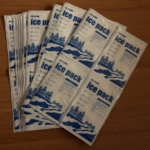
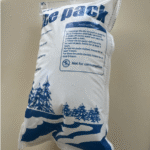
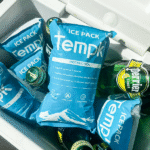
À base d'eau packs de gel et briques de glace peuvent absorber la chaleur lorsqu'ils se réchauffent et changent de phase. Leur utilité dépend de la masse, géométrie, conditionnement, placement, défi ambiant, et exigence du produit. Un pack gelé ne garantit pas une charge utile profondément gelée; de nombreux formats à base d'eau changent de phase proche de 0°C. Sélectionnez en fonction du comportement documenté et des tests d'itinéraire plutôt que du mot "glace."
D'autres matériaux à changement de phase peuvent cibler différentes régions de transition. Demander des données techniques, instructions de conditionnement, film d'emballage, réponse aux fuites, et la cohérence de la production. Confirmez si la source froide peut toucher le colis principal ou nécessite une barrière. Placez-le dans des manchons retenus ou dans des zones définies afin que les cyclistes ne puissent pas le déplacer avec désinvolture.
Le conditionnement a besoin d’une infrastructure. Identifier le point de consigne du congélateur et le surveiller, modèle de chargement, préparation minimale, méthode de confirmation, stockage de stock prêt, rotation, et manutention après le retour. Si les prévisions annoncent des centaines d'itinéraires, confirmer que l'installation peut conditionner suffisamment de packs sans surcharger les congélateurs ni raccourcir la procédure pendant les périodes de pointe.
La glace carbonique est un choix de conception distinct. C'est du dioxyde de carbone solide à environ -78,5°C, peut blesser la peau, peut endommager l'emballage en cas de froid extrême, et libère du gaz en se sublimant. Un stockage ou des véhicules mal ventilés peuvent devenir dangereux, et l'emballage doit permettre la libération du gaz. Les expéditions aériennes sont soumises aux règles actuelles relatives aux marchandises dangereuses et aux exigences des transporteurs. N'insérez pas de glace carbonique dans un sac à dos standard à moins qu'un agent de sécurité compétent, transport, matériels, et l'examen de l'emballage a approuvé l'utilisation.
Gardez les charges réfrigérées et congelées séparées à moins qu'il n'existe un système multizone vérifié.. Un diviseur ne crée pas deux régions de température stables. De même, ne combinez pas des aliments préparés chauds avec de la viande crue réfrigérée dans un seul support non contrôlé.
Testez le système complet, Y compris l'utilisation humaine
Écrivez le protocole avant de collecter des données. Nommer la révision du sac destiné à la production, packs primaires ou substitut justifié, niveau de charge utile, identité et conditionnement de la source froide, séquence de chargement, condition de démarrage, profil ambiant, orientation, horaire d'ouverture, capteurs, intervalle de journalisation, durée, et critères d'acceptation. Enregistrer les écarts plutôt que d’ajuster le protocole après l’apparition des résultats.
Utiliser des capteurs adaptés et calibrés ou vérifiés pour la plage d’intérêt. Placez-les à proximité de zones probablement chaudes: couvercle, fermeture éclair, mur extérieur, base, et lieu de la dernière commande. Inclure un noyau protégé représentatif. Séparez le capteur ambiant des capteurs de charge utile. Marquez si chaque mesure représente l'air, surface du paquet, ou un support de simulation de produit.
La courbe de température raconte l'histoire. Une augmentation rapide au début peut indiquer des composants chauds du sac ou un conditionnement incorrect.. Une étape après chaque ouverture montre un problème d'accès. Un bord chaud avec un noyau stable suggère une distribution de liquide de refroidissement ou un pont thermique. Un capteur de froid à côté d'un pack de gel peut dissimuler un produit plus chaud ailleurs.
Testez un faible remplissage et une pleine charge. Utilisez plusieurs sacs et répétitions lorsque le risque le justifie. Si une réutilisation est prévue, inclure un sac qui a subi un nettoyage et une manipulation représentatifs. Inspecter les sceaux des emballages, étiquettes, condensation, intégrité de la doublure, et mouvement de la source froide après chaque analyse.
Puis déplacez-vous sur le terrain. Un laboratoire ou une chambre ne peut pas reproduire tous les raccourcis d'emballage, position du véhicule, escalier, file d'attente de réception, ou absence du client. Former plus d'un emballeur et d'un cavalier. Observez si les travailleurs peuvent charger le diagramme, fermer le sac, identifier les commandes en externe, portez-le en toute sécurité, et répondre aux retards.
Outils de décision utiles
Vérifiez les détails avant de choisir l'emballage
Ces outils rapides peuvent vous aider à comparer le risque d'itinéraire, besoins de dimensionnement, choix de liquide de refroidissement, et les détails de l'emballage avant de demander un devis.
Calculateur de glace carbonique
Estimer les besoins en glace carbonique pour les envois congelés ou ultra-froids avant l'emballage.
Estimation de la neige carboniqueSélecteur d'emballage
Comparez les options d'emballage isotherme par produit, itinéraire, et besoin de température.
Trouver un emballageVérificateur de risque d'itinéraire
Examinez les conditions des pistes avant de sélectionner l'emballage en fonction des exigences opérationnelles réelles..
Vérifier le risque d'itinérairePrenons l'exemple d'un distributeur de services alimentaires livrant des coupes réfrigérées emballées sous vide à trois restaurants.. Le sac de test passe un profil ambiant fermé. En route, un chauffeur ouvre le couvercle plein à chaque arrêt et pose le transporteur près d'une hotte de cuisine. La dernière commande approche de la limite d'acceptation. La refonte correcte peut combiner des étiquettes de commande externes, zones amovibles, une position différente du véhicule, et un rendez-vous de livraison. Plus de réfrigérant seul pourrait augmenter le poids sans contrôler l’exposition.
Terminez le pilote en revenant, nettoyage, séchage, inspecter, et réutiliser le sac. S'il ne peut pas être prêt pour la prochaine expédition sans sauter une étape, le nombre de flottes, capacité de nettoyage, ou la conception doit changer.
Confiez les responsabilités réglementaires aux bonnes parties
Un fournisseur d'équipement peut documenter les matériaux et les tests. Il ne peut pas rendre conforme l’ensemble de l’exploitation de viande de l’acheteur.. La juridiction américaine varie selon les espèces, formulation, établissement, et activité. Le service de sécurité alimentaire et d'inspection de l'USDA supervise de nombreux produits à base de viande et de volaille. La FDA supervise d'autres aliments et parties des systèmes de transport et de vente au détail. État, locale, importer, et les règles du client peuvent ajouter des exigences.
Le FDA Food Code est un modèle pour les garanties de vente au détail et de restauration, la loi fédérale n'est pas identique partout. La règle de transport sanitaire de la FDA couvre de nombreux mouvements de produits alimentaires éligibles par moteur ou par train., mais la couverture, exemptions, accords écrits, et les tâches doivent être évaluées pour l'opération réelle. Les directives du FSIS traitent de la protection et de la défense de la viande, volaille, et ovoproduits dans le transport et la distribution.
La déclaration d'approvisionnement minutieuse n'est pas "Sac à dos approuvé par l'USDA" ou "Sac conforme HACCP." Il s'agit d'une affirmation précise sur la construction et les conditions de test, suivi de la propre détermination de l'adéquation par l'opérateur. L'établissement doit intégrer le transporteur dans ses procédures d'assainissement, contrôle des risques, méthodes de protection des produits, plan de température, traçabilité, et réponse à la déviation, le cas échéant.
Les produits crus et prêts à consommer nécessitent une séparation contrôlée. La viande assaisonnée ou marinée peut susciter des problèmes d'allergènes. Les emballages primaires doivent être scellés et étiquettes intacts. Les retours sales doivent rester séparés des transporteurs libérés. Si une fuite se produit, conserver les aliments concernés et retirer le support du service. Un effacement rapide pendant un itinéraire ne remplace pas la réponse approuvée.
Les fonctionnalités de traçabilité peuvent prendre en charge le processus. Identification du sac, points d'étanchéité, étiquettes de lots, et les analyses de garde peuvent aider à relier un itinéraire à un lot de produits et à un transporteur.. Ils ne remplacent pas les documents commerciaux requis par le système concerné.. Décidez quels identifiants doivent survivre à l’humidité, froid, nettoyage, et utilisation répétée.
Contrat avec le distributeur pour plus de cohérence
La relation distributeur doit avoir une couche technique et une couche commerciale. Du côté technique, contrôler les matériaux critiques et les spécifications de construction, échantillon approuvé, tolérances, plan d'inspection, identité du lot, processus de non-conformité, et préavis de modifications. Du côté commercial, définir les composants inclus, quantités, base de tarification, échantillons, personnalisation, calendrier de production, emballage, conditions d'expédition, garantie, des pièces de rechange, et processus de prévision.
Demandez comment le distributeur contrôle les fabricants en amont. Qui approuve la mousse, doublure, fermeture éclair, sangles, impression, et sources froides? Comment les révisions sont-elles identifiées? Quels contrôles finaux ont lieu avant l'expédition? Comment les lots mélangés sont-ils évités? Qui enquête sur un défaut qui traverse les fournisseurs de composants?
Aucun distributeur n'a besoin de divulguer tous les détails exclusifs pour être utile, mais il doit fournir suffisamment d'informations pour que l'acheteur puisse contrôler les fonctionnalités critiques en termes de performances.. Un refus d'identifier même la construction du paquebot, épaisseur d'isolation, ou la configuration du test est un signal de risque.
Approuver un échantillon destiné à la production. Un prototype fabriqué à la main peut démontrer la géométrie, mais la production en vrac introduit la découpe, piqûre, laminage, et variation d'assemblage. Une revue de pré-production ou du premier article peut confirmer la conception avant la sortie complète. Conserver un échantillon de référence et des dessins ou photographies contrôlés.
L'inspection à l'arrivée doit échantillonner tous les cartons et positions. Vérifier l'identité, dimensions intérieures, présence du panneau, coutures de doublure, alignement de fermeture, renforts, sangles, propreté, odeur, marque, ajustement à la source froide, et chargé les contrôles de performance définis dans le plan. Lorsque la construction interne n’est pas visible, une évaluation destructive occasionnelle peut être justifiée.
Les substitutions critiques doivent être revues. Une mousse différente, doublure, adhésif, fermeture éclair, couture, plaque de base, ou le réfrigérant peut modifier le comportement thermique ou sanitaire. Définir ce qui nécessite une révision des documents, un nouvel échantillon, ou refaire un test. Le contrôle des modifications doit également couvrir les modifications côté acheteur, telles qu'un nouveau carton., produit, produit chimique de nettoyage, itinéraire, ou charger.
Exploiter et entretenir la flotte
À l'expédition, libérer seulement propre, sec, porteurs intacts. Vérifier l'identité du produit et la condition de départ, scellés pour emballages primaires, réfrigérants corrects, placement du diviseur, étiquette d'itinéraire, et charge approuvée. Suivez l'emballage illustré et fermez le sac rapidement. Conserver les supports remplis dans un environnement contrôlé jusqu'à la collecte.
Pendant la livraison, fixez le sac à dos dans l'orientation approuvée et protégez-le de la chaleur évitable. Ouvert uniquement pour la commande prévue. Ne rangez pas d'objets personnels dans le compartiment à viande. Ne retirez pas les sources froides, ajouter des produits non planifiés, ou forcer la fermeture sous une charge excessive. Le plan d’escalade doit remédier aux retards, fuites, sacs endommagés, perdu la garde, et surveillance des alarmes.
A la réception, confirmer l'identité, scellés, condition physique, et preuve de température requise. Transférer sans délai les marchandises acceptées vers un entrepôt approprié. Séparer les écarts pour l’évaluation autorisée. Le refroidissement ou la recongélation ne doivent jamais être traités comme une correction automatique sans évaluer l'historique du produit et le plan de sécurité alimentaire..
Après le retour, déplacer les sacs sales vers la zone définie. Retirez les inserts comme indiqué, nettoyer en utilisant la chimie et la méthode approuvées, rincer si nécessaire, et sécher complètement ouvert. Inspecter la doublure, coutures, fermetures, état d'isolation, base, harnais, poches, et odeur. Réparer ou mettre hors service les unités qui ne peuvent pas répondre aux critères de libération.
Suivre la santé de votre flotte. Les mesures utiles incluent les sacs manquants, les prises de nettoyage, dommages à la doublure, échec de fermeture, type de réparation, produit rejeté, écart de température, dépassement d'itinéraire, erreur d'emballage, et réutilisation effective. Tendance par itinéraire et révision des sacs. Les données montrent si la prochaine amélioration appartient à l'emballage, expédition, entraînement, nettoyage, ou conception de réseau.
Le coût total doit inclure bien plus que le prix d’achat: réfrigérants, capacité du congélateur conditionné, travail, surveillance, essai, nettoyage, espace de séchage, retours, réparations, enregistré, pertes, élimination du produit, et gestion de fin de vie. Une flotte réutilisable n’a de valeur que lorsqu’elle revient et reste apte au service.
Rendre la réutilisation et la fin de vie crédibles
Conception pour la boucle réelle. Un itinéraire de restaurant local avec des retours de sacs quotidiens pourrait bien favoriser la réutilisation. Un envoi de consommateur aller simple peut ne pas. Distance de retour du modèle, perte, lavage, séchage, réparation, et remplacement avant de choisir une construction réutilisable plus lourde.
Préférer des supports de taille appropriée et des pièces remplaçables à forte usure lorsque cela est possible. Évitez les poches inutiles, matériaux mélangés, et des éléments de marque qui ajoutent des points de défaillance sans valeur opérationnelle. Demandez si la doublure, sangle, panneau, ou les composants de fermeture peuvent être entretenus sans compromettre la construction approuvée.
Les descriptions de fin de vie doivent correspondre à l'infrastructure disponible. Un sac à dos multicouche peut être difficile à recycler même s'il est en mousse individuelle, film, ou les composants textiles sont théoriquement recyclables. Déterminer si les pièces se séparent, si les programmes locaux les acceptent, et si le distributeur propose une voie de récupération. Évitez les "écologique" réclamations.
La politique d’emballage évolue également. Les entreprises qui mettent des emballages sur le marché de l’Union européenne devraient évaluer la réglementation (UE) 2025/40, qui s'applique généralement à partir d'août 2026 et aborde la composition de l'emballage, Recyclabalité, réutilisation, et prévention des déchets. Les tâches spécifiques dépendent de l'emballage et du rôle sur le marché. Un examen qualifié est nécessaire; ni la réutilisation ni le contenu recyclé ne démontrent à eux seuls la conformité.
La protection des produits fait toujours partie de l’équation de la durabilité. Perdre de la viande parce qu'un transporteur léger ne peut pas contrôler l'itinéraire gaspille le produit et toutes les ressources investies avant la livraison. L’objectif est le système le moins matériel qui fonctionne de manière fiable, termine ses cycles prévus, et a une prochaine étape réaliste à la retraite.
Approuvez uniquement l’enveloppe opérationnelle que vous pouvez défendre
Un sac à dos isolé pour la livraison de viande est approprié lorsque la mobilité mains libres a une valeur opérationnelle, la charge utile peut être transportée en toute sécurité, le produit reste scellé, la route est délimitée, et le pack complet passe les tests pertinents. Ce n'est pas la valeur par défaut pour les longues distances, viande lourde et volumineuse, produit exposé, attente incontrôlée, températures mixtes complexes, ou toute voie nécessitant une réfrigération motorisée.
L'approbation doit identifier la famille de produits, révision du sac, source froide, plage de charge utile, modèle de chargement, conditions d'itinéraire, surveillance, nettoyage, et processus d'acceptation. Cette limite donne aux répartiteurs une réponse claire lorsqu'une commande change. Il donne également au distributeur un véritable cahier des charges pour fabriquer.
Lorsqu'un paramètre sort de la limite, faire une pause et évaluer. Raccourcir le parcours, séparation des ordres, changer la source froide, ajout d'une mise en scène contrôlée, utiliser un expéditeur rigide, passer à un transporteur à roues, ou choisir un véhicule réfrigéré peut être plus sûr et plus économique que d'étendre la revendication du sac à dos.
L'achat réussit lorsque des employés ordinaires formés peuvent reproduire le résultat approuvé et lorsque le distributeur préserve la construction qui l'a produit.. C'est la différence entre acheter sacs isolés et mise en place d'une flotte de livraison contrôlée de viande conditionnée.
À propos du tempk
Tempk est une société basée à Shanghai emballage chaîne du froid fabricant. Sa gamme officielle comprend des sacs à dos isothermes pour la livraison de nourriture, sacs thermiques, packs de gel, briques de glace, et choix personnalisés pour les dimensions, isolation, garniture, fermetures, sangles, séparateurs, couleurs, et marque. Tempk propose également des exemples de support pour l'ajustement de la charge utile, confort de portage, nettoyage, et contrôles d'itinéraire. Pour la viande emballée, ces options peuvent former un candidat d'intention de production; l'acheteur reste responsable des limites du produit, sanitaire, vérification thermique, et les décisions réglementaires applicables.
Fournissez à Tempk vos formats de packs de viande scellés, critères réfrigérés ou congelés, itinéraire et modèle d'ouverture, plan source froide, méthode de nettoyage, et les exigences du distributeur pour demander un échantillon contrôlé et une proposition en gros.