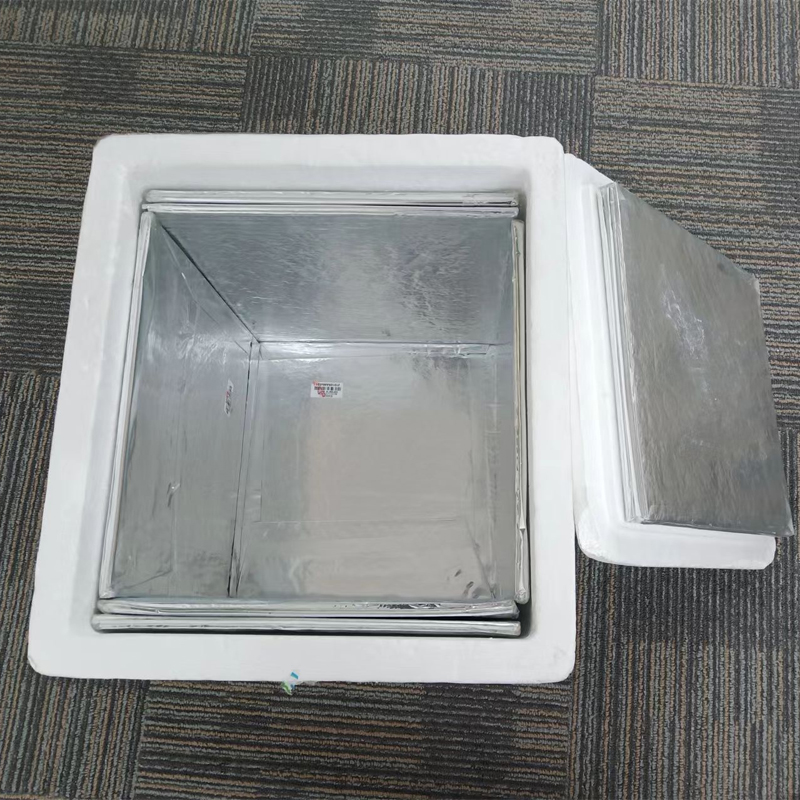
Sélection d'un 20 Fournisseur de glacières pour vaccins d'un litre avec preuves
Un crédible 20 litre fournisseur de glacières pour vaccins devrait être capable de transformer cinq entrées en une proposition contrôlée: exigences de température du produit, dimensions réelles de la charge utile, exposition par voie, ressources de préparation, et les besoins en documentation de qualité. « 20 litres » n'est qu'une catégorie de départ. Le chiffre décisif est l’espace de chargement utile après l’installation du liquide de refroidissement et des composants de protection.. L’exigence de performance décisive n’est pas un nombre d’heures générique, mais des preuves liées à la boîte exacte, charger, liquide de refroidissement, profil ambiant, et le mode opératoire que vous comptez utiliser.
Commencez avec cinq entrées non négociables
Les comparaisons entre fournisseurs deviennent confuses lorsque chaque fournisseur remplit les informations manquantes avec une hypothèse différente. Émettre un dossier de demande commun afin que les propositions partagent une limite.
D'abord, indiquer les conditions de transport approuvées du produit. N'attribuez pas de cuisinière réfrigérée générique simplement parce que la charge utile est un vaccin.. Sensibilité au gel, stabilité, conditionnement, et les règles du programme peuvent différer selon le produit.
Deuxième, fournir des détails sur la charge utile. Inclure le décompte, dimensions extérieures du carton, condition de départ, masse approximative, limites d'orientation, et si la quantité varie. Troisième, tracer la voie. Notez la durée totale, transferts, mise en scène, types de véhicules, saisons chaudes et froides, et des scénarios de retard crédibles.
Quatrième, décrire les ressources opérationnelles. Le personnel peut-il geler, réfrigérer, ou autrement conditionner le liquide de refroidissement dans des conditions contrôlées? Y a-t-il de l'espace pour organiser les packs ?? Qui emballe et vérifie la boîte? Enfin, identifier les attentes en matière de preuves et de documentation. Ceux-ci peuvent inclure un emballage contrôlé, rapport thermique, traçabilité des composants, notification de changement, et réception des dossiers.
| Saisir | Informations minimales | Pourquoi cela change le design |
|---|---|---|
| Produit | Conditions de température et sensibilité approuvées | Définit les limites d’acceptation et le risque de gel/chaleur |
| Charge utile | Taille du carton, compter, masse, et variantes | Détermine l'enveloppe utilisable et la masse thermique |
| Itinéraire | Durée, exposition ambiante, transferts, retards | Établit le défi que le système doit gérer |
| Opérations | Équipement de conditionnement, travail, mise en scène, réutilisation | Détermine si le packout peut être exécuté de manière fiable |
| Qualité | Test, enregistrements, traçabilité, et changer les besoins | Définit les preuves requises pour l’approbation |
Ce dossier en cinq entrées expose également quand une classe de produit différente est nécessaire. Si poids chargé, durée, ou la géométrie de la charge utile n'est pas adaptée, s'éloigner d'une valeur nominale 20 La demande vaut mieux que d'y forcer l'envoi.
Capacité: Résoudre la définition avant le dessin
Trois fournisseurs peuvent proposer un 20 Boîte L avec trois interprétations différentes. On peut calculer la cavité vide. Un autre peut utiliser un nom de modèle arrondi. Un troisième peut faire référence à une famille nominale. Aucun ne décrit nécessairement l'espace disponible pour les vaccins après les emballages latéraux, meilleurs packs, séparateurs, et un dispositif de surveillance sont présents.
Demander des dimensions extérieures, contours internes, et une enveloppe de charge utile dimensionnée pour le packout proposé. Vérifiez les murs coniques, coins arrondis, évidements du couvercle, côtes, et matériel saillant. Effectuez ensuite un essai d'ajustement physique avec des cartons équivalents à ceux de la production.. L'arithmétique du volume ne peut pas indiquer si l'orientation requise du carton dégage le couvercle ou si le personnel peut retirer un carton sans perturber le liquide de refroidissement..
La charge utile minimale est aussi importante que la charge utile maximale. Une boîte sous-remplie peut avoir moins de masse thermique et plus d'air libre que l'agencement testé. Si la quantité expédiée varie, demander si plusieurs emballages approuvés, charges fictives, ou un format plus petit est plus approprié. Tout remplisseur doit être compatible avec le système et contrôlé dans la notice.
La masse totale chargée complète la définition de la capacité. Peser la coquille, isolation, liquide de refroidissement, charge utile, enregistreur, scellés, et documents. Utiliser ce résultat pour la manipulation manuelle, charge utile du véhicule, fret, et planification du stockage.
Tracez une ligne entre les caractéristiques du produit et la preuve thermique
Une coque robuste, isolation épaisse, couvercle hermétique, et un liquide de refroidissement premium peut tous être utile. Ils restent des caractéristiques de conception jusqu'à ce que la configuration assemblée soit évaluée. L'approbation du produit doit séparer quatre niveaux:
Construction de conteneurs: coquille, isolation, couvercle, matériel, et géométrie interne
Composants thermiques: type de liquide de refroidissement, quantité, condition, et placement
Méthode de fonctionnement: préparation de la charge utile, séquence de chargement, fermeture, et règles d'ouverture
Preuve: protocole et résultats dans des conditions ambiantes et de charge utile définies
Cette séparation évite les exagérations. Une coque extérieure en plastique ne constitue pas une boîte à température contrôlée. Le matériel VIP ne qualifie pas un itinéraire. Un enregistreur de température ne protège pas le produit. Une norme de test mentionnée dans une brochure n'établit pas que la configuration exacte proposée répond aux critères d'acceptation pertinents..
L’OMS publie des spécifications de performances et des approches d’essais de type pour des catégories définies de boîtes froides de vaccins. ISTA fournit des normes et des profils pour évaluer les emballages de transport thermique dans les environnements de colis. Ceux-ci peuvent éclairer un programme, mais les exigences dépendent de l'application. Vérifier si un produit est officiellement répertorié ou testé de manière indépendante lorsque ce statut est important. Si un fournisseur utilise une norme comme référence, demander précisément quelle méthode, edition, profil, configuration, et le résultat s'applique.
Lire un rapport thermique comme un enregistrement de décision
Le rapport doit répondre à trois questions: Ce qui a été testé? Sous quel défi? Ce qui s'est passé?
Pour quoi,» confirme le modèle, matériels, révisions des composants, liquide de refroidissement, emballage, charge utile, positions des enregistreurs et des capteurs. Pour « défi," Examiner la température ambiante en fonction du temps, préconditionnement, températures de départ, durée, ouvertures, et toute simulation de manutention. Pour « réussi," identifier la plage d'acceptation, le capteur ou la condition qui a régi le résultat, écarts, et approbation.
Ne réduisez pas le rapport à la durée du titre. Un test de 48 heures et un parcours de 48 heures ne sont pas équivalents simplement parce que les chiffres correspondent. L'exposition de l'itinéraire peut commencer avant l'expédition, inclure une rampe ou un retard important, et continuez pendant la réception. La charge utile de test peut également avoir une masse thermique différente. Votre processus qualité doit déterminer comment les preuves s'appliquent et quelle marge est nécessaire.
Le placement des capteurs mérite un examen minutieux. Des points froids peuvent apparaître à proximité du liquide de refroidissement gelé; des points chauds peuvent apparaître à proximité d'un couvercle ou d'un pont thermique. Les relevés d'air peuvent réagir différemment d'une charge simulant un produit. Le rapport doit expliquer pourquoi les emplacements représentent le risque prévu. Des instruments calibrés et des enregistrements de données intacts renforcent la confiance, mais aucune configuration de capteur ne prouve des emplacements non surveillés sans une conception d'étude solide.
Une séquence de révision pratique
- Faites correspondre chaque composant testé à la nomenclature proposée.
- Reconstruisez le pack à partir des instructions.
- Comparez la charge utile testée avec les charges minimales et maximales prévues.
- Comparer le profil ambiant avec le risque d'itinéraire, y compris la mise en scène.
- Vérifiez l'acceptation du chaud et du froid, le cas échéant.
- Enregistrer les lacunes sous forme d'actions, pas des hypothèses.
Variation de l'opérateur de conception
L’emballage passif dépend des personnes. Une conception qui ne fonctionne que lorsqu'un expert ajuste chaque paquet est difficile à mettre à l'échelle. Le fournisseur doit aider à créer une séquence reproductible avec des identités claires des composants, état défini du liquide de refroidissement, ordre de chargement, placement, contrôle de fermeture, et temps de préparation maximum autorisé, le cas échéant.
Utilisez des composants ajustés ou des repères visuels là où ils réduisent l'ambiguïté. Un pack de base ne doit pas être interchangeable avec une entretoise latérale, sauf si la conception le permet vraiment.. Les instructions doivent montrer l'état final correct, y compris la couche supérieure que les opérateurs oublient souvent. Le nombre de composants peut être enregistré avant la fermeture.
Le conditionnement du liquide de refroidissement est une source de variation majeure. Température du congélateur, empilement de paquets, chargement de l'équipement, et le temps passé en dehors du stockage contrôlé peut affecter l'état. Les instructions doivent spécifier un état objectif ou une procédure validée appropriée au liquide de refroidissement.. Pour les vaccins sensibles au gel, l'emballage doit contrôler le contact direct et le risque local de rhume plutôt que de compter sur une prudence générale.
Imaginez deux équipes d'entrepôt utilisant la même boîte. Une équipe met en scène chaque composant dans l'ordre et ferme le couvercle immédiatement; l'autre apporte le liquide de refroidissement au banc plus tôt et recherche les entretoises manquantes pendant que la boîte reste ouverte. Même si les deux utilisent les bonnes pièces, les conditions de départ diffèrent. Un pack équipé, liste de contrôle avant utilisation, et la limite de mise en scène peut réduire cette variation.
Surveillance et réponse aux excursions
La surveillance est la couche de preuve pendant l'expédition. Sélectionnez un enregistreur en fonction du produit et du processus: plage de mesure appropriée, précision, état d'étalonnage, intervalle, durée, logique d'alarme, accès aux données, et conservation des dossiers. Vérifiez les paramètres spécifiques à partir de la documentation actuelle de l'appareil plutôt que de supposer que tous les enregistreurs pharmaceutiques sont interchangeables..
Outils de décision utiles
Vérifiez les détails avant de choisir l'emballage
Ces outils rapides peuvent vous aider à comparer le risque d'itinéraire, besoins de dimensionnement, choix de liquide de refroidissement, et les détails de l'emballage avant de demander un devis.
Calculateur de banquise
Estimation de la quantité de pain de glace pour les expéditions réfrigérées et planification pratique des itinéraires.
Estimer les packs de glaceRéférence du matériau isolant
Comparez les choix de matériaux d'isolation pour différents besoins d'emballage de la chaîne du froid.
Comparez les matériauxSélecteur d'emballage
Comparez les options d'emballage isotherme par produit, itinéraire, et besoin de température.
Trouver un emballagePlacer le capteur selon la justification de la qualification. Évitez le placement occasionnel à côté d’un sac congelé, dans un coin vide, ou directement sous le couvercle, sauf si ce point est intentionnellement surveillé. Former le personnel de réception à arrêter et récupérer le dossier sans perdre les informations de garde.
Une alarme n’est pas une décision automatique de libération ou de rejet. Définir qui examine l'historique temps-température, quelles informations justificatives sur l'expédition sont collectées, où le produit est conservé pendant l'évaluation, et qui a le pouvoir de disposer. Le fournisseur d'emballage peut expliquer la boîte et tester, mais les décisions relatives à la stabilité des produits appartiennent aux fonctions responsables de la qualité et de la santé.
L'approbation de la production fait partie du contrôle thermique
Après qualification, le fournisseur doit fabriquer à plusieurs reprises la conception approuvée. Créer une spécification qui identifie les matériaux critiques, dimensions, interfaces de composants, caractéristiques du liquide de refroidissement, et contrôles fonctionnels. Lier la spécification à un échantillon de référence contrôlé et aux dessins actuels.
Les changements potentiellement significatifs incluent la résine ou le colorant, formulation ou densité de la mousse, fournisseur d'isolation, VIP geometry, adhésif, joint, film ou remplissage de liquide de refroidissement, outil de moulage, et lieu de production. Tous les changements ne nécessitent pas une nouvelle étude thermique, mais chacun doit passer une évaluation d'impact documentée. Convenez des règles de notification avant de commander.
L'inspection à la réception doit vérifier l'identité et l'état visible, ne pas tenter de répéter la qualification sur chaque unité. Les contrôles appropriés peuvent inclure le marquage du modèle, nombre de composants, dimensions, fonction couvercle ou loquet, état du joint, qualité du joint du liquide de refroidissement, précision de l'étiquette, et dommages dus au transport. Analyser les échecs et les relier aux mesures correctives du fournisseur.
Pour les unités réutilisables, l'inspection se poursuit après chaque retour en fonction des risques. Fissures, gauchissement, isolation endommagée, odeurs, contamination, composants manquants, ou une fermeture peu fiable peut déclencher le nettoyage, réparation, enquête, ou à la retraite. Établissez des règles avant que les cartons ne s’accumulent dans l’entrepôt.
Comparez le coût total pour la même configuration
La comparaison des prix ne devrait commencer qu'après la normalisation de la configuration. Identifiez si chaque devis inclut le shell, isolation, liquide de refroidissement, jeu d'entretoises, séparateurs, accessoires de l'enregistreur, scellés, œuvres d'art, export carton, documents techniques, et pièces de rechange. Outillage séparé, exemple de travail, essai, et fret.
Pour une distribution à sens unique, calculer le coût au débarquement et le fret dimensionnel, puis tenez compte des obligations de main-d'œuvre d'emballage et d'élimination. Pour réutilisation, coût du modèle par cycle terminé avec succès, y compris le transport inverse, nettoyage, inspection, stockage, suivi, perte, dommage, et remplacement. Évitez de traiter une demande de réutilisation maximale non vérifiée comme un fait financier.
Les comparaisons de durabilité nécessitent la même discipline. Tenir compte de l'apport matériel, fret dans les deux sens, nettoyage, durée de vie, perte, et parcours de fin de vie. Une boîte réutilisable peut s'adapter à une boucle fermée dense; un expéditeur à usage limité de bonne taille peut s'adapter à une voie à sens unique éloignée. Choisissez en fonction des limites du système et soutenez les affirmations publiques avec des preuves.
Liste restreinte des fournisseurs: Dix questions décisives
Comment est le 20 Capacité L définie?
Quelle est l'enveloppe de charge utile exacte utilisable dans le package proposé ??
Quelles conditions de température du produit et hypothèses d'itinéraire ont guidé la conception?
Quel liquide de refroidissement, processus de conditionnement, et la méthode de séparation sont spécifiées?
Quel rapport prend en charge la configuration exacte proposée?
Quel profil ambiant, charge utile, capteurs, et les critères d'acceptation ont été utilisés?
Comment les matériaux critiques et les processus de production sont-ils contrôlés?
Quels changements déclenchent une notification client?
Quels documents et échantillons sont livrés avec approbation?
Comment les unités réutilisables sont-elles inspectées, nettoyé, réparé, et retraité?
Ces questions favorisent les fournisseurs transparents sans exiger une certitude non étayée. Un fournisseur qui identifie une lacune dans les données et propose un test est souvent plus sûr qu'un fournisseur qui prétend que chaque itinéraire est déjà couvert.
Questions fréquemment posées
L’espace utilisable pour les vaccins est-il toujours plus petit que 20 litres?
Souvent, elle est plus petite que la cavité vide indiquée car le liquide de refroidissement, espaceurs, et les séparateurs occupent l'espace, mais les définitions varient. Certains modèles utilisent 20 L uniquement en tant que catégorie. Demandez la méthode de mesure du fournisseur et une enveloppe de charge utile dimensionnée. Confirmez l'ajustement en utilisant les cartons réels et l'emballage complet proposé.
Quelle isolation est la meilleure pour une glacière à vaccins?
Aucun matériau n’est universellement le meilleur. PPE, constructions en plastique à âme en mousse, et les systèmes améliorés VIP offrent différents équilibres de résistance thermique, épaisseur de paroi, durabilité, sensibilité aux dommages, poids, et coûter. Évaluer la configuration terminée, contrôles de production, itinéraire, et tester les preuves plutôt que de choisir uniquement par le nom du matériau.
Un emballage peut-il fonctionner en été comme en hiver?
Éventuellement, mais il ne faut pas supposer. Les expositions au chaud et au froid peuvent créer différents risques de défaillance, y compris la surchauffe et le refroidissement excessif. Examiner les preuves de la plage saisonnière prévue. Certains programmes utilisent des packs saisonniers; d'autres prennent en charge une configuration dans des conditions définies. La décision doit suivre les données de test et l'évaluation de l'itinéraire.
Que se passe-t-il si la quantité de charge utile change?
La modification de la quantité de charge utile peut modifier la masse thermique, flux d'air, et les relations entre le liquide de refroidissement et le produit. Utiliser uniquement une plage de charge utile prise en charge par l'évaluation. Si les chargements partiels sont courants, développer un arrangement approuvé en utilisant un système plus petit justifié, remplisseur contrôlé, ou un conditionnement alternatif plutôt que de permettre aux opérateurs d'improviser.
La référence de l'OMS ou de l'ISTA garantit-elle l'acceptation?
Non. Une référence peut décrire une méthode, profil, ou catégorie de produit, mais l'acceptation dépend du respect des exigences applicables et de l'adéquation du produit testé à l'utilisation prévue. Vérifier la liste exacte ou les allégations de certification si nécessaire, examiner le rapport, et confirmer toute offre locale, réglementaire, ou obligations en matière de système qualité.
Conclusion
UN 20 Le fournisseur de glacières pour vaccins d'un litre doit être sélectionné selon une chaîne de preuves, pas une comparaison de catalogue. Définir le produit, charge utile, itinéraire, opérations, et la documentation d'abord. Résoudre le volume utilisable et la masse chargée. Évaluez l’isolation et le liquide de refroidissement dans l’emballage complet. Lire les rapports thermiques par rapport au risque réel sur la voie, puis contrôlez la construction qualifiée jusqu'à la production, recevoir, et réutiliser. Normaliser la configuration avant de comparer les coûts. Ce cadre donne aux marchés publics, logistique, et les équipes qualité une base commune d'approbation.
À propos du tempk
Tempk, une partie de Shanghai Tempk, offres emballage chaîne du froid catégories qui incluent glacières médicales, Formats PPE, Solutions isolées liées aux VIP, boîtes en plastique, et options de liquide de refroidissement. Ces catégories offrent des choix de conception pour différentes charges utiles, manutention, et les besoins en itinéraires; ils ne suppriment pas la nécessité d'un examen spécifique à la configuration. Une enquête productive décrit l’état prévu du produit, géométrie réelle de la charge utile, défi ambiant, moyens de fonctionnement, et les preuves requises afin que l'orientation de l'emballage disponible puisse être évaluée par rapport à des limites claires.
Contactez Tempk avec votre résumé d'itinéraire et la disposition de votre charge utile pour discuter d'exemples d'options, composants d'emballage, et la documentation nécessaire pour la prochaine étape d'évaluation.