


Chilled Mixed Grocery Pallets
Controlar 2-8 C chilled routes while protecting airflow, mixed SKU compatibility, condensação, resistência da caixa, and dock exposure.
Pallet cold chain planning is not parcel packaging scaled up. The route must account for pallet mass, warehouse airflow, exposição da doca, stretch-wrap tension, edge warming, carton compression, and logger positions across the top, exposed edge, essencial, and lower layers.
A chilled mixed grocery pallet, frozen meat pallet, and frozen seafood pallet may all pass through the same warehouse, but the failure points are different. Tempk plans the cover, forro, fluxo de ar, opção de gelo seco, and logger map around the actual load.
Controlar 2-8 C chilled routes while protecting airflow, mixed SKU compatibility, condensação, resistência da caixa, and dock exposure.
Proteger -18 C frozen lanes from edge thaw, carton compression, frost melt, and open-door transfer risk.
Maintain frozen control while managing glaze condition, vazamento, seafood odor separation, and exposed edge cartons.
| Pallet route | Intenção de temperatura | Load protection setup | Coolant or cover planning | Check at receiving |
|---|---|---|---|---|
| Chilled mixed grocery pallet, cold room to reefer, 2-12 h | Use the strictest product requirement on the pallet; many mixed grocery lanes are planned around 2-8 C. | Pre-cooled pallet, airflow-aware wrap, carton-strength stacking, thermal cover or liner for dock exposure. | Primary control should be the refrigerated lane. Add gel packs or PCM only in a validated insulated pallet plan, muitas vezes 8-25 kg for exposed handoff or passive buffer lanes. | Top/edge/core temperature, caixas molhadas, crushed soft cartons, transferência de odor, wrap movement, e atraso no recebimento. |
| Frozen meat pallet, frozen warehouse to reefer, 4-24 h | Common frozen planning target is around -18 C; protect exposed edges and avoid partial thaw during transfer. | Frozen pallet cover or liner, placas de canto, heavy-carton pattern, protected exposed edge, dry dock transfer limit. | Use active frozen transport as the main control. Dry ice may be planned for validated backup or passive segments, comumente 10-50 kg per pallet depending on lane, tamanho da palete, and allowed handling rules. | Edge and core temperature, resistência da caixa, frost melt, drip signs, wrap stability, and remaining dry ice if used. |
| Frozen seafood pallet, frozen warehouse to reefer or cross-dock, 4-24 h | Plan around frozen control, muitas vezes perto -18 C, with attention to surface glaze, vazamento, and odor separation. | Frozen cover or liner, leak/odor separation, stable carton pattern, exposed edge protection, top-edge-core logger map. | Use reefer control first. Dry ice or frozen pallet shroud can be considered for validated exposed lanes, comumente 10-55 kg per pallet depending on duration and pallet mass. | Glaze condition, vazamento, transferência de odor, borda descongelada, carton wetting, mapa do registrador, and remaining dry ice if used. |
These ranges are starting points for sampling and route discussion. Final coolant or dry ice mass must be confirmed by pallet size, massa do produto, regulatory and carrier rules, duração da rota, ventilação, exposição ambiental, e procedimento de recebimento.
Load from stable cold storage. A cover, forro, or coolant plan should hold the route, not remove heat from a warm pallet.
Stretch wrap, carton pattern, lacunas de ar, and cover fit should work together. Over-wrapping can trap warm zones; weak stacking can crush lower cartons.
Pacotes de gel, PCM, or dry ice can support some pallet routes, but they should not replace a required refrigerated or frozen lane unless the passive pallet setup has been validated.
Use loggers at the top, exposed edge, essencial, and lower pallet positions. One center logger can miss edge warming or top-layer exposure.
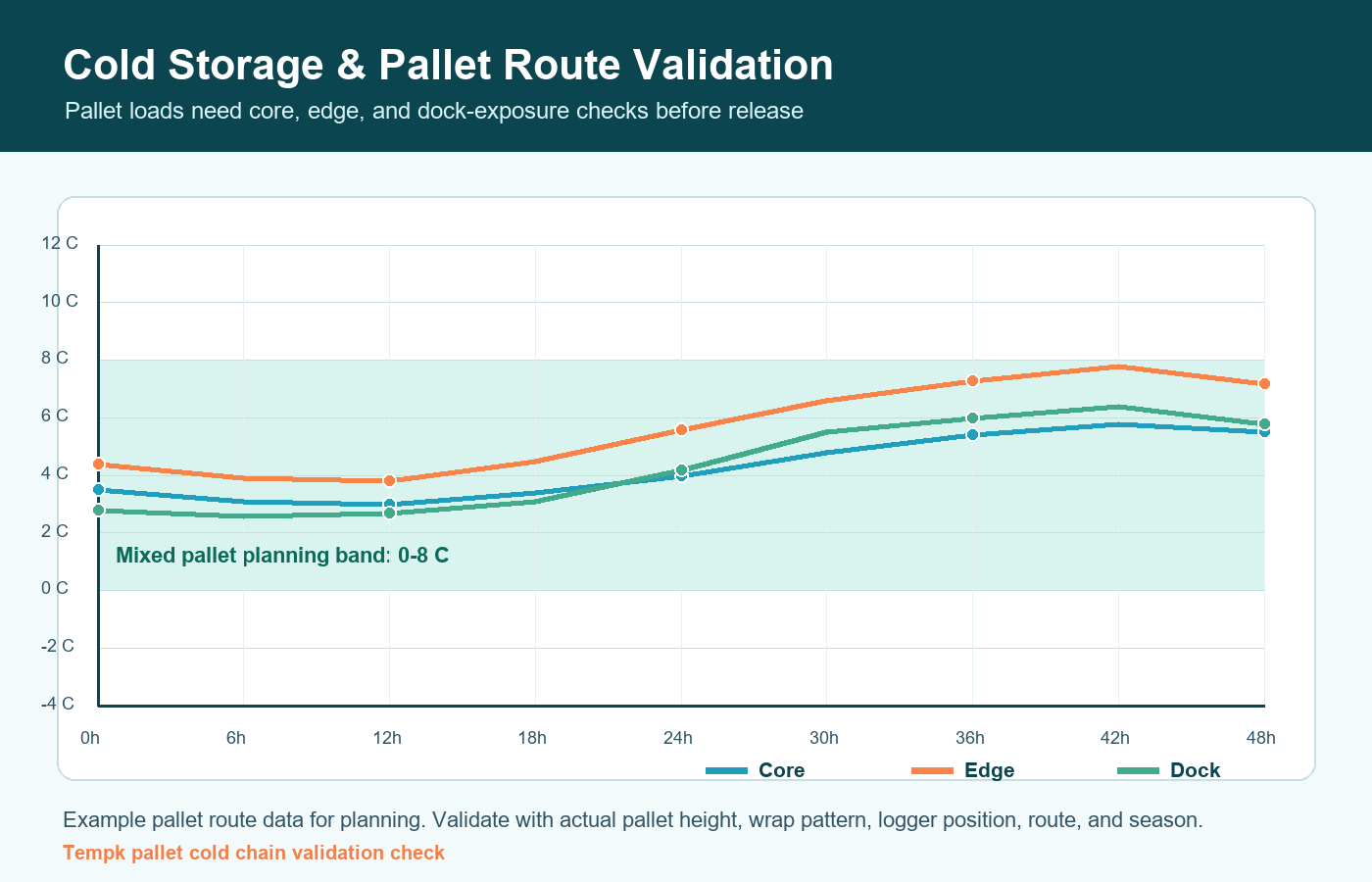
The pallet curve helps compare dock exposure, pallet cover performance, e localizações de registradores. Read it together with receiving checks for carton condition, vazamento, geada, odor, wrap shift, and exposed-edge quality.
Use this guide for a related chilled pallet lane where pre-cooling, fluxo de ar, controle de envoltório, and dock exposure need focused handling notes.
Chilled dairy pallet guidance with pre-cooling, fluxo de ar, controle de envoltório, exposição da doca, e validação.
Use these pages to compare coolant mass, dry ice planning, risco de rota, escolha de isolamento, and nearby product routes before validation.
Share the pallet dimensions, massa do produto, carton pattern, temperatura alvo, hora de ancoragem, trailer type, cross-dock steps, condição ambiente, e recebimento de cheques. Tempk can help compare covers, forros, pacotes de gel, PCM, dry ice support, posições do registrador, e etapas de validação.