


Falscher Temperaturmodus
Frisch, behoben, and frozen Gewebe routes may need different handling; assuming one cold route can create receiving problems.
Biopsie and Gewebe Probe packaging depends on whether the Probe is fresh, behoben, oder gefroren. The same box cannot safely cover all three routes without checking the collection protocol, Container, Leckgefahr, and receiving deadline.
Gewebeproben reagieren empfindlich auf Temperaturfehler und Handhabung. Der Aufbau muss Leckage, Quetschung, Gefrier-Auftau-Fehler und Dokumentenschäden verhindern.
Frisch, behoben, and frozen Gewebe routes may need different handling; assuming one cold route can create receiving problems.
Liquid containers need upright support, absorbierend Sekundärverpackung, and paperwork protected away from wet zones.
Small Gewebe containers can move inside a large shipper unless cushioning and dividers are sized to the Nutzlast.
| Routenbedingung | Temperaturziel | Verpackungsaufbau | Planung von Kühlelementen oder Trockeneis | Empfangsprüfung |
|---|---|---|---|---|
| Fresh Gewebe, short diagnostic route | Befolgen Sie das Laborprotokoll. Many fresh Gewebe routes use 2-8 C and short handoff windows. | Rigid leak-resistant primary container, absorbierend Sekundärverpackung, Dämpfung, Kühlmittelverteiler, and Temperaturschreiber near the Nutzlast. | Für einen 3-8 L Versender, Versuch 0.8-2 kg konditioniert 2-8 C PCM or Gel-Kühlelemente for local routes. Vermeiden Sie direkten Kühlmittelkontakt. | Keine Leckage, Gewebe container stable, kein Einfrieren, dry request form, und Empfangszeit. |
| Fixed Gewebe or ambient protocol route | Use the collection protocol. Some fixed Proben may not need refrigerated coolant, but still need leak and document protection. | Rigid outer shipper, aufrechte Unterstützung, absorbierend secondary layer, Dämpfung, and separate document sleeve. | Insulation may be used for temperature buffering. Avoid adding cold packs unless the lab protocol asks for them. | Container intact, cap sealed, no liquid in outer bag, lesbare Etiketten, and chain record. |
| Frozen Gewebe or molecular testing route | Maintain frozen condition when required and avoid thaw-refreeze during transfer. | Trockeneis shipper, frozen Probe rack, Trockeneis barrier, Entlüftungsverpackung, absorbierende Sekundäreindämmung, and frost-protected documents. | Small frozen Gewebe lanes may start around 2-6 kg Trockeneis für 0-24 Hand 6-12 kg for longer or hot routes, dann validieren. | Restliches Trockeneis, keine Hinweise auf Tauwetter, Probe rack stable, dry paperwork, and freezer transfer at receiving. |
Verwenden Sie diese Werte als Ausgangspunkt für die Bemusterung und Angebotserstellung. Letztes Kühlmittel, PCM, Trockeneis, Isolierung, Sekundärverpackung, Temperaturschreiber, und Handhabungsoptionen müssen mit dem echten Probe-Container validiert werden, Route, Trägerprozess, Jahreszeit, Einstufung, und Empfangsverfahren.
Confirm Probe condition before choosing refrigerated coolant, ambient buffer, or Trockeneis.
Use cushioning and upright support so small containers do not strike the shipper wall or coolant block.
Pair the primary container with absorbierend Sekundärverpackung and keep requisition forms outside wet or frost zones.
Route testing should include pickup delay, lab handoff, Empfangszeit, and container inspection.
Dies sind die sichtbaren und betrieblichen Probleme, die der Verpackungsaufbau reduzieren sollte, bevor die Sendung den Empfänger erreicht.
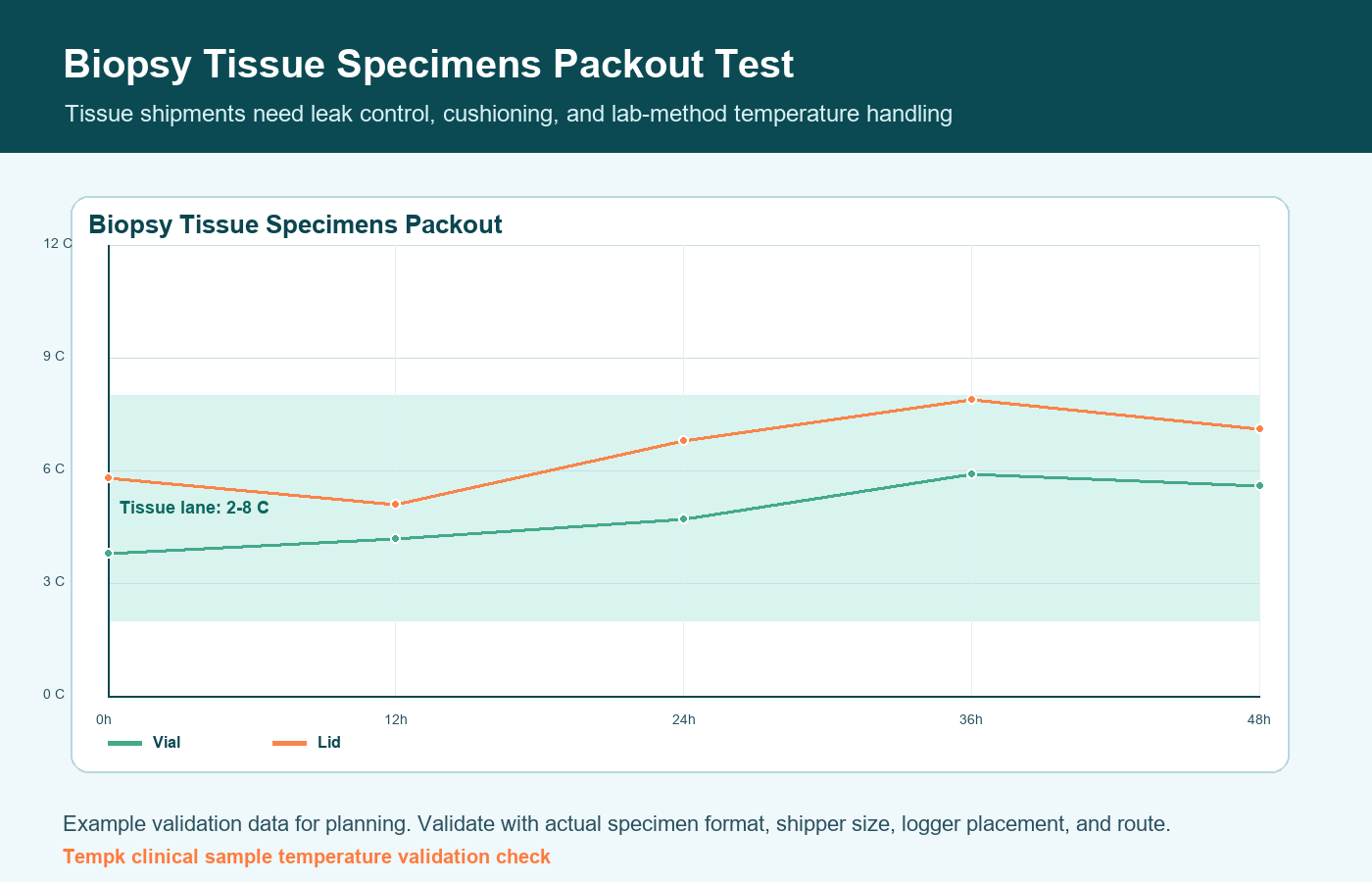
Nutzen Sie die Testkurve als Arbeitsvergleich, Anschließend mit dem tatsächlichen Probe-Container validieren, Absender, Kühlmittel- oder Trockeneiskonfiguration, Spurdauer, Umgebungsprofil, und Empfangsprozess.
Nutzen Sie diese Seiten, um nahegelegene klinische und medizinische Routen zu vergleichen, Kühlmittelauswahl, Isolierungsmöglichkeiten, und Routenrisikofragen vor der Probenahme.
Biopsie and Gewebeproben are not a single temperature category. Fresh Gewebe, preserved Gewebe, and frozen Gewebe can require different Verpackungsaufbaus for the same route.
Losses include thawed frozen Gewebe, dry Gewebe, leaking containers, formalin-container damage, and missed lab receiving windows.
Use rigid secondary containment, absorbierend material, and a document pocket. Protect Probe jars from hard coolant and from impact against the outer wall.
Verwenden Sie gekühltes Gel, Trockeneis, or no coolant according to the preservation method and lab instruction. Frozen Gewebe should be validated separately from fixed Proben.
Confirm preservative, Probe temperature, Containerintegrität, Papierkram, and lab acceptance criteria before releasing the lane.
Custom Verpackungsaufbau support
Für feste Kartongrößen, Nutzlast limits, Branding-Anforderungen, Saisonspuren, oder Validierungsziele, Tempk kann diese Lösung in einen maßgeschneiderten Kühlketten-Verpackungsaufbau umwandeln.
Share whether the Gewebe is fresh, behoben, oder gefroren, plus the container size, Zieltemperatur, Streckendauer, Umgebungsprofil, Trockeneis allowance, and receiving deadline. Tempk can help compare shipper, Kühlmittel, Trockeneis, Dämpfung, absorbierende Schicht, und Validierungslayout.
Request a Verpackungsaufbau review