


Monoklonale Antikörper
Eine 2-8 °C-Route mit Frostschutz, Kartonstützung, kontrolliertem PCM-Kontakt und Temperaturschreiberplatzierung an warmen und kalten Risikopunkten planen.
Biologische Arzneimittellieferungen sollten zunächst anhand der Produktform geplant werden: refrigerated Antikörper, Kryo-Zelltherapien, und gefrorene Gentherapie-Vektoren scheitern nicht auf die gleiche Weise. Tempk hilft bei der Abbildung des Temperaturbereichs, Verladerstruktur, Wahlweise Kühlmittel oder Trockenshipper, Überwachungsposition, and Empfangskontrolles before Routenvalidierung.
Ein einzelnes medizinisches Paket kann für ein Produkt zu warm und für ein anderes zu kalt sein. Der sinnvolle erste Schritt besteht darin, die Nutzlast nach Risiko zu trennen: freeze-sensitive refrigerated biologische Arzneimittel, Produkte mit lebenden Zellen, die möglicherweise Flüssigstickstoff in der Dampfphase erfordern, and Vektoren that often need frozen or ultratief gefroren control.
Eine 2-8 °C-Route mit Frostschutz, Kartonstützung, kontrolliertem PCM-Kontakt und Temperaturschreiberplatzierung an warmen und kalten Risikopunkten planen.
Anhand der Produkt-SOP entscheiden, ob ein Trockenshipper mit Flüssigstickstoff in Dampfphase erforderlich ist, und danach Identitätskette, Ausrichtung und Hold-Time-Reserve schützen.
Trockeneis oder Trockenshipper erst wählen, wenn der gekennzeichnete Lagerbereich klar ist. Vor, Wiedereinfrieren, Vial-Druck, Frostschäden und Dokumentenverlust verhindern.
| Produktroute | Temperaturziel | Verpackungsaufbau | Planung von Kühlelementen oder Trockenshipper | Empfangskontrolle |
|---|---|---|---|---|
| Monoklonale Antikörper, Probe oder kommerziell 2-8 C-Spur | Halten Sie den gekennzeichneten Kühlbereich fest und verhindern Sie ein Einfrieren an der Kühlmittelfläche. | Qualifizierter isolierter Versender, Nutzlast Karton support, Trennwand aus Schaumstoff oder Wellpappe, Kondensationskontrolle, und ein Temperaturschreiber in der Nähe der wahrscheinlich warmen und kalten Positionen. | Konditioniert verwenden 2-8 C PCM oder gekühlte Gel-Kühlelemente hinter einer Barriere. Für eine kleine 3-8 L Versender, Viele Prüfungen beginnen um 0.8-2.5 kg Kühlmittel, Passen Sie es dann je nach Saison und Spur an. | Temperaturkurve, Kartonzustand, Keine Spuren von gefrorenem Kühlmittel, Lesbarkeit des Etiketts, und Empfangszeit. |
| Zelltherapieprodukte, Kryo-Krankenhaus oder Produktionsweg | Befolgen Sie die Produkt-SOP. Wenn eine Kryogenkontrolle erforderlich ist, keep the Nutzlast in a validiert Flüssigstickstoff in Dampfphase Trockenshipper. | Vorgeladener Trockenshipper, Kassette or Kanister fit check, sekundäre Eindämmung, Originalitätssiegel, Ausrichtung control, Identitätskette and Besitzkette paperwork. | Plan by validiert hold time, keine Eisbeutelmasse. Die Fahrtzeit sollte einen Reservespielraum für die Abholung lassen, Flugverzögerung, Zoll, und Bereitschaft empfangen. | Trockenshipper-Zustand, Besitz record, Ausrichtung or Schock indicator, verbleibende Haltezeitaufzeichnung, und Empfängerabmeldung. |
| Gentherapie-Vektoren, frozen or ultratief gefroren lane | Verwenden Sie das Etiketted-Sortiment, often frozen or ultratief gefroren. Avoid Antauen and Wiedereinfrieren during Verpackungsaufbau or Übergabe. | Je nach Bedarf Trockeneisverlader oder Trockenshipper, Halterung für Fläschchengestell, Trockeneis separation, belüftete Außenverpackung, Dokumentenhülle vor Frost und Feuchtigkeit geschützt. | Wenn Trockeneis erlaubt ist, Kleine Parzellen beginnen oft mit Versuchen 3-7 kg für 0-24 h Spuren und 8-15 kg für 24-48 h Spuren. Verwenden Sie einen validierten Trockenversender, wenn das Produkt LN2-Bedingungen erfordert. | Temperaturschreiber record, verbleibende Trockeneis- oder Shipper-Hold-Marge, keine Fläschchenbewegung, Keine frostgeschädigten Dokumente, and immediate Tiefkühler transfer. |
Bei diesen Sortimenten handelt es sich um Planungsbeispiele für die Verpackungsdiskussion. Final Verpackungsaufbau acceptance must follow the product Etikett, Sponsor-SOP, Spurqualifikation, Trägerregeln, und lokale regulatorische Anforderungen.
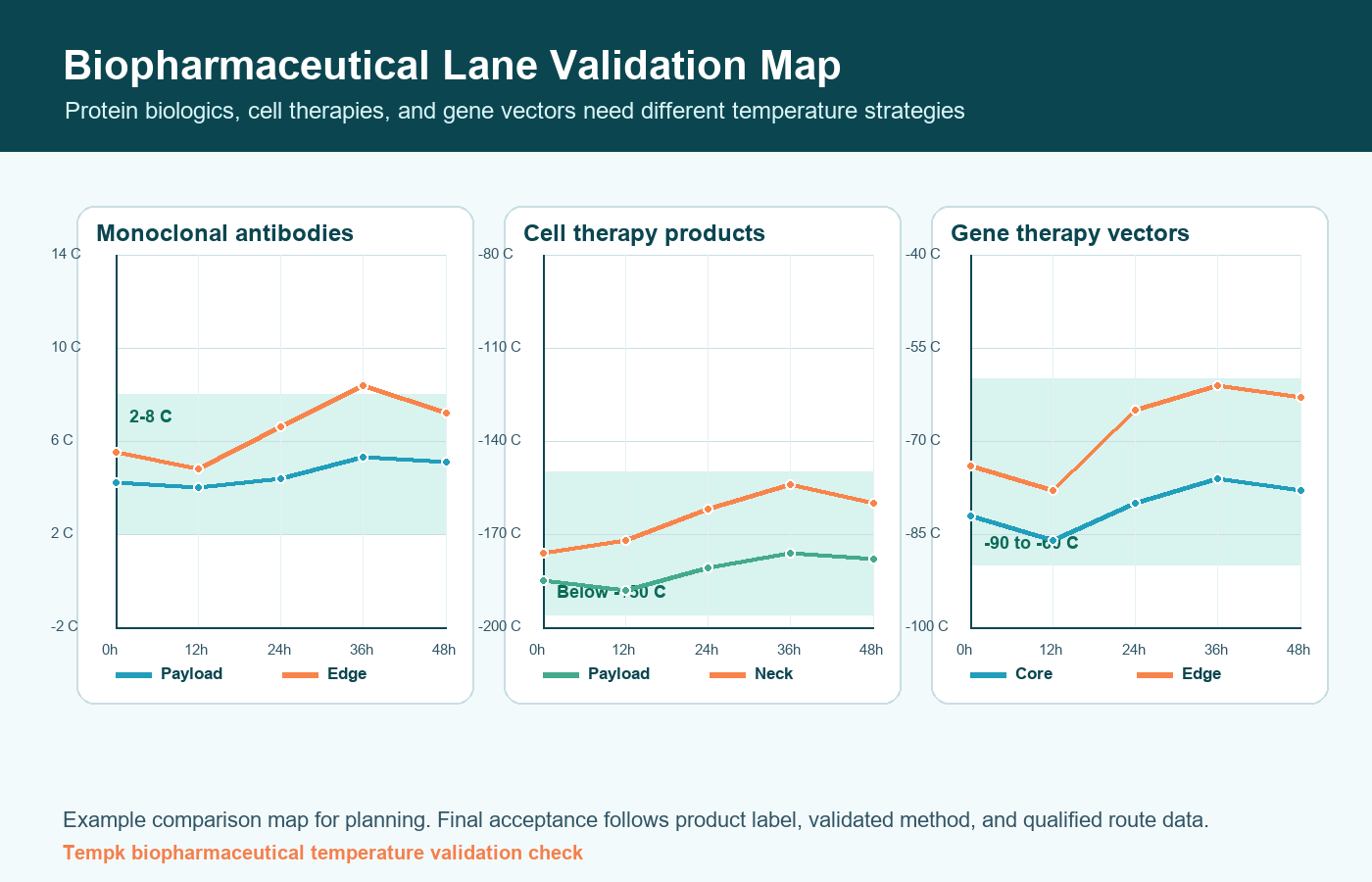
Verwenden Sie die Kurve, um gekühlte Produkte zu vergleichen, kryogen, und eingefrorenes Verhalten, bevor Sie die Route wiederholen. Eine nützliche Übersicht kombiniert die Temperaturschreiber-Kurve mit der Nutzlast-Bedingung, Abholverzögerung, Übertragungsschritte, und Empfangen von Notizen.
Auch rekombinante Proteine und Enzymersatztherapien erfordern eine produktspezifische Handhabung, insbesondere bei Frostempfindlichkeit, Aggregationskontrolle, Fläschchenunterstützung, und Aufzeichnungen.
2-8 C-Verpackung mit Frostschutz, Aggregationsbewusste Handhabung, Kartonunterstützung, Überwachung, und Empfangen von Aufzeichnungen.
Gekühlte therapeutische Verpackung mit Fläschchenschutz, Kein direkter Kontakt mit gefrorenem Kühlmittel, controlled Übergabe, und Streckenkontrollen.
Nutzen Sie diese Seiten, um das Kühlmittelverhalten zu vergleichen, Routenrisiko, Verladerstruktur, und in der Nähe befindliche medizinische Kühlkette-Fälle, bevor Sie eine Probe oder einen Spurtest anfordern.
Der Versand biologischer Arzneimittel ist sehr unterschiedlich. Monoklonale Antikörper may need 2 Zu 8 C-Schutz, Bei der Zelltherapie ist möglicherweise eine Kryogenkontrolle erforderlich, und Gentherapie-Vektoren erfordern möglicherweise eine tiefgefrorene Handhabung.
Die größten Risiken bestehen im Einfrieren von gekühlten biologischen Arzneimitteln, Trockeneismangel auf tiefgefrorenen Fahrspuren, Schockexposition, and incomplete Besitzkette records.
Verwenden Sie einen Nutzlast-Hohlraum, der der Größe des Fläschchens entspricht, Tasche, oder Kassette und schützen Sie diese vor Bewegung. Dokumentation und Temperaturprotokollierung sollten im Rahmen des Verpackungsaufbaus eingeplant werden.
Wählen 2 Zu 8 C PCM, Trockeneis, oder Kryogenausrüstung entsprechend der Produktkennzeichnung und den Validierungsanforderungen. Diese Systeme sollten nicht einfach so ausgetauscht werden.
Spur validieren, Dauer, handling Ausrichtung, and Übergabe documentation. Empfangskontrolles should include Nutzlast condition and Temperaturschreiber review.
Custom Verpackungsaufbau support
Für feste Kartongrößen, Nutzlast limits, Branding-Anforderungen, Saisonspuren, oder Validierungsziele, Tempk kann diese Lösung in einen maßgeschneiderten Kühlketten-Verpackungsaufbau umwandeln.
Teilen Sie den Produkttyp, Beschrifteter Temperaturbereich, Nutzlast size, Streckendauer, Spurtemperaturen, Übergabe limits, Überwachungspflicht, und Empfangsprozess. Tempk kann beim Vergleich des isolierten Versenders helfen, PCM, Trockeneis, Trockenverlader, Stützeinsatz, und Validierungsplan.
Request a Verpackungsaufbau review