


Grippeimpfstoffe
Saisonale Sendungen mit hohem Volumen benötigen Stabilität 2-8 C-Handhabung, schneller Empfang in der Klinik, Kartonidentitätskontrolle, und Schutz vor direktem Kontakt mit gefrorenem Gel.
Die meisten routinemäßigen Routen für Impfstoffpakete sind geplant 2-8 C, Aber die eigentliche Verpackungsentscheidung ist nicht nur die Temperatur. Fläschchen und Kartons müssen vor Frost geschützt werden, Wärmegewinn, Beschädigung des Etiketts, Kühlmittelkontakt, lange Übergabezeit, und Empfangsverzögerungen.
Zur Impfstoffverteilung, Eine stärkere Verpackung ist nicht immer eine kältere Verpackung. Viele gekühlte Impfstoffe benötigen einen Stall 2-8 C-Umgebung und sollte vor direktem Kontakt mit gefrorenem Gel geschützt werden. Tempk baut das Paket rund um die Kühlmittelaufbereitung auf, Isolationsdicke, Halterung für Fläschchen/Karton, und den Routennachweis, den der Empfänger benötigt.
Saisonale Sendungen mit hohem Volumen benötigen Stabilität 2-8 C-Handhabung, schneller Empfang in der Klinik, Kartonidentitätskontrolle, und Schutz vor direktem Kontakt mit gefrorenem Gel.
Kleiner, Pakete mit höherem Wert benötigen einen Frostschutz, Originalkartonschutz, Etikettenklarheit, und lichtbewusster Umgang beim Kliniknachschub.
Adjuvantierte Impfstoffe benötigen einen starken Frostschutz, konditioniertes Kühlmittel, Fläschchenunterstützung, und klare Temperaturanzeige beim Empfang.
| Produktroute | Temperaturabsicht | Verpackungsaufbau | Vorläufiger Kühlmittelbereich | Überprüfen Sie beim Empfang |
|---|---|---|---|---|
| Wiederauffüllung der Klinik für Grippeimpfstoffe | 2-8 C, Vermeiden Sie das Einfrieren während saisonaler Volumenspitzen. | Isolierter Karton oder EPP-Versand, Fläschchenkarton in der Mitte, konditionierte Gelpackungen oder 5 C PCM durch Pufferplatine getrennt. | Um 1.0-2.5 kg konditionierte Gelpackungen oder PCM für a 1-4 L gekühlte Nutzlast an 8-24 h Spuren. | Logger-Datensatz, Trockenheit des Fläschchenkartons, Etikettenklarheit, Kühlmittelposition, und Zeit außerhalb des Speichers. |
| HPV-Impfstoffpaket oder Kliniktransfer | 2-8 C mit starkem Frost und lichtbewusstem Umgang. | Originalkartons geschützt in einer stabilen Innenschale, Kühlmittel an den Seiten/oben, Keine direkt gefrorene Oberfläche auf dem Karton. | Um 1.2-3.2 kg konditionierte Gelpackungen oder PCM für 12-36 h Spuren, angepasst an die Größe des Versenders und die Saison. | Minimale Temperatur, Kartonquetschen, Etikettenzustand, Lichteinwirkung während der Handhabung, und verbleibender Kühlmittelzustand. |
| Verteilung des Hepatitis-B-Impfstoffs | 2-8 C, mit besonderem Augenmerk auf den Frostschutz. | Gepufferte zentrale Nutzlast, konditioniertes Kühlmittel, Absorbierende oder Trennschicht, wo Kondenswasser die Kartons beeinträchtigen kann. | Um 1.0-3.0 kg konditionierte Gelpackungen oder PCM für 8-36 h Spuren; Vermeiden Sie, dass unkonditioniertes gefrorenes Gel die Nutzlast berührt. | Jeder Messwert unter Null, Nässe im Fläschchen/Karton, Produktbewegung, und dokumentierte Übergabezeit. |
Bei diesen Sortimenten handelt es sich um Planungssortimente für die Verpackungsdiskussion, keine Freigabekriterien. Die endgültige Verpackung sollte anhand des Impfstoffetiketts bestätigt werden, Streckenprofil, Nutzlastgröße, Temperaturlogger, und lokale Handhabungsanforderungen.
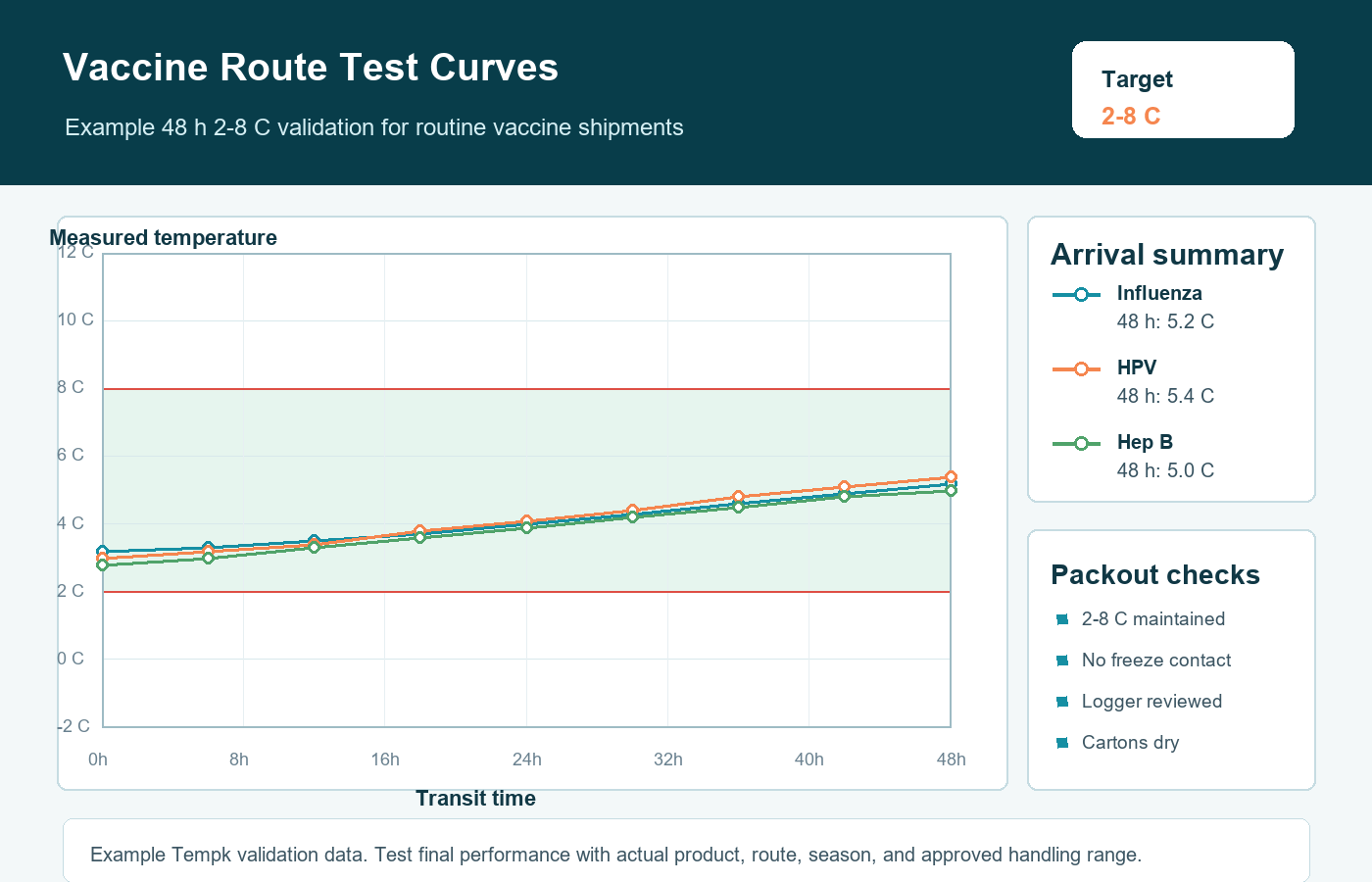
Verwenden Sie die Validierungskurve zusammen mit Produkteingangskontrollen. Die Impfstoffverpackung sollte anhand des Temperaturverlaufs beurteilt werden, Frostvermeidung, Kartonzustand, und wie einfach der Empfänger die Sendung bestätigen kann.
Für Produkte, die noch keine eigene Lösungsseite benötigen, Diese Leitfäden sorgen dafür, dass der Solution Hub nützlich bleibt, ohne zu viele wartungsintensive Seiten zu erstellen.
Verwenden Sie diesen Artikel, wenn das Produkt nicht auf einer der drei speziellen Seiten zu Impflösungen aufgeführt ist, oder wenn die Bahn einen separaten impfspezifischen Packzettel benötigt.
Verwenden Sie diesen Artikel, wenn das Produkt nicht auf einer der drei speziellen Seiten zu Impflösungen aufgeführt ist, oder wenn die Bahn einen separaten impfspezifischen Packzettel benötigt.
Verwenden Sie diesen Artikel, wenn das Produkt nicht auf einer der drei speziellen Seiten zu Impflösungen aufgeführt ist, oder wenn die Bahn einen separaten impfspezifischen Packzettel benötigt.
Verwenden Sie diese Seiten, wenn die Spur, Umgebungstemperatur, oder die Auswahl des Kühlmittels muss vor dem Test noch einmal kurz überprüft werden.
Die meisten Routineimpfungen sind anfälliger für Frost als für milde Kälte. Der Verpackungsplan sollte eingehalten werden 2 Zu 8 C und verhindert dabei direkten Kältekontakt mit Fläschchen oder Kartons.
Belichtung einfrieren, Verzögerungen bei der Eröffnung der Klinik, gemischte Kartongrößen, und eine schlechte Platzierung der Logger sind die Hauptgründe dafür, dass eine Impfstoffverpackung die Validierung nicht besteht.
Verwenden Sie konditioniertes Kühlmittel, ein Produktkorb, und klare Trennung zwischen Kühlmittel- und Impfstoffkartons. Bewahren Sie den Datenlogger im Nutzlastbereich auf, nicht gegen das Kühlmittel.
Verwenden 2 Zu 8 C PCM oder ordnungsgemäß konditionierte Gelpackungen. Vermeiden Sie Trockeneis, es sei denn, das Produkt ist speziell für den Transport in gefrorenem Zustand gekennzeichnet und validiert.
Validieren Sie Sommer- und Winterspuren getrennt. Beim Empfang sollte die Position des Loggers überprüft werden, Kartonzustand, Mindesttemperatur, und Zeit außerhalb der Kühlung.
Für Routineimpfungen, Die erste Designfrage ist normalerweise nicht, wie man mehr Kühlung hinzufügt, aber wie verhindert man das Einfrieren beim Halten? 2 Zu 8 C. Die Nutzlast sollte in einem geschützten Hohlraum mit konditioniertem Kühlmittel oder qualifiziertem PCM um sie herum sitzen.
Winterspuren erfordern besondere Aufmerksamkeit, da ein Versender, der einen Test in der heißen Jahreszeit besteht, Kartons bei der Übergabe im Freien immer noch unterkühlen kann. Die Platzierung der Holzfäller sollte den Impfstoffkartons entsprechen, nicht die kälteste Wand des Versenders.
Tempk sollte die Mindesttemperatur validieren, maximale Temperatur, Nutzlastanzahl, Kühlmittelaufbereitung, und Empfangsverzögerung. Die Abnahmeprüfung sollte Loggerdaten umfassen, Kartonzustand, und ob das Klinikpersonal schnell auspacken kann.
Unterstützung für benutzerdefinierte Pakete
Für feste Kartongrößen, Nutzlastgrenzen, Branding-Anforderungen, Saisonspuren, oder Validierungsziele, Tempk kann diese Lösung in eine individuelle Kühlkettenverpackung umwandeln.
Teilen Sie den Impfstofftyp mit, Nutzlastvolumen, Versendergröße, Spurdauer, Umgebungsbedingungen, und erforderliche Empfangsschecks. Tempk kann beim Vergleich von Isolierungen helfen, Kühlmittelmasse, Kühlmittelplatzierung, und den Validierungsplan vor dem Live-Versand.
Fordern Sie eine Packout-Bewertung an