


Laden Sie hartgefrorenes Produkt
Trockeneis ist Streckenschutz, Keine Möglichkeit, weiche Produkte zu retten. Beginnen Sie mit einem Produkt, das bereits vollständig gefroren ist.
Eiscreme & Gefrorene Desserts
Eistorten, Eiscreme, und Wannen müssen gefroren gehalten werden, kein gekühltes Dessertpaket. Die Verpackung muss die Festigkeit des Produkts schützen, Textur, Dekorationen, Etiketten, und Kartonzustand, während das Trockeneis sicher entweichen kann.
Kategorieentscheidungen
Die Logistik von Tiefkühldesserts ist nicht dasselbe wie die Lieferung von Kühlbäckereien. Eistorten brauchen Form- und Dekorationsschutz, Italienisches Eis braucht Texturstabilität, und Einzelhandelsbehälter benötigen Deckelsicherheit und Kartontrockenheit. Die Verpackung sollte das Produkt hart gefroren halten und gleichzeitig den Trockeneisdruck vermeiden, blockierte Entlüftung, und nasse Einzelhandelsverpackungen.
Trockeneis ist Streckenschutz, Keine Möglichkeit, weiche Produkte zu retten. Beginnen Sie mit einem Produkt, das bereits vollständig gefroren ist.
Verwenden Sie Trennwände und Freiraum, damit Trockeneis die Kartons nicht zerdrückt, Oberflächen markieren, oder wenden Sie sich an empfindliche Kuchenschachteln.
Trockeneis untermauert in Gas. Der Versender muss eine kontrollierte Entlüftung ermöglichen und die Anforderungen des Spediteurs einhalten.
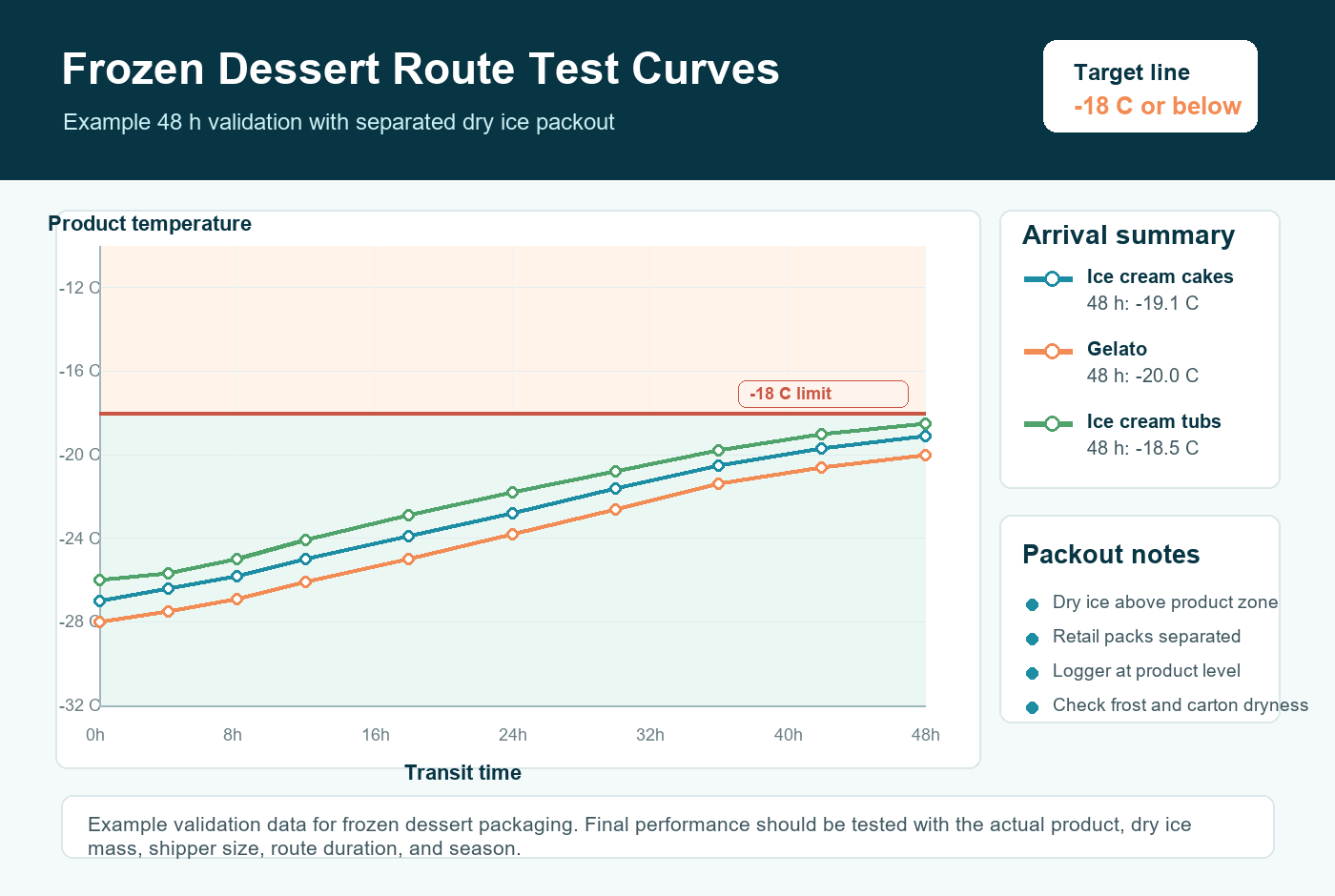
Überprüfen Sie die Temperaturkurve, Produkthärte, Frost, Deckeldichtung, Kartontrockenheit, Dekorationszustand, und restliches Trockeneis.
Hochwertige Produktrouten
Auf jeder Produktseite finden Sie Routenszenarien, Trockeneis-Startbereiche, Packout-Schichten, und Erhalt von Schecks für ein bestimmtes Tiefkühldessertformat.
Gefrorene Verpackungen für Kuchenform, Dekorationen, Board-Rückhaltesystem, Kartonfreigabe, und getrennte Trockeneisplatzierung.
Sehen Sie sich die Lösung für Eistorten an TexturkontrolleRouten für dicht gefrorene Desserts mit Schwerpunkt auf der Verhinderung von Auftauen und Wiedereinfrieren, Frostschutz, Deckelschutz, und Zuverlässigkeit auf kurzen Strecken.
Italienisches Eis-Lösung ansehen EinzelhandelswannenPaket- und DTC-Verpackung für Deckelsicherheit, Kartontrockenheit, Druck im Wannenstapel, Trockeneisrand, und gefrorene Textur.
Sehen Sie sich die Lösung für Eisbecher anRoutenplanung
Gefrorene Desserts benötigen normalerweise Trockeneis oder ein validiertes Tiefkühlsystem. Gel-Packs können bei einigen Hybridtests als unterstützendes Kühlmittel nützlich sein, Sie sollten Trockeneis jedoch nicht für Standardpaketrouten ersetzen, die eine hart gefrorene Ankunft erfordern.
| Versandzustand | Paketrichtung | Trockeneisrichtung | Was zu überprüfen |
|---|---|---|---|
| Tiefkühllieferung noch am selben Tag Hartgefrorenes Produkt, kurze Strecke, begrenzte Dockexposition | Isolierter EPS- oder EPP-Versender, Teiler, Liner, Produktunterstützung, und belüfteter Umkarton | Verwenden Sie eine kleine, abgetrennte Trockeneiszone über oder um die Nutzlast; Bestätigen Sie die Handhabung und Entlüftung des Trägers. | Produkthärte, niedrigste Kontaktfläche, Kartontrockenheit, Deckelsicherung, und restliches Trockeneis |
| Paketroute über Nacht Depotabwicklung, Exposition auf der letzten Meile, 18-36h Lieferfenster | Dickere EPS/EPP-Verpackung, Trockeneisteiler, Produktabstandshalter, Logger, und stärkerer Umkarton | Größe des Trockeneises nach Nutzlast, Boxvolumen, Isolierung, Streckenzeit, Umgebungswärme, und Spediteurregeln. | Temperaturspur, Trockeneis bleibt übrig, Produkttextur, Frostgrad, und Verpackungsverformung |
| Heißes Wetter oder verzögerungsanfällige Route 30-35 C Umgebungstemperatur, 36-48h Risiko, Wochenendaufenthalt möglich | Leistungsstärkere Isolierung, größerer Trockeneisrand, starker Teiler, Entlüftungsweg, und Routenlogger | Erhöhen Sie die Trockeneismenge nur bei ausreichend Luftraum und Trennung, sodass Gas entlüftet werden kann, Druck, und Produktschäden werden kontrolliert. | Spitzentemperatur, verbleibendes Trockeneis bei verspätetem Empfang, Karton nass, Produktform, und Sicherheitskennzeichnung |
Unterstützung von Frozen-Dessert-Guides
Eis am Stiel und gefrorener Joghurt können in diesem gefrorenen Dessert-Cluster bleiben, ohne jedes Produkt in eine separate Lösungsseite umzuwandeln.
Nützliche interne Links
Produkttyp teilen, Produkttemperatur beim Verpacken, Kartongröße, Nutzlastgewicht, Streckendauer, Umgebungsbereich, Trägermodus, und Erhalt von Schecks. Tempk kann bei der Auswahl der Isolierung helfen, Trockeneis-Layout, Trenner, Entlüftung, und Validierungsschritte.
Fordern Sie eine Überprüfung der eingefrorenen Route anEistorten, Eiscreme, und Wannen müssen alle gefroren gehandhabt werden, aber jeder scheitert anders. Die richtige Verpackung hängt davon ab, ob der Kunde Form sieht, Textur, Unversehrtheit des Deckels, oder schaufeln Sie zuerst die Qualität.
Zu den typischen Ansprüchen gehören weiche Kanten, wieder gefrorene Eiskristalle, zerkleinerte Kuchen, nasse Kartons, und Deckel, die beim Trockeneisversand platzen.
Verwenden Sie das Produktformat, um die Einlage auszuwählen: Kuchenbretter und Tortenständer, Dichter Seitenschutz für Eis, und Topload-Schutz für Wannen.
Bei längeren Paketrouten ist Trockeneis üblich, während gefrorene Gelpackungen für kurze kontrollierte Bahnen funktionieren können. Halten Sie Trockeneis von freiliegenden Etiketten und Einzelhandelsplastik getrennt, wenn die Gefahr einer Sprödigkeit besteht.
Mit dem tatsächlichen Karton validieren, Produktmasse, Streckendauer, und Empfangshaltezeit. Überprüfen Sie die Textur und die Trockenheit des Kartons, nachdem das Produkt temperiert ist.
Nutzen Sie diese Kategorieseite als Auswahlpunkt, kein einziges Tiefkühlrezept. Wenn es sich bei dem Produkt um eine Eistorte handelt, Das erste Risiko besteht in Form und Dekoration. Wenn es Eis ist, Das erste Risiko besteht in einer Texturveränderung durch Auftauen und erneutes Einfrieren. Wenn es sich um eine Verkaufswanne handelt, Deckeldruck und Etikettenbenetzung sind in der Regel die ersten für den Kunden sichtbaren Mängel. Die Kategorieseite sollte Benutzer zu einem produktspezifischen Routentest mit Produktmasse führen, Trockeneiszulage, Kartonstärke, und Aufenthalt auf der letzten Meile. Eine eingefrorene Temperaturmessung ist nur ein Teil der Akzeptanz; Form, Textur, Zustand des Deckels, und Kartontrockenheit entscheiden darüber, ob die Sendung verkauft werden kann.
Unterstützung für benutzerdefinierte Pakete
Für feste Kartongrößen, Nutzlastgrenzen, Branding-Anforderungen, Saisonspuren, oder Validierungsziele, Tempk kann diese Lösung in eine individuelle Kühlkettenverpackung umwandeln.