


Temperaturschwankungen verändern das Mundgefühl
Italienisches Eis kann nach dem Auftauen und Wiedereinfrieren körnig werden, selbst wenn die Tasse gefroren ankommt.
Kühlkette für Italienisches Eis
Italienisches Eis ist dicht und Texturmpfindlich. Ein Weg, der das Erweichen und erneute Einfrieren ermöglicht, kann zu Körnigkeit führen, selbst wenn das Produkt wieder gefroren aussieht, Daher muss die Verpackung eine stabile gefrorene Spur halten und die Tasse oder Pfanne vor Frost und Druck schützen.
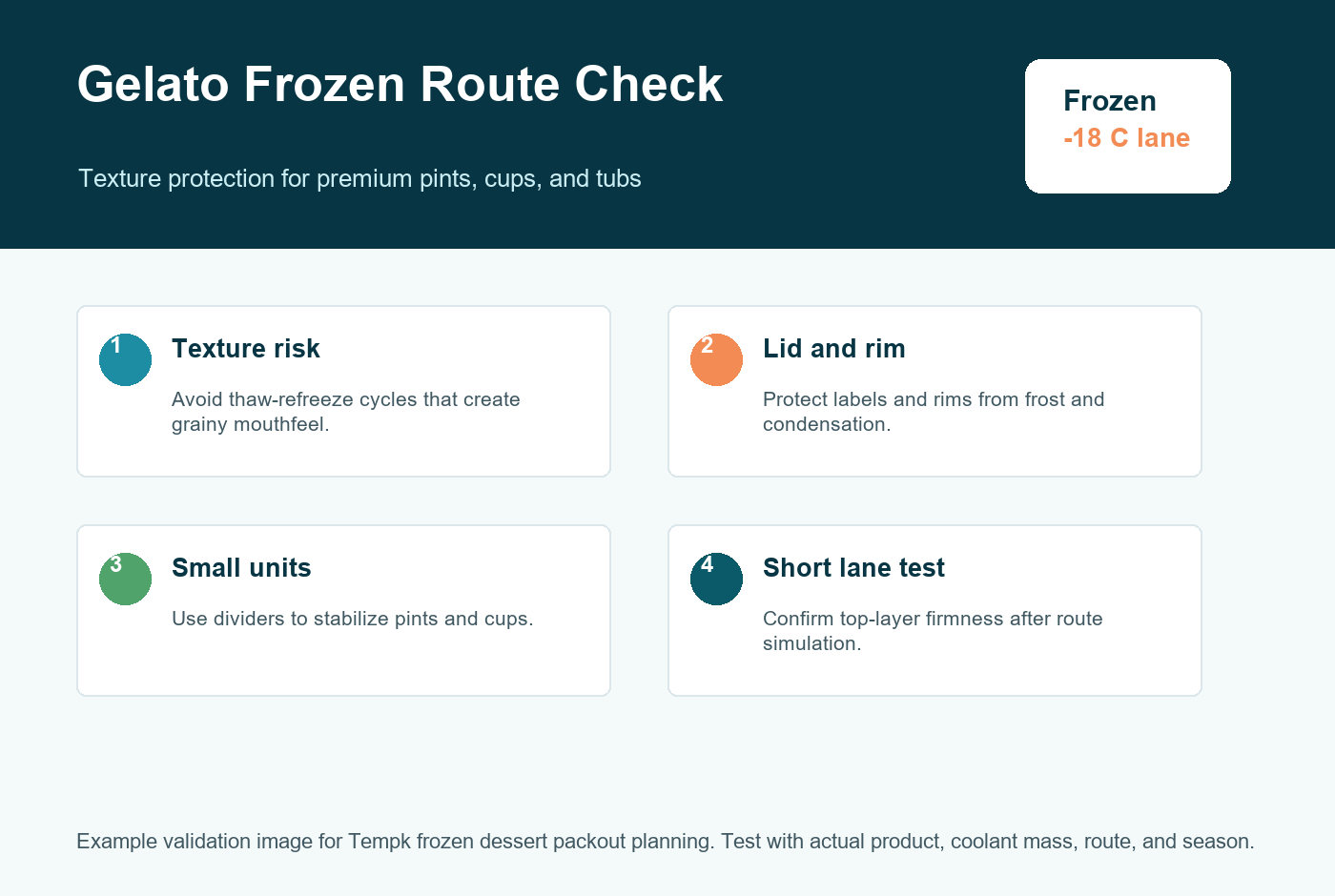
Produktrisiko
Die richtige Verpackung muss die Ankunftsqualität gewährleisten, zeigt nicht nur eine Kaltlogger-Spur an. Die folgenden Risikopunkte bestimmen die Trockeneismasse, Isolierung, Produktunterstützung, Entlüftung, und Erhalt von Schecks.
Italienisches Eis kann nach dem Auftauen und Wiedereinfrieren körnig werden, selbst wenn die Tasse gefroren ankommt.
Die Produktmasse sollte vor dem Verpacken hart eingefroren werden, damit der Versender nicht gezwungen wird, sie herauszunehmen.
Lose Deckel lassen Frost zu, Geruchsübertragung, oder Oberflächentrocknung im Inneren des Versenders.
Kürzere Fahrspuren und validierte Trockeneisgrenzen sind oft besser als lange Routen mit unsicheren Übergaben.
Routenbasierte Empfehlung
Dies sind praktische Startbereiche für die Routenerprobung. Die endgültige Trockeneismasse und die Isolationsdicke sollten anhand der tatsächlichen Nutzlast überprüft werden, Absender, Trägermodus, Route, und Empfangsstandard.
| Versandzustand | Empfohlenes Tempk-Paket | Trockeneisrichtung starten | Trockeneisposition | Was zu validieren ist |
|---|---|---|---|---|
| Tiefkühllieferung noch am selben Tag 8-18h-Route, Umgebungstemperatur unten 22 C, hartgefrorene Tassen oder Pfannen | EPS- oder EPP-Versender, Tassenteiler, Liner, Trockeneisteiler, und belüfteter Umkarton | Um 1.2-2.2 kg Trockeneis für a 1-3 kg Italienisches Eis-Nutzlast als erster Testbereich. Nutzen Sie den Trockeneisrechner für die tatsächlichen Streckenverhältnisse. | Trockeneis über oder an Seitenzonen mit Trennwand; Halten Sie Druck von Deckeln und Tassenrändern fern. | Produkthärte, Deckeldichtung, Frostgrad, Oberflächenstruktur, und restliches Trockeneis |
| Paketroute über Nacht 18-36h-Route, Depotabwicklung, Ambient 22-30 C | Dickere EPS/EPP-Verpackung, feste Becherreihen, Trockeneisteiler, Feuchtigkeitsliner, und Holzfäller | Um 2.5-4.0 kg Trockeneis für einen kleinen Päckchentest. Je nach Tassenanzahl anpassen, Versendervolumen, Umgebungsprofil, und Streckenzeit. | Oben-plus-seitige Trockeneiszone mit Trennwand und Gasentlüftungsweg; Vermeiden Sie es, die Tassendeckel zu zerdrücken. | Wärmste Tasse, kalte Kontaktbereiche, Frost um die Lider herum, Texturprüfung, und Trockeneis übrig |
| Heißes Wetter oder verzögerungsanfällige Route 30-35 C Umgebungstemperatur, 36-48h Risiko, Wochenendaufenthalt möglich | Leistungsstärkere Isolierung, größere Trockeneiskammer, stärkere Tassenunterstützung, Entlüftungsweg, und Routenlogger | Um 4.0-6.5 kg Trockeneis für erweiterte Kleinpakettests. Bestätigen Sie die Regeln des Mobilfunkanbieters, Kopfspace, und Ankunft Trockeneis vor der Entkalkung. | Perimeter-Trockeneis mit vollständiger Trennwandabdeckung; Halten Sie die Tassen aufrecht und gestützt. | Spitzentemperatur, restliches Trockeneis, Deckelbewegung, Frostbildung, und das Risiko eines Auftauens und Wiedereinfrierens der Textur |
Trockeneismasse ist ein Ausgangspunkt, keine Garantie. Passen Sie die Produkttemperatur beim Verpacken an, Nutzlastgewicht, Versendergröße, Isolationsmaterial, Trockeneisform, Streckendauer, Umgebungsprofil, und Spediteurregeln. Trockeneis darf nicht in einem luftdichten Behälter verschlossen werden, Für Luft- oder Paketsendungen ist möglicherweise eine besondere Kennzeichnung und Dokumentation erforderlich.
Packout-Struktur
Verpackungen für gefrorene Desserts benötigen Produktunterstützung und Trockeneistrennung, bevor der Versandkarton versiegelt wird. Beginnen Sie mit dem Produktzustand, Stärke der Einzelhandelsverpackung, und entlüften, Dann dimensionieren Sie Trockeneis und Isolierung.
Verpackungsprozess
Der Versender sollte ein gefrorenes Produkt aufbewahren, Retten Sie nicht jemanden, der bereits weich geworden ist. Eine gute Handhabung vor dem Versiegeln reduziert den Bedarf an Trockeneis und verhindert sichtbare Produktfehler.
Laden Sie hartgefrorenes Italienisches Eis und minimieren Sie die Zeit außerhalb des Gefrierschranks beim Verpacken.
Verwenden Sie Trennwände und einen festen Sitz, damit die Deckel nicht reiben, Pop, oder den Frost ungleichmäßig sammeln.
Platzieren Sie Trockeneis in einer kontrollierten Zone mit Puffermaterial und einem Entlüftungsweg.
Härte prüfen, Frost, Deckeldichtung, Oberflächenzustand, und alle Anzeichen von Tau- und Wiedergefrierschäden.
Wann sollte das Design geändert werden?
Vorgefrieren prüfen, wärmster Loggerpunkt, Streckenverzögerung, und Trockeneis verbleiben, bevor die Verpackung gewechselt wird.
Verbessern Sie die Lidunterstützung, Trockeneisteiler, Feuchtigkeitskontrolle, und Becherstabilisierung.
Erhöhen Sie den Isolationsspielraum, Trockeneismasse, oder Streckengeschwindigkeit; Validierung mit einem Logger innerhalb der Nutzlastzone.
Verwandte Ressourcen
Teilen Sie die Tassen- oder Pfannengröße mit, Produkttemperatur, Nutzlastgewicht, Streckenzeit, Umgebungsbereich, Trägermodus, und Texturanforderungen. Tempk kann bei der Auswahl der Trockeneismasse helfen, Tassenunterstützung, Versendergröße, und Validierungsschritte.
Fordern Sie eine Überprüfung der eingefrorenen Route anUnterstützung für benutzerdefinierte Pakete
Für feste Kartongrößen, Nutzlastgrenzen, Branding-Anforderungen, Saisonspuren, oder Validierungsziele, Tempk kann diese Lösung in eine individuelle Kühlkettenverpackung umwandeln.