


Durch das Erweichen und erneute Einfrieren verändert sich die Qualität
Behälter können bei der Lieferung gefroren aussehen, während das Produkt bereits seine glatte Konsistenz verloren hat.
Kühlkette für Eisbecher
Eisbecher sind robuster als dekorierte Kuchen, aber sie versagen immer noch, wenn sich die Deckel lösen, Kartons werden nass, Produkt wird weicher, oder Trockeneisdruck beschädigt die Einzelhandelsverpackung. Die Verpackung sollte einen gefrorenen Weg halten und den Wannenstapel schützen.
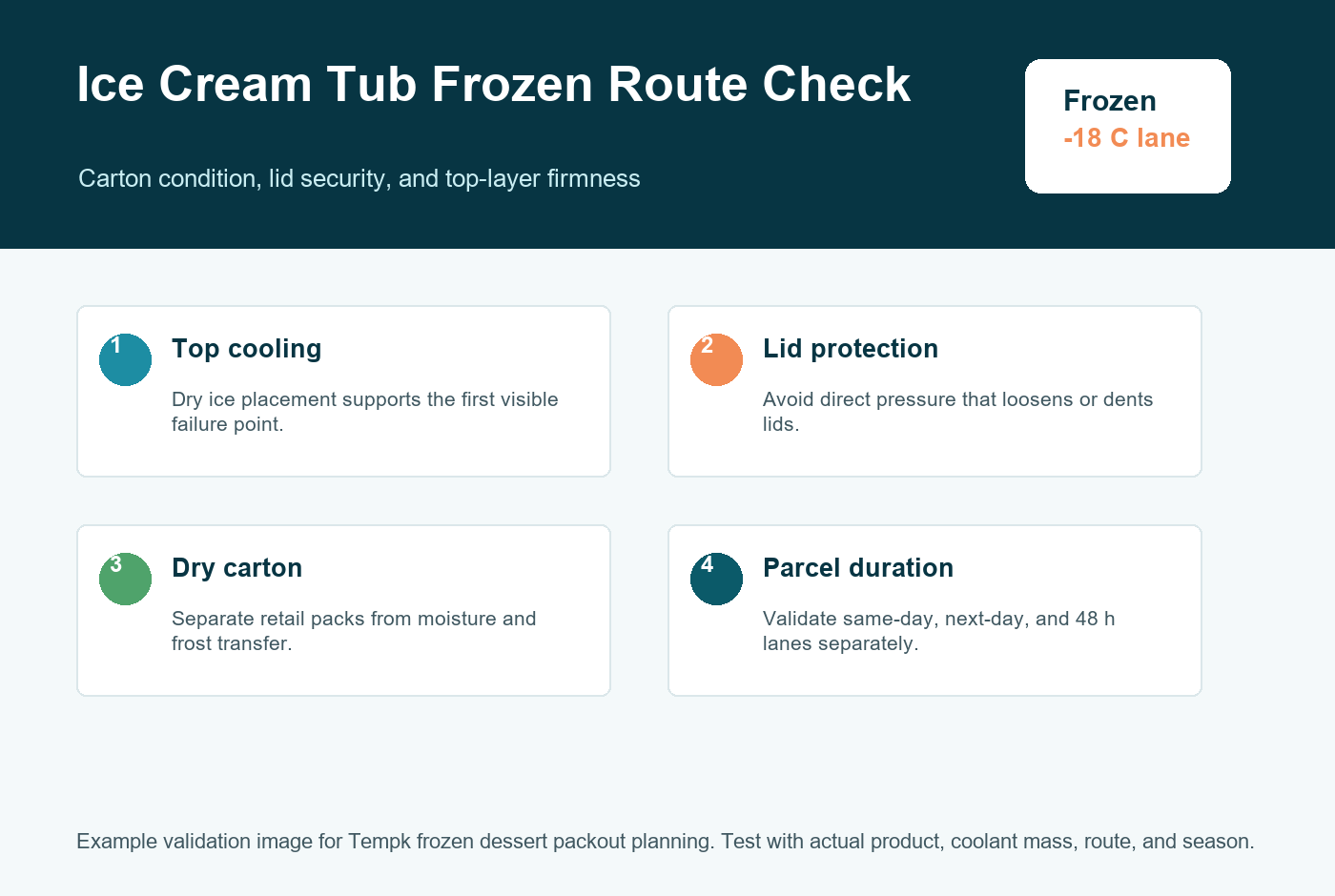
Produktrisiko
Die richtige Verpackung muss die Ankunftsqualität gewährleisten, zeigt nicht nur eine Kaltlogger-Spur an. Die folgenden Risikopunkte bestimmen die Trockeneismasse, Isolierung, Produktunterstützung, Entlüftung, und Erhalt von Schecks.
Behälter können bei der Lieferung gefroren aussehen, während das Produkt bereits seine glatte Konsistenz verloren hat.
Trockeneis, Trenner, und andere Wannen sollten die Deckel nicht aus ihrer Position drücken.
Frost und Kondenswasser können Papierhüllen schwächen, Etiketten, und Umkartons.
Die Größe der Verpackung sollte so bemessen sein, dass zum erwarteten Empfangszeitpunkt noch Frostschutz vorhanden ist.
Routenbasierte Empfehlung
Dies sind praktische Startbereiche für die Routenerprobung. Die endgültige Trockeneismasse und die Isolationsdicke sollten anhand der tatsächlichen Nutzlast überprüft werden, Absender, Trägermodus, Route, und Empfangsstandard.
| Versandzustand | Empfohlenes Tempk-Paket | Trockeneisrichtung starten | Trockeneisposition | Was zu validieren ist |
|---|---|---|---|---|
| Tiefkühllieferung noch am selben Tag 8-18h-Route, Umgebungstemperatur unten 22 C, hartgefrorene Wannen | EPS- oder EPP-Versender, Wannenteiler, Liner, Trockeneiszone, und belüfteter Umkarton | Um 1.5-2.5 kg Trockeneis für a 2-5 kg Wannennutzlast als erster Testbereich. Nutzen Sie den Trockeneisrechner für die tatsächliche Nutzlast und Route. | Trockeneiszone oben oder seitlich mit Trennwand; Halten Sie Trockeneis und schwere Packungen von den Wannendeckeln fern. | Wannenhärte, Deckeldichtung, Trockenheit kennzeichnen, Kartonzustand, und Trockeneis übrig |
| Paketroute über Nacht 18-36h-Route, Depotabwicklung, Ambient 22-30 C | Dickere EPS/EPP-Verpackung, fester Wannenstapel, Feuchtigkeitsliner, Trockeneisteiler, und Holzfäller | Um 3.0-5.0 kg Trockeneis für einen kleinen Päckchentest. Je nach Anzahl der Wannen anpassen, Boxvolumen, Isolationsniveau, und Trägergrenzen. | Trockeneis-Layout von oben nach unten mit starker Trennwand und Gasentlüftungsweg. | Wärmste Wanne, Deckelbewegung, Frost, Karton nass, und restliches Trockeneis |
| Heißes Wetter oder verzögerungsanfällige Route 30-35 C Umgebungstemperatur, 36-48h Risiko, Wochenendaufenthalt möglich | Isolierter Transporter mit höherer Leistung, größerer Trockeneisrand, verstärkter Karton, entlüfteter Versender, und Routenlogger | Um 5.0-8.0 kg Trockeneis für erweiterte Tests. Headspace bestätigen, Etikettenregeln, und Netzbetreiberbeschränkungen vor der Skalierung. | Perimeter-Trockeneis mit Trennwänden und ohne direkten Deckeldruck; Halten Sie die Wannen aufrecht und stabil. | Spitzentemperatur, Trockeneis verbleibt bei verspäteter Lieferung, Produkttextur, Etikettenzustand, und Kartonkomprimierung |
Trockeneismasse ist ein Ausgangspunkt, keine Garantie. Passen Sie die Produkttemperatur beim Verpacken an, Nutzlastgewicht, Versendergröße, Isolationsmaterial, Trockeneisform, Streckendauer, Umgebungsprofil, und Spediteurregeln. Trockeneis darf nicht in einem luftdichten Behälter verschlossen werden, Für Luft- oder Paketsendungen ist möglicherweise eine besondere Kennzeichnung und Dokumentation erforderlich.
Packout-Struktur
Verpackungen für gefrorene Desserts benötigen Produktunterstützung und Trockeneistrennung, bevor der Versandkarton versiegelt wird. Beginnen Sie mit dem Produktzustand, Stärke der Einzelhandelsverpackung, und entlüften, Dann dimensionieren Sie Trockeneis und Isolierung.
Verpackungsprozess
Der Versender sollte ein gefrorenes Produkt aufbewahren, Retten Sie nicht jemanden, der bereits weich geworden ist. Eine gute Handhabung vor dem Versiegeln reduziert den Bedarf an Trockeneis und verhindert sichtbare Produktfehler.
Lassen Sie die Wannen nicht bei Zimmertemperatur stehen, während die Verpackung vorbereitet wird.
Halten Sie die Wannen aufrecht, Leerraum reduzieren, und vermeiden Sie den Druck zwischen Deckel und Trockeneis.
Verwenden Sie Trennwände und eine Folie, damit Etiketten und Kartons nicht ausfrieren oder nass werden.
Überprüfen Sie die Härte, Deckeldichtung, Trockenheit kennzeichnen, Kartonzustand, Temperaturspur, und restliches Trockeneis.
Wann sollte das Design geändert werden?
Liner verbessern, Trockeneisteiler, und Feuchtigkeitsmanagement vor einer Änderung der Streckentemperatur.
Stapeldruck reduzieren, Fügen Sie Trennwände hinzu, und entfernen Sie Trockeneis von den Deckeln.
Erhöhen Sie den Isolationsspielraum, Trockeneismasse anpassen, Streckendauer verkürzen, oder die Versandgröße ändern.
Verwandte Ressourcen
Teilen Sie die Wannengröße, Kartonformat, Nutzlastanzahl, Produkttemperatur, Streckenzeit, Umgebungsbereich, Trägermodus, und Erhalt von Schecks. Tempk kann bei der Auswahl des Versenders behilflich sein, Trockeneis-Layout, Trenner, Entlüftung, und Validierungsschritte.
Fordern Sie eine Überprüfung der eingefrorenen Route anUnterstützung für benutzerdefinierte Pakete
Für feste Kartongrößen, Nutzlastgrenzen, Branding-Anforderungen, Saisonspuren, oder Validierungsziele, Tempk kann diese Lösung in eine individuelle Kühlkettenverpackung umwandeln.