


Schätzen Sie die Kühlmittelmasse
Nutzlastgewicht verwenden, Streckenzeit, Kastengröße, und saisonale Umgebungstemperatur, bevor Sie die erste Testverpackung bestellen.
Die Hähnchenbrustverpackung muss gleichzeitig die Kühltemperatur und das Auslaufen von rohem Geflügel kontrollieren. Eine praktische Verpackung hält das Produkt griffbereit 0-4 C, Hält das Kühlmittel vom Primärpaket getrennt, und bietet ausreichend Einlage und Absorptionskapazität, um Kartons und in der Nähe befindliche Gegenstände zu schützen.
Die unten aufgeführten Kühlmittelmengen sind Richtwerte für die Planung. Das endgültige Packout sollte mit der genauen Nutzlast validiert werden, Kastengröße, Trägerspur, und Jahreszeit.
| Streckenzustand | Temperaturabsicht | Einrichtung der Tempk-Verpackung | Kühlmittelplanungsbereich | Kühlmittelposition |
|---|---|---|---|---|
| Lokale oder taggleiche Geflügelroute, 8-18 H | 0-4 C gekühlt | Primär versiegelte Verpackung, SekundärLiner, absorbierender Pad, EPP oder Isolierkarton. | 0.8-1.4 kg konditionierte Gelpackungen oder 0 C PCM für 1-4 kg Nutzlast. | Seitliches Kühlmittel mit Trennwand; Lassen Sie kein Schmelzwasser oder Kondenswasser in die Geflügelpackungen gelangen. |
| Übernachtungspaket, 18-36 H | 0-4 C mit niedriger Warmhaltezeit | Dickere Isolierung, doppelte Leckbarriere, saugfähige Unterlage, Logger im Produktluftraum. | 1.4-2.6 kg Gelpacks oder PCM für 1-4 kg Nutzlast. | Oberes und seitliches Kühlmittel durch Platte oder Beutel getrennt; Schützen Sie den Liner vor Durchstichen. |
| Heiße Route oder Verzögerungsrisiko, 36-48 H | Validierte Kühlroute | Höhere Isolierung, reduzierter Kopfraum, stärkere sekundäre Eindämmung, schnellerer Spediteurservice, wenn möglich. | 2.6-4.2 kg Gelpacks oder PCM für 1-4 kg Nutzlast. | Wenn der Karton nass wird, Aktualisieren Sie die Auskleidung und die absorbierende Struktur, bevor Sie Kühlmittel hinzufügen. |
Für eine genauere erste Schätzung, Verwenden Sie das Eisbeutel-Rechner. Wenn die Route eingefroren ist, vergleiche mit dem Trockeneisrechner vor dem Testen.
Die richtige Reihenfolge reduziert die Warmverweilzeit, Leckage, Kühlmittelkontakt, und Verpackungsschäden, bevor die Box den Empfänger erreicht.
Die Verpackung sollte die Temperatur halten, Ziehen Sie warmes rohes Geflügel nach dem Verpacken nicht herunter.
Verwenden Sie die primäre Produktverpackung und eine sekundäre, lebensmittelechte Einlage mit saugfähigem Material, das für die erwartete Reinigung ausgelegt ist.
Bewahren Sie Gelpackungen oder PCM mit einer Trennwand rund um die Kammer auf, damit die rohen Packungen nicht zerdrückt oder durchnässt werden.
Produkttemperatur aufzeichnen, Leckage, Kartontrockenheit, Geruch, Liner-Punktion, und ob sich das Kühlmittel während des Transports verschoben hat.
Nutzen Sie diese Eingangskontrollen, wenn Sie entscheiden, ob die Kühlmittelmasse angepasst werden soll, Liner-Struktur, oder Isolationsdicke.
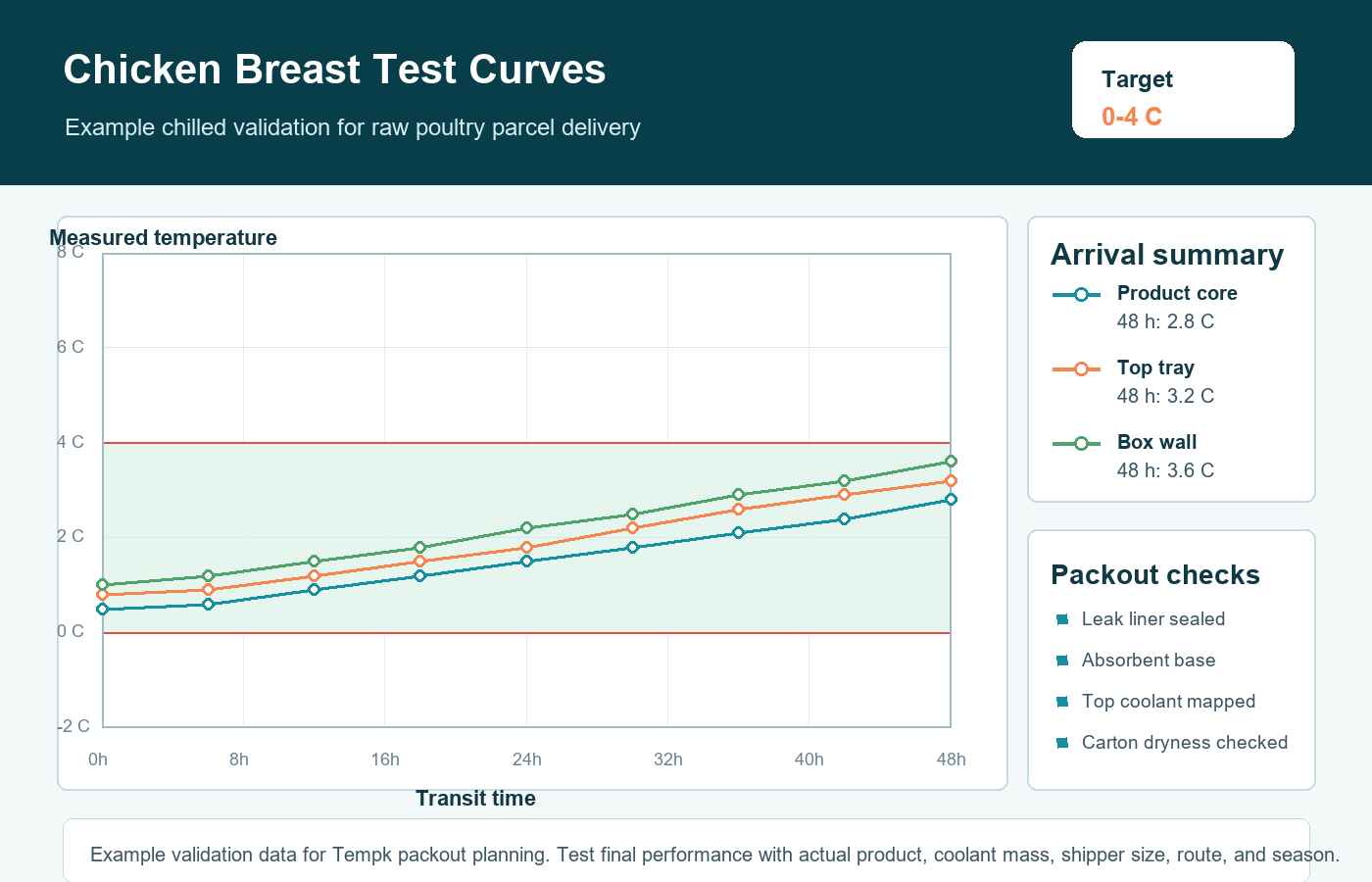
Nutzen Sie die Produktseite für die Handhabungslogik, Dimensionieren Sie dann den ersten Versuch mit Werkzeugen und validieren Sie die tatsächliche Route.
Nutzlastgewicht verwenden, Streckenzeit, Kastengröße, und saisonale Umgebungstemperatur, bevor Sie die erste Testverpackung bestellen.
Vergleichen Sie konditionierte Gelpackungen, 0 C PCM, und Trockeneislogik mit gefrorener Route, bevor die Isolationsgröße geändert wird.
Überprüfen Sie die Abholzeit, Verspätung auf der letzten Meile, Empfangsfenster, und würzen Sie, bevor Sie eine Fleischroute starten.
Teilen Sie das Produktformular, gekühltes oder gefrorenes Ziel, Nutzlastgewicht, Kastengröße, Streckendauer, Jahreszeit, und Erhalt von Schecks. Tempk kann bei der Auswahl der Isolierung helfen, Kühlmittelmasse, Liner-Struktur, und Validierungsschritte.
Unterstützung für benutzerdefinierte Pakete
Für feste Kartongrößen, Nutzlastgrenzen, Branding-Anforderungen, Saisonspuren, oder Validierungsziele, Tempk kann diese Lösung in eine individuelle Kühlkettenverpackung umwandeln.