


Steaks
Wählen Sie eine gekühlte Gelpackung oder eine gefrorene Trockeneis-Logik, je nachdem, ob das Steak frisch ankommen soll, tiefgekühlt, oder fest gefroren.
Fleisch- und Geflügelsendungen sind kein einziges Verpackungsproblem. Premium-Steaks können gekühlt oder eingefroren werden, Rohes Huhn benötigt eine stärkere Leckageeindämmung, und Wurstwaren benötigen eine saubere Einzelhandelspräsentation. Die Verpackung sollte der Produktform entsprechen, Zieltemperatur, Kühlmittelverhalten, Streckendauer, und Erhalt von Qualitätskontrollen.
Die Temperatur ist wichtig, Aber auch Fleischprogramme scheitern an Spüllecks, zerkleinerte Tabletts, nasse Etiketten, Kühlmittelkontakt, und unklare Kühl-gegen-Gefroren-Routenabsicht.
Wählen Sie eine gekühlte Gelpackung oder eine gefrorene Trockeneis-Logik, je nachdem, ob das Steak frisch ankommen soll, tiefgekühlt, oder fest gefroren.
Kontrollieren Sie das Auslaufen von rohem Geflügel, Saugfähigkeit, Liner-Integrität, und Kreuzkontaktrisiko beim Halten eines 0-4 C gekühlte Route.
Schützen 0-4 C-Temperatur, Lesbarkeit des Etiketts, Aussehen der Einzelhandelsverpackung, Kondensation, und Geruchsabscheidung ohne Einfrieren der Produktoberfläche.
Nutzen Sie diese Planungsbereiche, um das erste Tempk-Paket zum Testen auszuwählen. Die endgültige Kühlmittelmasse sollte mit der genauen Nutzlast validiert werden, Isolationsgröße, Route, und Jahreszeit.
| Produktroute | Gemeinsames Ziel | Verpackungsstruktur | Kühlmittelstartpunkt | Zuerst ansehen |
|---|---|---|---|---|
| Hochwertige gekühlte Steaks, 8-36 H | 0-2 C für hochwertige gekühlte Präsentation, oder 0-4 C, wo das Lebensmittelsicherheitsprogramm dies zulässt. | Vakuum- oder Trayverpackung, absorbierende Schicht, Leckage-Liner, EPP oder Isolierkarton, getrennte Gelpacks oder 0 C PCM. | Um 0.8-2.8 kg Gelpacks oder PCM für 1-4 kg Nutzlast. | Gefrierspuren, säubern, Tablettbeulen, Farbwechsel. |
| Rohe Hähnchenbrust, 8-36 H | 0-4 C-gekühlte Route mit strenger Leckkontrolle. | Primär versiegelte Verpackung, SekundärLiner, saugfähige Unterlage, Kühlmittel getrennt von Geflügelpackungen. | Um 0.8-2.6 kg konditionierte Gelpackungen oder PCM für 1-4 kg Nutzlast. | Lecks, Karton nass, Risiko von Kreuzkontakten, warme Oberschicht. |
| Würstchen und Wurstwaren, 8-36 H | 0-4 C-Kühlroute für verarbeitete oder verzehrfertige Packungen. | Einzelhandelsbeutel oder -tablett, Kondensationsbarriere, Etikettenschutz, seitliches und oberes Kühlmittel mit Trennwand. | Um 0.6-2.2 kg Gelpacks oder PCM für 1-4 kg Nutzlast. | Kondensation, Beschädigung des Etiketts, Geruchsübertragung, Oberflächengefrieren. |
| Gefrorene Fleischlieferungen | -18 C oder niedriger, wenn die Route als eingefroren angegeben ist. | Gefrorener Versender, Plan für Trockeneis oder gefrorenes Kühlmittel, Dampfspalt, Etiketten- und Spediteurkontrollen. | Verwenden Sie eine Trockeneisplanung nach Kartongröße, Fleischgewicht, Streckenzeit, und Trägerlimit. | Trockeneissublimation, Tauwetter auf der letzten Meile, vorschriftsmäßige Kennzeichnung. |
Für Tiefkühlpaletten- oder Großmengenprogramme, sehen Gefrorene Fleischpaletten. Für Abonnementprogramme, sehen DTC-Fleischboxen.
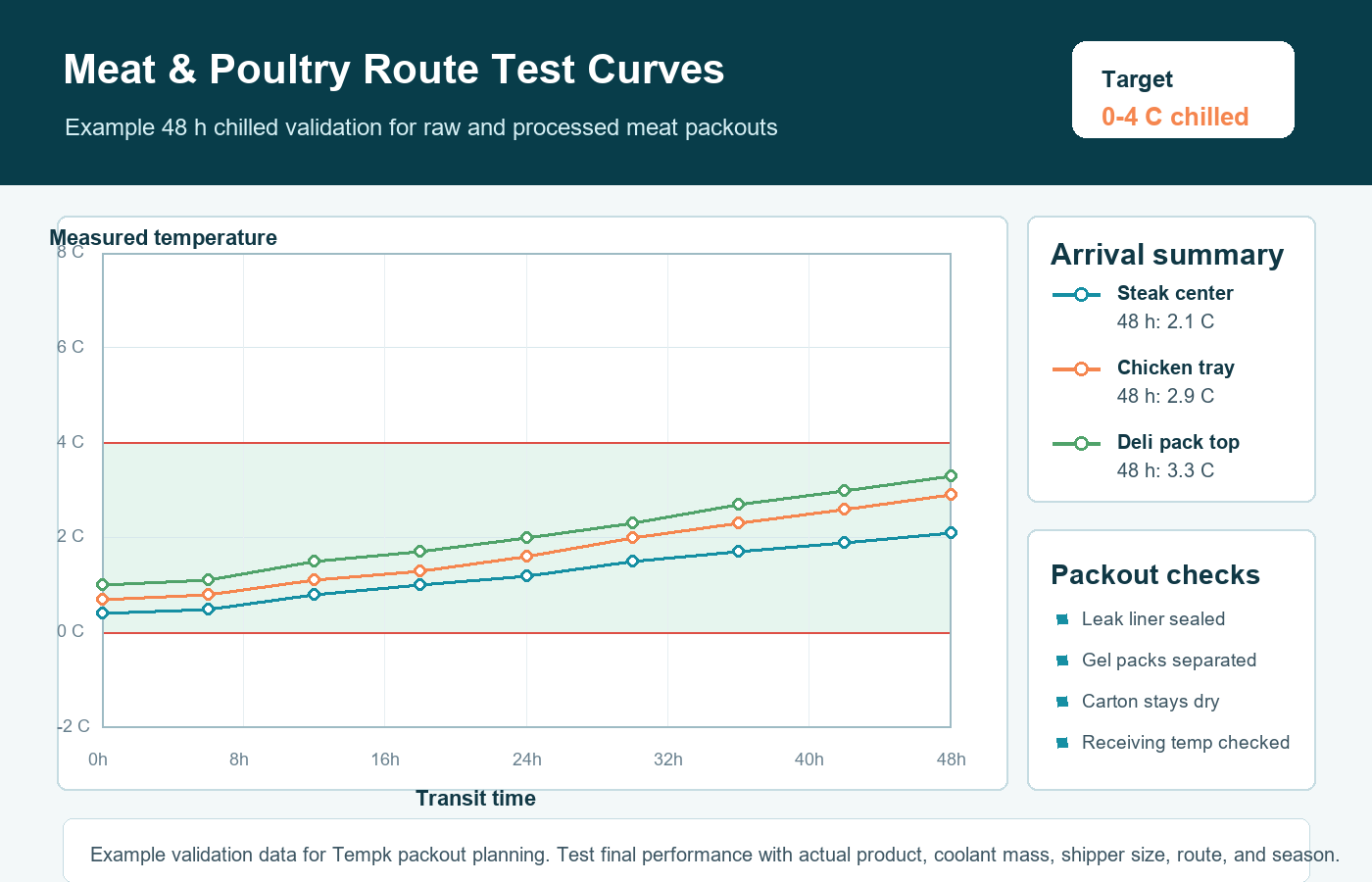
Temperaturkurven sind nur dann sinnvoll, wenn sie mit Empfangsschecks gekoppelt sind: säubern, Leckage, Etikettenzustand, Kartontrockenheit, Kühlmittelposition, und Produktqualität.
Diese Produkthandbücher unterstützen die Kategorieseite, ohne jedes Produkt auf eine separate Lösungsseite zu zwingen.
Verwenden Sie diesen Leitfaden, wenn das Produkt nicht zu den drei Prioritätsseiten gehört, aber dennoch eine produktspezifische Fleischverpackungsentscheidung erforderlich ist.
Verwenden Sie diesen Leitfaden, wenn das Produkt nicht zu den drei Prioritätsseiten gehört, aber dennoch eine produktspezifische Fleischverpackungsentscheidung erforderlich ist.
Verwenden Sie diesen Leitfaden, wenn das Produkt nicht zu den drei Prioritätsseiten gehört, aber dennoch eine produktspezifische Fleischverpackungsentscheidung erforderlich ist.
Verwenden Sie diesen Leitfaden, wenn das Produkt nicht zu den drei Prioritätsseiten gehört, aber dennoch eine produktspezifische Fleischverpackungsentscheidung erforderlich ist.
Verwenden Sie die Tools, um die Größe des ersten Versuchs festzulegen, Dann validieren Sie es mit der echten Fleischladung und den Empfangsschecks.
Teilen Sie das Produktformular, gekühltes oder gefrorenes Ziel, Nutzlastgewicht, Kastengröße, Streckendauer, Jahreszeit, und Erhalt von Schecks. Tempk kann bei der Auswahl der Isolierung helfen, Kühlmittelmasse, Liner-Struktur, und Validierungsschritte.
Fleisch & Bei Geflügellieferungen sollte nicht für jedes Produkt ein festes Boxrezept verwendet werden. Beginnen Sie mit 0-4 C gekühlte Steuerung für frische Schnitte oder -18 C für Tiefkühlfleischprogramme, Dann trennen Sie die Produkte nach Wärmebelastung, Verpackungsstärke, und wie sie angenommen werden. Für gemischte Programme, Tempk vergleicht normalerweise eine kurze lokale Route, eine Paketroute über Nacht, und die heißeste erwartete Jahreszeit, bevor Sie den Versender bestätigen.
Verwenden Sie eine Vakuumverpackungshalterung, saugfähige Pads, Leckage-Liner, Isolierkarton, und Eckenschutz. Der Kühlmittelplan sollte mit Gel-Packs für gekühlte Packs und Trockeneis oder gefrorenem PCM für gefrorene Bahnen beginnen, die eine längere Haltezeit erfordern. Wenn die Nutzlast empfindliche Einzelhandelskartons enthält, weiche Textur, Live-Material, oder medizinische Dokumentation, Schützen Sie zuerst die Nutzlast und erhöhen Sie dann die Kühlkapazität. Wenn sich der Versand beim Verpacken verzögert, weiterleiten, Zoll, oder Docktransfer, Anstatt nur das Kühlmittelgewicht zu erhöhen, sollte das Streckenprofil erneut überprüft werden.
Die Validierung sollte eine Check-Pure-Kontrolle umfassen, Oberflächentemperatur, Kartonkompression, und Entladezeit am Zielort. Ein nützlicher Test erfasst den wärmsten Nutzlastpunkt, der kälteste Punkt in der Nähe des Kühlmittels, und der Empfangszustand nach der Handhabung. Dadurch erhält das Einsatzteam eine praktische Packout-Anleitung, nicht nur ein Temperaturdiagramm.
Unterstützung für benutzerdefinierte Pakete
Für feste Kartongrößen, Nutzlastgrenzen, Branding-Anforderungen, Saisonspuren, oder Validierungsziele, Tempk kann diese Lösung in eine individuelle Kühlkettenverpackung umwandeln.