


Führen Sie die Kühlmittelschätzung durch
Nutzlastgewicht verwenden, Kastengröße, Streckenzeit, und saisonale Temperatur, bevor Sie die Gelpackung oder PCM-Masse fertigstellen.
Austern werden nicht wie Fischfilets behandelt. Die Verpackung muss lebende Schalentiere kalt und feucht halten, Schützen Sie Shells und Tags, Vermeiden Sie Erfrierungsverletzungen, und verhindern, dass Austern im Schmelzwasser sitzen. Das beste Design hängt von den Muschelregeln ab, Jahreszeit, Bestellgröße, und Trägerzeit.
Die unten aufgeführten Kühlmittelmengen sind Richtwerte für die Planung. Das endgültige Packout sollte mit der genauen Nutzlast validiert werden, Isolationsgröße, Trägerspur, und Jahreszeit.
| Streckenzustand | Temperaturabsicht | Einrichtung der Tempk-Verpackung | Kühlmittelplanungsbereich | Kühlmittelposition |
|---|---|---|---|---|
| Lieferung in ein lokales Restaurant, 8-18 H | Kalt und feucht, nicht gefroren | Isolierter Karton oder EPP-Box, Muschelbeutel oder Tablett, feuchter Liner, saugfähige Unterlage. | 0.5-1.0 kg konditionierte Gelpackungen für kleine Pakete, angepasst an die Bestellgröße. | Kühlmittel über oder neben dem Mantelmaterial mit einer Trennwand; Vermeiden Sie direkten Kontakt mit der Schale. |
| Über Nacht lebende Schalentiere, 18-30 H | 0-4 C-Planungsbereich, sofern der Lieferant nichts anderes angibt | Stärkere Isolierung, Bei Bedarf nicht luftdichte Ausführung, Tag-schützendes Innenlayout. | 1.0-1.8 kg konditionierte Gelpackungen für kleine bis mittelgroße Pakete. | Halten Sie Schalentiere von stehendem Schmelzwasser fern und schützen Sie das Ernteetikett vor Feuchtigkeitsschäden. |
| Heiße Jahreszeit oder längere Strecke, 30-48 H | Validierte, frostsichere Spur | Höhere Isolierung, Routenrisikocheck, reduzierter Kopfraum, frühere Abholung durch den Spediteur. | 1.8-3.0 kg konditionierte Gelpackungen, bestätigt durch Saisontest. | Wenn die Schalen gefroren sind, Reduzieren Sie das Kontaktrisiko, bevor Sie die Kühlmittelmasse erhöhen. |
Für eine genauere erste Schätzung, Verwenden Sie das Eisbeutel-Rechner und vergleichen Sie dann die Kühlmittelfamilien im Kühlmittel & PCM-Referenz.
Kleine Layoutänderungen können darüber entscheiden, ob der Empfänger ein sauberes, gekühltes Meeresfrüchtepaket oder ein nasses Paket sieht, unter Druck gesetzt, teilweise gefrorenes Produkt.
Nutzen Sie den Lieferanten's Reichweite, Beschriftung, Etikett, und Belüftungsregeln, bevor Sie sich für ein geschlossenes Shipper-Design entscheiden.
Verwenden Sie feuchtes, lebensmittelechtes Material für Feuchtigkeit und eine separate saugfähige Unterlage für Schmelzwasser oder Kondenswasser.
Verpacken Sie Austern so, dass sie bei der Paketbearbeitung weder Etiketten noch einander zerquetschen können. Halten Sie das Muscheletikett beim Empfang lesbar.
Schalenverschluss prüfen, Geruch, Feuchtigkeit, Granatenschaden, Tag-Bedingung, und eventuelle Frosterscheinungen.
Verwenden Sie diese Eingangskontrollen, wenn Sie die Kühlmittelmenge anpassen, Isolationsdicke, oder innere Trennung.
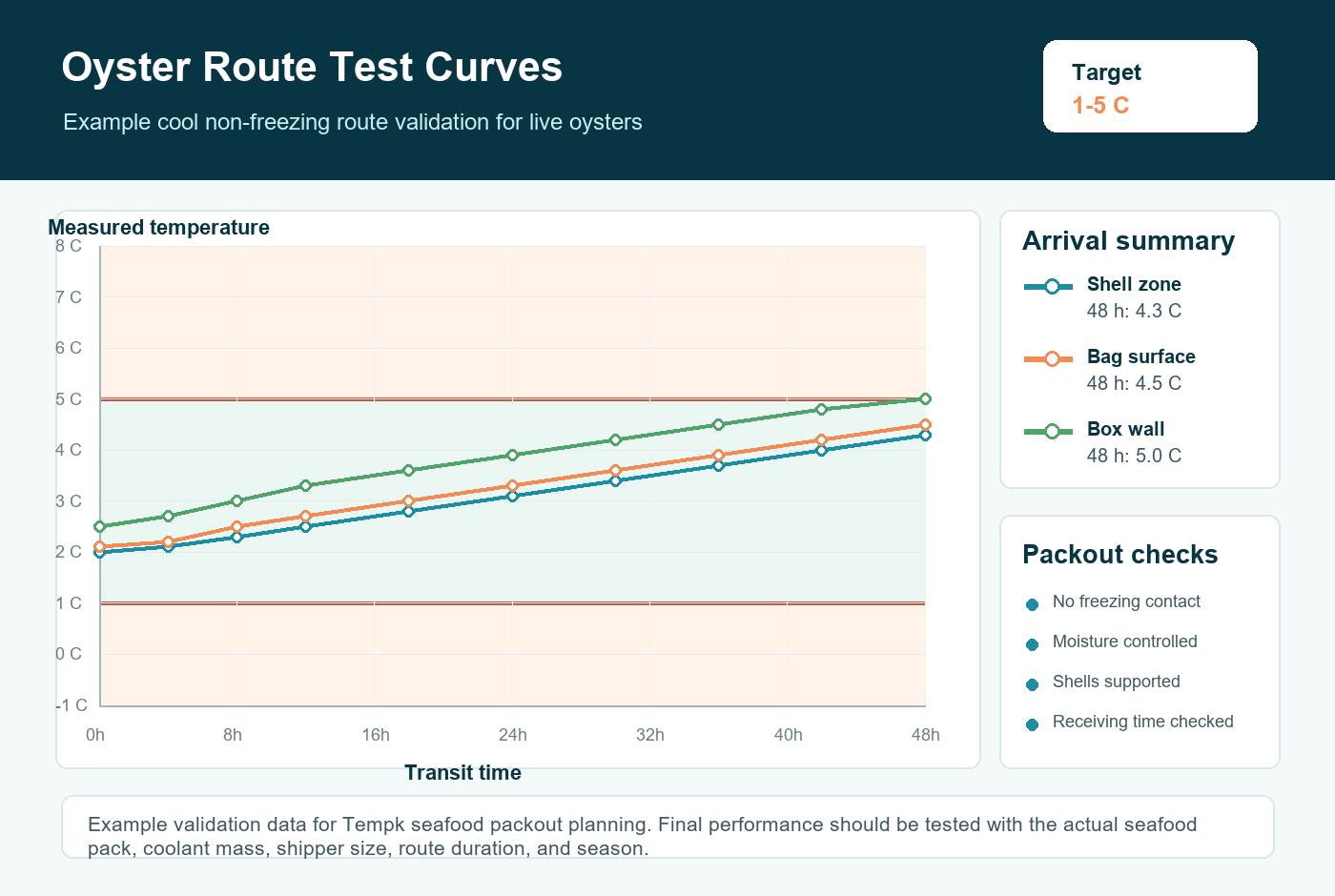
Nutzen Sie die Produktseite für die Verpackungslogik, Verwenden Sie dann die Werkzeuge, um die Größe des ersten Probepackouts vor einem Spurtest zu ermitteln.
Nutzlastgewicht verwenden, Kastengröße, Streckenzeit, und saisonale Temperatur, bevor Sie die Gelpackung oder PCM-Masse fertigstellen.
Vergleichen Sie gefrorene Gelpackungen, konditionierte Gelpackungen, Und 0 C PCM, damit das Produkt ohne direkten Frostschaden gekühlt wird.
Überprüfen Sie die Fahrzeit, Abholung verweilen, Verspätung auf der letzten Meile, und Empfängerprozess vor dem Start.
Teilen Sie das Meeresfrüchte-Formular, Nutzlastgewicht, Kastengröße, Serviceniveau, Ursprungstemperatur, Bahnsaison, und Empfangsfenster. Tempk kann beim Vergleich von Isolierungen helfen, Kühlmittelmasse, Platzierung, und Validierungsschritte.
Unterstützung für benutzerdefinierte Pakete
Für feste Kartongrößen, Nutzlastgrenzen, Branding-Anforderungen, Saisonspuren, oder Validierungsziele, Tempk kann diese Lösung in eine individuelle Kühlkettenverpackung umwandeln.