


TemperaturabsichtPflegen 2-8 C und behandeln Sie den Frostschutz als eine primäre Designanforderung.
Kühlkettenverpackungslösung für Hepatitis-B-Impfstoffe
Hepatitis-B-Impfstoffverpackungen müssen stark vor dem Einfrieren geschützt werden, da gekühlte Impfstoffe mit Adjuvans durch Einfrieren beschädigt werden können. Die Lösung sollte die Nutzlast im Inneren halten 2-8 C während der Verwendung von Puffern, konditioniertes Kühlmittel, und stabile Fläschchenauflage.
Was das Paket steuern muss
KühlmittelregelVerwenden Sie konditionierte Gelpackungen oder PCM. Bauen Sie einen zentralen Nutzlasthohlraum und halten Sie einen Abstandshalter zwischen Kühlmittel- und Fläschchenkartons.
Schwerpunkt VerpackungMinimaltemperaturregelung, Fläschchenunterstützung, trockene Kartons, und dokumentierte Eingangskontrollen.
Wählen Sie die Packout-by-Routen-Bedingung
| Streckenzustand | Verpackungsaufbau | Vorläufiger Kühlmittelbereich | Empfangsscheck |
|---|---|---|---|
| Lokale Route, 4-12 H | Isolierter Karton, Mittelfach, seitliches Kühlmittel mit Well- oder Schaumstoffabstandshalter. | 0.6-1.2 kg konditionierte Gelpackungen oder PCM für a 1-3 L Nutzlast. | Bestätigen Sie, dass der Messwert des Loggers nicht unter Null liegt, und lagern Sie ihn schnell ein. |
| Nachschub in der Klinik, 12-24 H | EPP oder Isolierkarton, Kühlmittel oben/seitlich, Nutzlast vom Kühlmittel isoliert. | 1.2-2.6 kg konditionierte Gelpackungen oder PCM für a 1-4 L Nutzlast. | Überprüfen Sie die Nässe des Kartons, Produktbewegung, und Mindesttemperatur. |
| Längere Strecke, 24-36 H | Dickere Isolierung, ausgewogenes Kühlmittel, Wärmepuffer um die Nutzlast herum hinzugefügt. | 2.6-4.2 kg konditionierte Gelpackungen oder PCM, vor dem Versand streckengeprüft. | Wenn der Logger das Risiko eines Beinahe-Einfrierens aufweist, Fügen Sie Puffer hinzu oder wählen Sie wärmeres PCM, bevor Sie Kühlmittelmasse hinzufügen. |
Nutzen Sie diese Bereiche als Ausgangspunkt für die Verpackungsüberprüfung. Bestätigen Sie die endgültige Kühlmittelmasse anhand des Produktetiketts, Versendergröße, Streckendauer, Umgebungsprofil, und ein qualifizierter Temperaturlogger-Test.
Wie Tempk die Lieferung bauen würde
Machen Sie den Frostschutz sichtbar
Auf der Packungsbeilage sollte genau angegeben sein, wo das Kühlmittel konditioniert wurde, Abstandsschichten, und der Impfstoffhohlraum sitzt so, dass Packer ihn wiederholen können.
Verwenden Sie einen zentralen Nutzlasthohlraum
Platzieren Sie Hepatitis-B-Impfstoffkartons entfernt von den Wänden des Versandbehälters und von direkten Oberflächen der Gelpackung.
Schützen Sie den Karton und die Fläschchenhalterung
Halten Sie die Kartons trocken und stützen Sie sie ab, damit sich die Fläschchenschalen während der Kuriersortierung oder der Abfertigung auf der letzten Meile nicht verschieben.
Überprüfen Sie zunächst die Mindesttemperatur
Eine Sendung kann kalt ankommen und dennoch scheitern, wenn sie zu einem früheren Zeitpunkt auf der Route unter den akzeptablen Bereich fällt.
Häufige Fehlerquellen, die es zu vermeiden gilt
Das Ziel ist nicht nur eine Kühlbox. Der Empfänger muss gereinigt werden, lesbar, dokumentierte Sendung, die innerhalb des erforderlichen Kühlbereichs blieb.
- Frostausschlag durch direkten Kühlmittelkontakt.
- Nässe im Karton aufgrund von Kondenswasser im Versandkarton.
- Bewegung des Fläschchentabletts nach dem Fallenlassen oder seitlicher Handhabung.
- Verzögerter Empfang ohne ausreichende validierte Haltezeit.
Validierungskurve und Erhalt von Beweisen
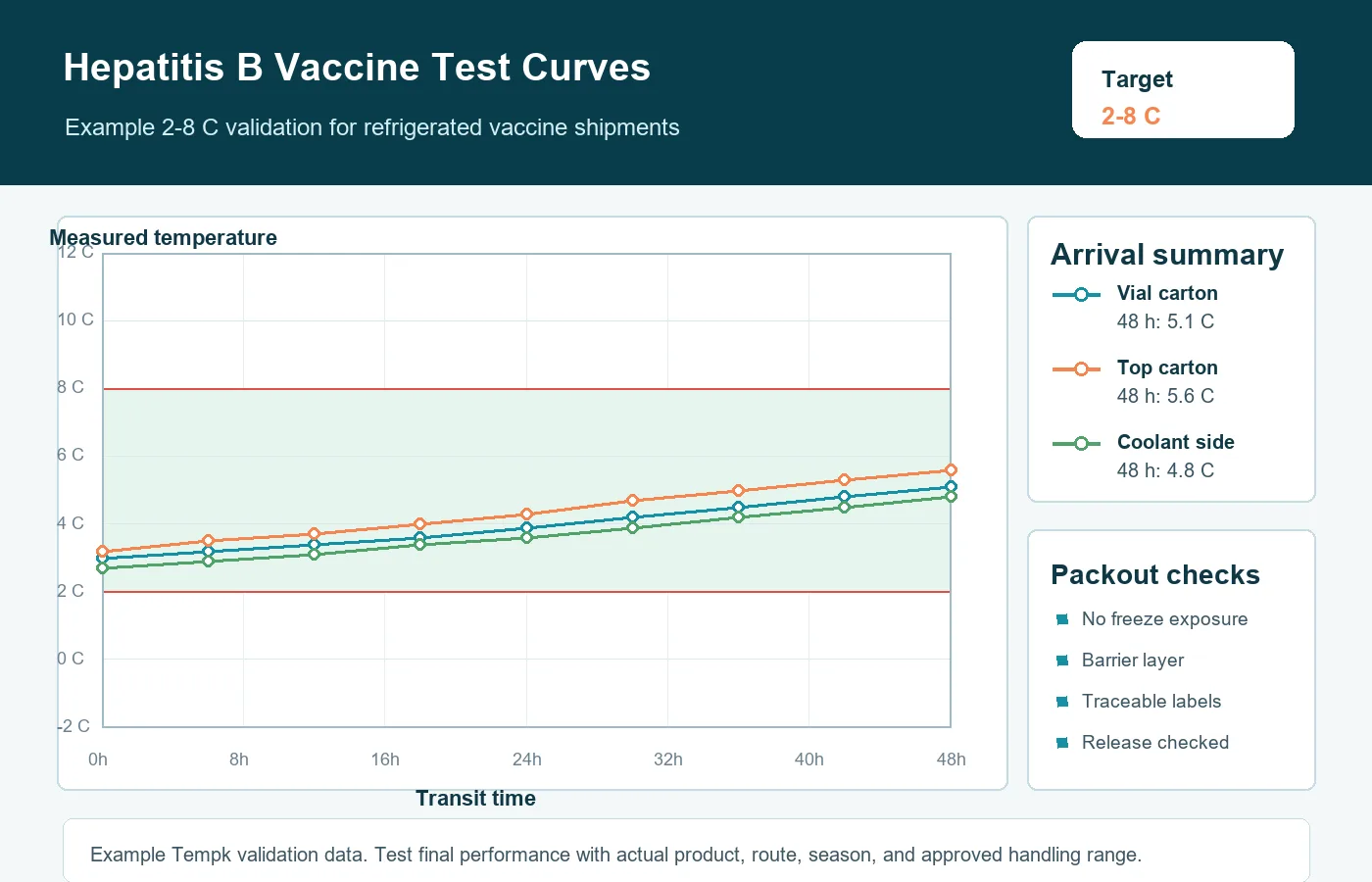
Überprüfen Sie die Kurve mit der tatsächlichen Impfstoffnutzlast, Kühlmittelmasse, Versendergröße, Streckendauer, und Jahreszeit. Für Impfstoffe, Die Mindesttemperatur und die Empfangsaufzeichnung sind ebenso wichtig wie die Endtemperatur.
Verwandte Seiten zur Packout-Planung
Kategorie „Impfstoffe“.GrippeimpfstoffeHPV-ImpfstoffeLeitfaden zur Pneumokokken-ImpfungMedizinische Kühlkettenboxen für Hepatitis-B-ImpfstofflieferungenPCM-Packungen und Eisblöcke für Hepatitis-B-ImpfstofflieferungenVIP-isolierte Versender für Hepatitis-B-ImpfstofflieferungenKühlkettenwerkzeugeTempk kontaktieren
Praktische Routenhinweise
Hepatitis-B-Impfstoffkartons nicht dem Einfrieren aussetzen
Hepatitis-B-Impfstoffe können besonders empfindlich auf Einfrieren reagieren. Beim Packout sollte ein Stall Vorrang haben 2 Zu 8 C-Nutzlastraum, anstatt kältere Packs zu verwenden, um eine längere Lebensdauer zu erreichen.
Wo dieses Produkt normalerweise versagt
Alarme einfrieren, Kühlmittel berührt Kartons, Unterkühlung im Winter, und eine schlechte Platzierung des Loggers sind die Probleme, die vor dem Start beseitigt werden müssen.
Verpackungsaufbau zum ersten Testen
Verwenden Sie konditioniertes Kühlmittel um einen Nutzlasthohlraum herum und fügen Sie einen Abstandshalter zwischen jeder Kühlmittelfläche und dem Impfstoffkarton ein. Halten Sie Fläschchen oder Kartons von Nähten fern, an denen sich kalte Stellen bilden.
Kühlmittelauswahl
Qualifiziert 2 Zu 8 C PCM wird für schwierige Fahrspuren bevorzugt. Konditioniertes Gel kann verwendet werden, wenn das Temperaturprofil sowohl in der heißen als auch in der kalten Jahreszeit validiert ist.
Überprüfung der Routenvalidierung
Überprüfen Sie zuerst den niedrigsten Loggerwert. Beim Empfang sollte bestätigt werden, dass der Karton nicht eingefroren ist, keine eingedrückten Ecken, und keine längere Zeit außerhalb der kontrollierten Lagerung.
Verpackungsdetails
Hepatitis-B-Impfstoffverpackungen sollten den Kontakt mit kalten Wänden vermeiden
Anwendungsfall
Hepatitis-B-Impfstoffe sollten so verpackt werden, dass die Kartons niemals die Kühlwand berühren, auch wenn der äußere Transportbehälter fallen gelassen oder gekippt wird. Verwenden Sie eine Nutzlasthülse, Distanzbretter, und ein fester Sitz, der verhindert, dass Kartons in eine kalte Zone gelangen.
Wahl der Verpackung
Wenn die Strecke lang ist, Wählen Sie einen qualifizierten 2 Zu 8 C PCM-System oder erhöhen Sie die Isolierung, anstatt Kühlakkus näher am Produkt zu platzieren. Dies ist besonders wichtig bei Winterspuren und Übergaben über Nacht.
Was Tempk validieren sollte
Zur Tempk-Rezension, Teilen Sie die Kartonabmessungen, Nutzlastanzahl, Zieldauer, und die niedrigste erwartete Umgebungstemperatur. Der Test sollte bestätigen, dass kein Einfrierereignis vorliegt, stabile Loggerdaten, und sauberer Kartonzustand beim Empfang. Wenn die Sendung an eine Klinik oder Apotheke geht, Berücksichtigen Sie die voraussichtliche Verzögerung beim Auspacken, da Kartons, die in einem geschlossenen Versandbehälter verbleiben, nach der Lieferung weiter treiben können.
Unterstützung für benutzerdefinierte Pakete
Diese Spur muss rund um Ihr Produkt und Ihre Route aufgebaut sein?
Für feste Kartongrößen, Nutzlastgrenzen, Branding-Anforderungen, Saisonspuren, oder Validierungsziele, Tempk kann diese Lösung in eine individuelle Kühlkettenverpackung umwandeln.
Dieser Impfweg muss vor dem Versand überprüft werden?
Senden Sie die Produktetikettenanforderung, Nutzlastvolumen, Zieltyp, Streckendauer, Umgebungsbedingungen, und erforderlicher Logger-Bericht. Tempk kann beim Vergleich von Isolierungen helfen, Kühlmittelplatzierung, und Validierungsschritte vor dem Versand.
Fordern Sie eine Packout-Bewertung an