


TemperaturabsichtHalten 2-8 C und vermeiden Sie Temperaturen unter Null. Bewahren Sie das Produkt im Originalkarton auf, wenn dies auf dem Etikett vorgeschrieben ist.
Kühlkettenverpackungslösung für HPV-Impfstoffe
HPV-Impfstoffpakete sind in der Regel kleiner als saisonale Massenlieferungen von Impfstoffen, Der Produktwert und die Auswirkungen auf den Klinikplan können jedoch hoch sein. Die Verpackung sollte die Originalkartons schützen, Vermeiden Sie das Einfrieren, Reduzieren Sie die Licht- und Handhabungsbelastung, und geben Sie dem Empfänger einen klaren Temperaturnachweis.
Was das Paket steuern muss
KühlmittelregelVerwenden Sie konditionierte Gelpackungen oder PCM um den Nutzlasthohlraum herum, Mit Abstandshalter, damit keine gefrorene Oberfläche auf Kartons drückt.
Schwerpunkt VerpackungKartonquetschschutz, Sichtbarkeit des Etiketts, lichtbewusster Umgang, und einen klaren Logger-Datensatz für den Empfang.
Wählen Sie die Packout-by-Routen-Bedingung
| Streckenzustand | Verpackungsaufbau | Vorläufiger Kühlmittelbereich | Empfangsscheck |
|---|---|---|---|
| Kliniktransfer, 4-12 H | Kleiner EPP-Versandkarton oder isolierter Karton, inneres Kartonfach, seitliches Kühlmittel. | 0.6-1.2 kg konditionierte Gelpackungen oder PCM für a 0.5-2 L Nutzlast. | Verwenden Sie eine Pufferschicht zwischen Kühlmittel und Karton; Vermeiden Sie direkten Druck von oben. |
| Paketspur, 12-24 H | Starres Innentablett, Kühlmittel an den Seiten/oben, Dokumentenhülle außerhalb der Kaltzone. | 1.2-2.4 kg konditionierte Gelpackungen oder PCM je nach Versandvolumen. | Überprüfen Sie den Logger-Mindestwert, Kartonecken, und ob sich das Kühlmittel verlagert hat. |
| Erweiterte Route, 24-36 H | Dickere Isolierung, ausgewogenes Kühlmittel, zusätzliche Abstandsschicht in der Nähe der Nutzlast. | 2.4-3.8 kg konditionierte Gelpacks oder PCM für kleine bis mittlere Nutzlasten. | Wenn der Karton zerquetscht wird, Verbessern Sie die innere Wanne, bevor Sie die Kühlmittelmasse erhöhen. |
Nutzen Sie diese Bereiche als Ausgangspunkt für die Verpackungsüberprüfung. Bestätigen Sie die endgültige Kühlmittelmasse anhand des Produktetiketts, Versendergröße, Streckendauer, Umgebungsprofil, und ein qualifizierter Temperaturlogger-Test.
Wie Tempk die Lieferung bauen würde
Halten Sie die Produktidentität lesbar
Beim Versand von HPV-Impfstoffen sind beim Empfang häufig Originalkartons und Chargenetiketten erforderlich. Schützen Sie die Etikettenoberfläche vor Kondensation und Abrieb.
Trennen Sie die Kältequelle vom Karton
Bei einer kälteren Verpackung besteht die Gefahr eines Einfrierens. Verwenden Sie konditioniertes Kühlmittel und Abstandshalter, um die Nutzlast im Kühlbereich zu halten.
Reduzieren Sie den Druck auf kleine Kartons
Verwenden Sie ein starres Tablett oder einen zentralen Hohlraum, damit Gelpackungen beim Pakethandling nicht direkt in die Fläschchenkartons drücken.
Bestätigen Sie mit einem Logger
Platzieren Sie die Logger-Sonde in der Nähe des Produkthohlraums und überprüfen Sie die Mindesttemperatur, nicht nur Ankunftsgefühl oder Kühlmittelzustand.
Häufige Fehlerquellen, die es zu vermeiden gilt
Das Ziel ist nicht nur eine Kühlbox. Der Empfänger muss gereinigt werden, lesbar, dokumentierte Sendung, die innerhalb des erforderlichen Kühlbereichs blieb.
- Logger-Messwerte unter Null durch direkten Kontakt mit gefrorenem Gel.
- Eingedrückte Kartonecken bei der Handhabung kleiner Pakete.
- Nasse oder abgenutzte Etiketten verlangsamen den Empfang in der Klinik.
- Routenverzögerung, die einen kleinen Versender über die validierte Haltezeit hinaus drängt.
Validierungskurve und Erhalt von Beweisen
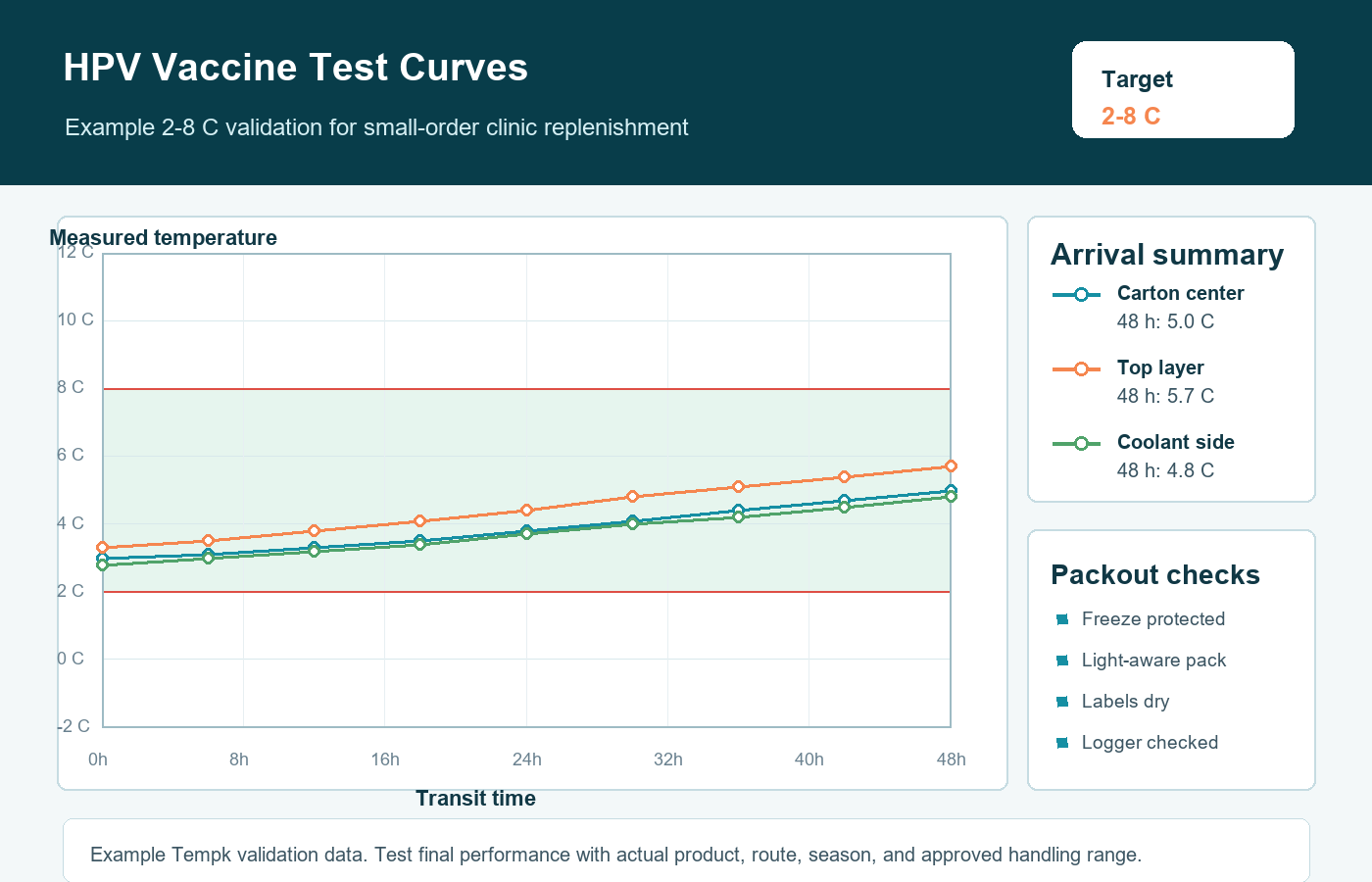
Überprüfen Sie die Kurve mit der tatsächlichen Impfstoffnutzlast, Kühlmittelmasse, Versendergröße, Streckendauer, und Jahreszeit. Für Impfstoffe, Die Mindesttemperatur und die Empfangsaufzeichnung sind ebenso wichtig wie die Endtemperatur.
Verwandte Seiten zur Packout-Planung
Praktische Routenhinweise
Schützen Sie HPV-Impfstoffkartons bei Klinikbesuchen an mehreren Standorten
HPV-Impfstofflieferungen unterstützen häufig geplante Jugendkliniken oder den Nachschub in Apotheken. Die Verpackung muss auch bei kurzen Empfangsfenstern und wiederholter Handhabung stabil bleiben.
Wo dieses Produkt normalerweise versagt
Die Hauptrisiken sind Frostkontakte, verzögerte Klinikübergabe, Abnutzung des Kartons, und das Personal verlässt den Versender zu lange nach Erhalt geschlossen.
Verpackungsaufbau zum ersten Testen
Halten Sie die Kartons aufrecht in einer Ladehülle mit einem Puffer auf jeder dem Kühlmittel zugewandten Seite. Fügen Sie klare Empfangsanweisungen hinzu, damit die Klinik die Kartons schnell in den Kühlschrank bringen kann.
Kühlmittelauswahl
Verwenden 2 Zu 8 C PCM oder konditionierte Gelpackungen. Platzieren Sie keine gefrorenen Packungen direkt neben HPV-Impfstoffkartons, um die Haltbarkeit zu verlängern.
Überprüfung der Routenvalidierung
Führen Sie die Route mit der tatsächlichen Kartonanzahl und der Klinikverweildauer durch. Loggerdaten prüfen, Kartonzustand, und die Zeit von der Lieferung bis zur Platzierung im Kühlschrank.
Verpackungsdetails
HPV-Impfstofflieferungen müssen klinikbereit sein
Anwendungsfall
Lieferungen von HPV-Impfstoffen gehen häufig an Kliniken, Apotheken, oder an Impfstellen für Jugendliche, an denen das Personal möglicherweise mehrere Kartons auf einmal erhält. Der Versandbehälter sollte leicht zu öffnen sein, mit Impfstoffkartons, die klar vom Kühlmittel getrennt sind und Anweisungen sofort sichtbar sind.
Wahl der Verpackung
Verwenden 2 Zu 8 C PCM oder ordnungsgemäß konditionierte Gelpackungen, mit Distanzstücken auf jeder dem Kühlmittel zugewandten Seite. Legen Sie keine zusätzlichen Tiefkühlpackungen neben die Kartons, um die Haltbarkeit zu verlängern; Dies kann zu einem Einfrierrisiko führen, bevor die Route aufgrund von Hitze ausfällt.
Was Tempk validieren sollte
Die Tempk-Validierung sollte die Anzahl der Kartons umfassen, Empfangsverzögerung, Sommer- und Winterambiente, und Logger-Platzierung innerhalb der Nutzlast. Überprüfen Sie zunächst die Mindesttemperatur, dann maximale Temperatur und Kartonzustand.
Szenario der Feldauspackung
Beispielaufbau für Lieferungen von HPV-Impfstoffkliniken
Für HPV-Impfstofflieferungen an Kliniken oder Apotheken, Gestalten Sie die Nutzlast so, dass das Personal Kartons schnell identifizieren und kühlen kann. Verwenden Sie auf jeder dem Kühlmittel zugewandten Seite ein Distanzstück, Halten Sie die Kartons aufrecht, und platzieren Sie den Logger zwischen Kartons und nicht gegen die Kühlpackung. Wenn eine Route mehrere Klinikhaltestellen umfasst, Testen Sie die längste Empfangsverzögerung und die kleinste Nutzlast. Verwenden 2 Zu 8 C PCM oder ordnungsgemäß konditionierte Gelpackungen; Lösen Sie die Dauer nicht dadurch, dass Sie ungekühlte Tiefkühlpackungen neben die Kartons legen. Die Empfangsprüfung sollte bestätigen, dass kein Einfrierereignis vorliegt und klare Übergabeanweisungen vorliegen.
Unterstützung für benutzerdefinierte Pakete
Diese Spur muss rund um Ihr Produkt und Ihre Route aufgebaut sein?
Für feste Kartongrößen, Nutzlastgrenzen, Branding-Anforderungen, Saisonspuren, oder Validierungsziele, Tempk kann diese Lösung in eine individuelle Kühlkettenverpackung umwandeln.
Dieser Impfweg muss vor dem Versand überprüft werden?
Senden Sie die Produktetikettenanforderung, Nutzlastvolumen, Zieltyp, Streckendauer, Umgebungsbedingungen, und erforderlicher Logger-Bericht. Tempk kann beim Vergleich von Isolierungen helfen, Kühlmittelplatzierung, und Validierungsschritte vor dem Versand.
Fordern Sie eine Packout-Bewertung an