


Les clients remarquent des dommages à la texture
Les aliments surgelés peuvent recongeler et paraître durs tandis que leur texture, forme, ou la qualité a déjà changé.
Envois DTC gelés
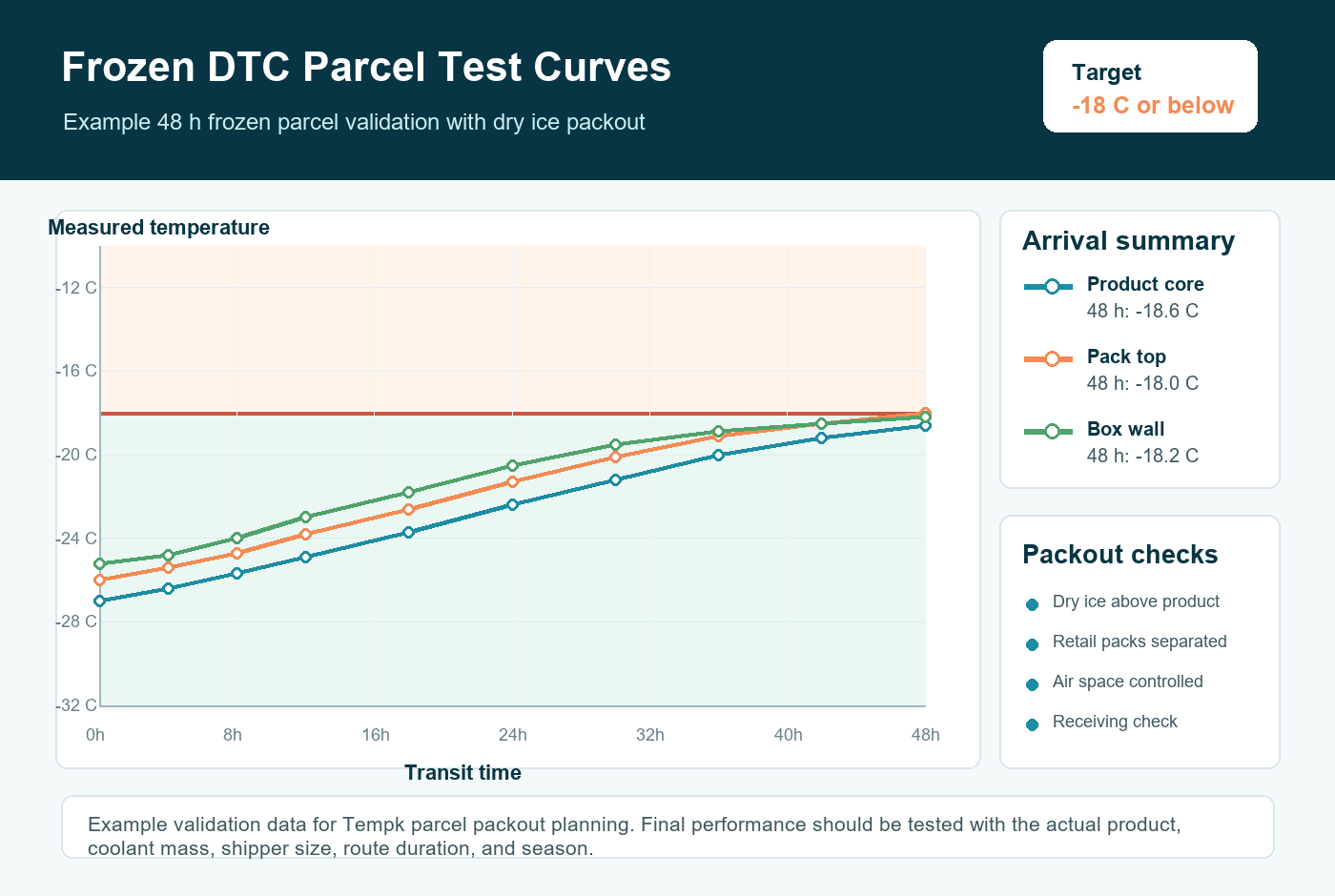
Les expéditions DTC congelées ont besoin de plus qu’une source froide. L'emballage doit conserver les produits surgelés, séparer la glace carbonique des packs de vente au détail, laisser le gaz s'échapper, protéger les étiquettes et les cartons, et rendre la réception des clients sûre et simple.
Risque produit
Le bon emballage doit protéger le produit réel et la décision de réception, non seulement afficher une trace d'enregistreur froid. Ces risques déterminent l’isolation, choix du liquide de refroidissement, emplacement du liquide de refroidissement, soutien intérieur, et contrôles de validation.
Les aliments surgelés peuvent recongeler et paraître durs tandis que leur texture, forme, ou la qualité a déjà changé.
La neige carbonique se sublime en gaz et peut nécessiter des règles d'étiquetage et de manipulation spécifiques au transporteur..
Gel, pression, et les cartons mouillés peuvent endommager les étiquettes et rendre la livraison dangereuse..
Les boîtes peuvent inclure des bacs, emballages sous vide, plateaux, ou des pochettes qui réagissent différemment à la pression et au contact froid.
Recommandation basée sur l'itinéraire
Ce sont des points de départ pratiques pour la planification des échantillons. Masse finale du liquide de refroidissement, épaisseur d'isolation, et le support interne doit être validé avec la charge utile réelle, itinéraire, messagerie, et recevoir la norme.
| Conditions d'expédition | Forfait Tempk recommandé | Direction de démarrage du liquide de refroidissement | Emplacement du liquide de refroidissement | Que valider |
|---|---|---|---|---|
| Livraison surgelée le jour même 8-18h itinéraire, ambiance ci-dessous 22 C, charge utile gelée durement |
Expéditeur EPS ou EPP, doublure, diviseurs de produits, zone de glace carbonique, et carton extérieur ventilé | À propos 1.5-2.5 kg de neige carbonique pour un 1-3 kg de charge utile gelée comme plage d'essai initiale. Utilisez le calculateur de glace carbonique pour connaître les conditions réelles de l'itinéraire. | Zone de glace carbonique supérieure ou latérale avec séparateur et espace libre; éloignez la glace carbonique des emballages de vente au détail fragiles. | État surgelé, glace carbonique restante, sécheresse du carton, état de l'étiquette, et ouverture sécurisée pour le client |
| Colis DTC de nuit 18-36h itinéraire, manutention du dépôt, ambiant 22-30 C |
Expéditeur EPS/EPP plus épais, diviseur de glace carbonique, lignes de produits fixes, doublure, enregistreur, et carton extérieur solide | À propos 3.0-5.0 kg de neige carbonique pour un test de petite parcelle. Ajuster en fonction du poids du produit, volume de la boîte, isolation, temps de parcours, et limites des transporteurs. | Disposition de glace carbonique sur le dessus et sur le côté avec couverture complète des séparateurs et chemin de ventilation. | Température maximale, glace carbonique restante, fermeté du produit, niveau de gel, pression du carton, et état de l'emballage de vente au détail |
| Itinéraire DTC par temps chaud ou sujet aux retards 30-35 C ambiant, 36-48h risque, séjour le week-end possible |
Expéditeur isolé plus performant, chambre à glace carbonique plus grande, carton renforcé, diviseurs de produits, et enregistreur d'itinéraire | À propos 5.0-8.0 kg de neige carbonique pour des tests étendus sur de petits colis. Confirmer l'espace libre, ventilation, et les exigences des opérateurs avant la mise à l'échelle. | Glace carbonique périmétrique et supérieure avec séparateurs; éviter tout contact direct avec les étiquettes, pochettes, ou plateaux fragiles. | Condition de réception retardée, glace carbonique restante, dégeler les preuves, carton mouillé, et clarté dans la gestion des clients |
La masse du liquide de refroidissement est un point de départ, pas une garantie. Ajuster en fonction de la température du produit à l'emballage, poids de charge utile, taille de l'expéditeur, matériau isolant, conditionnement du liquide de refroidissement, durée de l'itinéraire, profil ambiant, manutention du transporteur, et recevoir des chèques. Plus de liquide de refroidissement peut créer du gel, dégâts de pression, emballage humide, ou manipulation dangereuse de la glace carbonique lorsque la séparation et les instructions sont erronées.
Structure du paquet
Les envois de colis nécessitent une assistance produit, séparation du liquide de refroidissement, et recevoir des éclaircissements avant la fermeture de l'expéditeur. Commencez par la charge utile et les critères d’acceptation, puis dimensionnez l'isolation et le liquide de refroidissement.
Processus d'emballage
Un expéditeur plus fort aide, mais condition de chargement, séparation du liquide de refroidissement, soutien intérieur, et les instructions de réception décident généralement si le colis est accepté.
N'emballez pas de produit mou et attendez-vous à ce que la glace carbonique rétablisse la qualité.
Baignoires séparées, pochettes, plateaux, ou des cartons pour que les objets lourds n'écrasent pas les paquets fragiles.
Créez une zone de glace carbonique avec des séparateurs, espace de tête, et un chemin de gaz sûr.
Inspecter la glace carbonique restante, dureté du produit, gel, état de l'étiquette, et clarté des instructions de manipulation.
Quand changer la conception
Améliorer les séparateurs, doublure, résistance du carton, et séparation de la glace carbonique avant de changer la masse de glace carbonique.
Augmenter la marge d'isolation, ajuster la masse de glace carbonique, réduire le temps de parcours, ou modifier la taille de l'expéditeur.
Améliorer l'avertissement de glace carbonique, instructions de manipulation, ventilation, et séparation des emballages de vente au détail.
Ressources connexes
Partager la gamme de produits, cible gelée, poids de charge utile, taille de boîte, temps de parcours, plage ambiante, mode transporteur, et les exigences de réception des clients. Tempk peut vous aider à choisir la masse de glace carbonique, isolation, séparateurs, ventilation, et étapes de validation.
Demander un examen de l'emballage du colisPrise en charge des emballages personnalisés
Pour des tailles de carton fixes, limites de charge utile, exigences en matière de marque, voies saisonnières, ou des cibles de validation, Tempk peut adapter cette solution dans un emballage personnalisé pour la chaîne du froid.