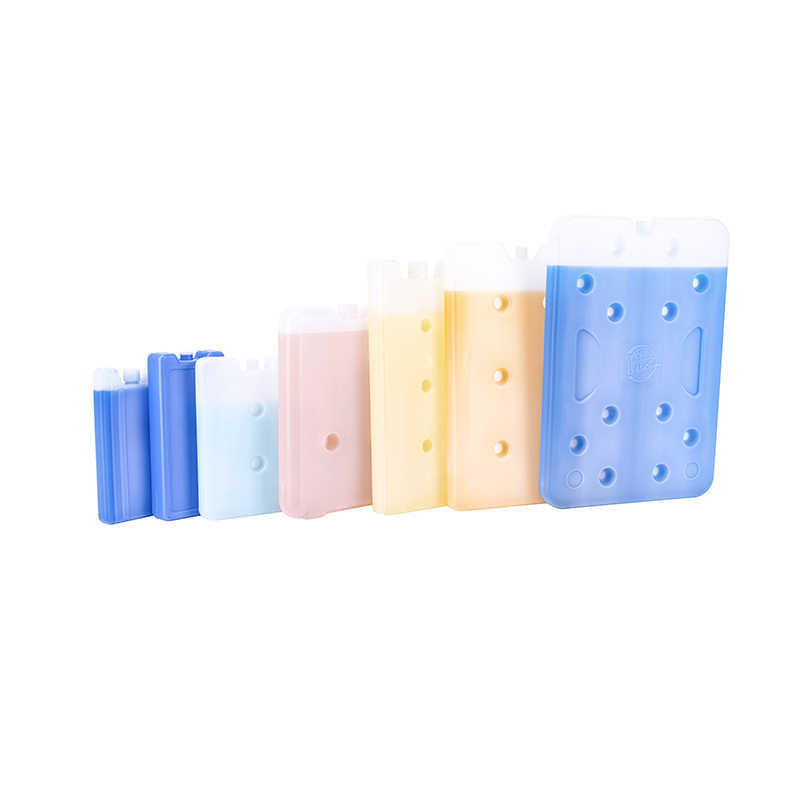
Blocs réfrigérants rigides en PEHD
Useful for EPP boxes, glacières médicales, sacs de livraison, and return loops that need durable shells, nettoyage facile, emplacement fixe, and inventory control.
View reusable ice bricksCustom coolant systems for repeatable packouts
Choose the phase point, PCM form, dimensions, coquille, méthode de conditionnement, emplacement fixe, étiquettes, and repeat-order requirements around your product limits and insulated shipper.
Prepare your sample request
Select the shipment details your quality, logistique, and packing teams already know. Tempk can use the brief to recommend samples; the final phase point, quantité, and placement must be checked in the complete packout.
Éléments à personnaliser?
Choose the operating form
Rigid bricks, pochettes souples, and panel arrays solve different fit and handling problems. Select the form around usable chamber space and repeatability, not appearance alone.
Useful for EPP boxes, glacières médicales, sacs de livraison, and return loops that need durable shells, nettoyage facile, emplacement fixe, and inventory control.
View reusable ice bricksUseful when the coolant must fit narrow side gaps, lid spaces, or irregular payloads while limiting unused volume in a one-way shipper.
Compare PCM behaviorUseful for fixed medical or high-value shippers where every panel position, état de conditionnement, séparateur, and logger point is recorded.
Plan pharmaceutical packagingCombines rigid and flexible PCM, or PCM with another approved cold source, when the chamber needs both fixed capacity and gap-filling coverage.
Plan packout testingRepeat-order control
A repeatable packout depends on more than the coolant formula. The physical unit, condition de départ, position, and operating checks must stay aligned with the tested assembly.
Fix the phase point, formulation reference, fill mass or volume, batch controls, and label used for the approved program.
Fix the outside dimensions, épaisseur, coque ou film, orientation, number of units, and chamber clearance.
Record conditioning temperature, temps de conditionnement minimum, limite de mise en scène, and how ready units are identified.
Placement des contrôles, séparateurs, opening sequence, nettoyage, inspection, inventaire, and retirement of damaged units.
Choose by temperature requirement
Use these options to narrow the first samples. Final performance depends on the payload, quantité de PCM, conditionnement, isolation, placement, and route profile working together.
| Exigence d'expédition | PCM starting option | Placement and separation | What the sample should confirm |
|---|---|---|---|
| 2–8°C freeze-sensitive medicine | Conditioned PCM selected against the approved product limits, in a rigid panel, brique, or fixed pouch arrangement. | Use a separated payload chamber and prevent direct frozen-coolant contact unless the qualified design permits it. | Warmest and coldest product points, risque de gel, marge de retard, répétabilité du conditionnement, and assembly accuracy. |
| 15Température ambiante contrôlée –25°C | PCM phase behavior and starting condition chosen for both hot-season and cold-season protection. | Place units to buffer external exposure without creating a localized cold zone beside the payload. | Summer heat ingress, winter cold soak, handoff transitions, temps de mise en scène, and seasonal operating instructions. |
| Chilled food or local delivery | Rigid ice bricks or PCM pouches sized to available bag or box space and the required delivery cycle. | Use pockets, séparateurs, or fixed top and side positions to stop movement, écrasement, or direct contact with fragile food. | Condition d'arrivée, condensation, pression du produit, bag balance, fréquence d'ouverture, nettoyage, and refreezing workflow. |
| Itinéraire gelé | Subzero PCM or a hybrid system compared with other approved frozen cold sources and carrier constraints. | Distribute the cold source around the frozen chamber while protecting packaging, étiquettes, and products from concentrated contact. | Payload warming, remaining cold source, retard d'itinéraire, pressure or vapor considerations, étiquettes, and receiver handling. |

Fit the coolant to the chamber
Frozen or conditioned thickness, cap clearance, coins moulés, position du diviseur, payload removal, and packing speed can all change whether a brick works in practice.
Share internal shipper and payload dimensions, non seulement la taille du carton extérieur.
Check the unit after conditioning for thickness, platitude, ajuster, and surface condition.
Use pockets, machines à sous, étiquettes, couleurs, or a packing diagram so operators repeat the same layout.
Review separators and pressure points around cartons, flacons, plateaux, bouteilles, et étiquettes.
Conditioning and reuse
A good sample can still fail in daily use when a brick is only partly conditioned, staged too long, placed in the wrong slot, or returned without inspection.
Use a part number, couleur, étiquette, phase-point reference, and quantity list so different coolant families are not mixed.
Define equipment, modèle de chargement, température de conditionnement, minimum time, limite de mise en scène, and readiness check.
Use numbered positions, séparateurs, a pack diagram, and logger locations that match the sample or approved assembly.
Vérifier les fuites, cap or weld integrity, déformation, contamination, étiquettes, and missing units before reconditioning.
Choose your custom options
| Customization item | Decisions to provide | What the sample or approval should confirm |
|---|---|---|
| Phase point and formulation | Limites de produit, bande cible, sensibilité au gel, profil saisonnier, reuse need, and material requirements. | Selected PCM reference, état de conditionnement, thermal behavior in the complete packout, and agreed documentation. |
| Dimensions and capacity | Maximum length, largeur, épaisseur, chamber clearance, disposition de la charge utile, and required placement. | Conditioned fit, volume de charge utile utilisable, orientation, pocket or rack fit, et vitesse d'emballage. |
| Shell or pouch | Rigid HDPE, flexible film, panel construction, cap or weld, puncture exposure, and cleaning process. | Résistance aux fuites, intégrité de la fermeture, état de surface, manutention, and compatibility with the intended operation. |
| Couleur, étiquette, and numbering | Codage couleur, logo, product ID, phase-point label, instructions de conditionnement, code à barres, and warning text. | Oeuvre, print or label adhesion, scan area, operator clarity, and traceability through return and reuse. |
| Conditioning and pack instructions | Équipement, température, temps, mise en scène, séquence d'assemblage, séparateurs, logger points, et recevoir des chèques. | A repeatable SOP or packing diagram that trained operators can follow without changing the tested layout. |
| Carton and repeat supply | Units per carton, emballage de protection, plan de palette, export label, monthly demand, inspection, and reorder code. | Approved carton count, transit protection, inspection à l'arrivée, batch reference, and repeat-order specification. |
From samples to repeat orders
Document the payload, limites de température, itinéraire, expéditeur, et contraintes d'exploitation.
Compare PCM phase behavior, formulaire, dimensions, conditionnement, and chamber placement.
Condition sample units and review pockets, séparateurs, espace de charge utile, étiquettes, et vitesse d'emballage.
Test the complete loaded shipper under the agreed ambient and route assumptions.
Approve the unit specification, conditioning record, schéma d'emballage, plan de carton, and reorder code.
Complete the PCM packout
Qualification reference: Healthcare and vaccine projects should follow the product owner’s quality requirements and applicable transport procedures. WHO/PQS recognizes PCM packs as coolant packs with phase-change temperatures other than 0°C, alors que Ista 7e provides a framework for evaluating thermal transport packaging against external temperature exposure.
Questions before sampling
Non. A colder phase point can increase direct-contact or freezing risk for sensitive products. Select the PCM against the approved product limits, condition de départ, isolation, itinéraire, and separation, then test the complete packout.
Project-specific PCM options may be discussed, but the requested phase behavior, compatibilité, méthode de conditionnement, quantité, and documentation must be reviewed before samples or bulk supply are approved.
Rigid bricks suit fixed, reusable layouts and easy cleaning. Flexible pouches fit narrow spaces and irregular payloads. The right choice depends on chamber dimensions, pressure points, réutilisation, et flux de travail d'emballage.
There is no reliable universal number. Quantity depends on payload mass, température de départ, shipper performance, unit phase behavior, profil ambiant, durée de l'itinéraire, placement, et condition d'arrivée acceptable.
Oui. The approved packout should state conditioning equipment, température, minimum time, limite de mise en scène, contrôle de préparation, number of units, orientation, and placement sequence.
They can support a reusable program when the return loop includes cleaning, inspection, inventaire, reconditioning, and retirement criteria for leaking, deformed, contaminé, or unidentifiable units.
Share the product limits, charge utile, itinéraire, expéditeur isolé, conditioning equipment, preferred PCM form, modèle de réutilisation, quantité, and required test or approval records. Tempk can recommend samples and prepare an OEM quotation.