


Gelo seco depletion
Uma rota aparentemente curta pode perder gelo seco rapidamente em clima quente, com transferência aérea ou longa espera no recebimento.
Vetores de terapia gênica often move in frozen, congelado em temperatura ultrabaixa, ou pistas criogênicas. A configuração correta depende da faixa do rótulo e do formato do frasco: um transportador de gelo seco pode ser adequado para uma pista, enquanto outra rota precisa de um dry shipper validado.
As remessas vetoriais precisam de controle de temperatura e controle físico ao mesmo tempo. A rota deve evitar o descongelamento, recongelando, movimento do frasco, dano de contato com gelo seco, e problemas de papelada.
Uma rota aparentemente curta pode perder gelo seco rapidamente em clima quente, com transferência aérea ou longa espera no recebimento.
Verificações repetidas de porta aberta ou entrega lenta podem aquecer frascos o suficiente para criar uma exceção de rota.
Prateleiras soltas, direct gelo seco contato, e a papelada molhada pelo gelo pode causar problemas de recebimento, mesmo quando o gelo seco permanece.
| Condição da rota | Objetivo de temperatura | Configuração de embalagem | Planejamento de refrigerante ou dry shipper | Verificação no recebimento |
|---|---|---|---|---|
| Geada ao longo do caminho, 0-24 h | Use the product-approved frozen or ultrabaixo range and avoid descongelamento during configuração de embalagem. | Expedidor de gelo seco ventilado, suporte para rack de frascos, barreira de gel seco, contenção absorvente ou secundária, e capa de documento protegida. | Para pequenas parcelas, os testes iniciais geralmente começam por aí 3-7 kg gelo seco, em seguida, ajuste pela temperatura da pista, carga útil mass, e regras da operadora. | Registrador curve, remaining gelo seco, posição do frasco, sem documentos molhados, e transferência imediata para freezer. |
| Geada ao longo do caminho, 24-48 h ou estação quente | Manter a faixa congelada durante a coleta, transferir, risco de fim de semana, e atraso no recebimento. | Expedidor de maior capacidade, colocação superior e lateral de gelo seco com separação, revisão de risco de rota, e nomeação do receptor. | Muitos ensaios de pequeno a médio porte começam por volta 8-15 kg gelo seco. Use a calculadora de gelo seco, em seguida, valide o remetente e a rota reais. | Gelo seco remaining, no descongelamento evidence, condição do rack, integridade do cartucho externo, e recebendo carimbo de data/hora. |
| Via criogênica ou específica do produto | Use um dry shipper validado quando o rótulo do produto ou SOP exigir condições LN2. | Remetente seco pré-carregado, suporte para frasco cassete ou canister, cadeia de custódia registros, selo de violação, and orientação control. | Planejar por reserva de tempo de espera do remetente seco, não massa de gelo seco. Não substitua o gelo seco por uma rota criogênica, a menos que o proprietário do produto aprove. | Status de remetente seco, registros de custódia, orientação, notas de transferência, e transferência de armazenamento. |
Use esses valores como pontos de partida para amostragem e cotação. Líquido refrigerante final, PCM, gelo seco, isolamento, expedidor seco, gravador, e as escolhas de manuseio devem ser validadas com a carga útil real, faixa, processo de transporte, temporada, e procedimento de recebimento.
Escolha gelo seco, ultrabaixo, ou lógica dry shipper do rótulo do produto e SOP antes de escolher uma caixa.
Use suportes de rack e barreiras para que os frascos não pressionem diretamente em blocos de gelo seco ou pellets soltos.
Coloque os documentos em uma manga seca e longe da zona de gelo seco para que o receptor possa ler os rótulos e liberar a papelada.
As pistas de Terapia gênica devem chegar a um freezer designado, receptor treinado, e processo de transferência documentado.
Estes são os problemas visíveis e operacionais que a configuração de embalagem deve reduzir antes que a remessa chegue ao destinatário.
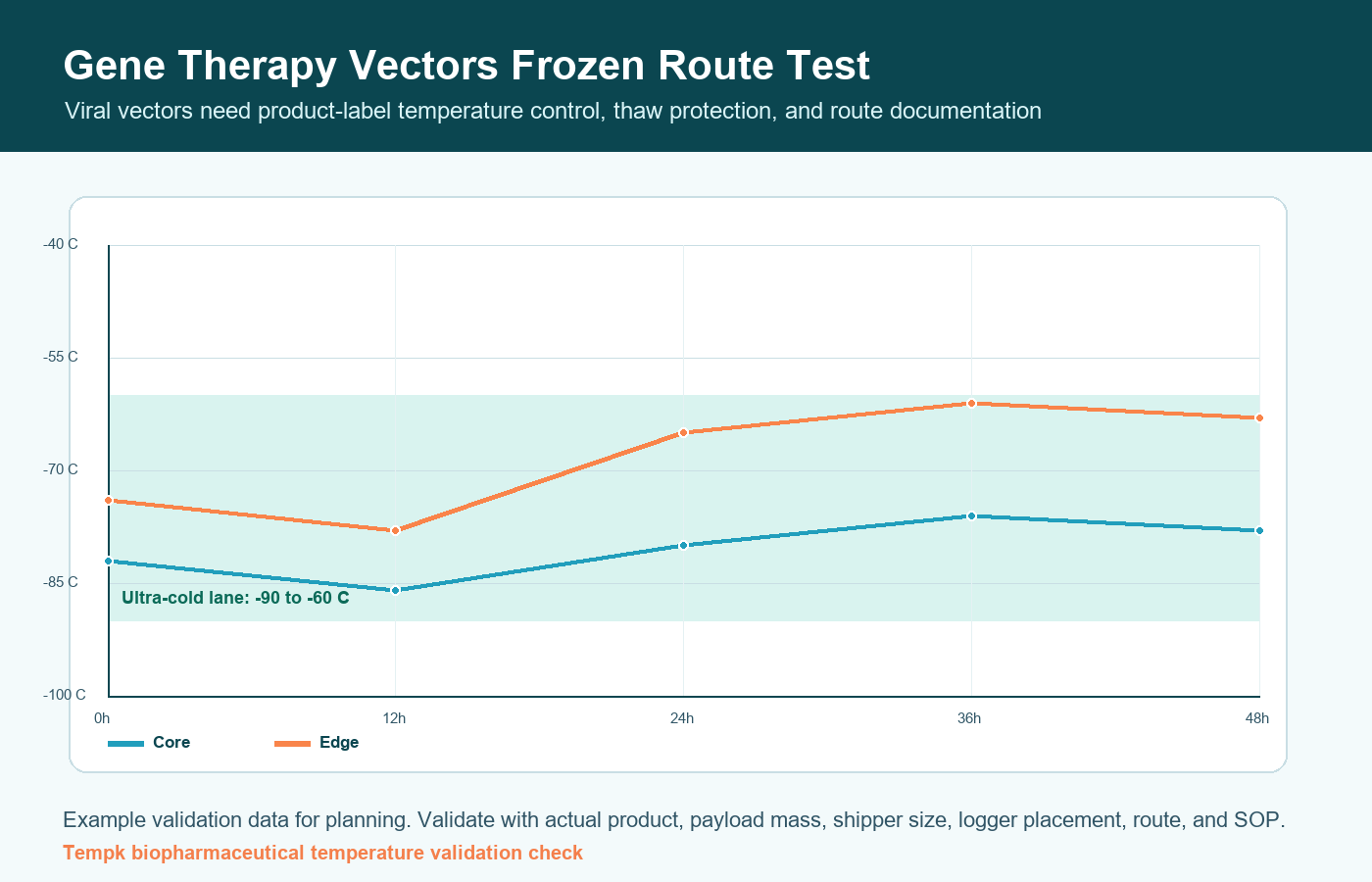
Use a curva de teste como uma comparação funcional, então valide com a carga útil real, remetente, configuração de refrigerante ou despachante seco, duração da pista, perfil ambiente, e processo de recebimento.
Use estas páginas para comparar rotas biofármacoscêuticas próximas, escolhas de refrigerante, opções de isolamento, e perguntas sobre risco de rota antes da amostragem.
Vetores de terapia gênica may require deep frozen or criogênico transport, dependendo da formulação. A configuração de embalagem deve ser selecionada a partir do requisito de estabilidade do produto, não da prática farmacêutica geral.
Os principais riscos são esgotamento do gelo seco, quebra de frascos, descongelamento durante atraso alfandegário, falha do registrador e perda da documentação de custódia.
Use prateleiras para frascos, contenção secundária, e uma zona de carga útil que mantém as amostras estáveis durante o manuseio. A documentação deve permanecer acessível sem abrir a zona fria.
Use gelo seco or criogênico equipment according to the validado lane. Padrão 2 para 8 A embalagem C não é adequada para remessas vetoriais ultracongeladas.
Verifique a margem seca de geada, carga útil temperature, integridade do frasco, morada da alfândega, and cadeia de custódia records before approving the lane.
Custom configuração de embalagem support
Para tamanhos de cartuchos fixos, carga útil limits, requisitos de marca, pistas sazonais, ou alvos de validação, Tempk can adapt this solution into a custom cold-chain configuração de embalagem.
Compartilhe o tipo de vetor, rótuloed storage range, formato frasco ou rack, duração da rota, condição ambiente, gelo seco allowance, etapas da transportadora, e recebendo plano de freezer. Tempk pode ajudar a comparar a massa de gelo seco, estrutura do expedidor, separadores, e verificações de validação.
Request a configuração de embalagem review