


Anticorpos monoclonais
Planeje uma rota 2-8 °C com proteção contra congelamento, suporte de cartucho, contato controlado com PCM e posicionamento do registrador nos pontos de risco quente e frio.
Os embarques de biofármacos devem ser planejados desde a forma do produto primeiro: anticorpos refrigerados, terapias celulares criogênicas, and frozen vetores de terapia gênica do not fail in the same way. Tempk ajuda a mapear a faixa de temperatura, estrutura do expedidor, escolha de refrigerante ou despachante seco, posição de monitoramento, and verificação no recebimentos before validação da rota.
Uma única configuração de pacote médico pode ser muito quente para um produto e muito fria para outro. O primeiro passo útil é separar a carga útil por risco: freeze-sensitive refrigerated produtos biológicos, living cell products that may require nitrogênio líquido em fase de vapor, and vetores that often need frozen or congelado em temperatura ultrabaixa control.
Planeje uma rota 2-8 °C com proteção contra congelamento, suporte de cartucho, contato controlado com PCM e posicionamento do registrador nos pontos de risco quente e frio.
Use a SOP do produto para decidir se é necessário um dry shipper com nitrogênio líquido em fase de vapor; depois proteja cadeia de identidade, orientação e margem de tempo de retenção.
Escolha gelo seco ou dry shipper apenas depois de confirmar a faixa de armazenamento indicada. Evite descongelamento, recongelando, pressão nos frascos, dano por gelo e perda de documentos.
| Rota do produto | Objetivo de temperatura | Configuração de embalagem | Planejamento de refrigerante ou dry shipper | Verificação no recebimento |
|---|---|---|---|---|
| Anticorpos monoclonais, amostra ou comercial 2-8 Pista C | Segure a faixa refrigerada rotulada e evite o congelamento na face do refrigerante. | Remetente isolado qualificado, suporte para cartucho de carga útil, divisor de espuma ou papelão ondulado, controle de condensação, e um registrador próximo às prováveis posições quentes e frias. | Uso condicionado 2-8 C PCM ou gel refrigerante refrigerado atrás de uma barreira. Por um pequeno 3-8 eu expedidor, muitas provações começam por aí 0.8-2.5 kg de refrigerante, em seguida, ajuste por temporada e faixa. | Curva de temperatura, condição do cartucho, sem marcas de refrigerante congelado, rótulo readability, e tempo de recebimento. |
| Produtos de terapia celular, hospital criogênico ou rota de fabricação | Siga o POP do produto. Quando o controle criogênico é necessário, keep the carga útil in a validado nitrogênio líquido em fase de vapor dry shipper. | Remetente seco pré-carregado, verificação de ajuste do cassete ou recipiente, contenção secundária, selo de violação, orientação control, cadeia de identidade and cadeia de custódia paperwork. | Planeje por tempo de espera validado, não massa de gelo. Horário do trajeto deve deixar margem de reserva para retirada, atraso de voo, alfândega, e recebendo prontidão. | Condição do remetente seco, custódia record, orientação or impacto indicator, registro de tempo de espera restante, e aprovação do receptor. |
| Vetores de terapia gênica, frozen or congelado em temperatura ultrabaixa lane | Use o intervalo recomendado, often frozen or congelado em temperatura ultrabaixa. Avoid descongelamento and recongelamento during configuração de embalagem or handoff. | Gelo seco shipper ou dry shipper conforme necessário, suporte para rack de frascos, gelo seco separation, pacote externo ventilado, capa para documentos protegida contra gelo e umidade. | Se o gelo seco for permitido, pequenas parcelas geralmente começam os testes em torno 3-7 kg para 0-24 h pistas e 8-15 kg para 24-48 h pistas. Use um dry shipper validado quando o produto exigir condições LN2. | Registrador record, restante gelo seco ou margem de espera do remetente, nenhum movimento do frasco, sem documentos danificados pelo gelo, e transferência imediata para freezer. |
Estas gamas são exemplos de planeamento para discussão de embalagens. Final configuração de embalagem acceptance must follow the product rótulo, patrocinar SOP, qualificação de pista, regras da operadora, e requisitos regulatórios locais.
Use a curva para comparar produtos refrigerados, criogênico, e comportamento congelado antes de repetir a rota. Uma revisão útil combina a curva registrada com condição de carga útil, atraso de retirada, etapas de transferência, e recebendo notas.
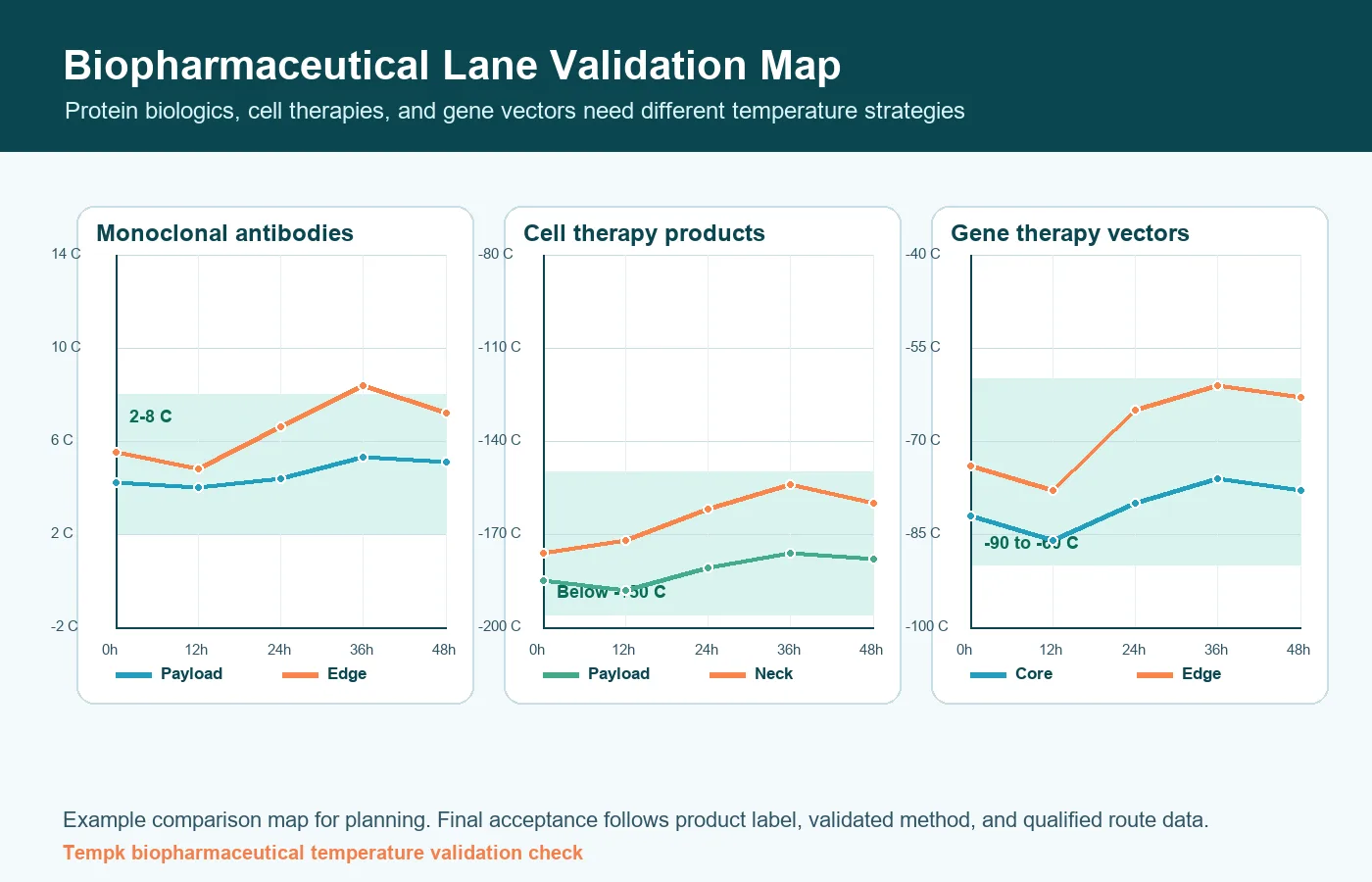
Proteínas recombinantes e terapias de reposição enzimática também precisam de manipulação específica do produto, especialmente para sensibilidade ao congelamento, agregação control, suporte para frasco, e registros.
2-8 Embalagem C com proteção contra congelamento, agregação-aware handling, suporte de cartucho, monitoramento, e recebendo registros.
Embalagens terapêuticas refrigeradas com proteção de frasco, sem contato direto com refrigerante congelado, transferência controlada, e verificações de rota.
Use estas páginas para comparar o comportamento do refrigerante, risco de rota, estrutura do expedidor, e casos médicos próximos de cadeia de frio antes de solicitar uma amostra ou teste de pista.
As remessas de biofármacoscêuticos variam amplamente. Anticorpos monoclonais may need 2 para 8 Proteção C, terapia celular may require criogênico control, and vetores de terapia gênica may require deep frozen handling.
Os riscos mais graves são o congelamento de produtos refrigerados biológicos, esgotamento do gelo seco em pistas congeladas, exposição ao impacto, and incomplete cadeia de custódia records.
Utilize uma cavidade de carga útil dimensionada para o frasco, bolsa, ou cassete e proteja-o do movimento. Documentation and temperature logging should be planned as part of the configuração de embalagem.
Escolher 2 para 8 PCM, gelo seco, ou equipamento criogênico conforme rótulo do produto e exigência de validação. Esses sistemas não devem ser trocados casualmente.
Validar pista, duração, handling orientação, e documentação de transferência. Verificação no recebimentos should include carga útil condition and registrador review.
Custom configuração de embalagem support
Para tamanhos de cartuchos fixos, carga útil limits, requisitos de marca, pistas sazonais, ou alvos de validação, Tempk can adapt this solution into a custom cold-chain configuração de embalagem.
Compartilhe o tipo de produto, rótuloed temperature range, carga útil size, duração da rota, temperaturas da pista, limites de transferência, requisito de monitoramento, e processo de recebimento. Tempk pode ajudar a comparar o remetente isolado, PCM, gelo seco, expedidor seco, inserção de suporte, e plano de validação.
Request a configuração de embalagem review