


Amostras de sangue
Seguir o protocolo do teste e proteger os tubos contra congelamento, aquecer, vazamento de tampa, quebra e ausência de registros de recebimento.
A embalagem da amostra clínica deve começar com o tipo de amostra, protocolo de teste, recipiente, e tempo máximo de transporte. Tempk ajuda laboratórios, CROs, hospitais, e redes de diagnóstico comparam o expedidor, refrigerante, contenção secundária, absorvente layer, suporte para tubo ou container, registrador de posição, and verificação no recebimentos before validação de rota.
tubos de sangue, tecido containers, and zaragatoa PCRs do not need the same configuração de embalagem. Uma rota pode ser refrigerada, outro pode ser ambiente, e um teste congelado pode exigir gelo seco ou manuseio ultrabaixo. A decisão útil de embalagem é proteger a integridade da amostra e o fluxo de trabalho de recebimento do laboratório.
Seguir o protocolo do teste e proteger os tubos contra congelamento, aquecer, vazamento de tampa, quebra e ausência de registros de recebimento.
Rotas de tecido fresco, fixado e congelado exigem temperaturas, amortecimento, controle de vazamento e tempos de entrega diferentes.
Proteger tubos de zaragatoa ou recipientes VTM/UTM com suporte vertical, separação do refrigerante, janelas curtas de entrega e documentos laboratoriais claros.
| Amostra route | Objetivo de temperatura | Configuração de embalagem | Planejamento de refrigerante ou gelo seco | Verificação no recebimento |
|---|---|---|---|---|
| Amostras de sangue para transporte refrigerado de rotina | Siga o protocolo de teste. Muitas pistas amostrais de rotina são planejadas em torno 2-8 C, embora alguns testes precisem de manuseio em temperatura ambiente ou congelado. | Leak-resistant embalagem secundária, absorvente layer, tubo rack ou manga, divisor de refrigerante, expedidor com isolamento externo, e registrador perto da borda quente. | Por um pequeno 3-8 eu expedidor, os julgamentos geralmente começam por volta 0.6-1.5 kg de gel condicionado ou 2-8 CPCM para 0-8 h, e 1.5-3 kg para 8-24 h pistas. | Condição do tubo, vedação da tampa, sem congelamento, sem vazamento, rótulos legíveis, registro em cadeia, e temperatura de chegada. |
| Biópsia or amostras de tecido, fresco, fixo, ou congelado | Use o protocolo de coleta ou laboratório. Tecido fresco pode precisar 2-8 C, tecido fixo pode se mover de maneira diferente, and frozen tecido may require gelo seco. | Recipiente primário rígido, absorvente embalagem secundária, amortecimento, suporte vertical, separação de zona úmida, e capa de documentos longe de líquido refrigerante ou líquido. | Para fresco 2-8 C tecido, começar por aí 0.8-2.5 kg de refrigerante condicionado em pequenos transportadores. For frozen tecido, use gelo seco apenas onde as regras de protocolo e operadora permitirem. | Sem vazamento, recipiente intacto, tecido não amassado, registro correto de temperatura, documentos secos, e tempo de transferência do laboratório. |
| PCR de zaragatoas em VTM, UTM, ou zaragatoa tubos secos | Siga o protocolo de diagnóstico. Pistas curtas costumam usar 2-8 C; faixas atrasadas ou específicas do protocolo podem exigir manuseio congelado. | Divisor de tubo vertical, absorvente layer, saco secundário selado, barreira de refrigeração, limpar lista de amostras, e um remetente dimensionado para evitar a pressão do tubo. | Para 2-8 C rotas no mesmo dia, começar por aí 0.5-1.5 kg de refrigerante condicionado. Para 24-48 h rotas, teste 1.5-3 kg ou um remetente maior; pistas congeladas podem exigir gelo seco. | Sem vazamento no tubo, sem pressão na tampa, lista amostral correta, sem descongelamento-recongelamento onde congelado, e recebimento rápido de laboratório. |
Estas são faixas de planejamento para discussão de embalagens. O manuseio final deve seguir o protocolo de teste, POP de laboratório, classificação de transporte, regras da operadora, e requisitos locais para a amostra exata.
Use a curva para comparar produtos refrigerados, congelado, e rotas amostrais de diagnóstico antes do dimensionamento. Uma revisão útil combina a curva do registrador com verificações de vazamento, condição do tubo ou contêiner, legibilidade do rótulo, e tempo de transferência.
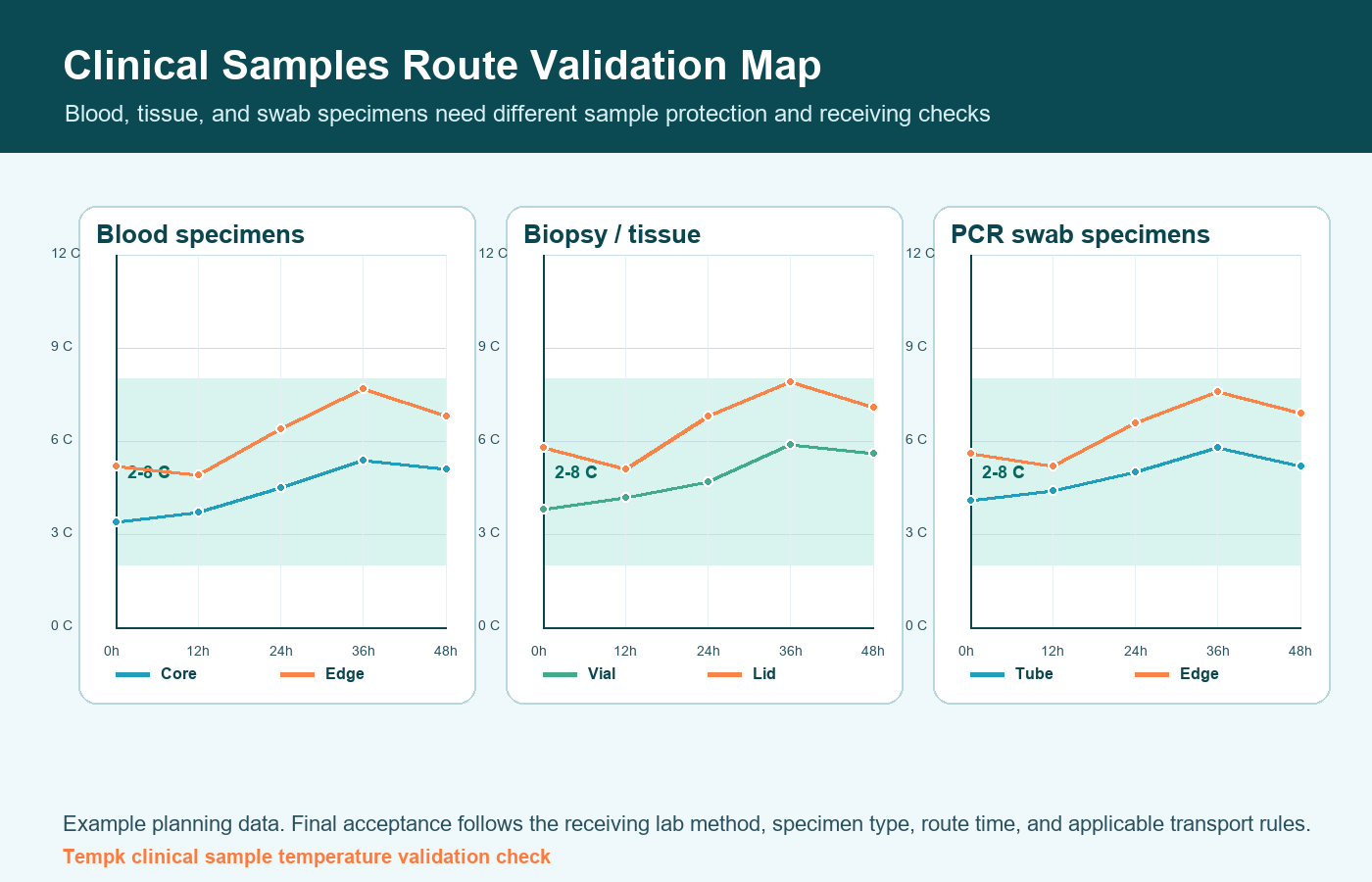
Rotas de diagnóstico mistas e programas de amostras menores podem usar o guia de amostras clínicas mais amplo, enquanto as três páginas acima cobrem os tipos de remessa de maior valor.
Notas de embalagem para sangue, tecido, e rotas de PCR zaragatoa com 2-8 C, congelado, gelo seco, vazamento, e controles de transferência.
Use estas páginas para comparar a escolha do refrigerante, risco de rota, estrutura de isolamento, casos de logística médica próximos, and final configuração de embalagem questions before sampling.
Amostras clínicas can be ambient, refrigerado, congelado, ou ultracongelado dependendo do ensaio. O plano de embalagem deve começar com o tipo de amostra e critérios de aceitação do laboratório.
As falhas incluem hemólise, thawed amostras, formulários de cadeia de custódia perdidos, vazamento, e amostras entregues fora da janela de recebimento do laboratório.
Use recipientes primários à prova de vazamentos, absorvente embalagem secundária, e um expedidor externo rígido. Manter os formulários de requisição secos e separados dos recipientes de amostra.
Use gel gelado, gelo seco, ou PCM à temperatura ambiente de acordo com o ensaio. Não escolha refrigerante por hábito quando os requisitos do laboratório forem diferentes.
Confirme a temperatura, vazamento, legibilidade do rótulo, e recebendo o tempo limite. A revisão de rejeição do laboratório deve ser parte da validação de rota.
Custom configuração de embalagem support
Para tamanhos de caixa fixos, carga útil limits, requisitos de marca, pistas sazonais, ou alvos de validação, Tempk can adapt this solution into a custom cold-chain configuração de embalagem.
Compartilhe o tipo de amostra, tubo ou recipiente, temperatura alvo, tempo máximo de transporte, contagem de carga útil, duração da rota, perfil ambiente, etapas do correio, classificação, and verificação no recebimentos. Tempk pode ajudar a comparar o remetente, layout do refrigerante, embalagem secundária, absorvente layer, inserções, registrador de posição, e plano de validação.
Request a configuração de embalagem review