


Schätzen Sie Trockeneismasse
Nutzlastgewicht verwenden, Kastengröße, Streckenzeit, saisonale Umgebungstemperatur, und Trägergrenzen vor dem ersten Spurtest.
Gefrorene Fertiggerichte kombinieren oft Tabletts, Foliendichtungen, Saucen, Reis, Pasta, Gemüse, und Ärmel in einer Packung. Die Route muss dafür sorgen, dass die Mahlzeiten gefroren bleiben und gleichzeitig die Siegel der Tabletts geschützt sind, Ärmeletiketten, Soßentextur, und gestapelte Tablettecken.
Die unten aufgeführten Trockeneismengen sind Richtwerte für die Planung. Das endgültige Packout sollte mit der genauen Nutzlast validiert werden, Kastengröße, Trägerspur, Jahreszeit, und Trockeneisgrenze.
| Streckenzustand | Temperaturabsicht | Einrichtung der Tempk-Verpackung | Kühlmittelplanungsbereich | Kühlmittelposition |
|---|---|---|---|---|
| Essenslieferung vor Ort, 8-18 H | Gefrorene Ankunft | EPP oder Isolierkarton, Unterstützung für den Tablettstapel, Feuchtigkeitsbarriere am Ärmel, abgetrenntes gefrorenes Kühlmittel oder Trockeneis. | 1.0-2.0 kg Trockeneis für 1-5 kg Nutzlast, oder validiertes gefrorenes PCM/gefrorenes Gel für kurze Spuren. | Seitliches/oberes Kühlmittel mit Trennwand; Vermeiden Sie Druck auf Foliendichtungen. |
| Über Nacht eingefrorenes Paket, 18-36 H | -18 C-Routenabsicht | Dickere Isolierung, Trockeneisbeutel, Eckstütze des Tabletts, reduzierter Leerraum. | 2.0-4.5 kg Trockeneis für 1-5 kg Nutzlast. | Top-Trockeneis durch Brett getrennt; Bewahren Sie den Logger im Luftraum des Produkts auf. |
| Heiße Spur oder 36-48 H | Validierte eingefrorene Spur | Höhere Isolierung, stärkere Tablettverstrebung, Routenrisikocheck, Überprüfung der Carrier-Limits. | 4.0-7.0 kg Trockeneis für 1-5 kg Nutzlast. | Wenn sich die Schalendichtungen lösen, Reduzieren Sie den Druck und verbessern Sie die Abstützung, bevor Sie die Trockeneismasse wechseln. |
Für eine genauere Schätzung, Beginnen Sie mit dem Trockeneisrechner und überprüfen Sie die Isolierungsoptionen im Referenz zu Isoliermaterialien.
Retouren von Tiefkühlkost sind oft auf einen kleinen Layoutfehler zurückzuführen: Direkter Trockeneiskontakt, zu viel Kopfraum, ein nasser Karton, oder ein Produktstapel, der sich während der Handhabung verschiebt.
Ein Versagen der Dichtung führt zu einem Rücklauf, selbst wenn die Temperaturkurve akzeptabel aussieht.
Verwenden Sie eine Trennwand oder eine Trockeneiskammer, damit die Hüllen nicht knittern und die Tablettfolie nicht durch direkten Kontakt beansprucht wird.
Soßenreiche Mahlzeiten, Reisschüsseln, und Nudeltabletts zeigen das Auftauen und Wiedereinfrieren unterschiedlich an; Überprüfen Sie das echte Produkt.
Temperatur aufzeichnen, Versiegelungsintegrität, Tablett reißt, Ärmelfeuchtigkeit, Soßentrennung, und Trockeneis übrig.
Verwenden Sie diese Eingangskontrollen, wenn Sie die Trockeneismasse anpassen, Isolationsdicke, oder innere Trennung.
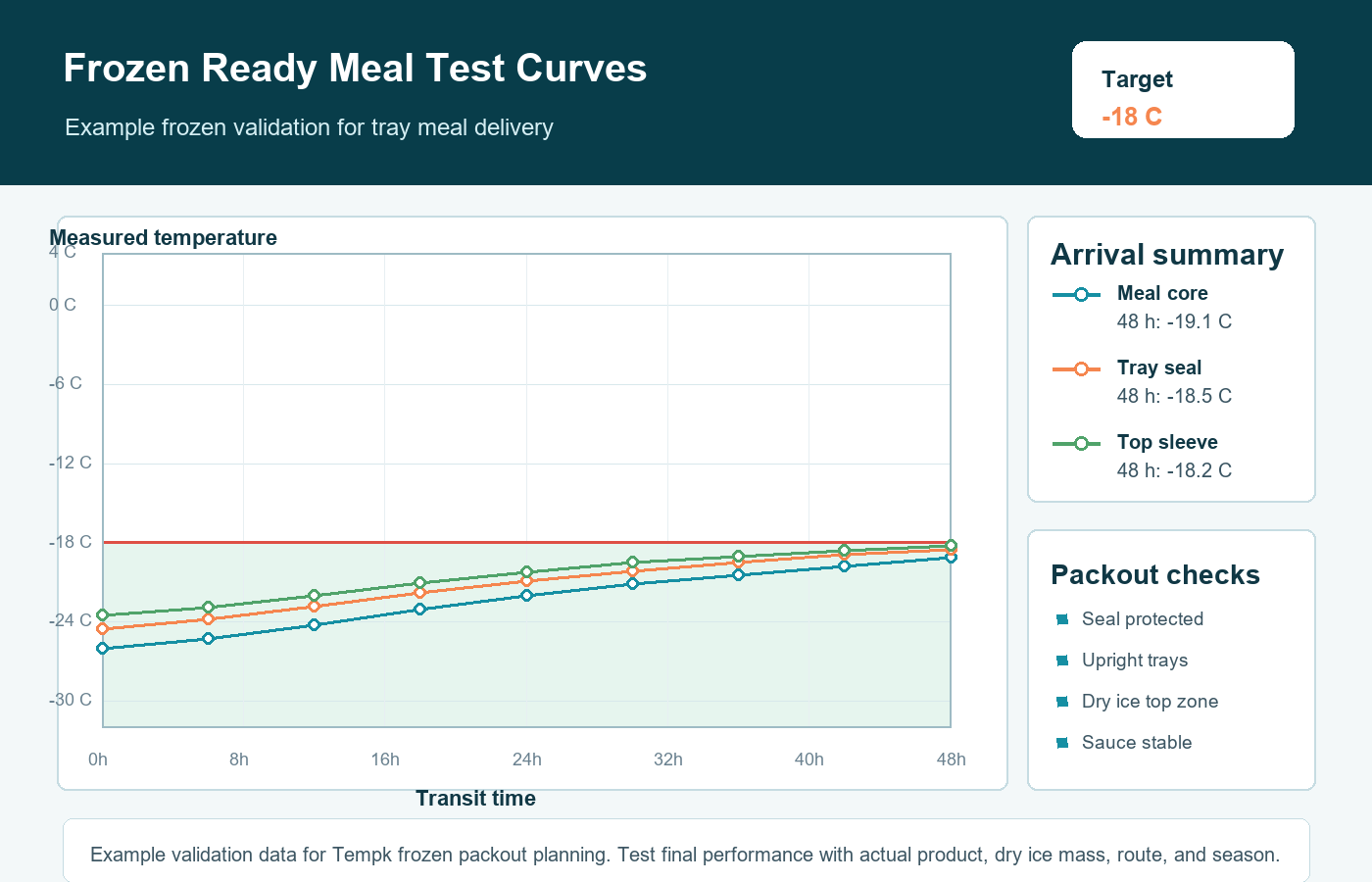
Nutzen Sie die Produktseite für die Handhabungslogik, Dimensionieren Sie dann den ersten Versuch mit Werkzeugen und validieren Sie die tatsächliche Route.
Nutzlastgewicht verwenden, Kastengröße, Streckenzeit, saisonale Umgebungstemperatur, und Trägergrenzen vor dem ersten Spurtest.
Vergleichen Sie Trockeneis, gefrorene Gelpackungen, und gefrorenes PCM bei der Auswahl der ersten gefrorenen Verpackung.
Überprüfen Sie die Abholzeit, Verspätung auf der letzten Meile, Empfangsfenster, und Sommerroute vor dem Start.
Teilen Sie den Tiefkühlprodukttyp, Nutzlastgewicht, Kastengröße, Streckendauer, Umgebungsprofil, Trägergrenzen, und Erhalt von Schecks. Tempk kann bei der Auswahl der Isolierung helfen, Platzierung von Trockeneis oder gefrorenem Kühlmittel, und Validierungsschritte.
Unterstützung für benutzerdefinierte Pakete
Für feste Kartongrößen, Nutzlastgrenzen, Branding-Anforderungen, Saisonspuren, oder Validierungsziele, Tempk kann diese Lösung in eine individuelle Kühlkettenverpackung umwandeln.