


Hielo seco depletion
Una ruta que parece corta puede perder hielo seco rápidamente en clima cálido, con transferencia aérea o con espera larga en recepción.
Vectores de terapia génica often move in frozen, congelado a ultrabaja temperatura, or criogénico lanes. La configuración correcta depende del rango etiquetado y del formato del vial.: un transportista de hielo seco puede ser adecuado para un carril, mientras que otra ruta necesita un transportista seco validado.
Los envíos de vectores necesitan control de temperatura y control físico al mismo tiempo. The route should prevent descongelación, recongelación, movimiento del vial, hielo seco contact damage, y problemas de papeleo.
Una ruta que parece corta puede perder hielo seco rápidamente en clima cálido, con transferencia aérea o con espera larga en recepción.
Los controles repetidos de puertas abiertas o la entrega lenta pueden calentar los viales lo suficiente como para crear una excepción de ruta..
Bastidores sueltos, direct hielo seco contact, y el papeleo mojado por las heladas puede causar problemas de recepción incluso cuando permanece hielo seco.
| Condición de ruta | Intención de temperatura | Configuración de embalaje | Planificación de refrigerante o dry shipper | Control de recepción |
|---|---|---|---|---|
| Hielo seco route, 0-24 h | Use the product-approved frozen or ultrabajo range and avoid descongelación during configuración de embalaje. | Vented hielo seco shipper, soporte para gradilla de viales, hielo seco barrier, contención absorbente o secundaria, y funda para documentos protegida. | Para paquetes pequeños, Las pruebas iniciales a menudo comienzan alrededor 3-7 kg hielo seco, luego ajustar por temperatura del carril, carga útil masiva, y reglas del transportista. | registrador de curvas, remaining hielo seco, posición del vial, sin documentos mojados, y traslado inmediato al congelador. |
| Hielo seco route, 24-48 h o temporada de calor | Mantener el rango congelado hasta la recogida, transferir, riesgo de fin de semana, y retraso en la recepción. | Transportista de mayor capacidad, Colocación de hielo seco superior y lateral con separación., revisión de riesgo de ruta, y cita del receptor. | Muchos ensayos pequeños y medianos comienzan alrededor 8-15 kg hielo seco. Use the hielo seco calculator, luego valide el transportista y el carril reales. | Hielo seco remaining, no descongelación evidence, condición del bastidor, outer cartón integrity, y recibir marca de tiempo. |
| Ruta criogénica o específica del producto | Utilice un remitente seco validado cuando la etiqueta del producto o el SOP requieran condiciones de LN2.. | Cargador seco precargado, soporte para viales o botes, cadena de custodia records, sello de manipulación, and orientación control. | Planificar por reserva de tiempo de espera del remitente seco, not hielo seco mass. No sustituya hielo seco por una ruta criogénica a menos que el propietario del producto lo apruebe.. | Estado del remitente seco, registros de custodia, orientación, entrega notes, y transferencia de almacenamiento. |
Utilice estos valores como puntos de partida para el muestreo y la cotización.. refrigerante final, PCM, hielo seco, aislamiento, cargador seco, registrador, y las opciones de manejo deben ser validadas con la carga útil real, carril, proceso de transporte, estación, y procedimiento de recepción.
Choose hielo seco, ultrabajo, o lógica de envío seco de la etiqueta del producto y SOP antes de elegir una caja.
Utilice soportes de rejilla y barreras para que los viales no presionen directamente contra bloques de hielo seco o gránulos sueltos..
Coloque los documentos en una funda seca y lejos de la zona de hielo seco para que la recepción pueda leer las etiquetas y liberar la documentación..
Los carriles de terapia génica deben llegar a un congelador asignado, receptor entrenado, y proceso de transferencia documentado.
Estos son los problemas visibles y operativos que la configuración de embalaje debe reducir antes de que el envío llegue al receptor.
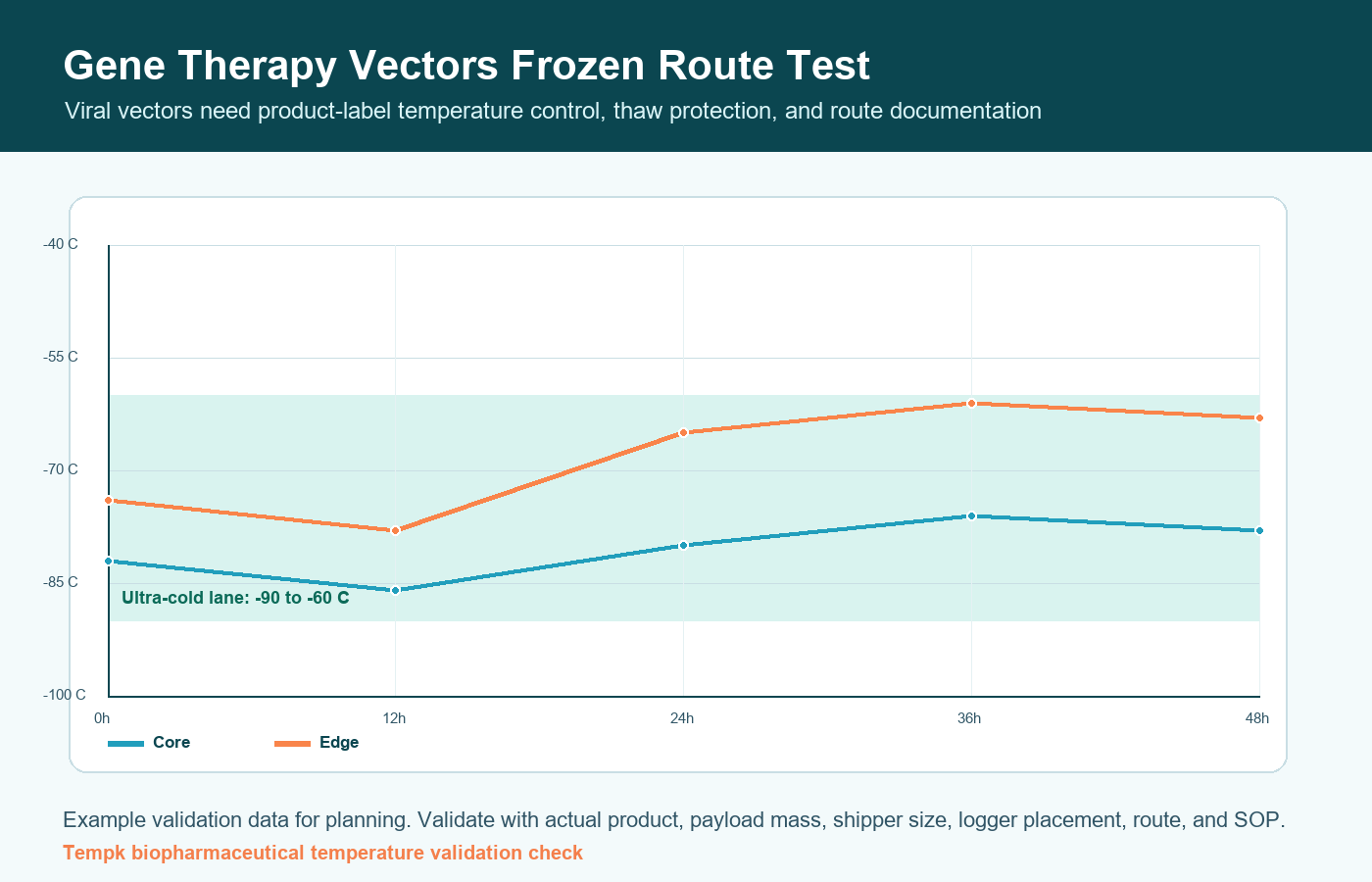
Utilice la curva de prueba como comparación de trabajo, luego validar con la carga útil real, expedidor, configuración de refrigerante o cargador seco, duración del carril, perfil ambiental, y proceso de recepción.
Utilice estas páginas para comparar rutas biofármacosceuticas cercanas, opciones de refrigerante, opciones de aislamiento, y preguntas sobre riesgos de ruta antes del muestreo.
Los vectores de terapia génica pueden requerir transporte criogénico o congelado, Dependiendo de la formulación. La configuración de embalaje debe seleccionarse a partir del requisito de estabilidad del producto., no de la práctica farmacéutica general.
Los riesgos principales son agotamiento del hielo seco, rotura de viales, descongelación durante demoras aduaneras, fallo del registrador y pérdida de documentación de custodia.
Utilice gradillas para viales, contención secundaria, y una zona de carga útil que mantiene las muestras estables durante el manejo. La documentación debe permanecer accesible sin abrir la zona fría..
Use hielo seco or criogénico equipment according to the validado lane. Estándar 2 a 8 El embalaje C no es adecuado para envíos de vectores congelados.
Check hielo seco margin, temperatura de carga útil, integridad del vial, costumbres habitan, y registros de cadena de custodia antes de aprobar el carril.
Custom configuración de embalaje support
Para tamaños de cartón fijos, límites de carga útil, requisitos de marca, carriles estacionales, o objetivos de validación, Tempk can adapt this solution into a custom cold-chain configuración de embalaje.
Comparte el tipo de vector, rango de almacenamiento etiquetado, formato de vial o gradilla, duración de la ruta, condición ambiental, hielo seco allowance, pasos del portador, y recibir plan congelador. Tempk puede ayudar a comparar la masa de hielo seco, estructura del transportista, separadores, y controles de validación.
Request a configuración de embalaje review