


Riesgo de congelación de la cara fría
Los acumuladores de gel congelados pueden crear un punto frío local aunque el registrador central permanezca dentro del rango esperado.
Anticuerpos monoclonales are often shipped as refrigerated productos biológicos, donde el principal problema del embalaje no es simplemente permanecer frío. The configuración de embalaje has to prevent heat exposure, congelación en la cara del refrigerante, aplastamiento de cartón, condensación, y estrés relacionado con la vibración durante la entrega.
La etiqueta del producto y el SOP del patrocinador deciden la gama final.. Para la planificación de embalajes, Los riesgos comunes a continuación son los que se deben eliminar antes de la validación de ruta..
Los acumuladores de gel congelados pueden crear un punto frío local aunque el registrador central permanezca dentro del rango esperado.
Levantar, traslado de aeronaves, almacén habitar, y el retraso en la recepción a menudo crean el punto más cálido cerca de la pared superior o exterior.
Humedad, divisores apretados, o el refrigerante pesado puede dañar los cartones secundarios, etiquetas, y documentación serializada.
| Condición de ruta | Intención de temperatura | Configuración de embalaje | Planificación de refrigerante o dry shipper | Control de recepción |
|---|---|---|---|---|
| Entrega controlada por mensajería o clínica., 0-8 h | Mantener 2-8 Planificación C evitando cualquier contacto congelado. | Transportador de EPP preacondicionado o cartón aislado, carga útil sleeve, barrera contra la humedad, y un registro cerca de la carga útil. | Por un 3-8 L remitente, ensayo 0.8-1.5 kg acondicionados 2-8 C PCM o acumuladores de gel refrigerados detrás de un divisor. | Sin marcas de frío, etiqueta seca, cartón intact, registro de temperatura, y tiempo de entrega. |
| Paquetería o mensajería especializada, 8-24 h | Mantenga la estufa refrigerada mediante recogida, clasificación, y retraso en la recepción. | Mayor aislamiento, almohadillas amortiguadoras superiores y laterales, capa PCM separada, dos posiciones del registrador para borde cálido y cara fría. | Iniciar pruebas en carriles pequeños 1.5-3.5 kilos 2-8 PCM. Aumente el refrigerante sólo después de la revisión del punto frío. | Borde cálido, cara fría, aplastamiento de cartón, condensación, y retraso del receptor. |
| Temporada de calor o ruta internacional, 24-48 h | Evite la exposición al calor sin crear riesgo de congelación durante el acondicionamiento previo o el traslado en vuelo.. | Transportista validado, perfil de carril estacional, carga útil spacer, capa absorbente o de control de humedad, y plan de entrega listo para el receptor. | Es posible que se necesiten carriles más largos 3-6 kg PCM en un transportista más grande. Utilice pruebas de ruta antes de envíos comerciales activos. | Revisión de curva completa, condición del refrigerante restante, sin papeleo mojado, y cierre de sesión del receptor. |
Utilice estos valores como puntos de partida para el muestreo y la cotización.. refrigerante final, PCM, hielo seco, aislamiento, cargador seco, registrador, y las opciones de manejo deben ser validadas con la carga útil real, carril, proceso de transporte, estación, y procedimiento de recepción.
Load the anticuerpo cartóns into a stable configuración de embalaje. No utilice el cargador para enfriar una carga útil tibia..
Mantenga PCM o acumuladores de gel detrás de la espuma., acanalado, o espaciado moldeado para que los cartones no puedan tocar una superficie congelada o demasiado fría.
Utilice separadores que sujeten el cartón sin comprimirlo y mantenga los papeles alejados de zonas de condensación..
Durante la prueba, Coloque sensores en el probable borde cálido y en el punto de riesgo del lado del refrigerante., no solo en el centro.
Estos son los problemas visibles y operativos que la configuración de embalaje debe reducir antes de que el envío llegue al receptor.
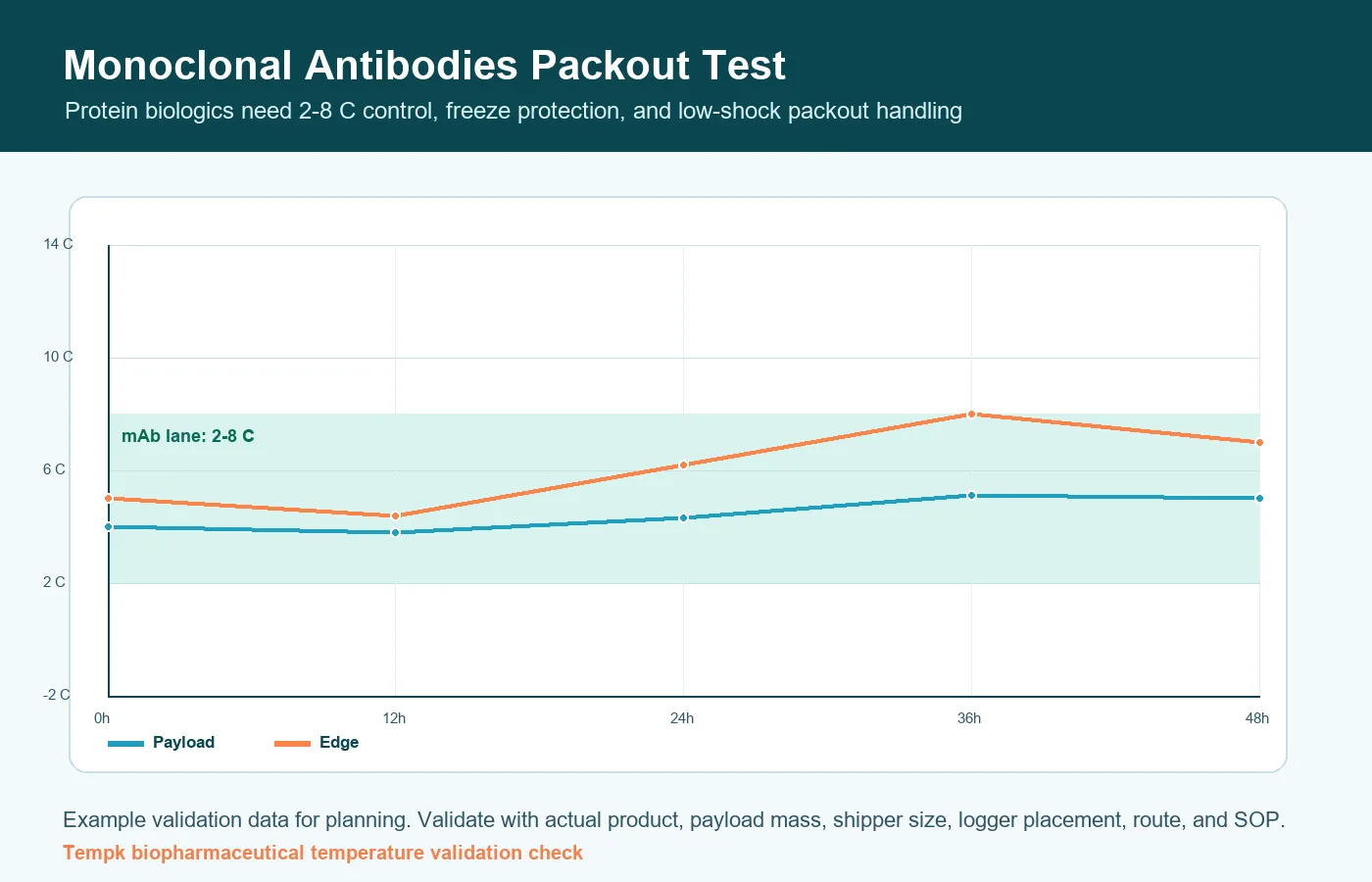
Utilice la curva de prueba como comparación de trabajo, luego validar con la carga útil real, expedidor, configuración de refrigerante o cargador seco, duración del carril, perfil ambiental, y proceso de recepción.
Utilice estas páginas para comparar rutas biofármacosceuticas cercanas, opciones de refrigerante, opciones de aislamiento, y preguntas sobre riesgos de ruta antes del muestreo.
Los anticuerpos monoclonales son comúnmente productos biológicos refrigerados donde la exposición al congelamiento y la vibración pueden amenazar la calidad del producto.. El embalaje debe mantener la temperatura y proteger los viales o unidades precargadas..
Los riesgos clave son contacto con congelación, rotura de viales, aplastamiento de cartónes, mala colocación del registrador de temperatura y recepción hospitalaria retrasada.
Utilice una cavidad de carga útil calificada con divisores de viales o soporte de cartón.. Mantenga el refrigerante detrás de los espaciadores y agregue amortiguación donde el carril tenga una alta intensidad de manejo.
Usar 2 a 8 C PCM o acumuladores de gel acondicionado para carriles frigoríficos validados. Evite el hielo seco a menos que el producto esté etiquetado para transporte congelado..
Comprobar registrador de datos, condición del vial, cartón integrity, y tiempo de recepción. Incluir un carril sensible a las vibraciones si se espera manejo de Air Express..
Los anticuerpos monoclonales necesitan transporte refrigerado estable y protección contra la congelación. The configuración de embalaje should hold viales or cartóns securely so vibration and impact do not become a hidden risk.
Usar 2 a 8 C PCM o acumuladores de gel condicionados detrás de espaciadores. Agregar divisores de viales, una cavidad de carga útil protegida, y un registrador colocado con el medicamento en lugar de al lado del refrigerante.
La validación de Tempk debe incluir el recuento de viales, cartón size, duración de la ruta, manejo expreso aéreo, y retraso en la recepción. Revisar temperatura mínima, daños sensibles a las vibraciones, cartón integrity, y registrador de datos.
Custom configuración de embalaje support
Para tamaños de cartón fijos, límites de carga útil, requisitos de marca, carriles estacionales, o objetivos de validación, Tempk can adapt this solution into a custom cold-chain configuración de embalaje.
Comparte la presentación de anticuerpos., recuento de cajas, rango objetivo, tamaño del listón, duración de la ruta, perfil ambiental, puntos de entrega, y requisito de registrador. Tempk puede ayudar a comparar la masa del PCM, aislamiento, estructura divisoria, y diseño de validación.
Request a configuración de embalaje review