


Anticuerpos monoclonales
Planifique una ruta 2-8 °C con protección contra congelación, soporte de cartón, contacto PCM controlado y colocación del registrador en puntos de riesgo cálidos y fríos.
Los envíos de Biofármacosceutical deben planificarse primero desde la forma del producto: refrigerated anticuerpos, terapias celulares criogénicas, y los vectores de terapia génica congelados no fallan de la misma manera. Tempk ayuda a mapear el rango de temperatura, estructura del transportista, elección de refrigerante o cargador seco, posición de monitoreo, y control de recepciones antes de la validación de ruta.
La configuración de un solo paquete médico puede ser demasiado cálida para un producto y demasiado fría para otro.. El primer paso útil es separar la carga útil por riesgo.: freeze-sensitive refrigerated productos biológicos, living cell products that may require nitrógeno líquido en fase vapor, y vectores que muchas veces necesitan congelados o congelados un control de temperatura ultrabaja.
Planifique una ruta 2-8 °C con protección contra congelación, soporte de cartón, contacto PCM controlado y colocación del registrador en puntos de riesgo cálidos y fríos.
Use la SOP del producto para decidir si se requiere un dry shipper de nitrógeno líquido en fase vapor; luego proteja cadena de identidad, orientación y margen de tiempo de retención.
Elija hielo seco o dry shipper solo después de aclarar el rango de almacenamiento indicado. Evite descongelación, recongelación, presión en viales, daño por escarcha y pérdida de documentos.
| Ruta del producto | Intención de temperatura | Configuración de embalaje | Planificación de refrigerante o dry shipper | Control de recepción |
|---|---|---|---|---|
| Anticuerpos monoclonales, muestra o comercial 2-8 carril C | Mantenga la estufa refrigerada etiquetada y evite la congelación en la cara del refrigerante.. | Transportista aislado calificado, carga útil cartón support, divisor de espuma o corrugado, control de condensación, y un registrador cerca de las probables posiciones cálidas y frías.. | Uso condicionado 2-8 C PCM o acumuladores de gel refrigerados detrás de una barrera. para un pequeño 3-8 L remitente, muchas pruebas comienzan alrededor 0.8-2.5 kg de refrigerante, luego ajuste por temporada y carril. | Curva de temperatura, cartón condition, sin marcas de refrigerante congelado, legibilidad de la etiqueta, y tiempo de recepción. |
| Productos de terapia celular, hospital criogénico o ruta de fabricación | Siga el POE del producto. Cuando se requiere control criogénico, keep the carga útil in a validado nitrógeno líquido en fase vapor dry shipper. | Cargador seco precargado, verificación de ajuste del casete o recipiente, contención secundaria, sello de manipulación, orientación control, cadena de identidad and cadena de custodia paperwork. | Plan by validado hold time, no masa de hielo. El tiempo de ruta debe dejar margen de reserva para la recogida., retraso del vuelo, aduanas, y recibiendo preparación. | Condición del cargador seco, registro de custodia, orientación or impacto indicator, registro de tiempo de espera restante, y cierre de sesión del receptor. |
| Vectores de terapia génica, frozen or congelado a ultrabaja temperatura lane | Utilice el rango etiquetado, often frozen or congelado a ultrabaja temperatura. Avoid descongelación and recongelación during configuración de embalaje or entrega. | Transportador Hielo seco o transportista seco según sea necesario, soporte para gradilla de viales, hielo seco separation, paquete exterior ventilado, Funda para documentos protegida de las heladas y la humedad.. | Si se permite hielo seco, Las parcelas pequeñas a menudo inician pruebas alrededor 3-7 kilos para 0-24 h carriles y 8-15 kilos para 24-48 h carriles. Utilice un cargador seco validado cuando el producto requiera condiciones de LN2.. | grabadora de discos, restante de hielo seco o margen de retención del transportista, sin movimiento del vial, sin documentos dañados por las heladas, y traslado inmediato al congelador. |
Estas gamas son ejemplos de planificación para el debate sobre embalajes.. Final configuración de embalaje acceptance must follow the product etiqueta, SOP del patrocinador, calificación de carril, Reglas del operador, y requisitos reglamentarios locales.
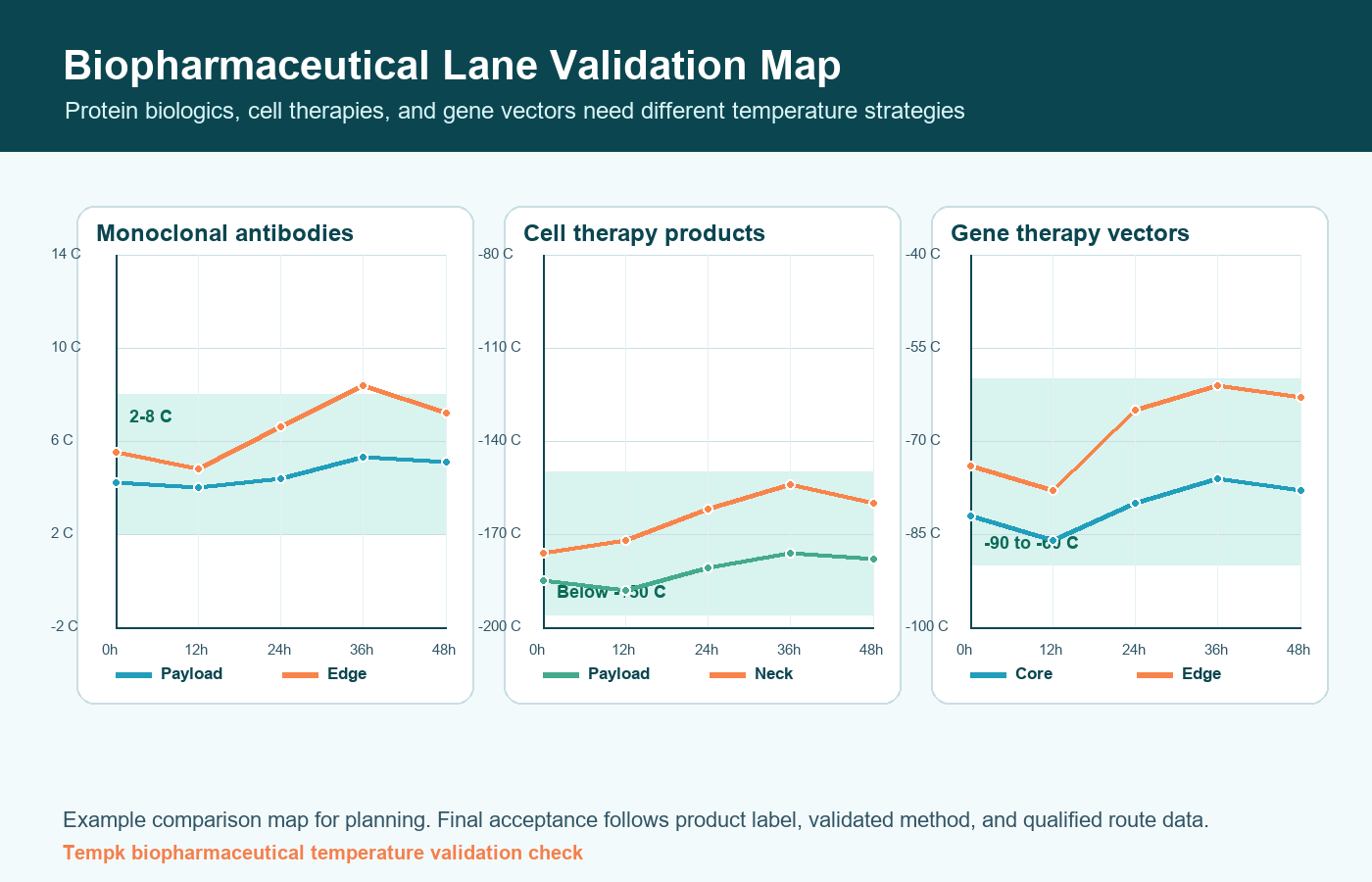
Utilice la curva para comparar refrigerados, criogénico, y comportamiento congelado antes de repetir la ruta. Una revisión útil combina la curva del registrador con la condición de carga útil., retraso en la recogida, pasos de transferencia, y recibiendo notas.
Las proteínas recombinantes y las terapias de reemplazo enzimático también necesitan un manejo específico del producto, especialmente para la sensibilidad a la congelación, agregación control, soporte para viales, y registros.
2-8 Embalaje C con protección anticongelación, agregación-aware handling, cartón support, escucha, y recibir registros.
Envase terapéutico refrigerado con protección de vial., sin contacto directo con refrigerante congelado, entrega controlada, y controles de ruta.
Utilice estas páginas para comparar el comportamiento del refrigerante, riesgo de ruta, estructura del transportista, y casos médicos cercanos de cadena de frío antes de solicitar una muestra o prueba de carril.
Los envíos de biofarmacoscéuticos varían mucho. Anticuerpos monoclonales may need 2 a 8 protección C, La terapia celular puede requerir control criogénico., and vectores de terapia génica may require deep frozen handling.
Los riesgos más graves son la congelación de productos biológicos refrigerados., Agotamiento del hielo seco en carriles congelados, impacto exposure, and incomplete cadena de custodia records.
Utilice una cavidad de carga útil del tamaño del vial., bolsa, o casete y protegerlo del movimiento. La documentación y el registro de temperatura deben planificarse como parte de la configuración de embalaje..
Elegir 2 a 8 PCM, hielo seco, o equipo criogénico según la etiqueta del producto y el requisito de validación.. Estos sistemas no deben intercambiarse casualmente..
Validar carril, duración, handling orientación, y documentación de entrega. El control de recepción debe incluir la condición de la carga útil y la revisión del registrador..
Custom configuración de embalaje support
Para tamaños de cartón fijos, límites de carga útil, requisitos de marca, carriles estacionales, o objetivos de validación, Tempk can adapt this solution into a custom cold-chain configuración de embalaje.
Compartir el tipo de producto, rango de temperatura etiquetado, tamaño de carga útil, duración de la ruta, temperaturas de carril, límites enterga, requisito de seguimiento, y proceso de recepción. Tempk puede ayudar a comparar el transportista aislado, PCM, hielo seco, cargador seco, inserto de soporte, y plan de validación.
Request a configuración de embalaje review