


Estimar la masa de hielo seco
Usar peso de carga útil, tamaño de la caja, tiempo de ruta, temperatura ambiente estacional, y límites del transportista antes de la primera prueba de carril.
Los platos preparados congelados suelen combinarse en bandejas., sellos de película, salsas, arroz, pastas, verduras, y mangas en un paquete. La ruta debe mantener las comidas congeladas protegiendo los sellos de las bandejas., etiquetas de manga, textura de salsa, y esquinas de bandejas apiladas.
Las cantidades de hielo seco a continuación son rangos iniciales para la planificación.. El paquete final debe validarse con la carga útil exacta, tamaño de la caja, carril de transporte, estación, y límite de hielo seco.
| Condición de la ruta | Intención de temperatura | Configuración del embalaje Tempk | Rango de planificación de refrigerante | Posición del refrigerante |
|---|---|---|---|---|
| Entrega de comida local, 8-18 h | Llegada congelada | EPP o cartón aislado, soporte de pila de bandejas, barrera contra la humedad de la manga, refrigerante congelado separado o hielo seco. | 1.0-2.0 kg de hielo seco para 1-5 kg de carga útil, o PCM congelado/gel congelado validado para carriles cortos. | Refrigerante lateral/superior con divisor; Evite la presión sobre los sellos de película.. |
| Paquete congelado durante la noche, 18-36 h | -18 Intención de ruta C | Aislamiento más grueso, bolsa de hielo seco, soporte de esquina de bandeja, espacio vacío reducido. | 2.0-4.5 kg de hielo seco para 1-5 kg de carga útil. | Hielo seco superior separado por tabla.; Mantenga el registrador en el espacio aéreo del producto.. |
| carril caliente o 36-48 h | Carril congelado validado | Mayor aislamiento, refuerzo de bandeja más fuerte, control de riesgo de ruta, revisión del límite del operador. | 4.0-7.0 kg de hielo seco para 1-5 kg de carga útil. | Si los sellos de la bandeja se levantan, reducir la presión y mejorar el refuerzo antes de cambiar la masa de hielo seco. |
Para una estimación más ajustada, empezar con el Calculadora de hielo seco y revisar las opciones de aislamiento en el Referencia del material aislante.
Las devoluciones de alimentos congelados suelen deberse a un pequeño fallo en el diseño: contacto directo con hielo seco, demasiado espacio de cabeza, un cartón mojado, o una pila de productos que se desplaza durante la manipulación.
La falla del sello genera un retorno incluso si la curva de temperatura parece aceptable.
Utilice un divisor o una cámara de hielo seco para que las mangas no se arruguen y la película de la bandeja no se esfuerce por el contacto directo..
Comidas ricas en salsa, tazones de arroz, y las bandejas de pasta muestran descongelar y volver a congelar de manera diferente; comprobar el producto real.
Temperatura récord, integridad del sello, grietas en la bandeja, humedad de la manga, separación de salsa, y hielo seco restante.
Utilice estos controles de recepción al ajustar la masa de hielo seco, espesor de aislamiento, o separación interna.
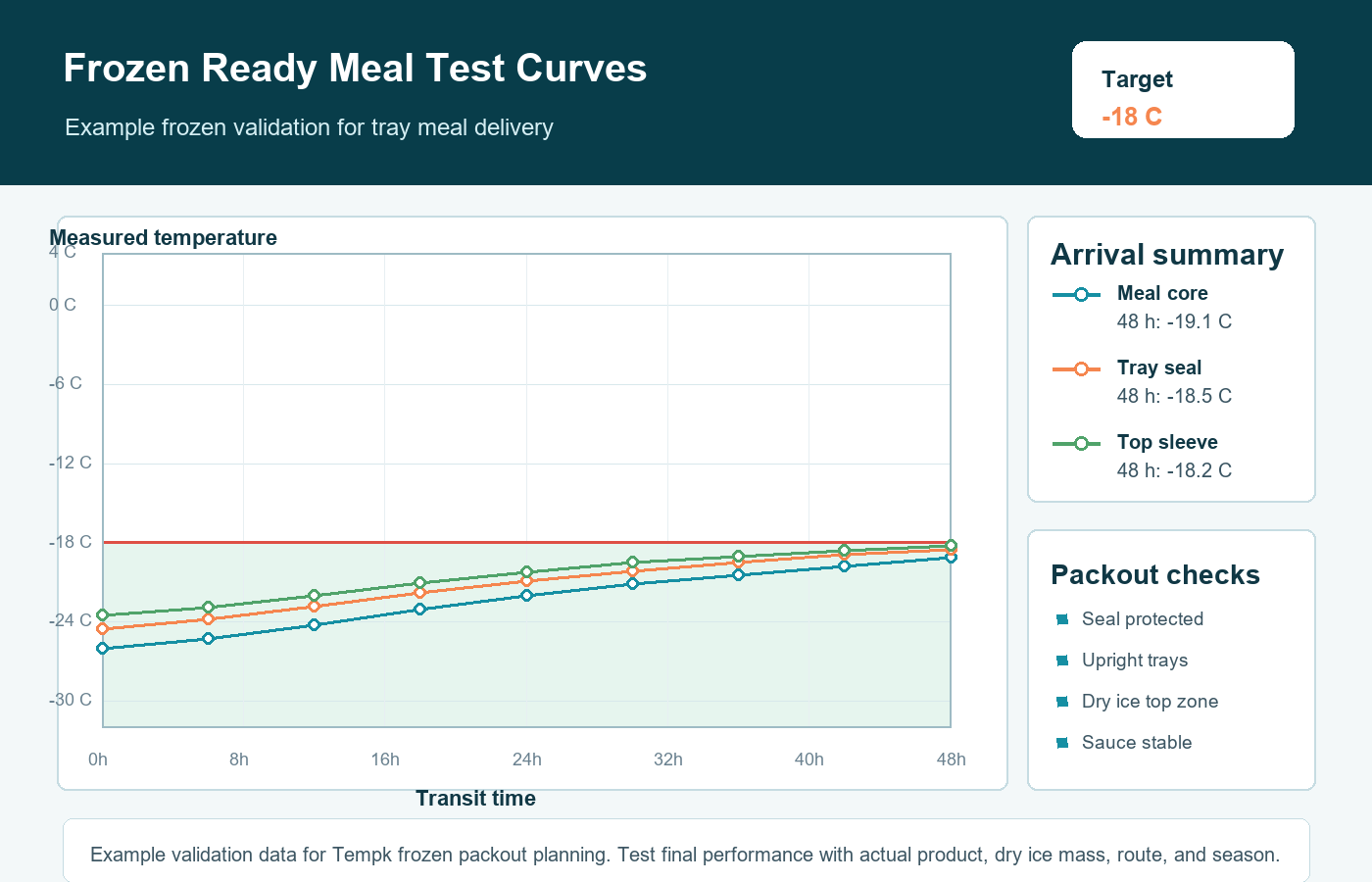
Utilice la página del producto para la lógica de manejo., luego dimensione la primera prueba con herramientas y valide la ruta real.
Usar peso de carga útil, tamaño de la caja, tiempo de ruta, temperatura ambiente estacional, y límites del transportista antes de la primera prueba de carril.
Comparar hielo seco, paquetes de gel congelado, y PCM congelado al elegir el primer paquete congelado.
Revisar la recogida en espera, retraso en la última milla, ventana receptora, y ruta de verano antes del lanzamiento.
Compartir el tipo de producto congelado, peso de carga útil, tamaño de la caja, duración de la ruta, perfil ambiental, límites del transportista, y recibir cheques. Tempk puede ayudar a elegir el aislamiento, Colocación de hielo seco o refrigerante congelado., y pasos de validación.
Soporte de paquete personalizado
Para tamaños de cartón fijos, límites de carga útil, requisitos de marca, carriles estacionales, o objetivos de validación, Tempk puede adaptar esta solución a un paquete de cadena de frío personalizado.