


Lait pasteurisé frais
Planifier un contrôle réfrigéré, bouteilles verticales, fuite de bouchon, doublure absorbantes, étiquettes sèches, et suffisamment de réfrigérant sans geler le liquide à proximité des surfaces du pack.
Les expéditions de produits laitiers exigent un contrôle réfrigéré, mais le lait, le yaourt et le fromage ne se détériorent pas de la même façon. Une bonne configuration doit contrôler la température de route tout en protégeant les bouchons, couvrons-le, cartons, l'humidité, les odeurs et l'état visible à réception.
Commencer par la forme du produit et la promesse d'expédition. Le lait liquide demande un maintien vertical et une protection absorbante. Le yaourt demande protection des pots et opercules. Le fromage demande contrôle de l'humidité, des odeurs et de la texture. Tempk ajuste l'isolation, le réfrigérant conditionné, les doublures, les inserts et les contrôles de réception selon ces différences.
Planifier un contrôle réfrigéré, bouteilles verticales, fuite de bouchon, doublure absorbantes, étiquettes sèches, et suffisamment de réfrigérant sans geler le liquide à proximité des surfaces du pack.
Protéger les opercules de pots et les plateaux empilés tout en contrôlant la condensation, risque de texture, et la solidité du carton grâce aux itinéraires chauds du dernier kilomètre.
Utilisez une disposition réfrigérée tamponnée qui empêche le suintement, transfert d'odeur, marques de gel, et compression des emballages de vente au détail.
| Route du produit | Objectif de température | Configuration d'emballage | Plage préliminaire de réfrigérant | Contrôle à la réception |
|---|---|---|---|---|
| Lait pasteurisé frais parcel or local delivery, 4-24 h | Gardez l'itinéraire réfrigéré selon les exigences du produit; many produits laitiers operations plan around 0-4 C ou 2-8 C et éviter de geler. | Carton isotherme ou boîte EPP, upright séparateur de bouteilles, doublure absorbante, accumulateurs de gel conditionnés or PCM on side/top positions with a separator. | À propos 1.0-2.8 kg accumulateurs de gel conditionnés or PCM for a 2-6 L lait charge utile; augmenter l'isolation avant d'ajouter une masse gelée excessive. | Product température, fuite de bouchon, mouvement des bouteilles, séchage des étiquettes, humidité du carton, and remaining réfrigérant. |
| Coupes de yaourt ou multipacks, 8-24 h | Utiliser une voie réfrigérée qui évite le réchauffement tout en évitant le contact du froid sur les opercules de pots et les parois latérales. | Carton isotherme ou expéditeur compact en EPP, support de plateau, opercule de pot buffer, doublure pour la condensation, réfrigérant conditionné placed around the tray. | À propos 1.2-3.2 kg accumulateurs de gel conditionnés or PCM for 12-24 tasses au détail, ajusté en fonction du profil ambiant et de la taille du carton. | Couvercles de bocaux, compression du carton, texture, mouillage des étiquettes, minimum température, and remaining réfrigérant state. |
| Blocs de fromage, coins, ou packs de vente au détail, 12-36 h | Manipulation réfrigérée en fonction du type de produit; éviter le gel direct et les grandes variations de température qui créent un suintement. | Carton isotherme ou boîte EPP, barrière contre l'humidité et les odeurs, protected cavité centrale, réfrigérant conditionné separated from retail packs. | À propos 1.0-2.8 kg accumulateurs de gel conditionnés or PCM for a 3-8 kg fromage charge utile; valider pour les voies chaudes ou les charges mixtes. | Sécheresse du colis, texture, transfert d'odeur, pression du carton, enregistrement de l'activateur si utilisé, and remaining réfrigérant. |
Il s'agit de plages de planification pour l'échantillonnage et le devis.. La masse finale du réfrigérant et la taille de l'expéditeur doivent être testées avec le nombre réel de produits., dimensions des cartons, product température, durée de l'itinéraire, profil ambiant, et exigence de réception.
Le colis doit conserver un produit froid, ne pas retirer la chaleur du lait chaud, yaourt, ou du fromage. Commencer par le produit’s état réfrigéré normal.
Use accumulateurs de gel conditionnés or PCM with a spacer. Un contact direct avec le gel peut créer un gel local, étiquettes mouillées, et les marques de colis même lorsque la température moyenne de l'itinéraire semble acceptable.
Les bouteilles de lait ont besoin de séparateurs verticaux, le yaourt a besoin d'un opercule de pot et d'un support de pile, et le fromage a besoin d'une cavité centrale protégée avec contrôle de l'humidité et des odeurs.
Lire l'activateur avec les notes de réception: fuite, sécheresse du carton, état du couvercle, texture du produit, transfert d'odeur, compression de l'emballage, and remaining réfrigérant.
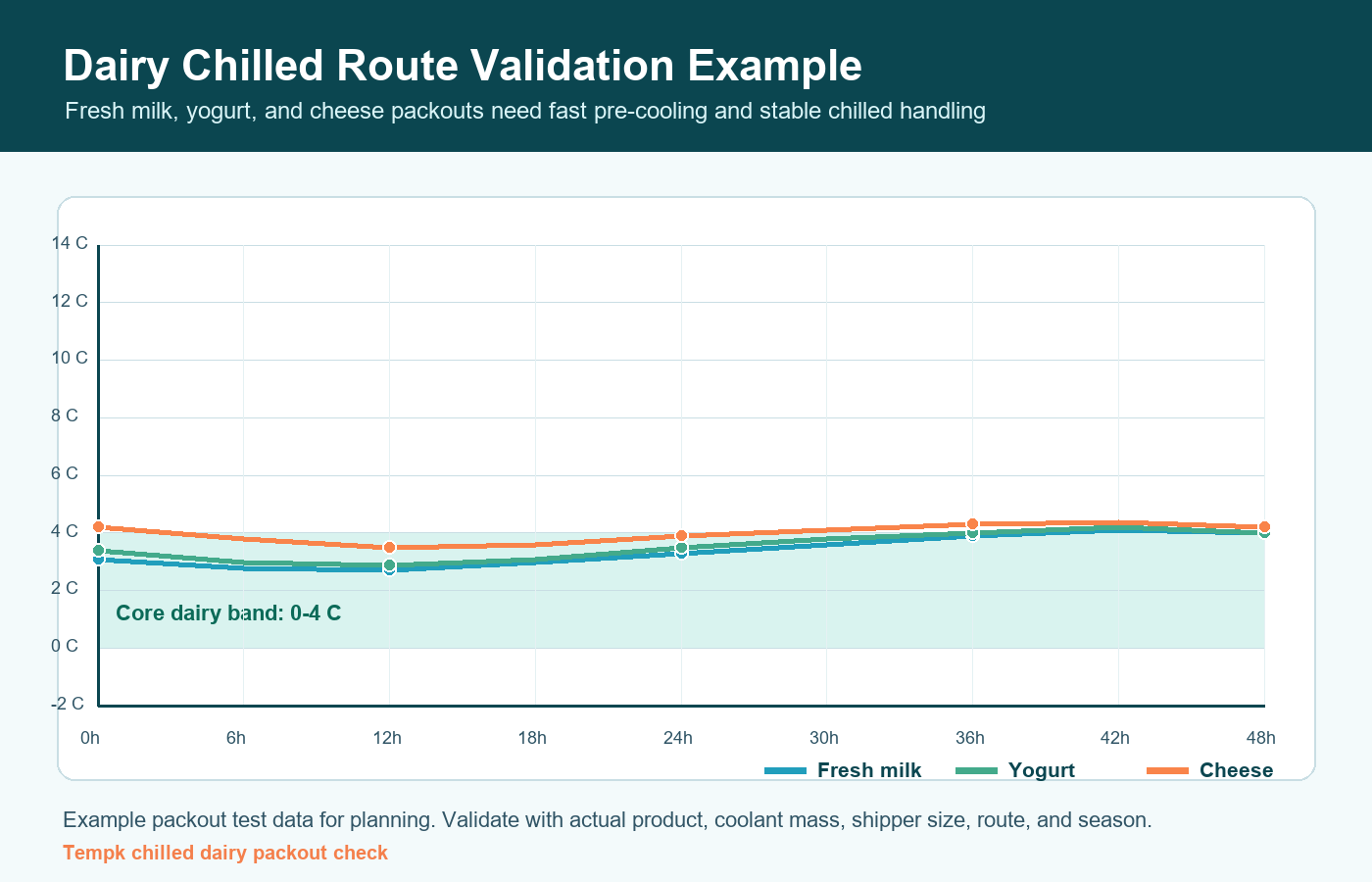
La courbe de test des produits laitiers permet de comparer le comportement des colis réfrigérés pour les liquides, cultivé, and solid produits laitiers formats. For produits laitiers, la condition visuelle d'arrivée peut être aussi importante que la courbe de température.
Utilisez ces guides pour les produits laitiers connexes qui nécessitent des notes de manipulation ciblées sans ajouter une autre page de solution dédiée..
Use these pages to compare masse de réfrigérant, risque d'itinéraire, choix d'isolation, et les itinéraires de produits à proximité avant l'exécution de validation.
Lait, yaourt, et fromages partagent les besoins de distribution réfrigérée, mais leurs schémas de dégâts diffèrent. Une configuration d'emballage utile pour les produits laitiers est basée sur le risque de fuite, texture, et contrôle de la condensation.
Les pertes incluent une odeur aigre, conteneurs gonflés, yaourt synérèse, fromage suintement, étiquettes mouillées, et cartons fragilisés par fuite de liquide.
Utiliser le contrôle des fuites pour les liquides, maintien vertical for yaourt cups, et des décisions d'emballage respirant pour le fromage. Gardez le réfrigérant séparé afin que les étiquettes et le carton restent secs..
Use chilled accumulateurs de gel for 0 à 4 C ou 2 à 8 C produits laitiers lanes. Le PCM est utile là où le dernier kilomètre est long ou où les températures des itinéraires d'été sont élevées.
Réception should check product température, container fuite, état de l'étiquette, et texture après repos du produit.
Prise en charge de la configuration d'emballage personnalisée
Pour des tailles de carton fixes, limites de charge utile, exigences en matière de marque, voies saisonnières, ou des cibles de validation, Tempk peut adapter cette solution dans une configuration d'emballage de chaîne du froid personnalisée.
Share the produits laitiers product, target température, nombre d'unités, charge utile poids, dimensions des cartons, durée de l'itinéraire, conditions ambiantes, et contrôles de réception. Tempk peut aider à comparer l'isolation, accumulateurs de gel conditionnés, PCM, doublures, inserts, and enregistreur placement.
Demander une revue de configuration