


Exécutez l'estimation du liquide de refroidissement
Utiliser le poids de la charge utile, taille de boîte, temps de parcours, et température saisonnière avant de finaliser le pack de gel ou la masse PCM.
Les huîtres ne se manipulent pas comme les filets de poisson. L'emballage doit conserver les coquillages vivants au froid et à l'humidité., protéger les coques et les étiquettes, éviter les blessures dues au gel, et empêche les huîtres de rester dans l'eau de fonte. La meilleure conception dépend des règles relatives aux coquillages, saison, taille de la commande, et temps de transport.
Les quantités de liquide de refroidissement ci-dessous constituent des plages de départ pour la planification.. Le package final doit être validé avec la charge utile exacte, taille de l'isolation, voie porteuse, et assaisonner.
| État de l'itinéraire | Intention de température | Configuration de l'emballage Tempk | Plage de planification du liquide de refroidissement | Emplacement du liquide de refroidissement |
|---|---|---|---|---|
| Livraison dans un restaurant local, 8-18 h | Froid et humide, pas gelé | Carton isotherme ou boîte EPP, sac ou plateau de coquillages, doublure humide, fond absorbant. | 0.5-1.0 kg de packs de gel conditionnés pour petits colis, ajusté en fonction de la taille de la commande. | Liquide de refroidissement au-dessus ou à côté du shellstock avec un séparateur; éviter le contact direct avec la coque. |
| Coquillages vivants pendant la nuit, 18-30 h | 0-4 Plage de planification C sauf indication contraire du fournisseur | Isolation plus forte, conception non hermétique si nécessaire, disposition intérieure de protection des étiquettes. | 1.0-1.8 kg de packs de gel conditionnés pour les colis de petite à moyenne taille. | Gardez les coquillages hors de l'eau de fonte stagnante et protégez l'étiquette de récolte des dommages causés par l'humidité.. |
| Saison chaude ou voie plus longue, 30-48 h | Voie antigel validée | Isolation supérieure, vérification des risques liés à l'itinéraire, espace libre réduit, prise en charge plus tôt par le transporteur. | 1.8-3.0 kg de packs de gel conditionnés, confirmé par test saisonnier. | Si les coquilles montrent du gel, réduire le risque de contact avant d'augmenter la masse du liquide de refroidissement. |
Pour une première estimation plus serrée, Utiliser le Calculateur de banquise puis comparez les familles de liquides de refroidissement dans le Liquide de refroidissement & Référence PCM.
De petits changements de présentation peuvent décider si le destinataire voit un colis de fruits de mer propre et réfrigéré ou un colis humide., sous pression, produit partiellement congelé.
Utiliser le fournisseur'gamme, étiquetage, étiqueter, et les règles de ventilation avant de choisir une conception d'expéditeur fermé.
Utilisez un matériau humide de qualité alimentaire pour l'humidité et une base absorbante séparée pour l'eau de fonte ou la condensation..
Emballer les huîtres afin qu'elles ne puissent pas écraser les étiquettes ou les unes les autres lors de la manutention du colis. Gardez l'étiquette des coquillages lisible à la réception.
Vérifier la fermeture de la coque, odeur, humidité, dégâts d'obus, état de l'étiquette, et tout signe de gel.
Utilisez ces chèques de réception lors du réglage de la quantité de liquide de refroidissement, épaisseur d'isolation, ou séparation interne.
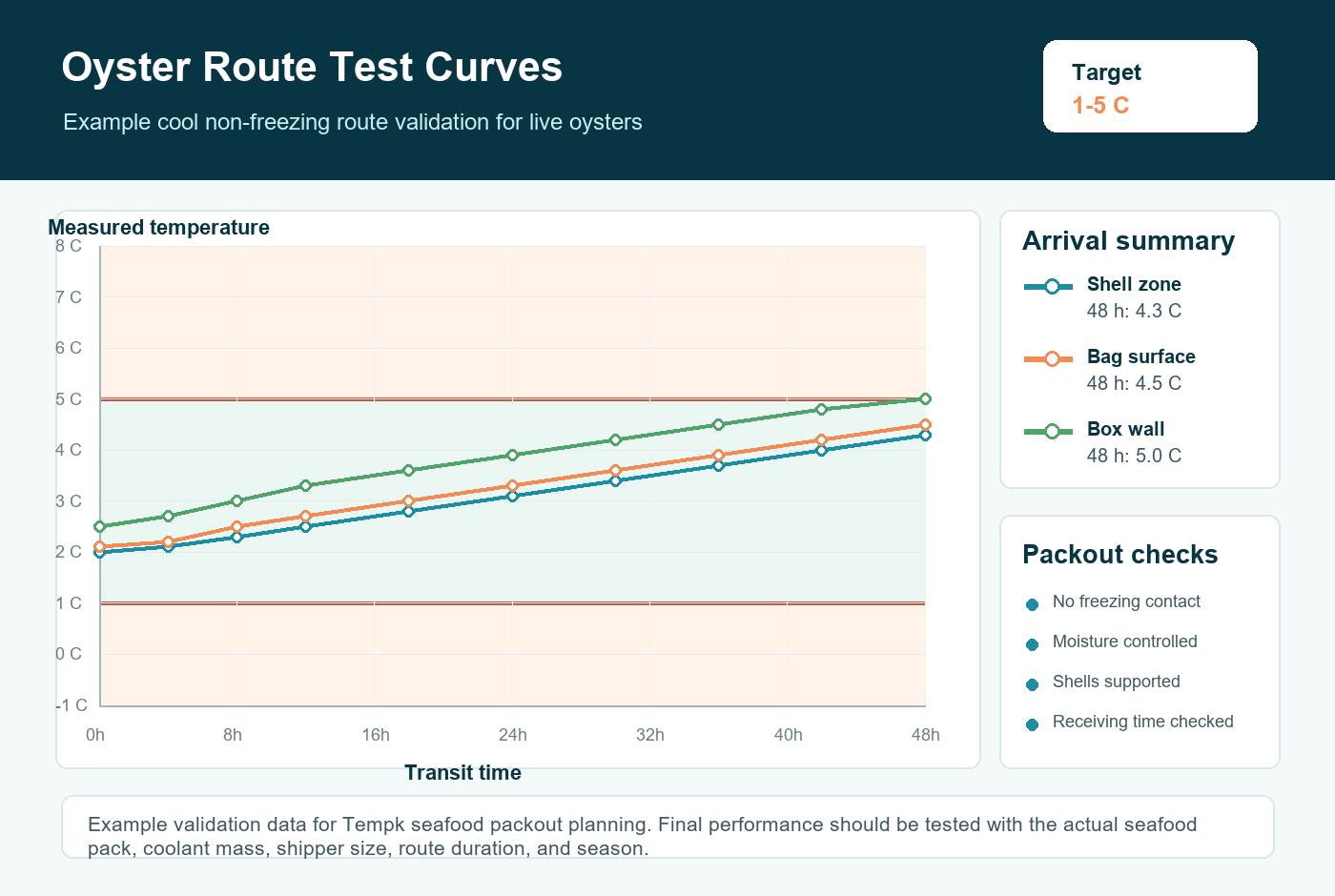
Utilisez la page produit pour la logique d'emballage, utilisez ensuite les outils pour dimensionner le premier pack d'essai avant un test de voie.
Utiliser le poids de la charge utile, taille de boîte, temps de parcours, et température saisonnière avant de finaliser le pack de gel ou la masse PCM.
Comparez les packs de gel congelés, packs de gel conditionnés, et 0 C PCM pour que le produit soit refroidi sans blessure directe par le gel.
Vérifier le temps de couloir, ramassage en direct, retard du dernier kilomètre, et processus de réception avant le lancement.
Partager le formulaire fruits de mer, poids de charge utile, taille de boîte, niveau de service, température d'origine, saison des voies, et fenêtre de réception. Tempk peut aider à comparer l'isolation, masse de liquide de refroidissement, placement, et étapes de validation.
Prise en charge des emballages personnalisés
Pour des tailles de carton fixes, limites de charge utile, exigences en matière de marque, voies saisonnières, ou des cibles de validation, Tempk peut adapter cette solution dans un emballage personnalisé pour la chaîne du froid.